Legends: Japan’s Most Notable Names
Kawakubo Rei’s Continuous Fashion Revolution: A Half Century of Rebellion, “Comme des Garçons”
People Culture Society- English
- 日本語
- 简体字
- 繁體字
- Français
- Español
- العربية
- Русский
A Fearless Fashion Visionary
For decades now, Kawakubo Rei’s rebellious spirit and unfettered creativity have secured her a place at the forefront of global fashion. Her collections have overturned Western ideals of beauty, blurred the boundaries between fashion and art, and delivered a powerful social message. Her iconic brand, Comme des Garçons (literally, “like boys”), has continually challenged society’s basic assumptions about apparel, including gender distinctions.
Her work has been described as bewildering, thought provoking, and soul stirring. Kawakubo herself—unlike most fashion designers—is known to avoid public appearances and dislike interviews. Nonetheless, I have had quite a few opportunities to speak with her in detail over the years. The words that came up again and again in these interviews were new, powerful, and forward-looking. And indeed, with each successive collection, she has delivered fresh surprises and insights. In the following, I offer an overview of Kawakubo’s prolific achievements as a pioneering designer and entrepreneur.
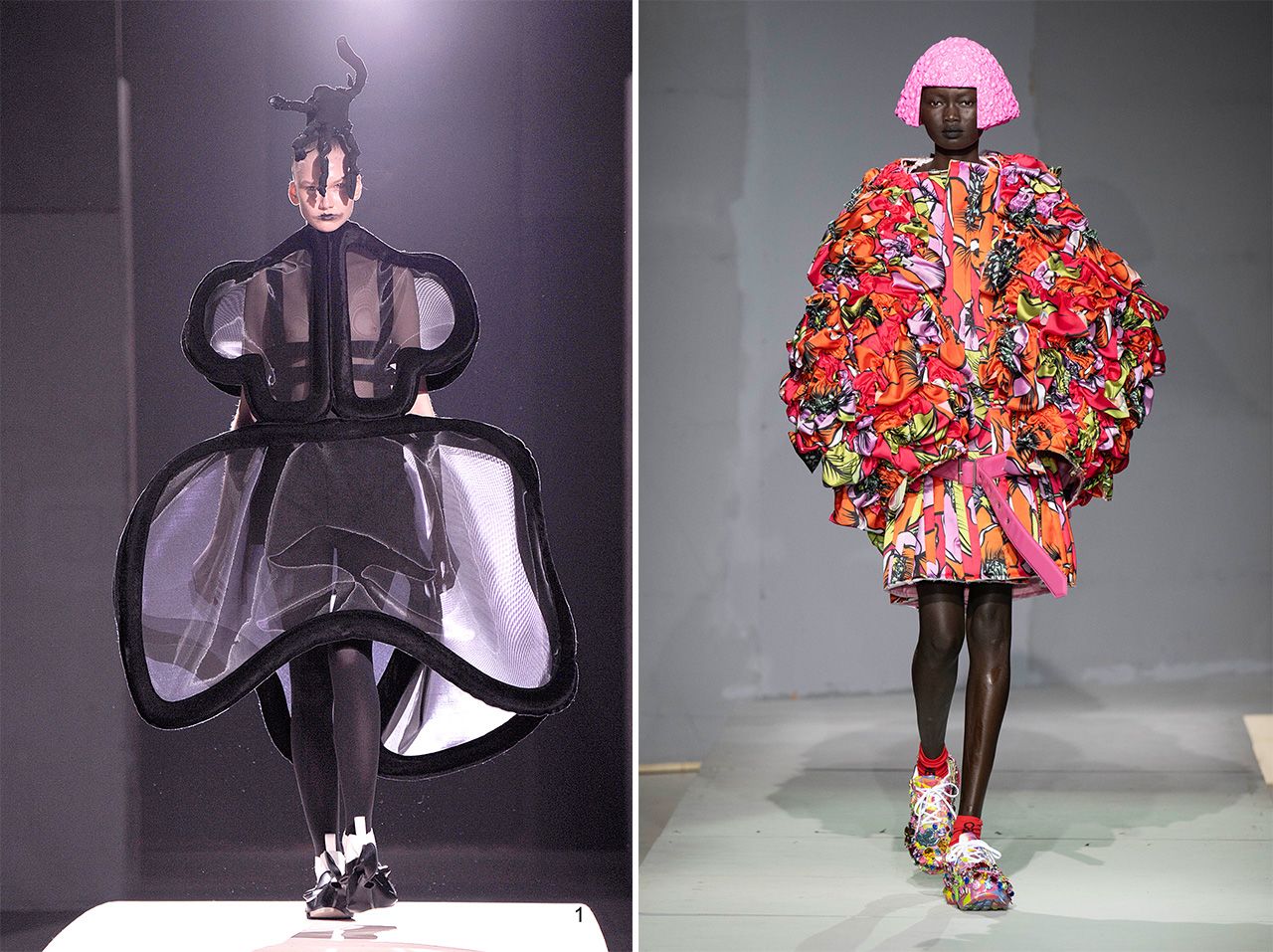
Left: Kawakubo Rei’s Comme des Garçons spring-summer 2014 collection challenged the very concept of clothing. Right: Her spring-summer 2024 collection exploded with color, as if looking forward to a brighter future. (Photo courtesy of Comme des Garçons)
Kawakubo and the “Shock of Pure Black”
Kawakubo Rei was born in Tokyo in 1942. Upon graduating from Keiō University she joined the advertising department of a major textile manufacturer. She left the company after a few years to become a freelance fashion stylist. In 1969, she began making and selling women’s clothing under the label Comme des Garçons. As she explained it, she decided to develop her own line of apparel because nothing on the market matched her ideas of stylishness.
Kawakubo launched Comme des Garçons as a publicly traded corporation in 1973 and opened her first clothing boutique in 1975. She debuted at Paris Fashion Week in 1981 and has shown her collection there every season since. Her debut collection, featuring frayed hems and oversized black sweaters riddled with holes, was derided by many in the Western media with descriptors like “swiss cheese” and “bag-lady look.”
Her designs were the antithesis of Western elegance and a repudiation of the dominant trends in lady’s fashion, which featured lush, body-conscious dresses and sharply tailored “power suits” projecting the image of a successful career woman. In the context of this prevailing aesthetic, Kawakubo Rei—together with Yamamoto Yōji, who debuted at the same time—made a bold counter-statement with “the shock of pure black.” In Japan, this fresh vision spawned a fashion boom, filling the streets with young people attired in black from head to toe. The media dubbed them “the crow tribe” (karasu-zoku).
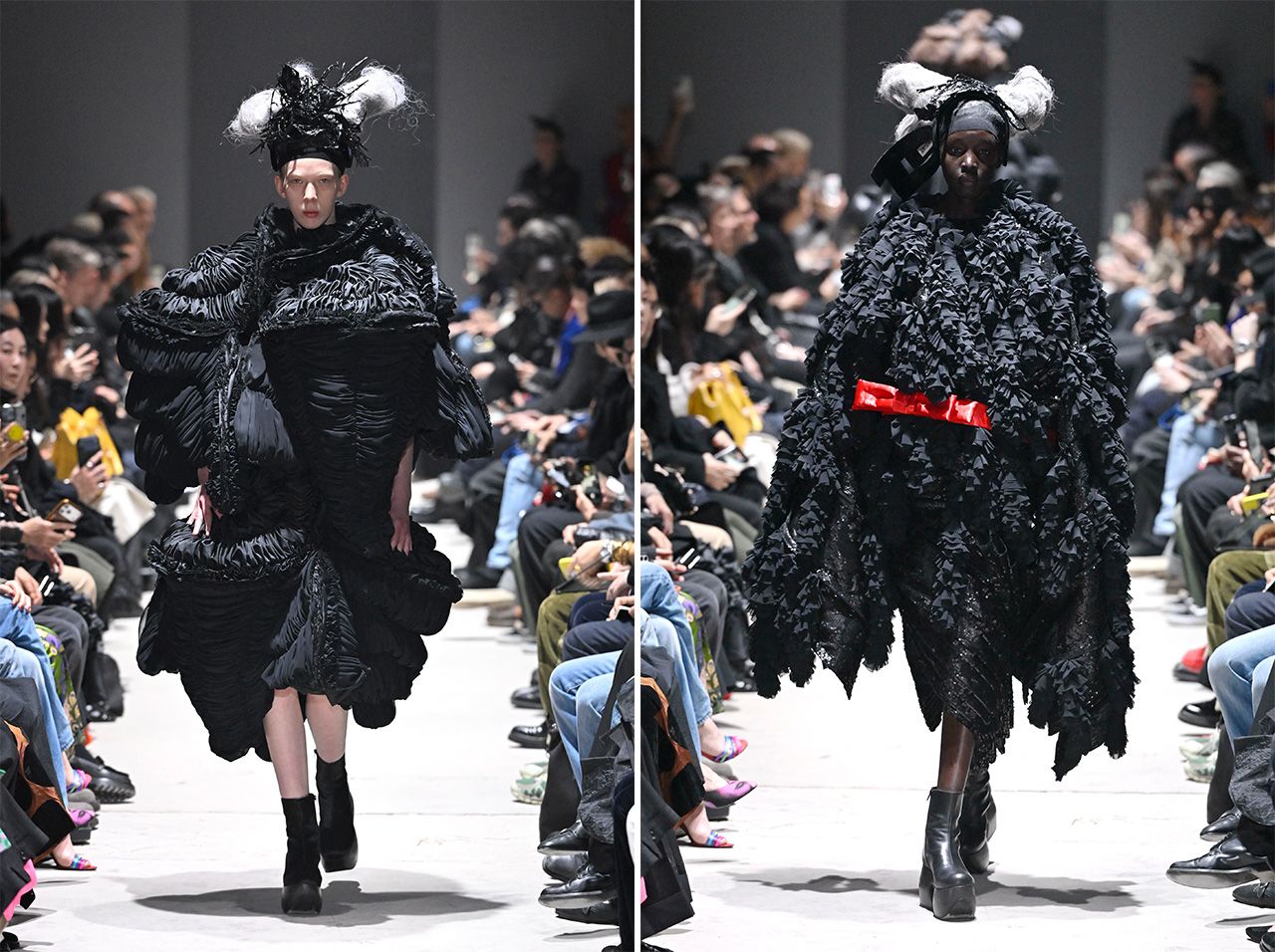
Kawakubo returned to her signature focus in her CdG autumn-winter 2026–27 collection with the theme “Ultimately Black.” (© Ōhara Hirokazu)
Freeing the Body and Clothing from Mutual Constraints
But Kawakubo did not stop there. Again and again she delivered designs that challenged convention and defied expectations.
The spring-summer 1992 CdG collection explored the theme of “Unfinished” with boldly exposed seams and frayed, trailing edges. In her spring-summer 1995 collection, Kawakubo challenged gender stereotypes (long before “genderless” became a watchword in Japanese fashion) with women’s apparel styled on men’s suits and school uniforms.
The spring-summer 1997 show, titled “Body Meets Dress, Dress Meets Body,” showcased women’s apparel in colorful gingham prints whose sweetness was deliberately negated by thick padding in unexpected areas. These “lumps and bumps” subverted long-established notions about clothing’s role in accentuating the “ideal” female silhouette.
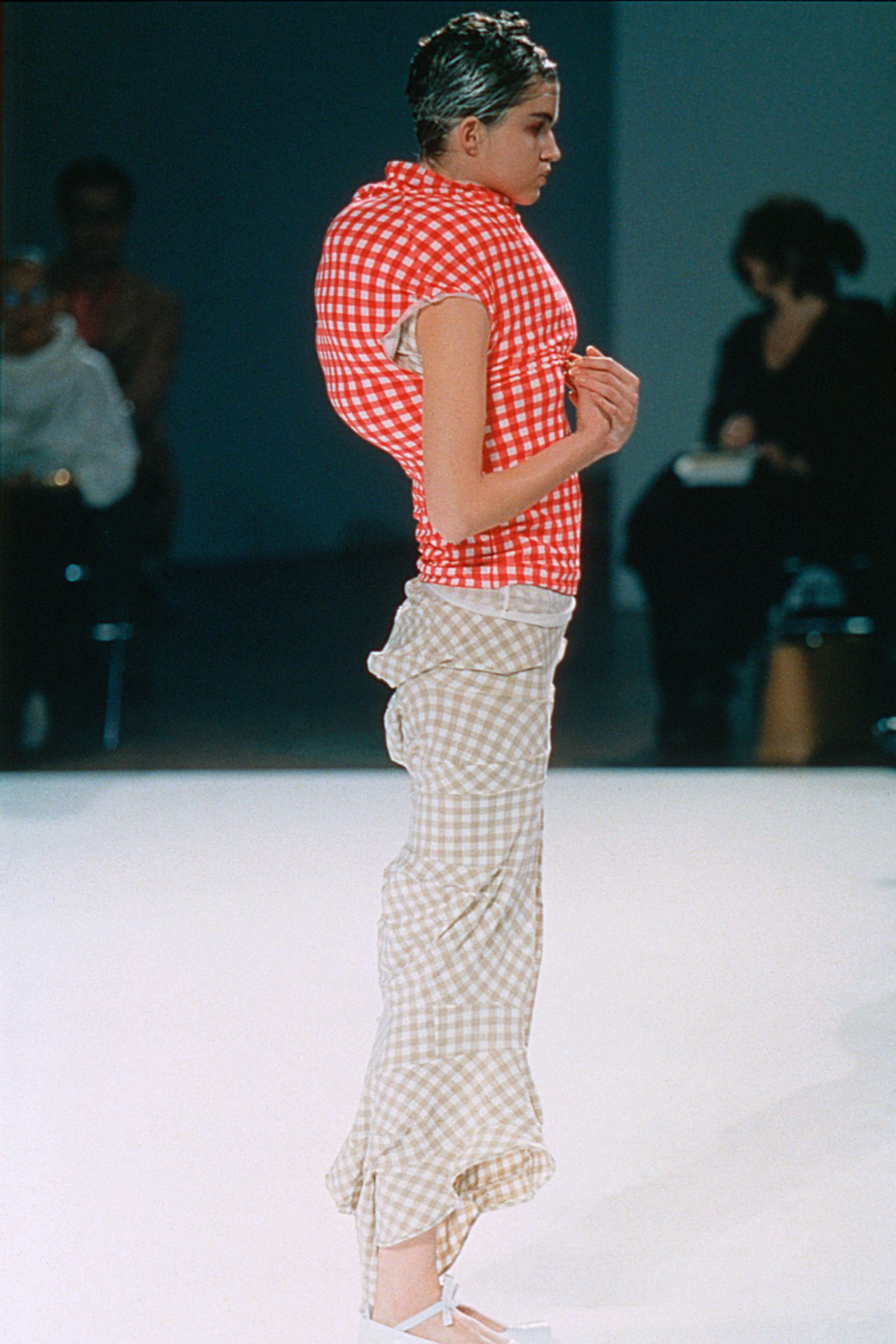
A piece from Kawakubo’s 1997 collection “Body Meets Dress, Dress Meets Body,” (Courtesy Comme des Garçons)
The initial reaction to the 1997 collection was shock. “When I first showed the pieces to non-production staff members in my own fashion house, they were all speechless,” Kawakubo later related. “I felt very alone as I begged them to ‘say something, anything.’” The anecdote epitomizes Kawakubo’s lonely but courageous nonconformism.
Meanwhile, the American dancer and choreographer Merce Cunningham was so struck by the collection that he invited Kawakubo to collaborate with him on a production titled Scenario (1997), and her fame spread. By freeing the body and clothing from the constraints they have traditionally imposed on one another, Kawakubo eventually altered our thinking about fashion and beauty.
The fall-winter 2001 collection, “Beyond Taboo,” played havoc with the traditional relationships between inner and outer, men and women, clothing and body, while reframing sex and eroticism with such creations as man-tailored jackets overlaid with brassieres and corsets. It was among the most blatant expressions of Kawakubo’s transgressive iconoclasm. More recently, CdG spearheaded the fashion for men’s skirts.
Throughout, Kawakubo has subverted the norms of Western fashion by manipulating, removing, and displacing the standard components of clothing—including its structure, fabric, fastenings, and even underlying concepts. She has also helped spearhead diversity on the runway, featuring not just tall, rail-thin young models but also pregnant and older women.
Innovations in Retailing
While developing her own men’s wear line under the CdG brand, Kawakubo has also nurtured talented in-house designers and encouraged them to participate in Paris Fashion Week under their own labels, including Junya Watanabe and Noir Kei Ninomiya. Altogether, Close to 20 distinct clothing lines operate under the aegis of CdG, including Play Comme des Garçons, a globally popular line of casual wear recognizable by its distinctive heart logo.
Even while managing her sprawling business empire, Kawakubo has remained its driving creative force, responsible for the design of its boutiques and even its direct mail as well as its clothing lines.
In 2004, CdG opened Dover Street Market in London. DSM is an innovative concept store that showcases work by fashion designers and other creators that CdG deems worthy of promotion, including many that have yet to make a name for themselves. It has since opened stores in other world capitals, including Paris, New York, and Tokyo’s Ginza, providing stimulating spaces that serve as regional hubs for innovation and creativity.
“I’m looking for a kind of chaos that gives rise to synergy and happy accidents and highlights the unique qualities of each work and each brand,” Kawakubo explained.
Other projects include a line of original CdG perfumes and a series of tote bags sporting images of the Beatles’ Apple Records logo. Kawakubo also pioneered the use of pop-up stores called “guerilla shops,” managed by people outside the fashion industry.
Erasing the Boundary Between Art and Fashion
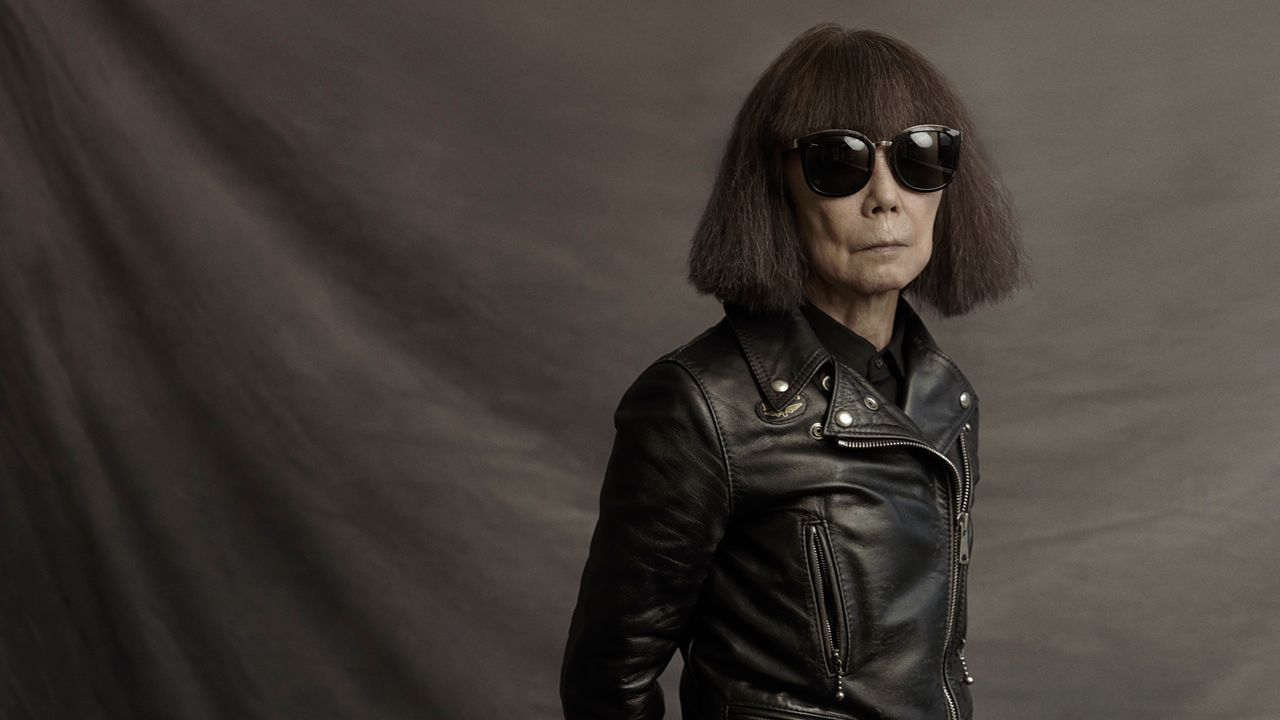
Kawakubo’s own appearance has barely changed over the years, with her bob haircut, neatly trimmed bangs, and chiseled face devoid of makeup. Each time I see her, I am struck by her austere, dignified beauty—and how well she wears her signature black leather jacket.
Her career has been one of bold and continuous innovation, apparent with each successive collection, and it has had a major impact on designers worldwide. She inspired the work of Belgian fashion designer Martin Mariela, who took the world by storm in the 1990s, and she was revered by such fashion luminaries as the late Alexander McQueen, John Galliano, and Marc Jacobs (the designer behind Louis Vuitton’s immensely successful ready-to-wear line of clothing).
A recent milestone in Kawakubo’s career was the memorable Comme des Garçons exhibition held by the Costume Institute of New York’s Metropolitan Museum of Art in 2017. Kawakubo is only the second living designer—after Yves Saint Laurent in 1983—to be honored with a solo exhibition at the Met. The decision was a testament not only to Kawakubo’s lifetime achievement in the world of fashion, going back to the 1980s, but also to her artistic creativity, which has blurred the boundary between fashion and fine art. Another recent highlight was her work designing the costumes for the Vienna State Opera’s production of Olga Neuwirth’s Orlando in 2019.
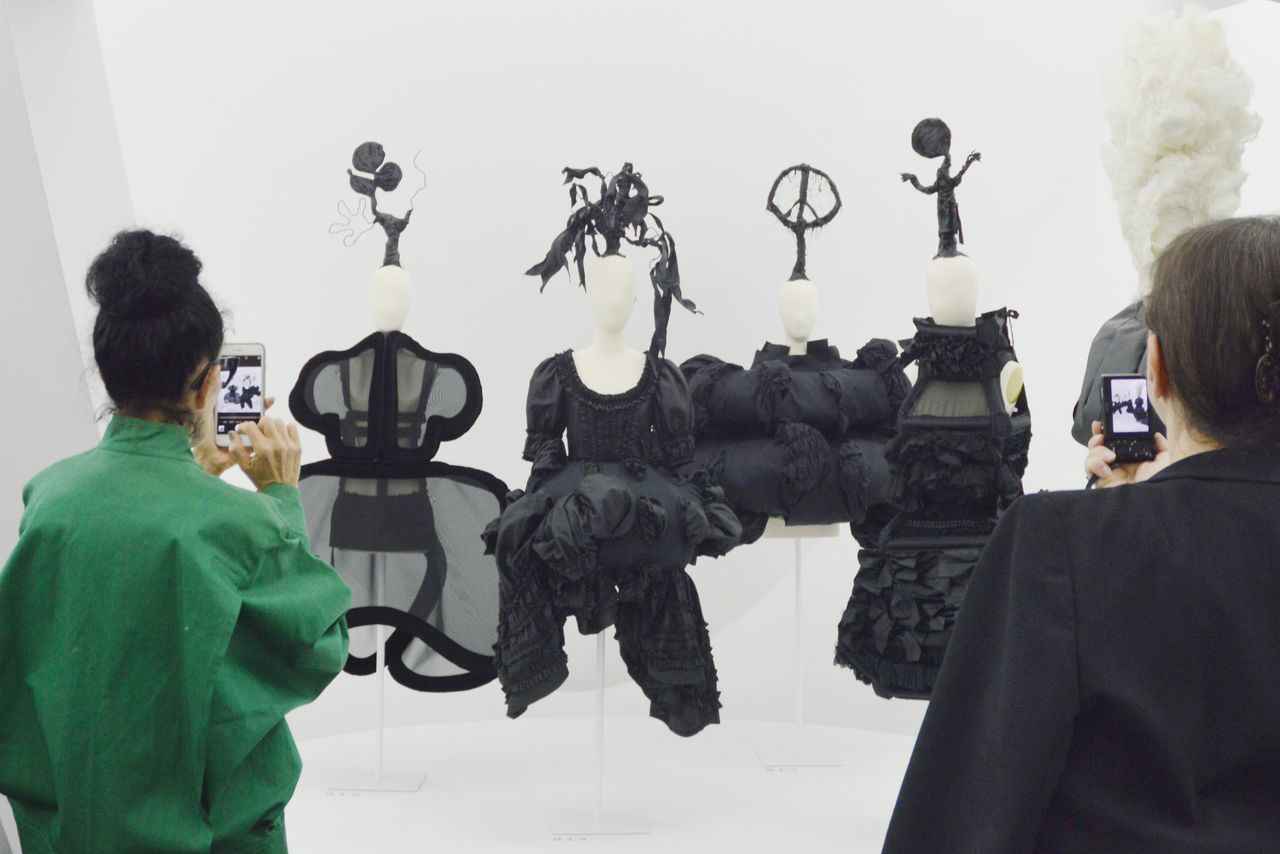
A scene from the media preview of the Comme de Garçons exhibition at the Metropolitan Museum of Art, May 1, 2017. (©Jiji)
Sending a Powerful Antiwar Message
Kawakubo is known for using fashion to speak out on social issues. From the start, her creativity was driven by indignation and anger toward society’s injustices and senseless constraints. “I try to channel my anger into the creation of things that can hopefully energize someone else,” she has said.
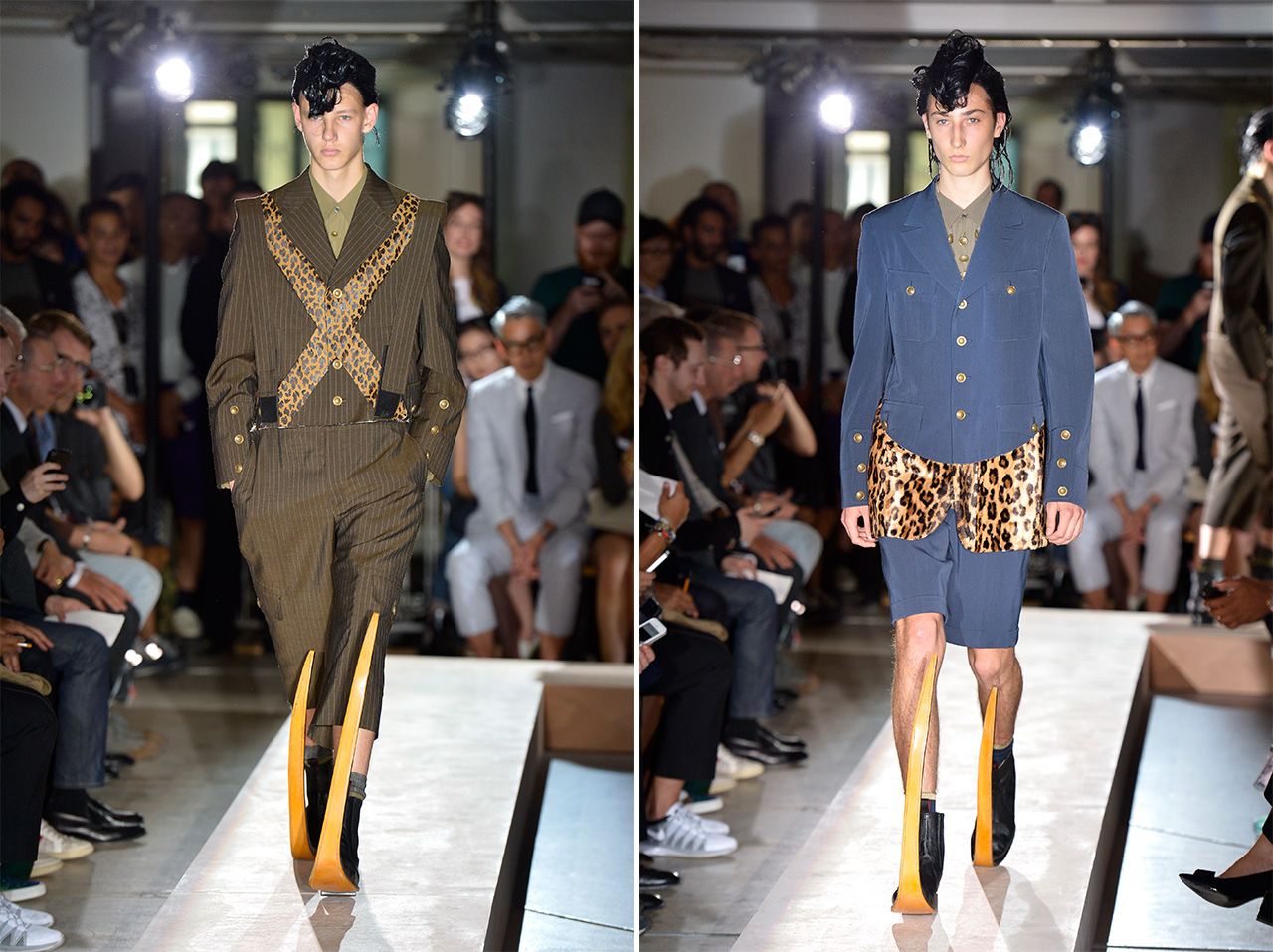
Kawakubo’s 2015 spring-summer collection featured pieces expressing her disdain of war. (© Ōhara Hirokazu)
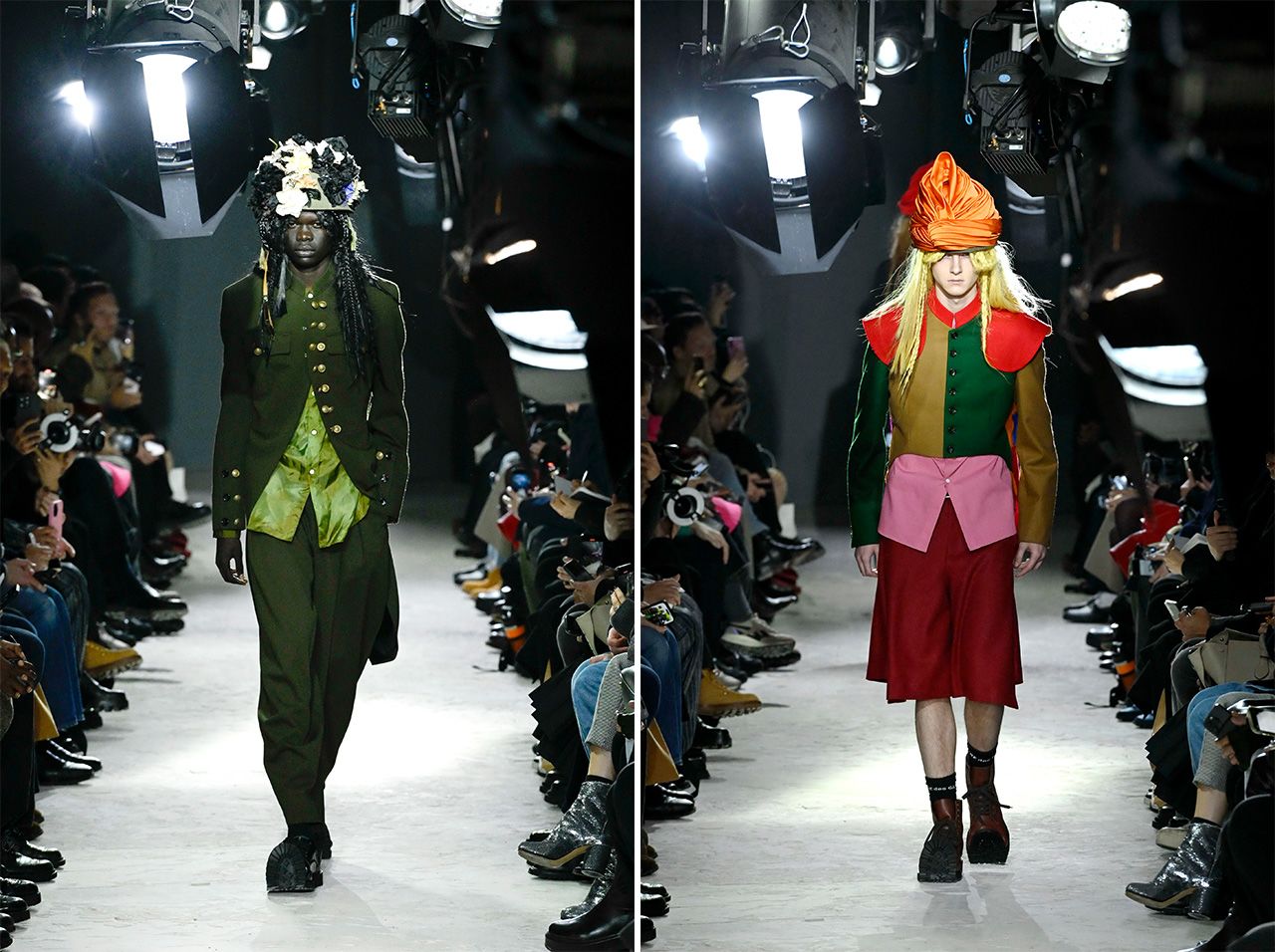
Reiterating her antiwar stance, Kawakubo bluntly titled her 2025–26 fall-winter collection “To hell with war.” (© Ōhara Hirokazu)
In 2015, Kawakubo designed her spring-summer men’s collection (Comme des Garçons Homme Plus) around an antiwar “soldier of peace” theme, deconstructing military uniforms and subverting them with incongruous elements, such as leopard prints and punk motifs. The collection also reiterated the brand’s core philosophy of “wear your freedom.” In a comment, the designer explained, “I think that people become strong when everyone is free, not by arming themselves with weapons.” Since Russia’s invasion of Ukraine in February 2022, Kawakubo has once again incorporated a powerful antiwar message in her collections.
Now in her eighties, Kawakubo Rei remains true to the youth and vigor of her brand name, distinguishing herself as one of those rare designers who never stops challenging herself and others. If, as she has said, the goal is “to be always new and powerful, to stir people’s hearts, and to keep moving forward,” she has surely achieved her aim.
(Originally published in Japanese. Banner photo: Fashion designer and entrepreneur Kawakubo Rei. Courtesy of Comme des Garçons/Photo by Tominaga Yoshie.)