
Living with the Reality of Dementia
Back from the Depths: Dementia Caregivers Saved by Family Support Systems
Health Family Society
Mitsuhashi Yoshihiro
Director of the Ninchishō no Hito to Kazoku no Kai (Alzheimer’s Association Japan) and vice chair of Hoshi no Kai, a support group for families of people with young-onset dementia. Born in 1953. Experienced in caring for his wife with young-onset dementia and elderly parents while working. Delivers lectures and shares caregiving experiences nationwide to support families in similar situations.
- English
- 日本語
- 简体字
- 繁體字
- Français
- Español
- العربية
- Русский
Fear About the Future
Mitsuhashi Yoshihiro speaks gently, with a kind look on his face. Nothing about his manner suggests his deep knowledge of the pain of a caregiver’s life. In truth, though, he struggled under the enormous burden of caring for his wife and parents while holding down a job.
He met his wife, Yoshie in 1972, at the age of 19. He spotted her working at the next food counter on the gourmet floor of a department store, and it was love at first sight. They were married at 23. They were a close pair, spending their weekends taking trips, enjoying dinners, and watching movies. Yoshihiro started his own stationery business in Yokohama and Yoshie helped out by keeping the books and packing boxes.
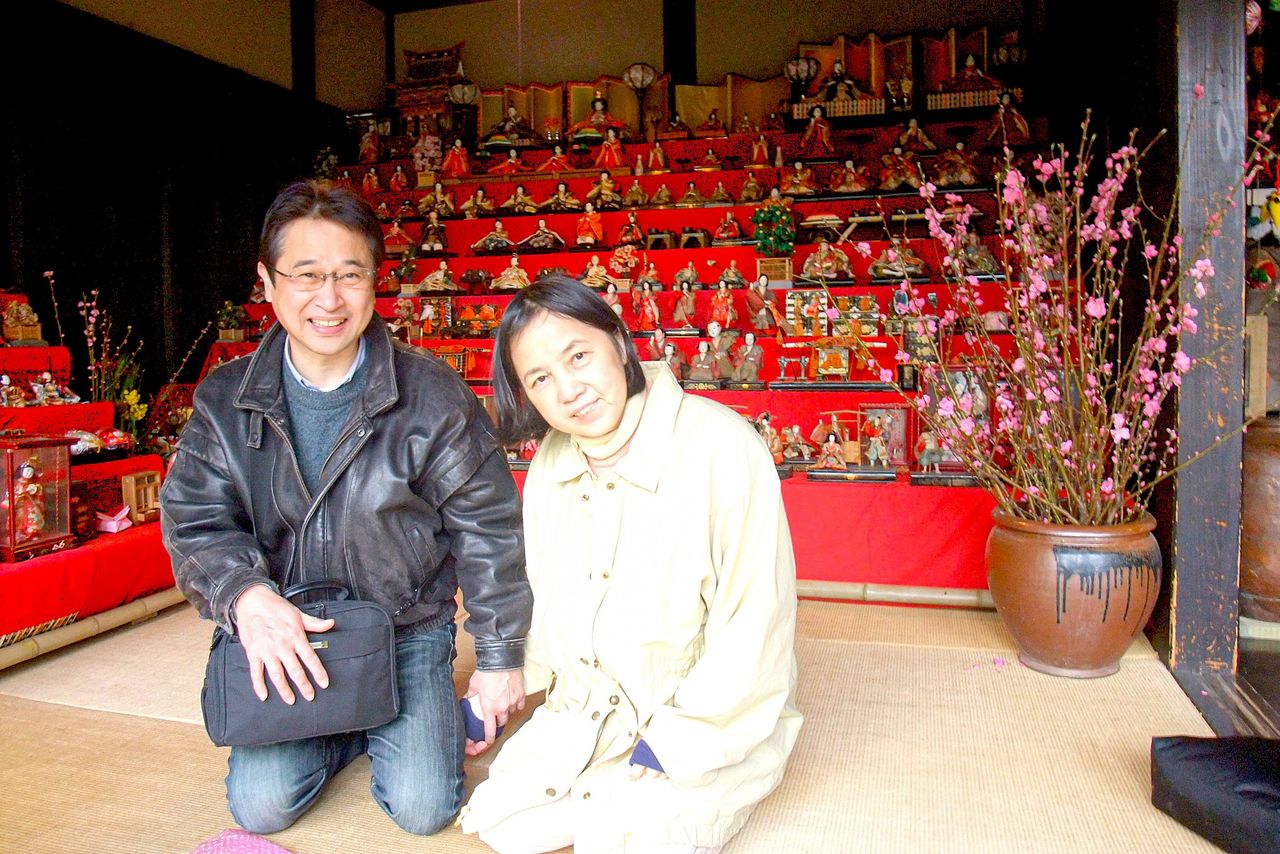
The Mitsuhashis at a doll festival event on a rare trip away from Yoshie’s hospital. Photographed on March 3, 2011. (© Mitsuhashi Yoshihiro)
Then, around 1997, Yoshie suddenly began suffering from headaches and nausea. She was initially diagnosed with depression, but her condition showed no signs of improvement with treatment. The couple bounced from one medical institution to another, until in 2005, Yoshie was diagnosed with early-onset Alzheimer’s disease. She was then 52. The first changes in her behavior were small—simple actions like buying large quantities of the same food, filling the refrigerator with things like nattō—but eventually her condition began deteriorating rapidly.
Yoshie began showering her husband with abuse or suddenly waking in the wee hours of the morning and striking him suddenly. She had been a kind, loving wife, but Yoshihiro says, “It was like she became someone else and couldn’t do the things she used to. I began to wonder, what next?” Yoshihiro was filled with anxiety for their future.
When Yoshihiro went out on sales rounds by car for his company, he says “I would end up with about a hundred missed calls from her on my phone.” One time, his mother, who lived with them, called to say she had heard a terrible sound from the second floor. He rushed home to find their bed disassembled, the television fallen over, and the wallpaper shredded. It even looked like Yoshie had dropped a chair from a second floor window. It was lying in the garden in pieces.
Days of Chaos
Later, he came to understand that Yoshie had her own reasons for her behavior. Thinking that constant telephoning and the destructive outbursts were caused by loneliness in his absence and her feelings of dependence, he began taking her with him on his sales rounds. Her attacks in the middle of the night, he says, were her attempts to defend herself after waking up to find a strange man next to her in bed.
But at the time, he was so overcome just trying to deal with the days of chaos that he had no capacity to consider these issues. And then came the wandering. “She strayed into the highway next to our house. Someone called the police and they found her in the middle of traffic.” Once, she even wandered onto the train tracks and a train had to be stopped.
In 2008, after three years of no improvements in her condition, Yoshihiro was diagnosed with social anxiety disorder himself, and became unable to continue his sales work. He reveals, “I started to think about dying with my wife.”
In 2010, Yoshie was judged to be at a nursing care level of five, the highest on Japan’s five-point scale. She was far beyond the limits of home care, and finally she was admitted to a specialist hospital for dementia patients. At around that same time, Yoshihiro’s parents were also unfortunately diagnosed with dementia, meaning that he had to be responsible for the care of three people at once.
Finding Family Support
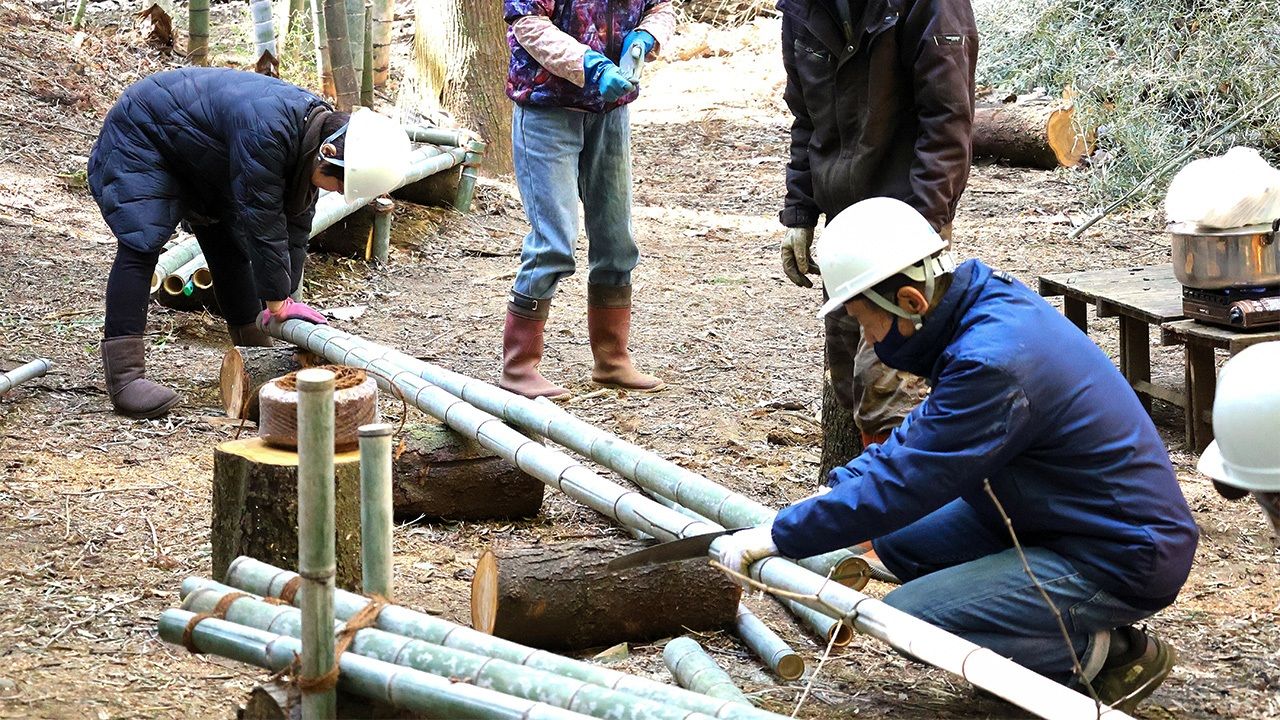
In April 2008, Yoshihiro was at his limits. Clutching at straws, he decided to attend a meetup of the national association Ninchishō no Hito to Kazoku no Kai (Alzheimer’s Association Japan). He had become a member two years earlier, but always hesitated to join in any actual events. When he finally worked up the courage to attend an event, he still dithered for nearly an hour at a nearby park before joining in.
Once he arrived at the gathering, he introduced himself to the others and, as he discussed how his beloved wife had changed over the course of her illness and how he had struggled with her care, he broke into tears. And even as he spoke, his phone rang with repeated calls from his wife. After he had bared everything, the other attendees comforted him, saying they understood the weight of his burden.
He also got helpful advice. Someone reminded him that his wife’s true self had not changed, but that the disease had changed how she acted, so he shouldn’t be angry. He was able to accept the words as coming from people with similar experience, not disinterested outsiders. He found himself able to open up about worries with them that he couldn’t with others, like dealing with his wife’s bodily functions.
The daily exhaustion of caring for her had removed the fun from life and caused him to forget how to laugh, but at the Kazokukai events he was surprised to see some of his fellow carers roaring with laughter despite their ongoing hardship. The chains around his heart began to loosen.
Isolation and Violence
As Japan’s society ages and nuclear families become the norm, cases of the elderly caring for the elderly, or of a single child caring for his or her parents, are more and more common. All of this leads to greater isolation and loneliness. Yoshihiro had convinced himself that no one else understood the pain and misery of his situation, but the Kazokukai showed him that was not the case.
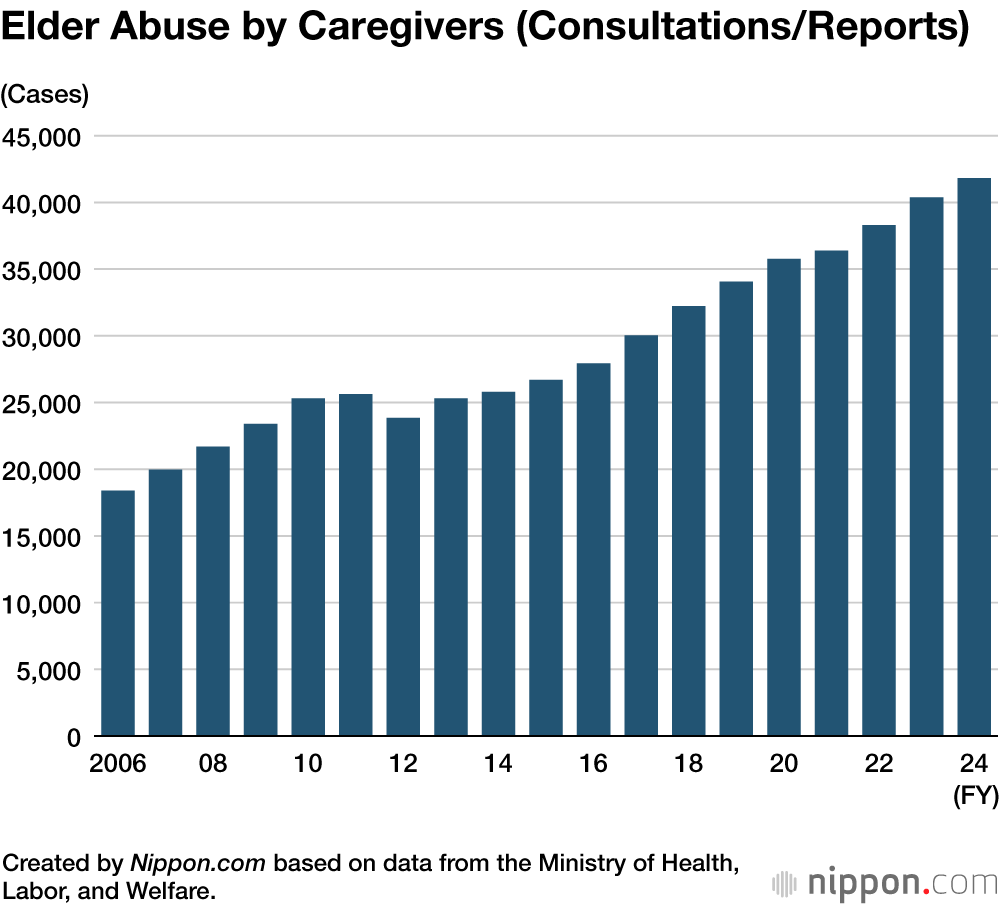
Caregiver isolation is a great source of stress and can lead to violence. According to a Ministry of Health, Labor, and Welfare survey, fiscal 2024 saw 41,814 consultations/reports regarding elder abuse at the hands of caregivers. The number has risen every year for the past 12 years, and is now at its highest since the survey began in 2006. There have been 26 fatalities in that time, as well.
In one 2024 case, a 71-year-old woman in Kunitachi, Tokyo killed her 102-year-old mother after an extended period of care. In court, she stated, “I was alone and I couldn’t think of anyone who could help, so I felt there was no way out.”
Some members of the Kazokukai revealed that they themselves had committed violence against the dementia patients they cared for, such as by throwing an ashtray at them. Most of the perpetrators are men. They often have an excessively strong sense of responsibility and can at times try too hard, missing the mark in terms of the care that is actually needed. Yoshihiro says, “They get angry at the fact that no matter how hard they try, nothing gets better.”
When he heard the experiences of others in his situation, he compared them to what he had been through. It was this, he says, that inspired him to redouble his efforts to avoid raising his hands against his own wife.
Mutual Support
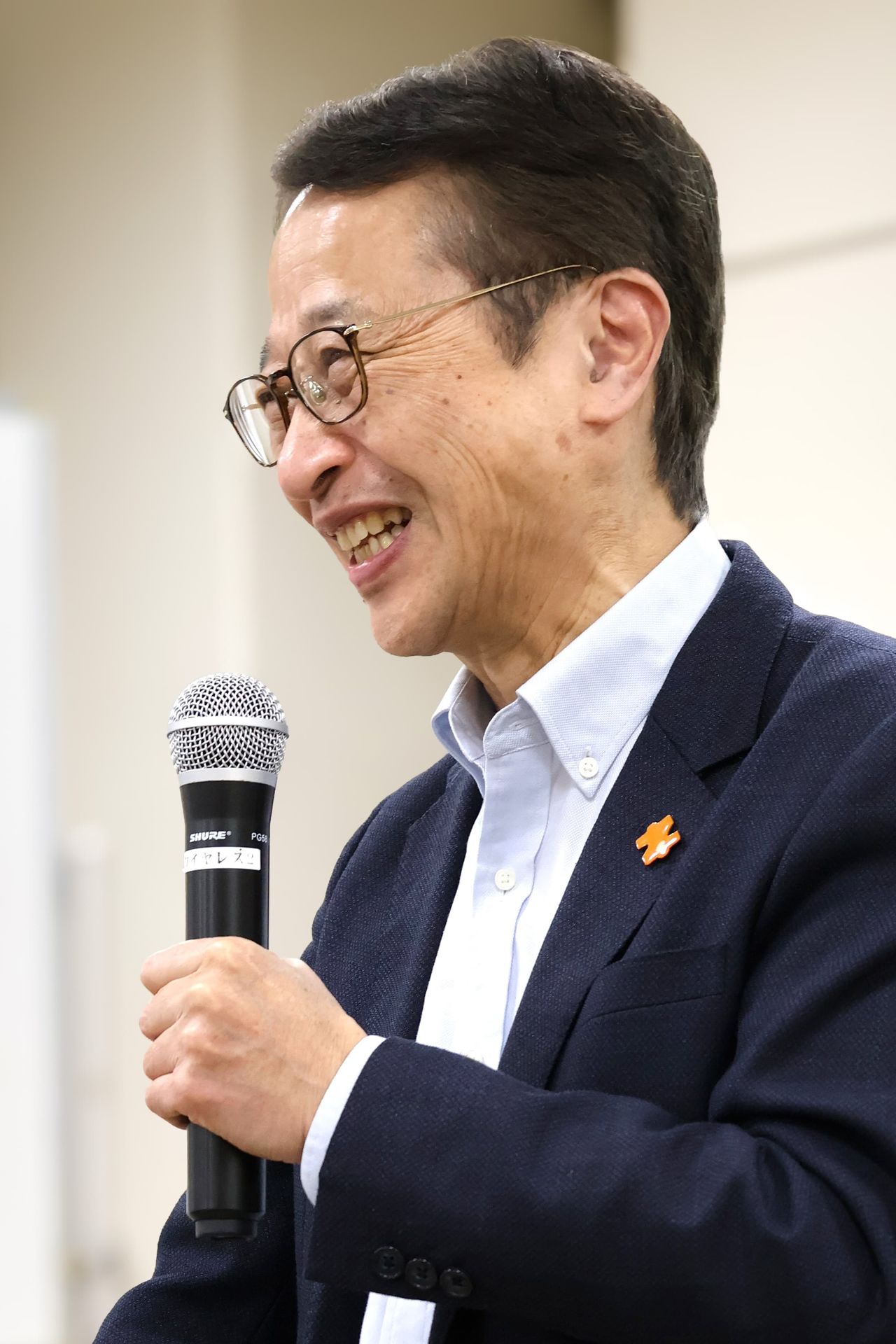
“It’s impossible to care for someone on your own. Everyone needs help,” says Mitsuhashi. (© Mochida Jōji)
Many people who attend the meetings go home with a sense of relief after opening up and getting some understanding from others. Of course, they then have to return to the difficulties of daily life. But as they go through a repeated cycle of soothing and despair, Mitsuhashi says, “The highs and lows even out, and you become able to accept the care role.”
Mitsuhashi Yoshie passed away in 2025 at the age of 72. She lived with her illness for a total of 28 years, including the time before her official diagnosis. Yoshihiro looks back on those years and says he was able to make it through only with the support of the Kazokukai, his neighborhood association, and friends. Now, he seeks to repay that debt to the Kazokukai by serving as a director and vice representative of the Kanagawa Prefecture branch. He travels nationwide speaking about his own experiences and the values of the association.
The Kazokukai is sometimes criticized as a place good for little more than “the wounded soothing each other’s pain,” but Mitsuhashi responds that the association shows caregivers something more important: “You aren’t alone. There is always someone at the Kazokukai who will understand you and support you. If you find a circle of support, it gives you a chance to try just a little more, to take one more step.”
(Originally published in Japanese. Banner photo: Mitsuhashi Yoshihiro speaking at a lecture in Yokohama. © Mochida Jōji.)