
Japanese Literature in the Twentieth Century: A Shōwa Retrospective
The Rise of Popular Fiction: Japanese Books in the 1970s and 1980s
Books Culture Society- English
- 日本語
- 简体字
- 繁體字
- Français
- Español
- العربية
- Русский
The fifth and final part of a series on Japanese literature in the Shōwa era (1926–89) looks at books written from 1973 to 1989. As Japan’s economy boomed, and the country became a global player, readers enjoyed a number of entertaining blockbusters. The period also saw the emergence of Murakami Haruki, who would go on to become Japanese fiction’s first global megastar.
Japan Sinks by Komatsu Sakyō
Komatsu Sakyō (1931–2011) made his writing debut in 1961 and went on to be a prolific science fiction author. His 1973 novel Japan Sinks became a publishing phenomenon, ultimately selling more than 4 million copies.
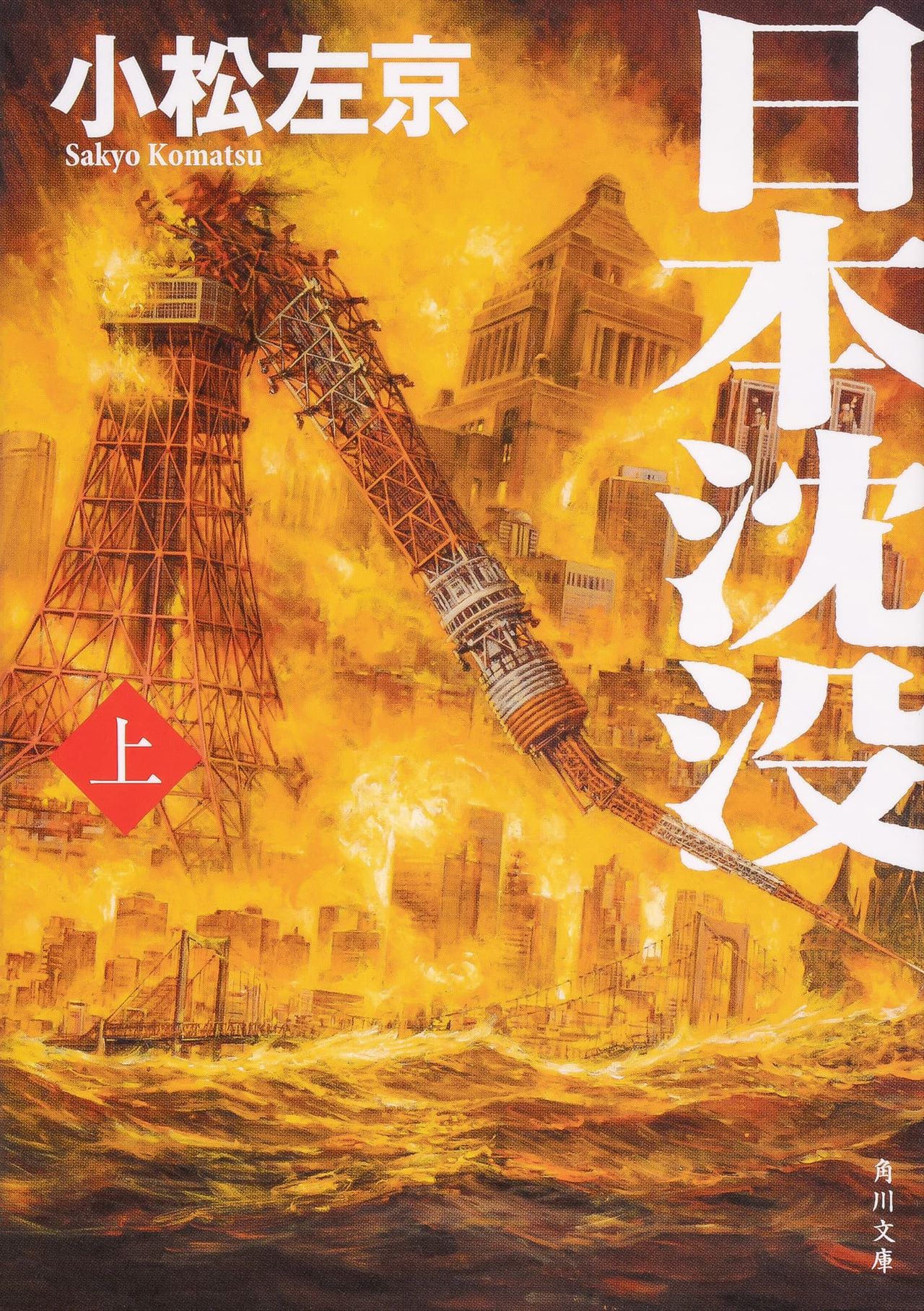
A Japanese edition of Nihon chinbotsu (Japan Sinks) by Komatsu Sakyō. (© Kadokawa)
The story has a grounding in volcanological and seismological knowledge that has not gone out of date. When an uninhabited island in the Ogasawara chain sinks overnight, Onodera, the captain of a deep-sea submarine, gets together with a maverick geophysicist, Professor Tadokoro, and sets out to explore the depths of the Japan Trench to find out what is happening.
Before long, the Japanese archipelago is rocked by a series of colossal earthquakes and volcanic eruptions. A major tremor devastates much of Tokyo, and then Mount Fuji erupts. It becomes clear that the entire island chain is sinking into the sea, and the government begins secret negotiations with Australia and other countries to evacuate its citizens.
Komatsu later wrote about his motivations, saying, “I felt that the Japanese had become intoxicated as a result of rapid economic growth; infatuated with the idea of getting rich. During the war, Japan had supposedly been prepared to fight to the death, ready to sacrifice everything, but now it had all been forgotten. I found a chaos of thoughts and feelings whirling around in my head as to what it really meant for Japan to stand shoulder to shoulder with the rest of the world.”
Komatsu was 14 in 1945, when World War II ended. He was living in Nishinomiya, Hyōgo Prefecture, which was reduced to rubble in bombing raids that year. His novel has an appeal that transcends the genre of science fiction, with compelling reading throughout, leading up to the grand destructive spectacle of the title. It imagines how people would act in a large-scale catastrophe and how other countries would react in such a situation. It is fascinating to consider these desperate circumstances, and natural disasters remain a threat to Japan today.
- Nihon chinbotsu is translated as Japan Sinks by Michael Gallagher.
Proof of the Man by Morimura Seiichi
Using adaptations to maximize impact is standard practice today, but the 1976 novel Proof of the Man by Morimura Seiichi (1933–2023) was a major pioneer of this practice in Japan. The book, film, and associated music combined to propel the work into the public consciousness, leading to big audiences at movie theaters and making the original novel a bestseller. (The book does not have an English translation, but the film bears the English title Proof of the Man).
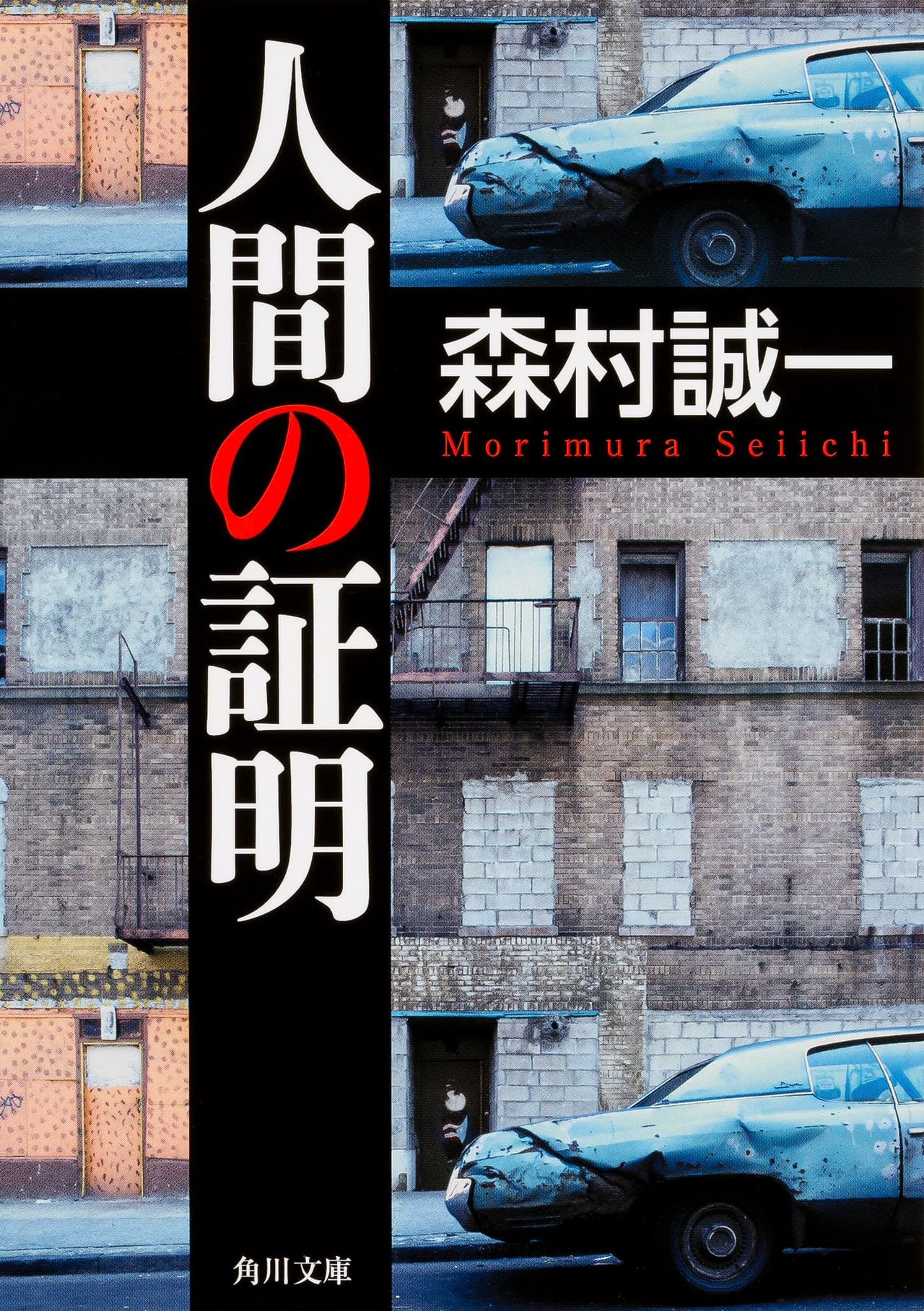
A Japanese edition of Ningen no shōmei by Morimura Seiichi. (© Kadokawa)
A line of dialogue from the movie that became a well-known phrase—“Mama, do you remember the old straw hat you gave to me?”—derives from a poem by Saijō Yaso, and is an important motif in the novel. The film stars Matsuda Yūsaku, Okada Mariko, and US actor George Kennedy, while Joe Yamanaka’s theme song became a major hit.
The body of a black man with a knife in his chest is found in an elevator that has stopped at the forty-second-floor dining room of a luxury Tokyo hotel. That night, he boarded a taxi in a deserted park nearby and made his own way to the hotel before his death. An old straw hat is discovered in the park, and a woman is found to have left at the same time as the man.
Using his passport, the investigators learn that the man was the resident of a New York slum. They struggle to understand why he came to Japan and headed for the top floor of the hotel. The novel’s characters have dark pasts and tragic destinies
Metamorphosis by Watanabe Jun’ichi
There were once several literary bars in Ginza, where famous authors gathered night after night. Watanabe Jun’ichi (1933–2014), who strolled through the area in a stylish kimono, was one of the last of these writers.
Watanabe was born in Hokkaidō. After graduating from Sapporo Medical University, he was employed as a heart surgeon at the university hospital, while contributing work to local literary magazines. In 1969, he voiced doubts about a heart transplant performed by a professor at the hospital and resigned. He moved to Tokyo and began his career as an author.
At first, he wrote a number of medically themed novels before pivoting to adult romance stories set in Ginza and Kyoto. In the works he continued to write until his death, he had an unflagging interest in sexual love between men and woman. This reached its culmination in his 1997 novel A Lost Paradise, which became a huge bestseller.
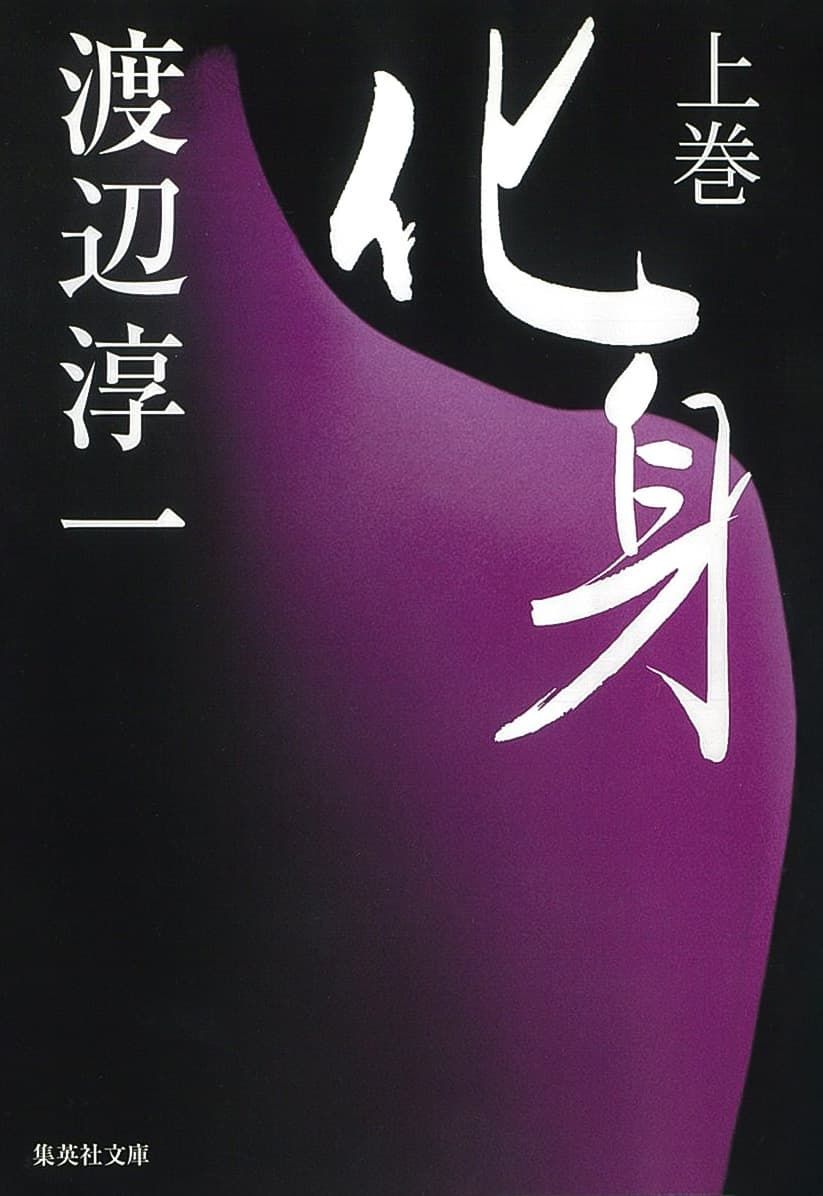
A Japanese edition of Keshin by Watanabe Jun’ichi. (© Shūeisha)
His 1986 book Metamorphosis tells the story of Akiba, a divorced literary critic approaching 50, and Kiriko, a 23-year-old club hostess. (It has not been translated, and the English title here comes from the film adaptation).
Kiriko, newly arrived in Ginza from Hokkaidō, dresses like a provincial office worker, but Akiba sees her unpolished beauty and resolves to shape her into his ideal woman. He helps her to become sophisticated and awakens her to sexual pleasure.
The book is worth reading for its depiction of Kiriko’s transformation and the differences between male and female sexuality from Akiba’s perspective. Worried about their age gap, Akiba is hesitant to marry Kiriko, and she begins to think about striking her own path.
Metamorphosis was written when Watanabe was at the height of his powers. The author was known for his Ginza romances, and had a gentle, broad-minded nature, with a charm that drew both men and women to him. I believe he based the character Akiba on himself. Watanabe remained a leading writer through the twentieth century and into the twenty-first.
- Shitsurakuen is translated as A Lost Paradise by Juliet Winters Carpenter.
“The Last Flight Home” and “All the Way to Kyoto” by Hayashi Mariko
Among today’s popular authors who are also respected for their literary skills, there is nobody quite like Hayashi Mariko, who was born in 1954. She started out as a copywriter, but after she wrote a bestselling essay collection, she switched to a career as a novelist. In 1986, she won the Naoki Prize for her short stories “The Last Flight Home” and “All the Way to Kyoto.”
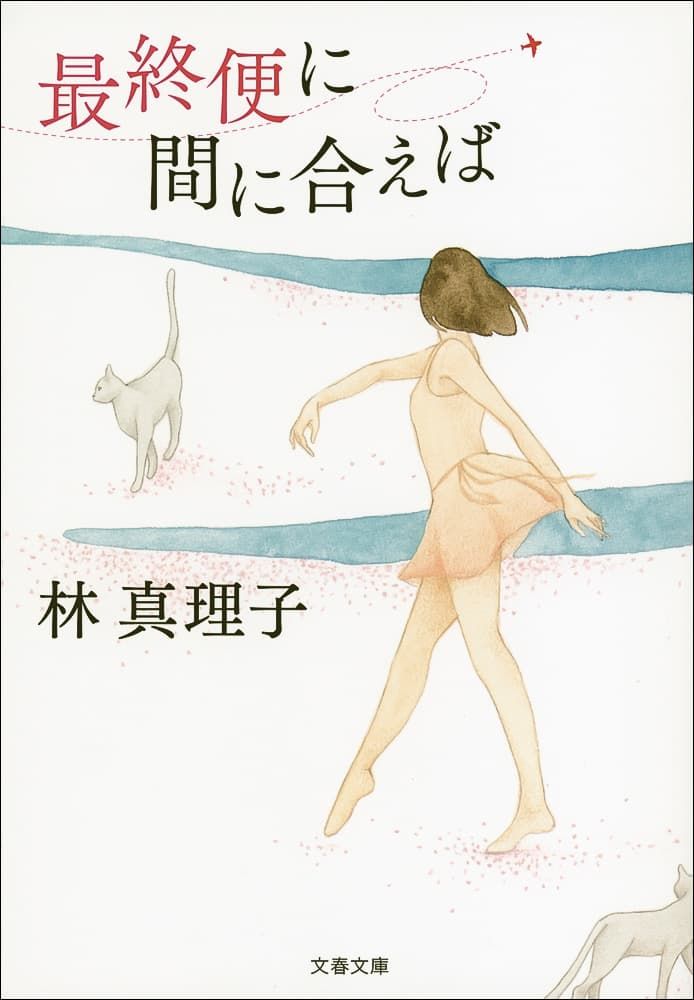
A Japanese edition of Saishūbin ni ma ni aeba (The Last Flight Home), a collection including the title story and “All the Way to Kyoto” by Hayashi Mariko. (© Bungeishunjū)
The main character of “The Last Flight Home” is a single career woman who is building her name as an up-and-coming designer of artificial flowers. During a work trip to Sapporo, she meets up with a man who she once had a close relationship with before he split up with her. After dinner together, he holds her hand in the taxi to the airport. She feels superior as he tries to win her over, but will she make the last flight?
Meanwhile, the protagonist of “All the Way to Kyoto” is an expert freelance editor. She has had romantic experiences, but now she enjoys an indulgent, satisfying life with her female friends in the industry. Then, through her work, she falls into a sweet intimacy with a younger man living in Kyoto, and meets up each time she is on business in the area. However, her feelings turn out to be based on a misunderstanding.
In her characters Hayashi frankly portrays women’s various sides, including their desire for luxury and sophisticated lifestyles, their wish to be seen as beautiful by men, and their jealousy of other women. With reference to the day’s fashions and a consciously popular style, she achieves a realism that fascinates readers.
Hayashi’s talents as a writer extend beyond fiction to historical works, biography, and social issues. An editor who knows her well comments: “She was shy when young, but full of curiosity, and she tested herself in many genres. What makes her extraordinary and keeps her at the cutting edge is her relentless urge to do better.”
- Saishūbin ni ma ni aeba is translated as The Last Flight Home by Giles Murray. (This exists only as a text for Japanese students of English).
A Wild Sheep Chase by Murakami Haruki
Murakami Haruki, born in 1949, was one of the top writers of the final chapter of Japan’s twentieth century. His works have appeared in translation across the globe, and he is touted for the Nobel Prize every year, but perhaps, like many of his characters, he only feels like sighing at the expectations and noise that surround him.
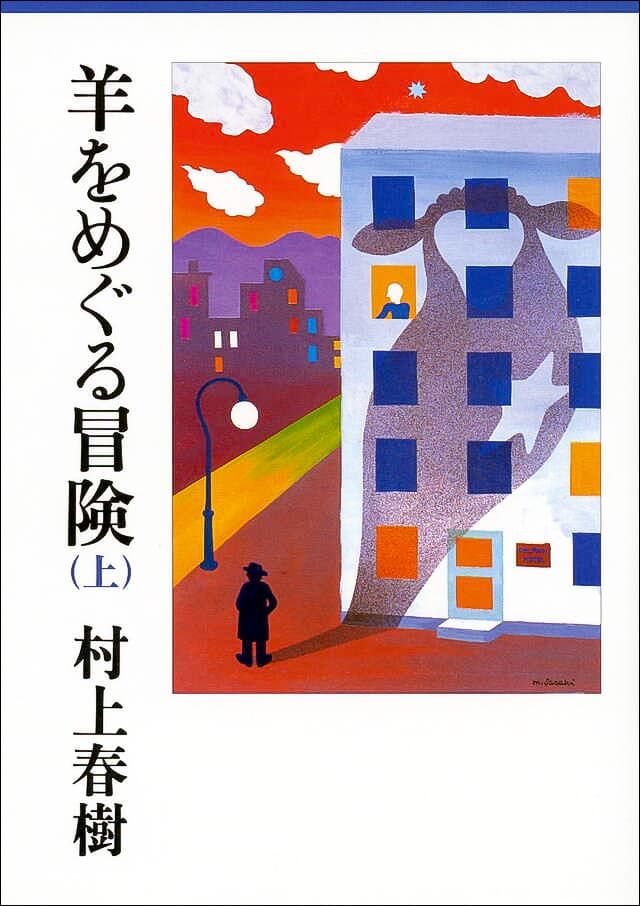
A Japanese edition of Hitsuji o meguru bōken (A Wild Sheep Chase) by Murakami Haruki. (© Kōdansha)
After Murakami graduated from Waseda University, his 1979 novella Hear the Wind Sing and the following year’s Pinball, 1973 were both nominated for the Akutagawa Prize. They center on the narrator and his friend Rat, the son of a wealthy family who he gets to know at J’s Bar in his seaside hometown. With the 1982 novel A Wild Sheep Chase, which continues their story, Murakami came to wider attention.
Reading the earlier works first makes for a more satisfying experience. In Hear the Wind Sing, the narrator, now in the last year of his twenties, remembers spending the summer of 1970 with Rat, and looks back on his upbringing and encounters with girls.
Pinball, 1973 alternates between the narrator’s and Rat’s stories. The narrator is living with twin sisters and has started a small translation company with a friend. Meanwhile, Rat passes idle days, spending all his time at J’s Bar. One day, the narrator remembers getting excited over games of pinball and becomes obsessed with tracking down a rare, discontinued machine.
By the time of A Wild Sheep Chase, the narrator has branched out from translation into advertising, and his casual use of a photo of a Hokkaidō sheep farm on the cover of a PR magazine embroils him in a complex adventure. The narrator is divorced after his wife had an affair, and he now has a 21-year-old girlfriend, who is an ear model (with “perfect ears”), a part-time proofreader, and a high-class call girl.
The secretary of a prominent, right-wing figure (the Boss), who is dying, demands that the narrator find a sheep in the picture that has a star-shaped mark on its back. This animal is connected to the immense power the Boss has over the underworld. Rat had originally sent the photo to the narrator. Did he know the sheep’s secret? The narrator and the woman with perfect ears set off in search of this special beast.
Murakami strikes gold in the novel format with A Wild Sheep Chase. In subsequent books like Hard-Boiled Wonderland and the End of the World and The Wind-Up Bird Chronicle, he writes in parallel about real and unreal worlds before bringing them to interlock together, like revealing a secret. This development works like a mystery story to capture readers’ attention.
As Japan’s Shōwa era approached its close in 1989, some people were caught up in the delirium of the bubble economy, while other wanted to distance themselves from it. I think Murakami was in the latter group, and his readers were in sympathy with this attitude that came through in his work. He later recalled, “I had my own stories I wanted to write, and the personal style I wanted to use. I just had to find the strength and keep writing.” He has remained a leading author in the decades since.
- Hitsuji o meguru bōken is translated as A Wild Sheep Chase by Alfred Birnbaum.
- Kaze no uta o kike and 1973 nen no pinbōru are translated as Hear the Wind Sing and Pinball, 1973, respectively, by Ted Goossen in the edition Wind/Pinball: Two Novels.
- Sekai no owari to hādoboirudo wandārando is translated as Hard-Boiled Wonderland and the End of the World by Alfred Birnbaum.
- Nejimakidori kuronikuru is translated as The Wind-Up Bird Chronicle by Jay Rubin.
Selected Japanese Literature (1973–89)
- Japan Sinks by Komatsu Sakyō, translated by Michael Gallagher from Nihon chinbotsu (1973)
- Ningen no shōmei (Proof of the Man) by Morimura Seiichi (no English translation) (1976)
- Almost Transparent Blue by Murakami Ryū, translated by Nancy Andrew from Kagirinaku tōmei ni chikai burū (1976)
- Kirikirijin (The People of Kirikiri) by Inoue Hisashi (no English translation) (1981)
- Totto-Chan: The Little Girl at the Window by Kuroyanagi Tetsuko, translated by Dorothy Britton from Madogiwa no Totto-chan (1981)
- A Wild Sheep Chase by Murakami Haruki, translated by Alfred Birnbaum from Hitsuji o meguru bōken (1982)
- The Last Flight Home by Hayashi Mariko, translated by Giles Murray from Saishūbin ni ma ni aeba (1985)
- Keshin (Metamorphosis) by Watanabe Jun’ichi (no English translation) (1986)
- Salad Anniversary by Tawara Machi, translated by Juliet Winters Carpenter from Sarada kinenbi (1987)
- Norwegian Wood by Murakami Haruki, translated by Jay Rubin from Noruwei no mori (1987)
(Originally published in Japanese on December 12, 2025. Banner photo: From left: Watanabe Jun’ichi [© Kyōdō], Murakami Haruki [© AFP/Jiji], Hayashi Mariko [© Jiji].)