Building Blocks: The Basic Ingredients Behind Japan’s Flavors
Renkon: A Unique Japanese Vegetable with an Auspicious New Year Role
Food and Drink Lifestyle Culture- English
- 日本語
- 简体字
- 繁體字
- Français
- Español
- العربية
- Русский
Stems Not Roots
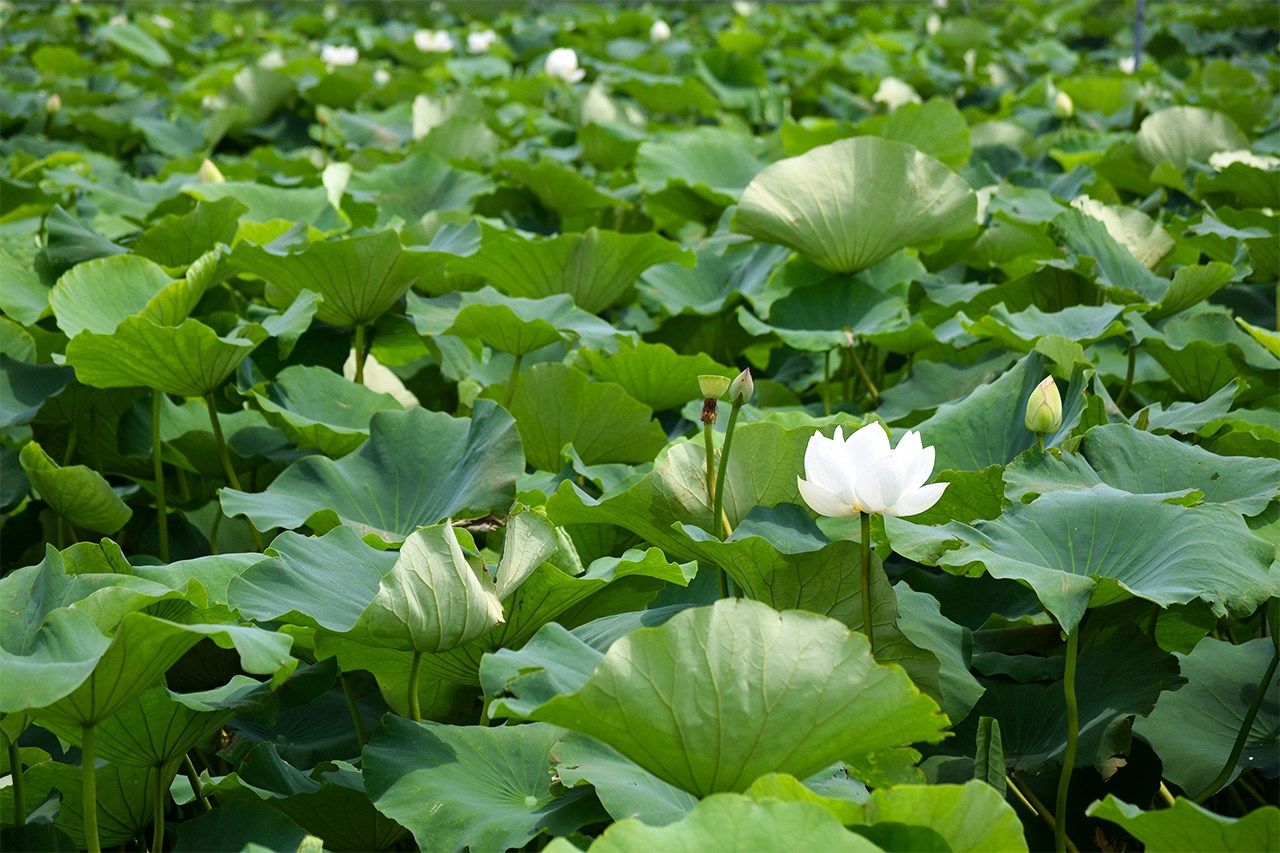
Lotus plants grow wild mainly in the temperate and subtropical zones of the Northern hemisphere and are thought to have been cultivated in Japan since the Nara period (710–94). The pedestal for Buddha statues is in the form of a lotus flower and this connection with Buddhist culture meant that lotus flowers were used in ancient times for ornamental and ceremonial purposes. From the Meiji period (1868-1912) onward, when varieties that were easier to cultivate began being imported from China, focus shifted to growing edible types. Ibaraki Prefecture accounts for 50% of total production, followed by 10% each in Saga and Tokushima.
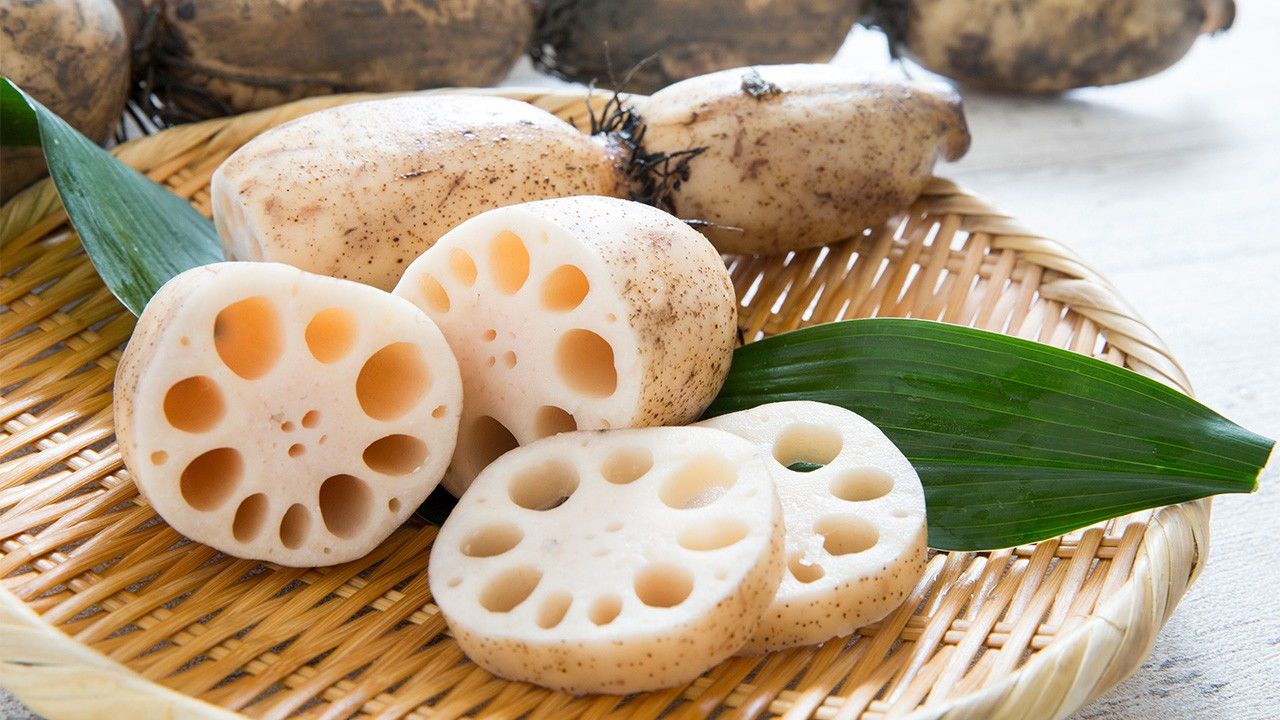
The lotus plant itself is known in Japanese as hasu, while the edible part is called renkon (lotus root). Although it is described as a “root” in both Japanese and English, it is technically an enlarged subterranean stem. As lotus plants grow in swamps and other types of wetlands, it makes it difficult for them to receive oxygen through the roots, so they absorb it through their large leaves and channel it down. The characteristic holes of renkon act as air channels to send oxygen to the roots.
(© Pixta)

Harvesting renkon. (© Pixta)
Renkon is an essential ingredient in Japanese New Year cuisine, osechi ryōri, including nishime (simmered vegetables) and su-renkon (pickled lotus root). It is associated with good luck as the holes are believed to symbolize “being able to see the way ahead” and “good prospects for the future.” As the plant produces many seeds, it is also thought to represent fertility and blessings for lots of children.
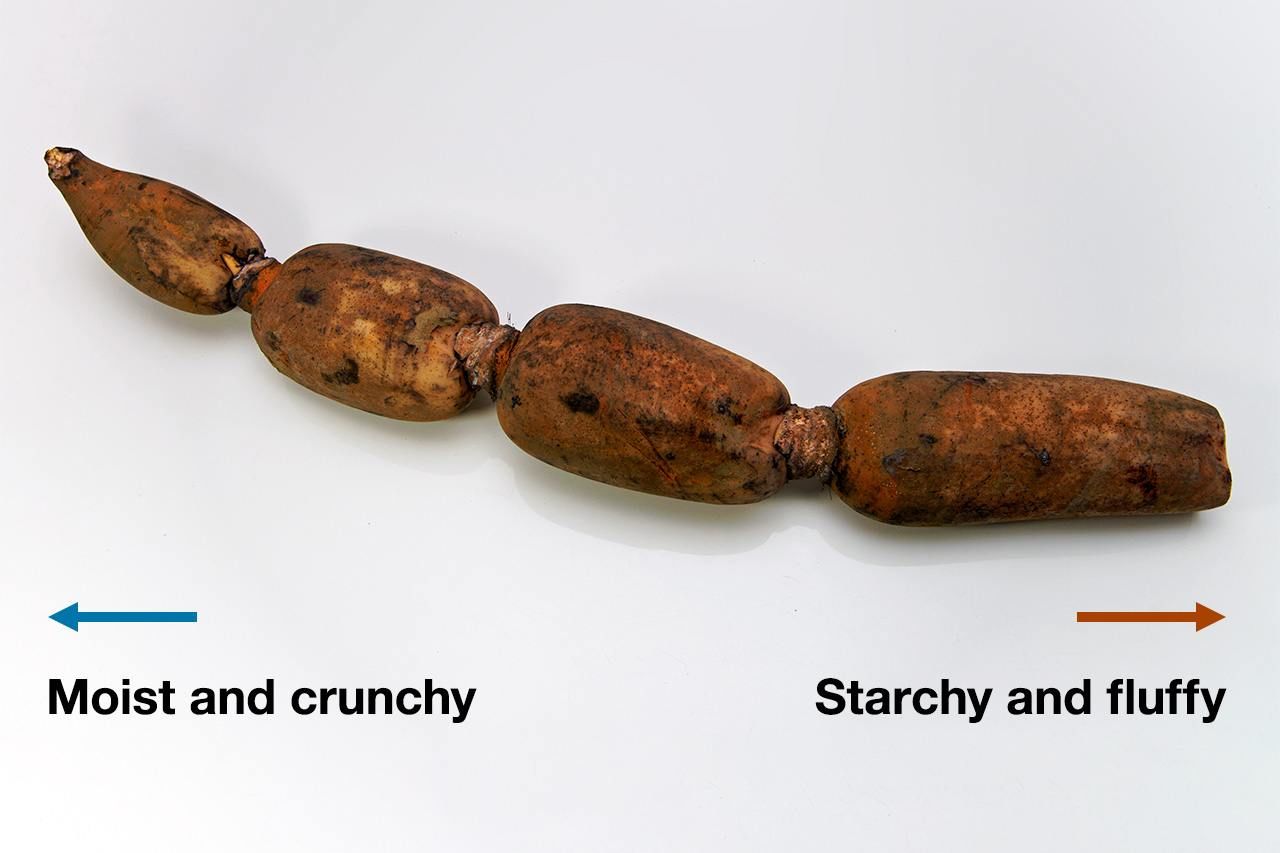
At supermarkets, renkon is usually sold in manageable pieces that can be easily used up, but it is harvested with several sections joined together, which are commonly called the “parent,” “child,” and “grandchild.” The relatively larger “parent” section has thick fibers and is very sticky, so it is perfect for use in dishes where it is simmered or grated. The central “child” section can be simmered, deep-fried, or stir-fried, making it more versatile. The section closest to the root tip is the “grandchild” and as it is still growing, it has finer fibers and a light, crispy texture. Dishes like kinpira, salad, and sunomono (pickled vegetables) are the best way to enjoy this part of the renkon.
(© Pixta)
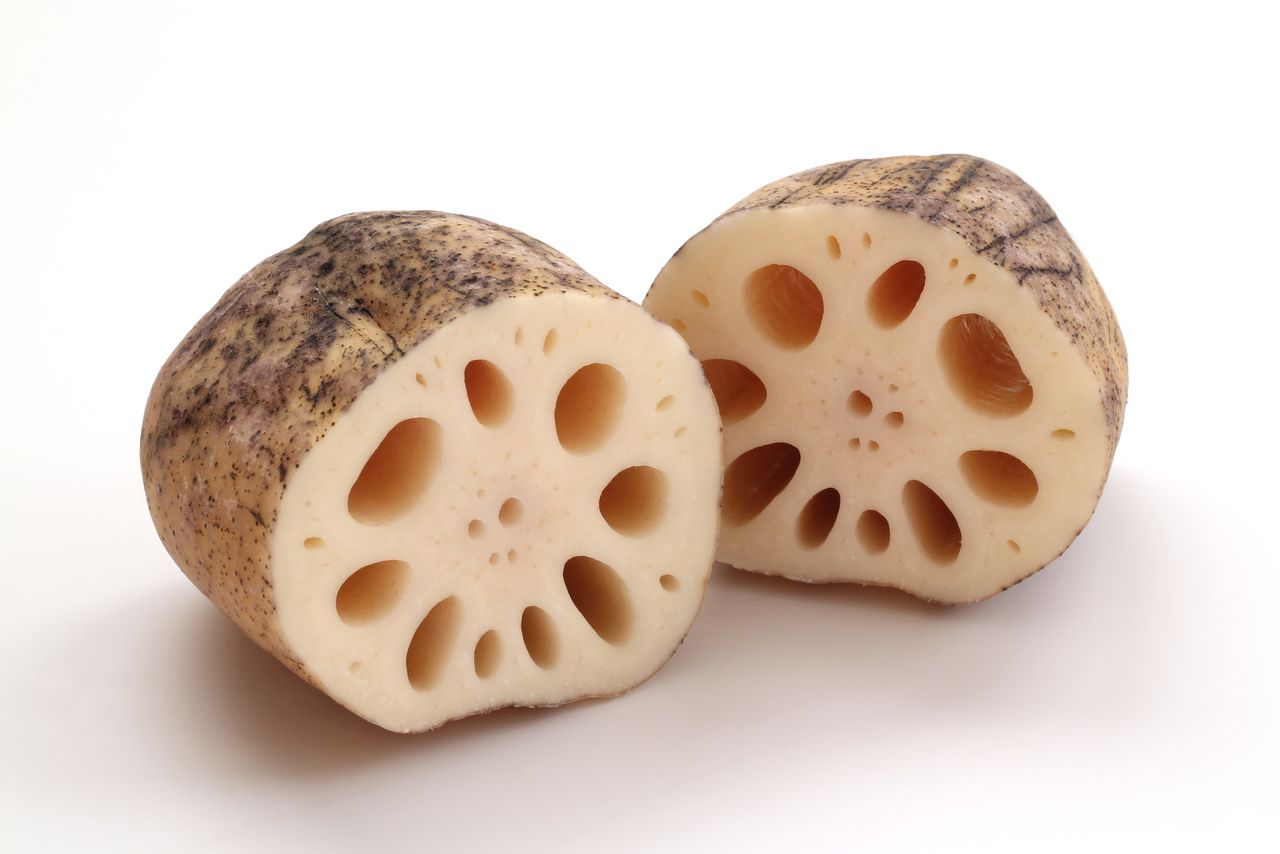
Producer and agricultural organization websites often state that renkon always has 10 holes or that there is a central hole with nine holes around it. But on buying renkon and cutting it open, one finds that there are many small holes and not always 10.
(© Pixta)
Related Content
Find ways to use renkon (lotus root) in your own cooking in “Attractive, Nourishing, and Delicious Dishes Using Renkon (Lotus Root).”
(Originally published in Japanese. Banner photo © Pixta.)