Building Blocks: The Basic Ingredients Behind Japan’s Flavors
Hijiki: A Humble Seaweed Gift from the Shore’s Edge
Food and Drink Lifestyle Culture Guide to Japan- English
- 日本語
- 简体字
- 繁體字
- Français
- Español
- العربية
- Русский
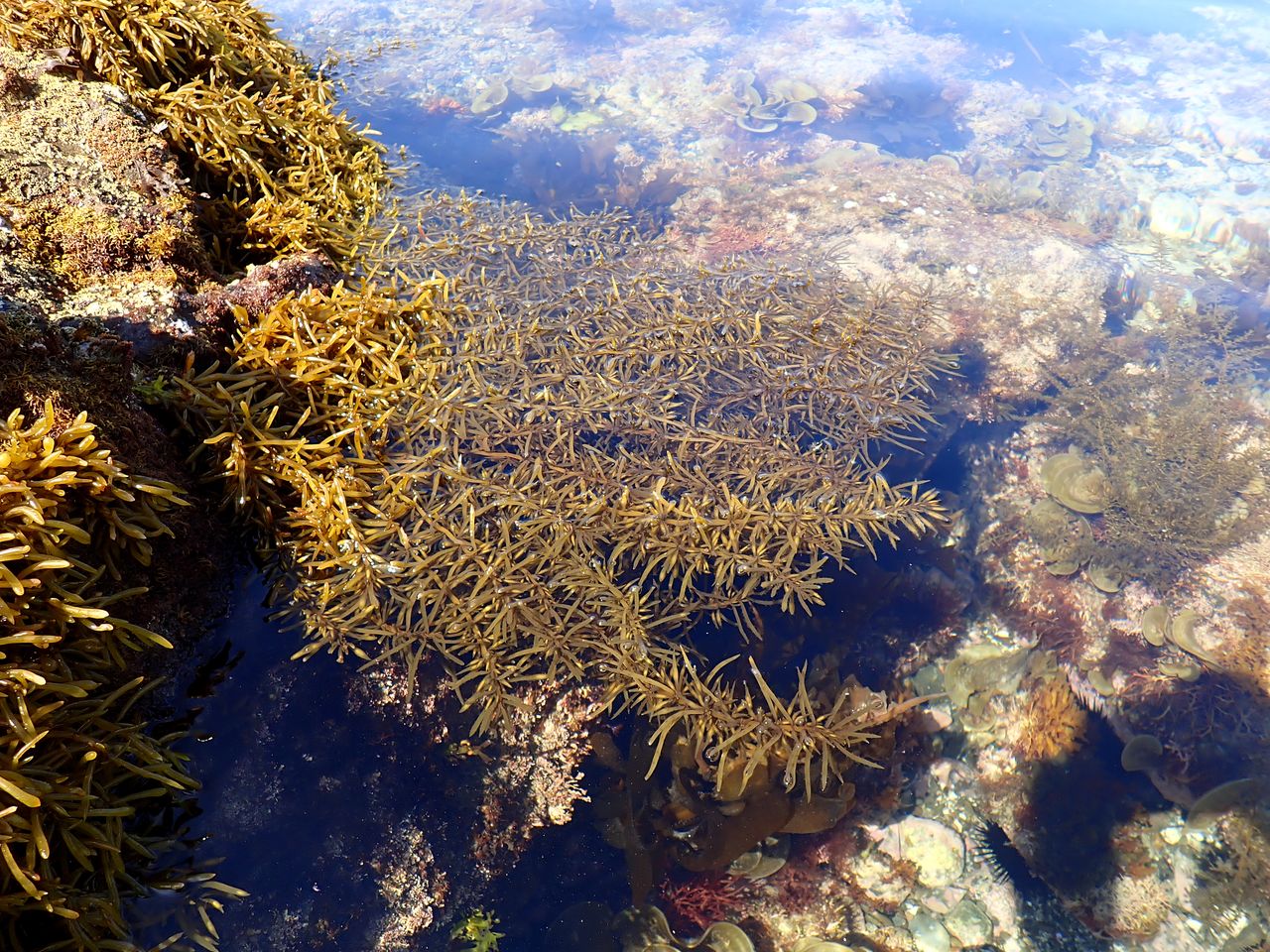
Hijiki (Sargassum fusiforme) is a seaweed that grows in rocky areas almost everywhere from southern Hokkaidō to the southern tip of Kyushu, apart from some coastal areas along the Sea of Japan. It is in season from March to May. Once the seaweed has grown to about one meter, it is harvested, leaving the roots intact so it will regrow.
(© Pixta)
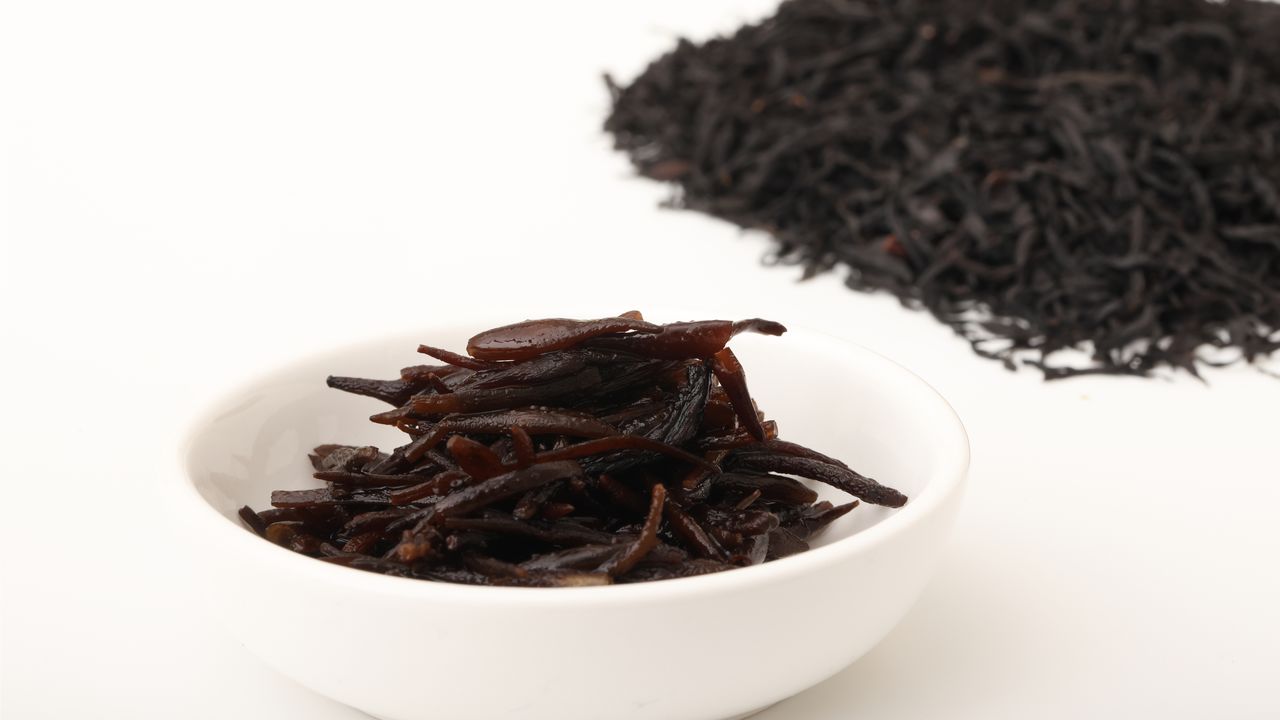
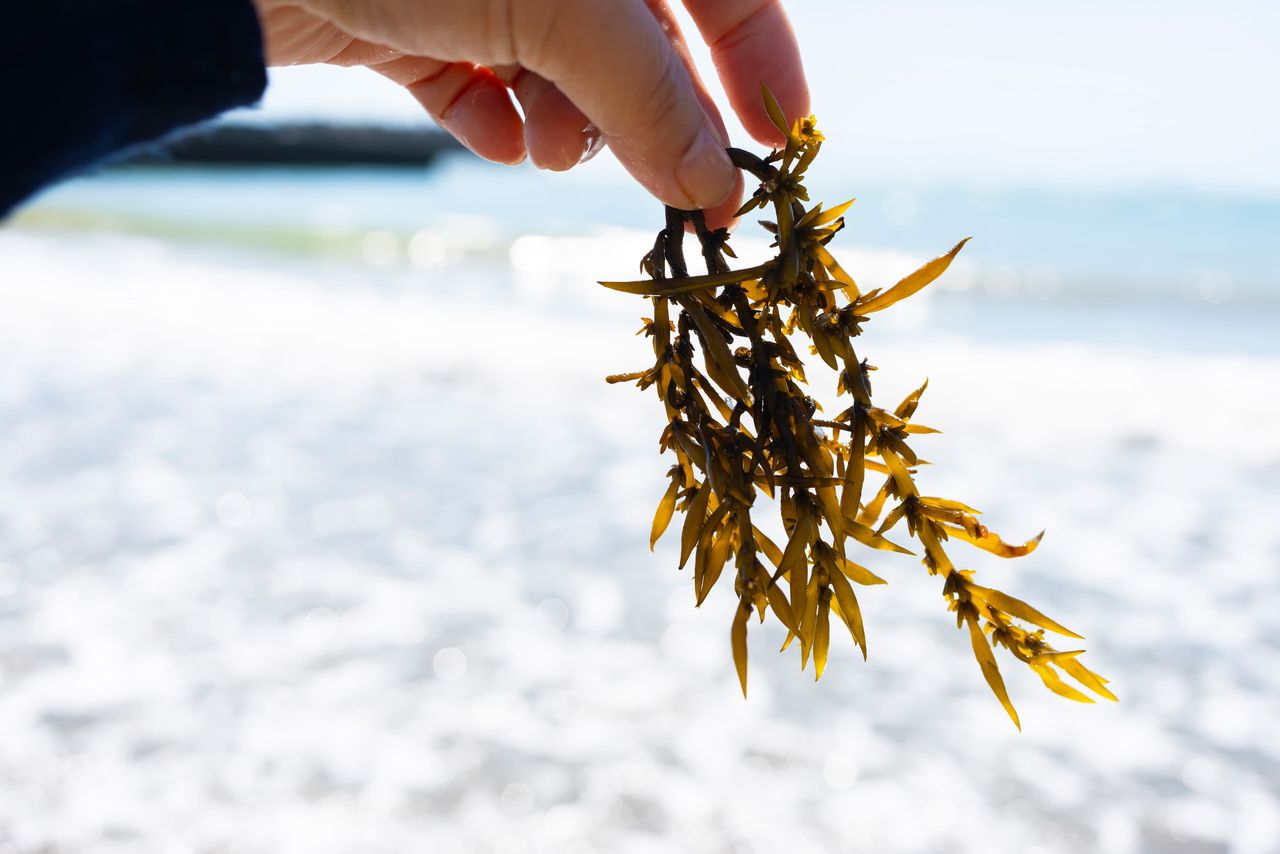
Harvested in spring, it is also available all year round in dried form. After harvesting, the hijiki is dried in the sun, and then washed and steamed. In some regions, it is steamed or boiled in its raw state. The buds on the stems get removed during this process and so are often sold separately, with the stems known as nagahijiki and the buds as mehijiki. When alive in the sea, hijiki is an olive brown color, but it turns jet black after being heated and dried. It is mentioned in ancient texts using the characters 鹿尾菜 (hijiki), literally meaning “deer-tail vegetable,” as the buds resemble the tail of the animal.
(© Pixta)
Hijiki has been consumed since the Jōmon period (ca. 10,000 BCE–300 BCE) and was used as an offering to the gods during the Nara period (710–94). It is recorded in the Engishiki, a compendium of laws and procedures written in the Heian period (794–1185), as being a chosen tribute to the Imperial Court. Moving into the Edo period (1603–1868), cookbooks described ways to prepare hijiki as simmered dishes or dressed in sauce, indicating it was already being eaten then much the way it is today.
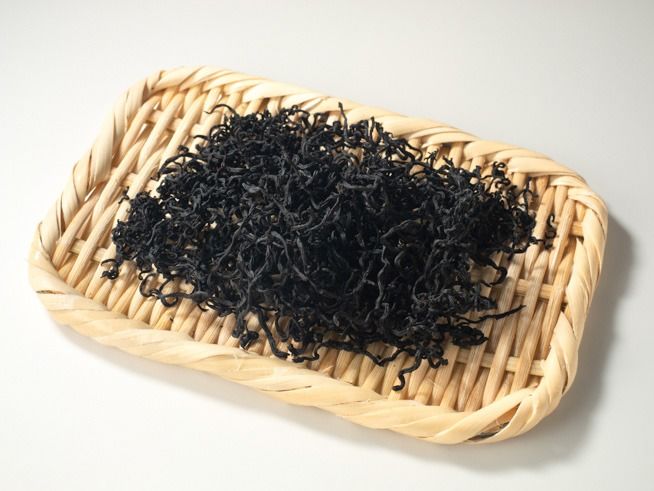
Dried nagahijiki from Mie Prefecture. (Courtesy Ministry of Agriculture, Forestry, and Fisheries)
Although hijiki has been consumed since ancient times, domestic production has been declining due to changes in the growing environment and a fall in the number of fishers. Now nearly 90% of hijiki sold in Japan comes from South Korea and China.
Just like other types of seaweed, nutritionally it is low in calories and rich in minerals and dietary fiber. On the other hand, some countries restrict consumption of hijiki because it has relatively high concentrations of inorganic arsenic. The Ministry of Agriculture, Forestry and Fisheries advises that rehydrating dried hijiki in water and rinsing it reduces the amount of arsenic present by roughly 50%. Boiling and draining it reduces that amount by 90%. There have been no reported cases of food-related arsenic intake having an adverse effect on health, and it is fine as long as large amounts are not consumed every day.
Hijiki pairs well with any ingredient and, as in the Edo period, it is often used in simmered dishes and dressed in sauces, featuring a lot in home cooking.
For some dishes making use of hijiki, see the companion article, “Making Healthy Hijiki a Part of Your Diet.”
(Originally published in Japanese. Text by Ecraft. Banner photo: Rehydrated mehijiki, with its dried form in the background. © Pixta.)