Building Blocks: The Basic Ingredients Behind Japan’s Flavors
Making Healthy Hijiki a Part of Your Diet
Food and Drink Culture Lifestyle Guide to Japan- English
- 日本語
- 简体字
- 繁體字
- Français
- Español
- العربية
- Русский
Hijiki seaweed is a common ingredient in numerous Japanese dishes. You can learn more about Sargassum fusiforme and its history in “Hijiki: A Humble Seaweed Gift from the Shore’s Edge,” or read on to see some of the ways it appears in standard offerings from the Japanese menu.
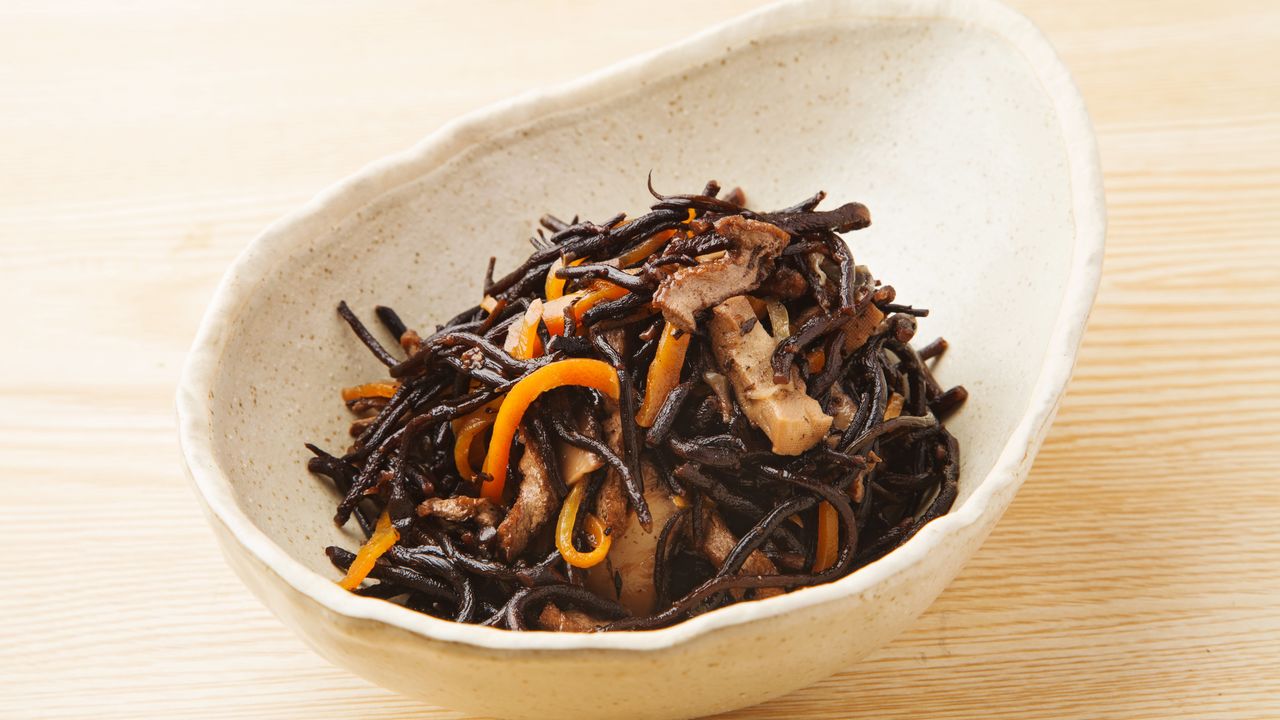
Hijiki no Nimono
This is quintessential when it comes to hijiki side dishes. Hijiki is combined with finely shredded carrot and aburaage fried tōfu, and then simmered in a salty sweet soy sauce. Sometimes chikuwa and other nerimono, konnyaku, or soybeans are added too. It is a staple home-cooked dish and also often served as a side dish with set meals at restaurants, as well as an appetizer at izakaya.
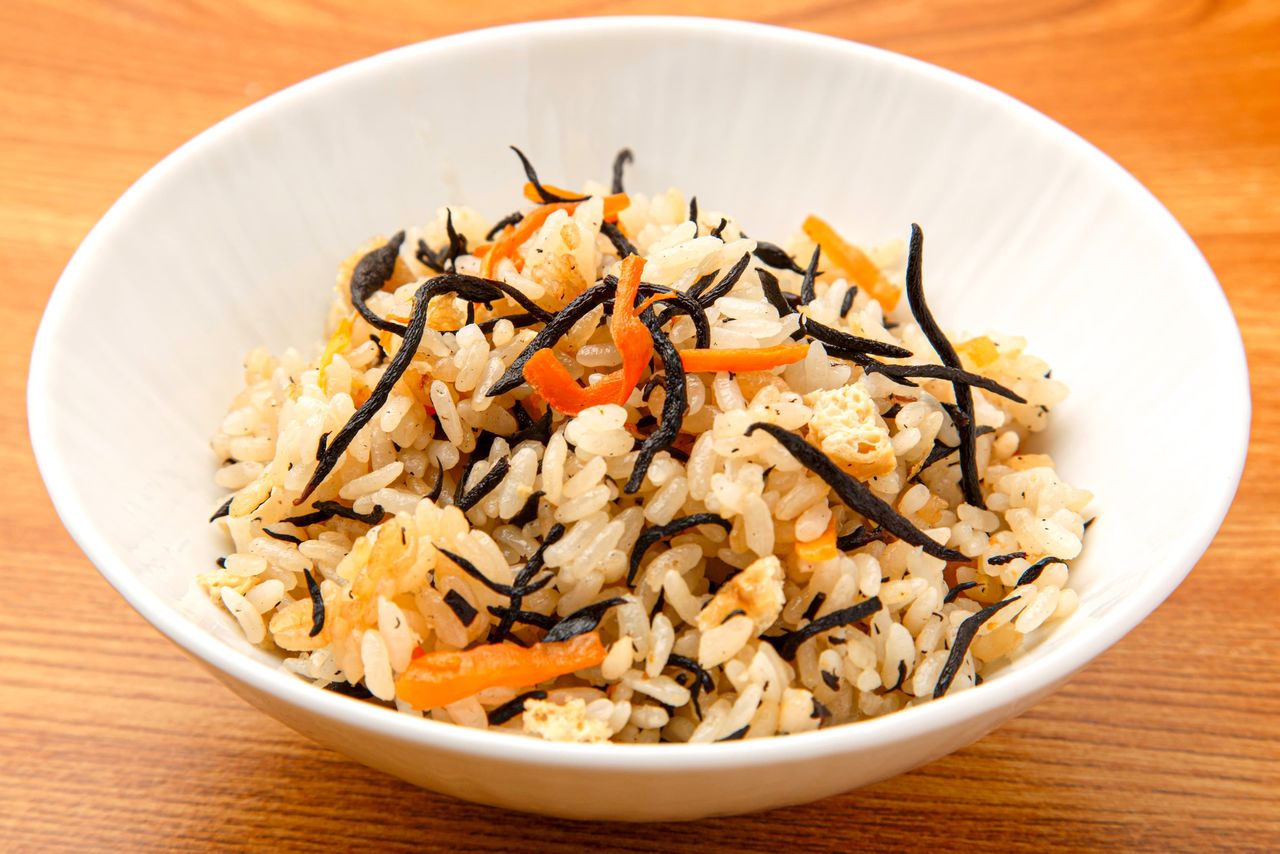
Hijiki Gohan
This rice dish is made with ingredients similar to those used to make the nimono above. An easier version uses hijiki furikake seasoning that is simply mixed into the rice.
(© Pixta)
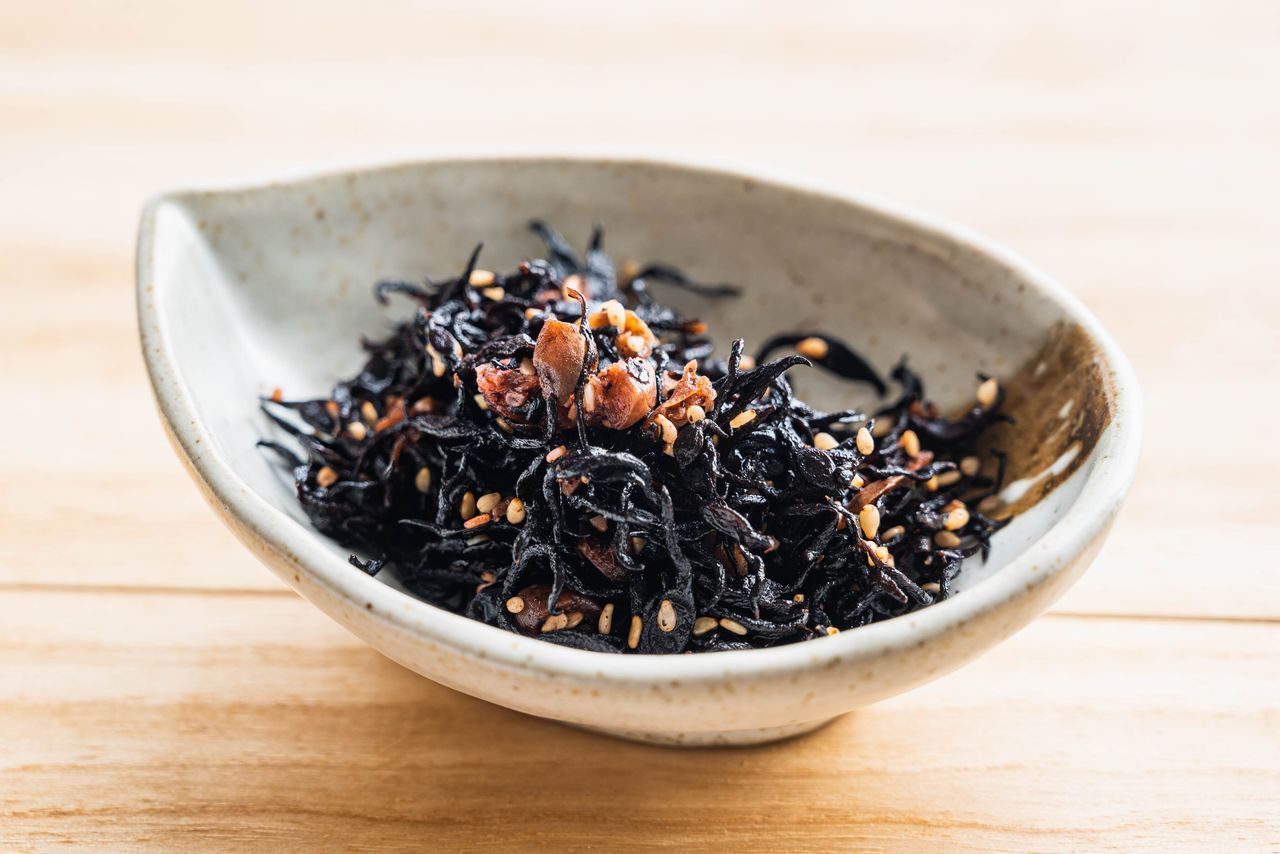
Ume-hijiki
Here, hijiki is simmered with minced umeboshi, and then sprinkled with white sesame seeds to create this delicious staple dish. It is also available as a popular furikake seasoning combination, where it has been fried to remove the moisture.
(© Pixta)
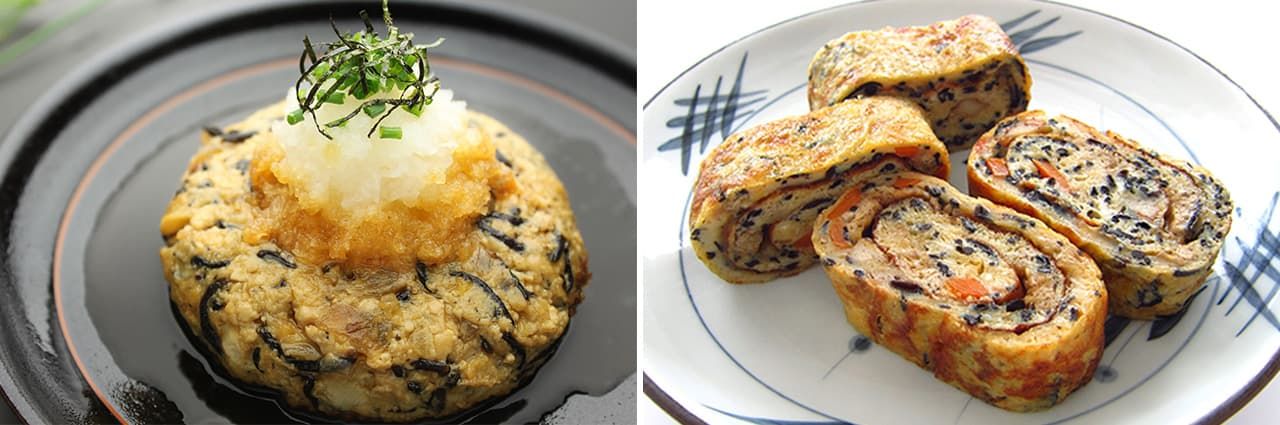
Hijiki Tōfu Hamburg Steak and Hijiki Tamagoyaki
Hijiki is often mixed into Japanese-style Hamburg steak, made using minced chicken and tōfu, and dashimaki tamago rolled omelet with dashi, a popular addition to breakfasts and bentō box meals. As an extra ingredient, it not only enhances the look of the food, but also increases the nutritional value.
(© Pixta)
Find out more about this ingredient in “Hijiki: A Humble Seaweed Gift from the Shore’s Edge.”
(Originally published in Japanese. Text by Ecraft. Banner photo: Hijiki no nimono. © Pixta.)