Building Blocks: The Basic Ingredients Behind Japan’s Flavors
Udo: A Crispy Japanese Vegetable That Signifies Spring
Food and Drink Culture Lifestyle- English
- 日本語
- 简体字
- 繁體字
- Français
- Español
- العربية
- Русский
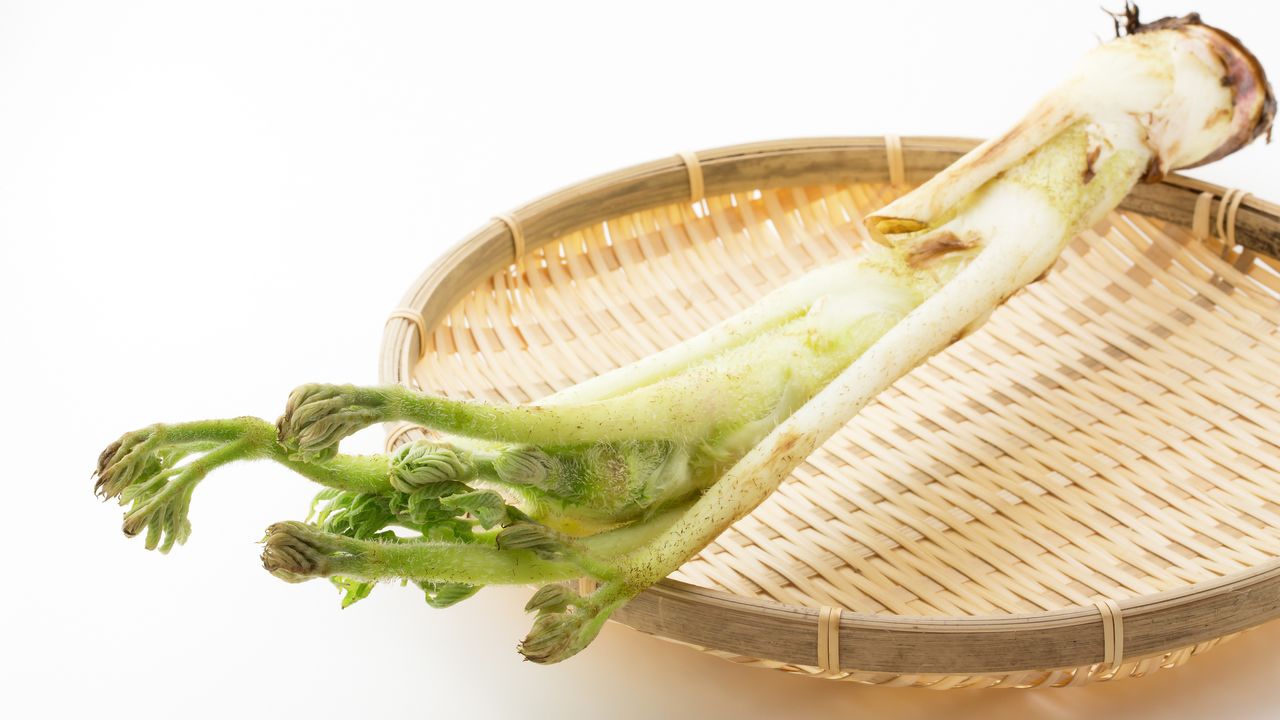
One of the few vegetables native to Japan, udo grows in mountainous areas across the whole of the country’s main islands, from Hokkaidō to Kyūshū. It is distinctively crisp and crunchy, with a slightly bitter taste, followed by a pleasantly refreshing aroma that heralds the coming of spring. It is unusual to find truly wild udo being sold in the market. Instead, there is yama udo, which has been cultivated in near-natural conditions, with leafy green tips and the same strong flavor and aroma of wild udo.
Another type is nanka udo, grown in the dark, such as in underground muro holes, giving it an entirely white color. This version has a softer texture than yama udo and tastes milder.
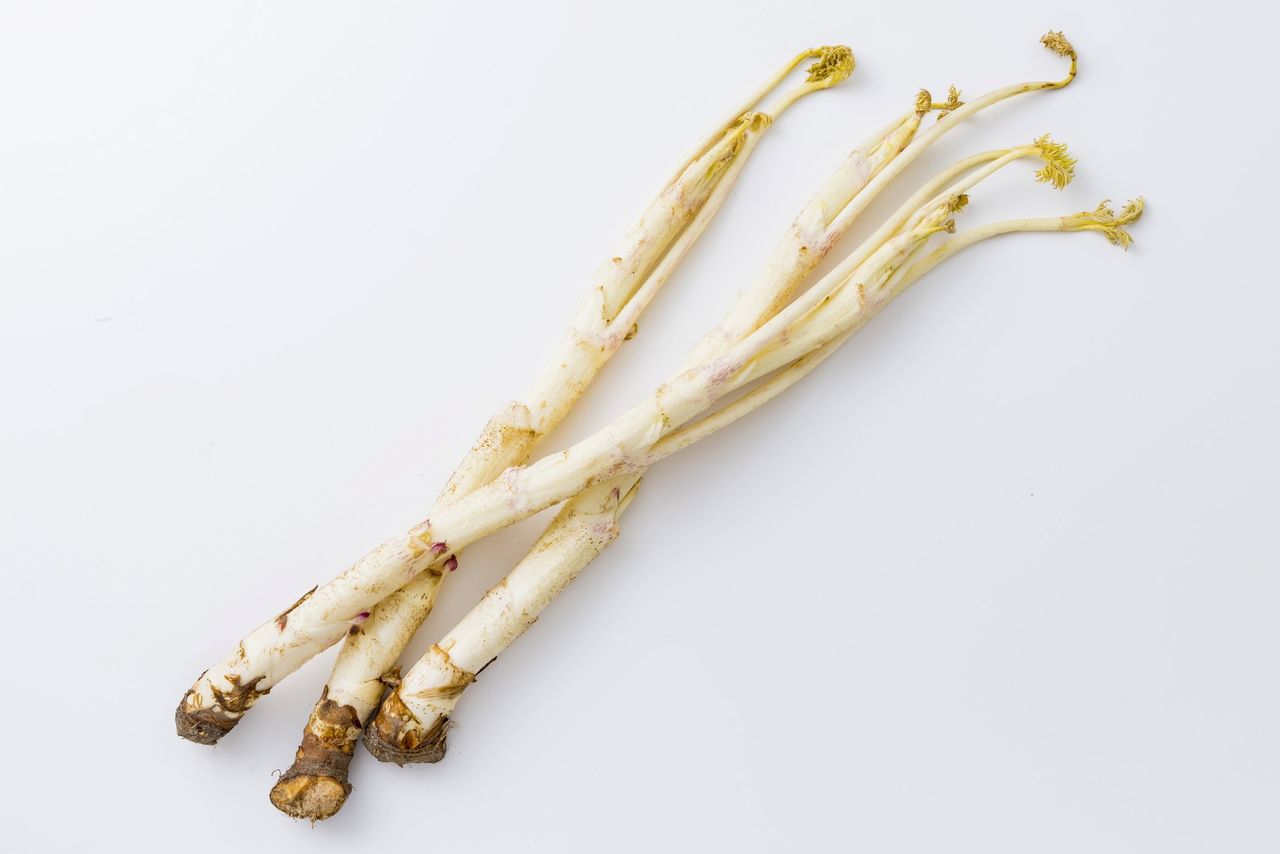
Tokyo udo that has been grown in the dark. (Courtesy the Tokyo Development Foundation for Agriculture, Forestry, and Fisheries)
Udo is primarily cultivated in the Kantō and Tōhoku regions, particularly in Tochigi and Gunma Prefectures. From the late Edo period (1603–1868), cultivation flourished in the suburbs of Tokyo. In the Tama region, in the west of the present metropolis, nanpaku udo, a soft, white variety grown in muro holes 3 meters underground, was established in the period immediately following World War II, and by the early 1970s, Tokyo accounted for more than 40% of total production. The JA Tokyo Chūōkai (Tokyo Metropolitan Central Union of Agricultural Cooperatives) has designated “Tokyo udo” as one of the traditional regional crops known as Edo-Tokyo vegetables.
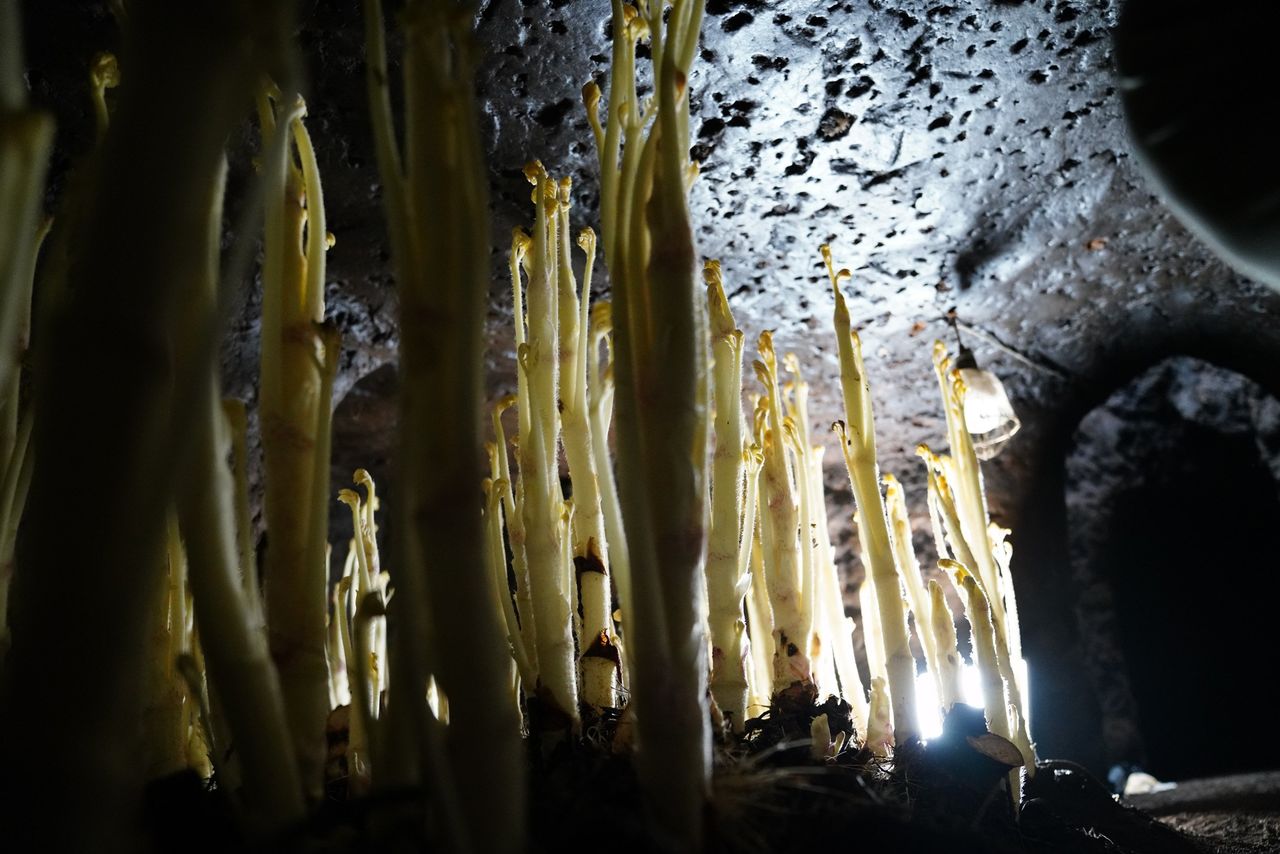
Tokyo udo are traditionally grown underground. (Courtesy the Tokyo Development Foundation for Agriculture, Forestry, and Fisheries)
Left untended, udo can grow to several meters in height, but the larger it gets, the tougher and more inedible it becomes. It isn’t hard enough to be used as timber though, so it is of no use. This has given rise to the phrase udo no taiboku (a giant udo plant), meaning someone or something with a large body, but good for nothing.
Below we present a handful of traditional Japanese dishes making use of this native ingredient.
Nuta (Sumiso-ae)
This is the classic way to enjoy udo. After peeling and cutting it into strips, the udo is soaked in vinegar water to remove the bitterness and then coated with miso that has been seasoned with vinegar and sugar. It is often served with spring onion and wakame.
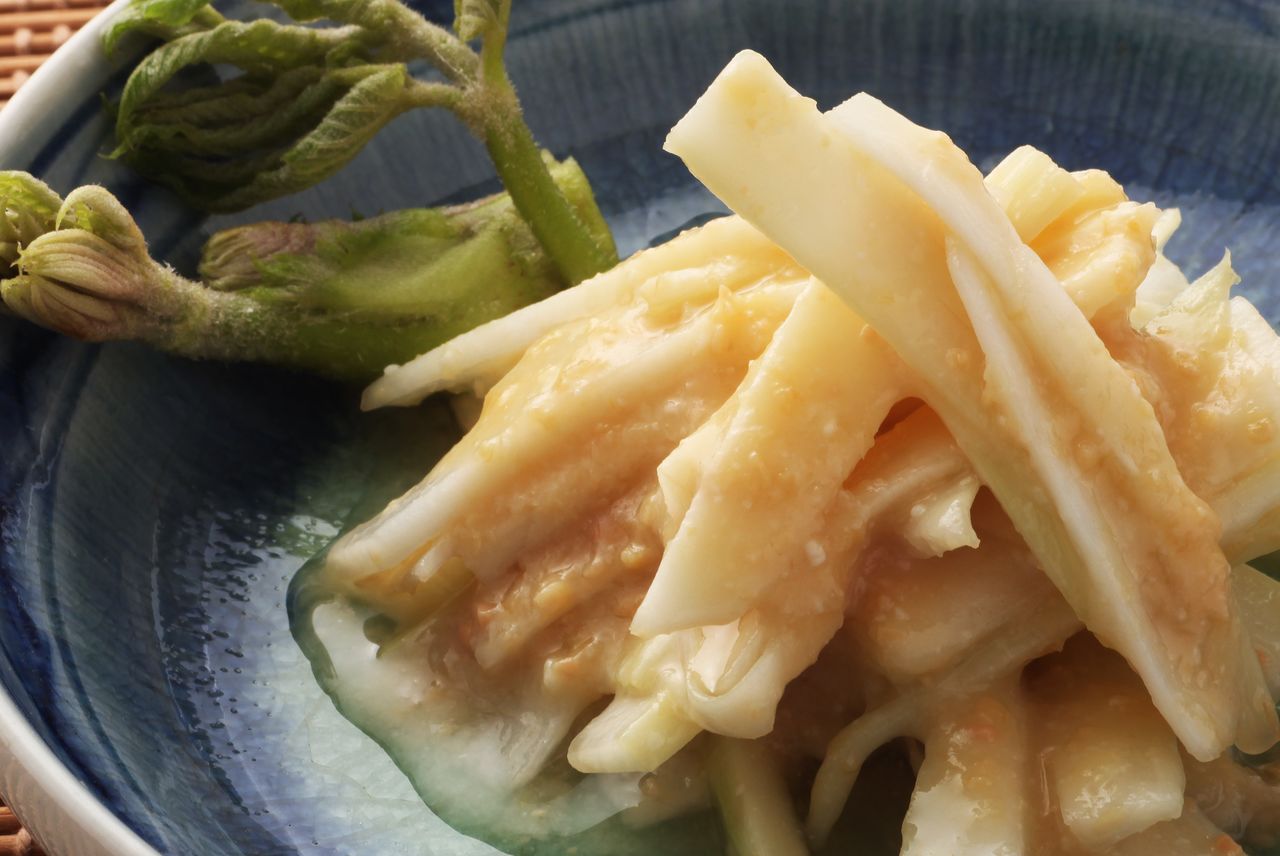
(© Pixta)
Kinpira
This dish is a great way to make sure the udo peel doesn’t go to waste. It is thinly sliced and stir-fried, and then seasoned with a sweet and spicy kinpira soy-based sauce.
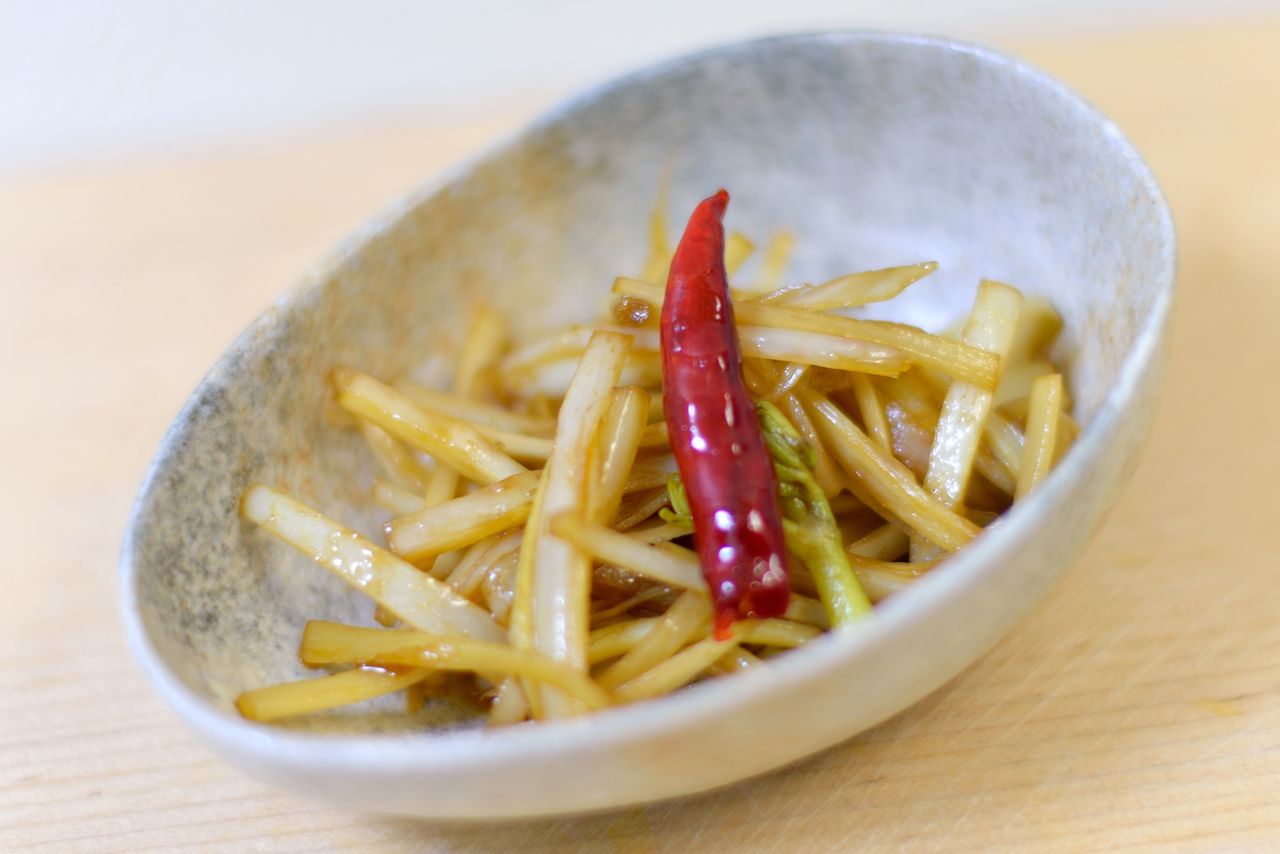
(© Pixta)
Tempura
Here, udo is simply coated in batter, deep-fried, and served with a sprinkling of salt to create a simple side dish or drink accompaniment that’s perfect for the spring. It can be accompanied by taranome (angelica-tree shoots) and fukinotō (butterbur shoots) for even more flavor of the early season.
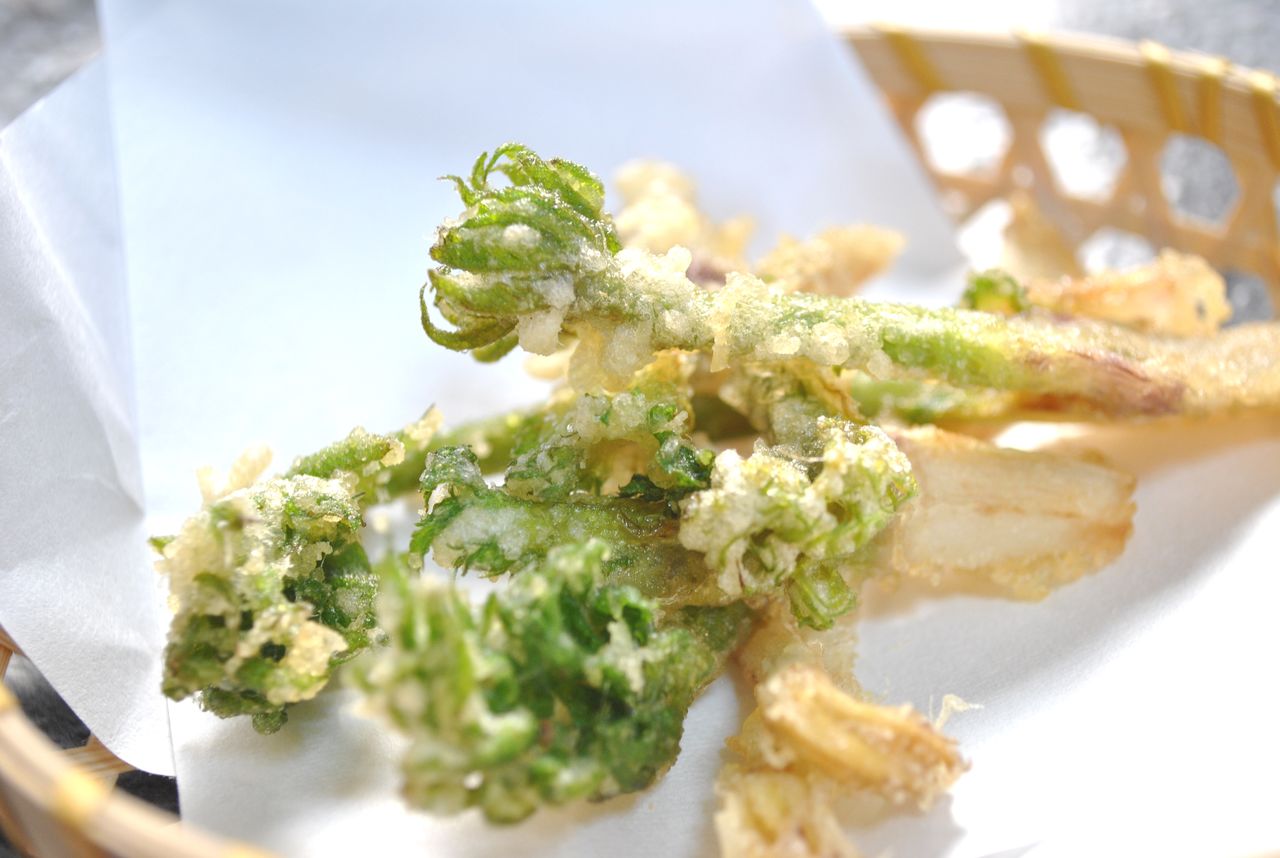
(© Pixta)
Data Sources
- Toyko Udo (Japanese) from JA Tokyo Chūōkai (Tokyo Metropolitan Central Union of Agricultural Cooperatives).
- Tokyo-grown Vegetables: Udo (Japanese) from the Tokyo Development Foundation for Agriculture, Forestry, and Fisheries.
(Originally published in Japanese. Text by Ecraft. Banner photo: Leafy green, crispy white yama udo. © Pixta.)