Building Blocks: The Basic Ingredients Behind Japan’s Flavors
Shiitake: Japan’s Best-Known Mushroom
Food and Drink Culture Lifestyle- English
- 日本語
- 简体字
- 繁體字
- Français
- Español
- العربية
- Русский
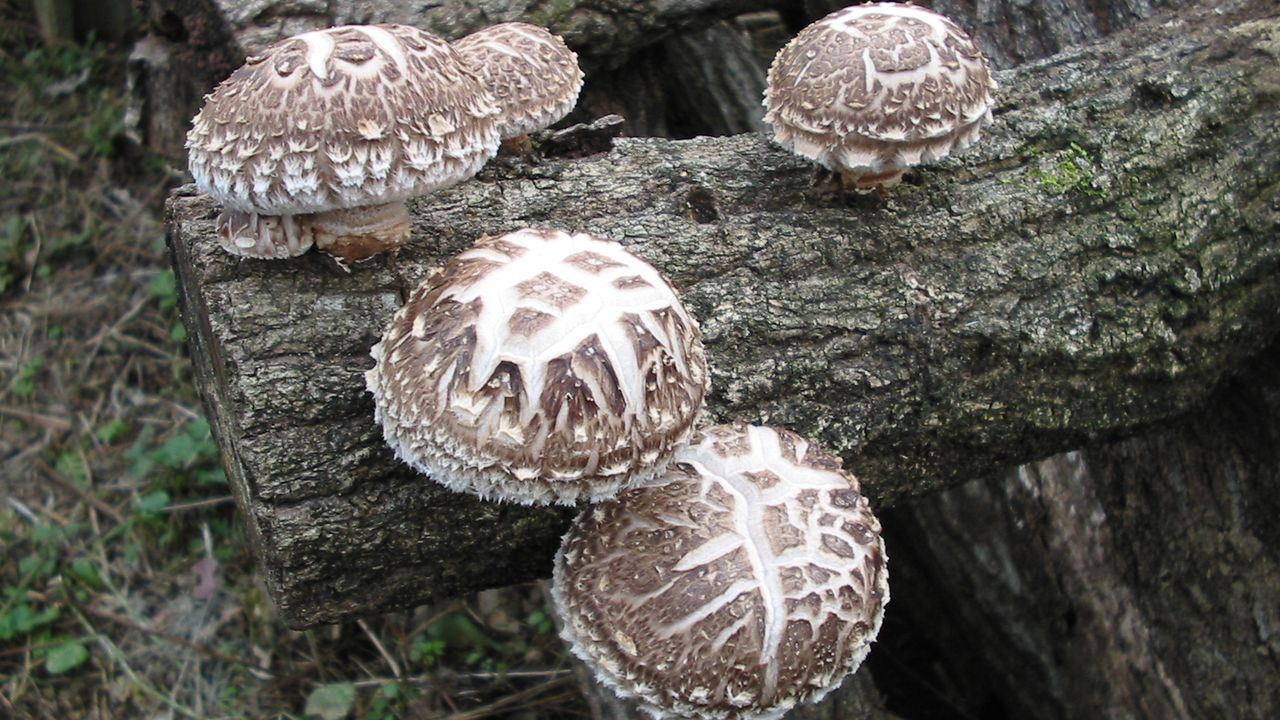
Japan’s warm and humid climate means a wide variety of mushrooms grow wild. In the case of shiitake, while the method of log cultivation has long been used to grow them, production rapidly increased in the 1940s through the development of a method where spore-coated wood chips were hammered directly into the logs. These days, the most common method of producing fresh shiitake is to grow them on beds of sawdust-based substrate in greenhouses, meaning they can be produced steadily all year round.
With log cultivation, the logs are placed in woodlands so the mushrooms can grow in an environment close to nature, which involves a lot of time and labor and is much more expensive than substrate cultivation. However, the shiitake produced are plump, succulent, and fragrant, resulting in a much more enjoyable dining experience.
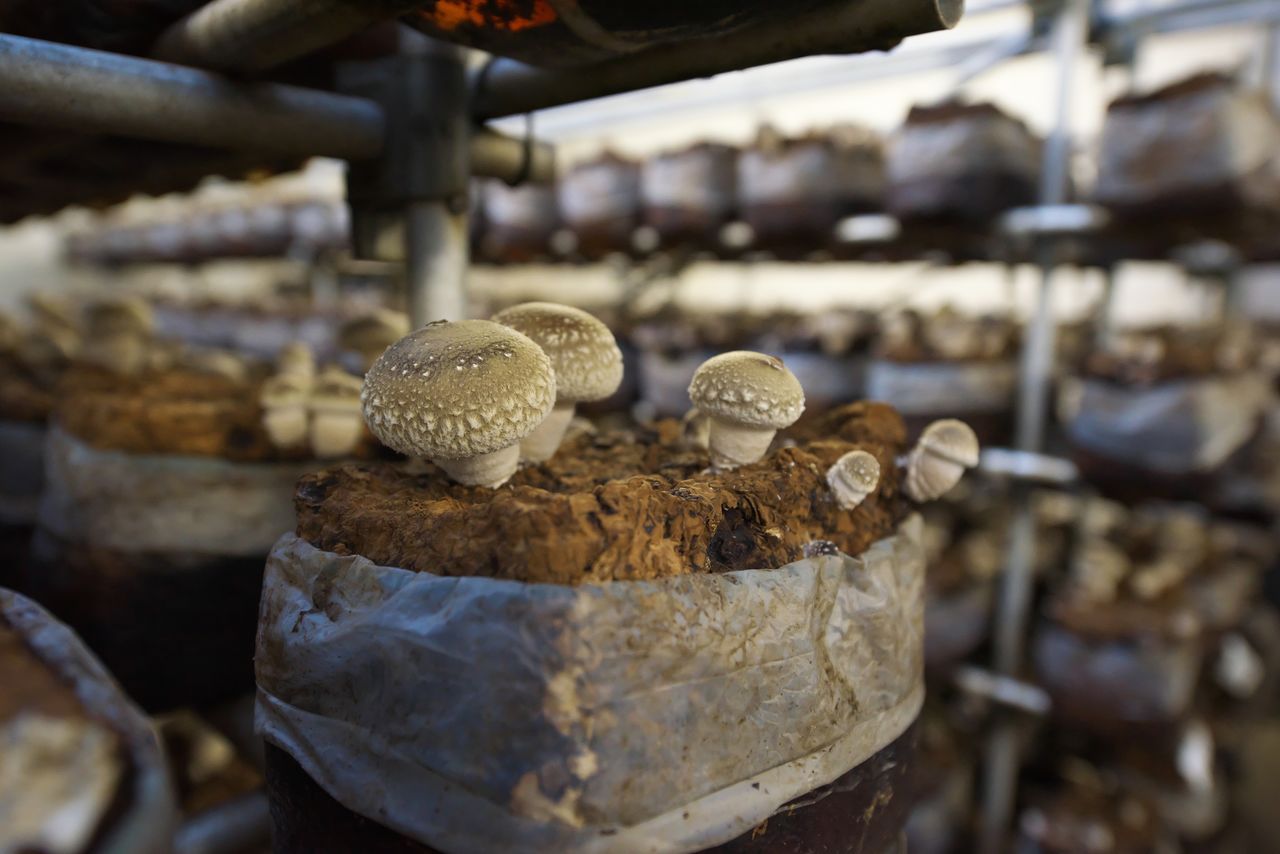
Shiitake growing on a substrate block. (© Pixta)
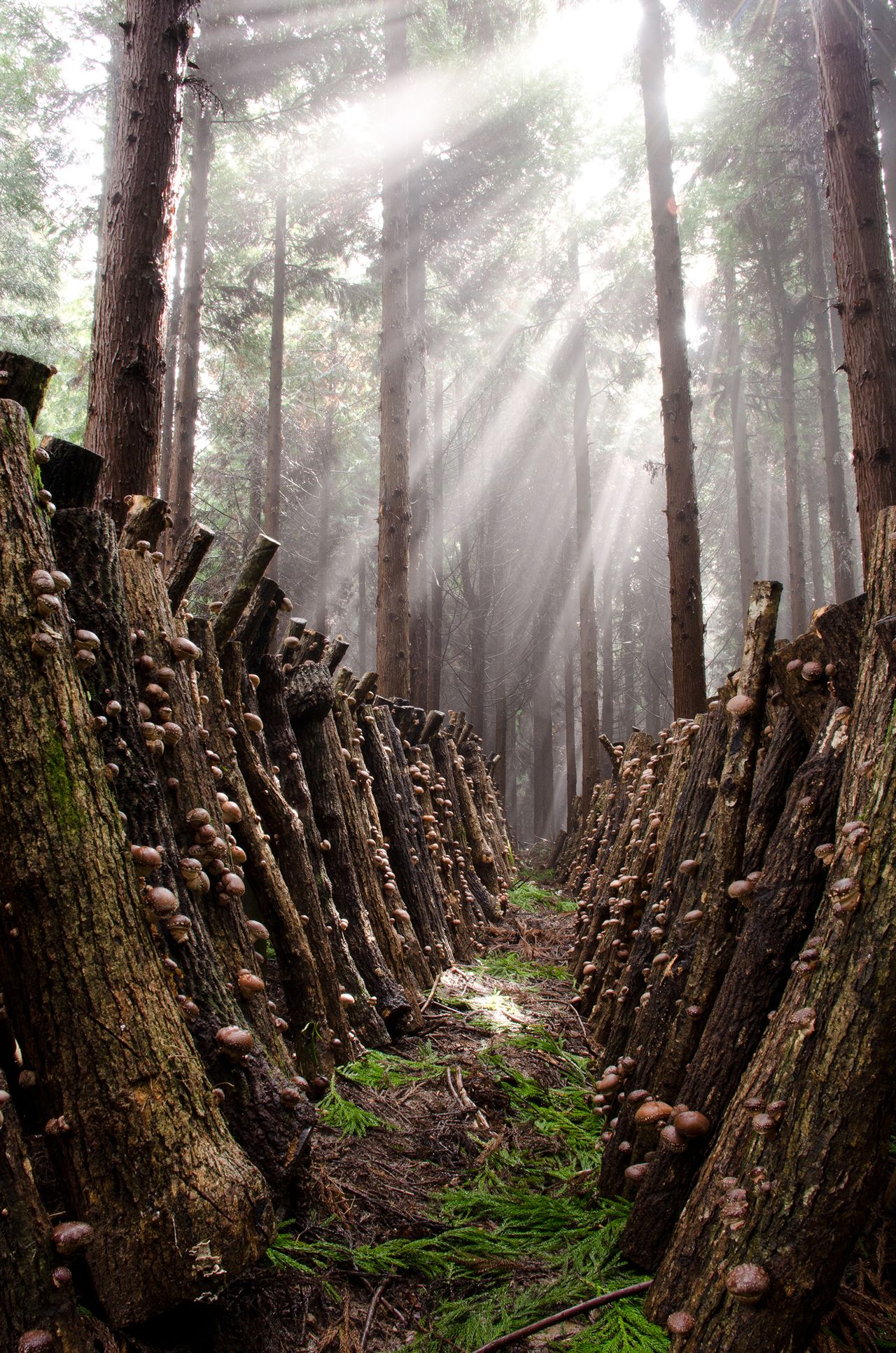
Shiitake growing in woodland. (Courtesy Ōita Shiitake Promotion Council)
Dried Shiitake a Popular Meat Alternative Worldwide
The custom of eating dried shiitake is said to have been introduced into Japan by scholars who studied Buddhism in China in the early 800s. The drying process enhances their umami flavor and extends their shelf life, which made them a valuable ingredient in Buddhism, where a vegetarian diet is encouraged.
Dried shiitake are predominantly cultivated on logs and, as they are harvested during winter, while the caps are not quite fully open, they are known as donko (literally “winter mushroom”) and prized as a luxury.
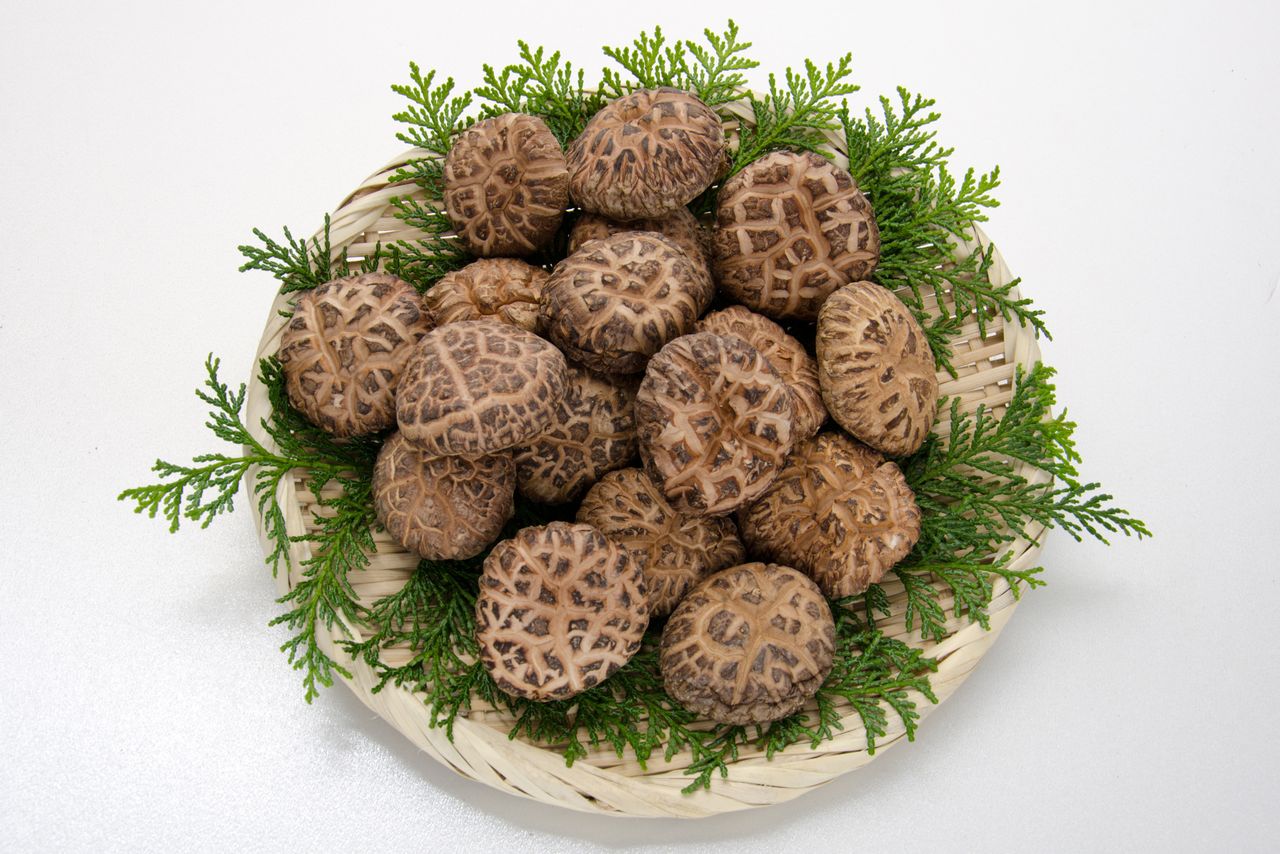
Donko, harvested in winter and used for dried shiitake (Courtesy Ōita Shiitake Promotion Council)
Dried shiitake are rich in guanylic acid, which along with inosinic acid and glutamic acid, make up the three major umami components. When soaked slowly in water, they regain their plumpness and develop a unique texture, different from that of fresh shiitake. The liquid used to rehydrate the shiitake also includes a lot of the umami components, so makes a good dashi stock for simmered dishes.
Since the 2010s, the major production area of Ōita Prefecture has been focusing on exports to Europe and the United States. Japanese dried shiitake are plump with a rich umami flavor, making them very popular among vegetarians and vegans for being both substantial and deliciously satisfying.
(Originally published in Japanese. Text by Ecraft. Banner photo: Log cultivation of shiitake. Courtesy Ōita Shiitake Promotion Council.)