Building Blocks: The Basic Ingredients Behind Japan’s Flavors
Gobō: At the Root of Hearty Japanese Cooking
Food and Drink Culture Lifestyle- English
- 日本語
- 简体字
- 繁體字
- Français
- Español
- العربية
- Русский
Buried Treasure
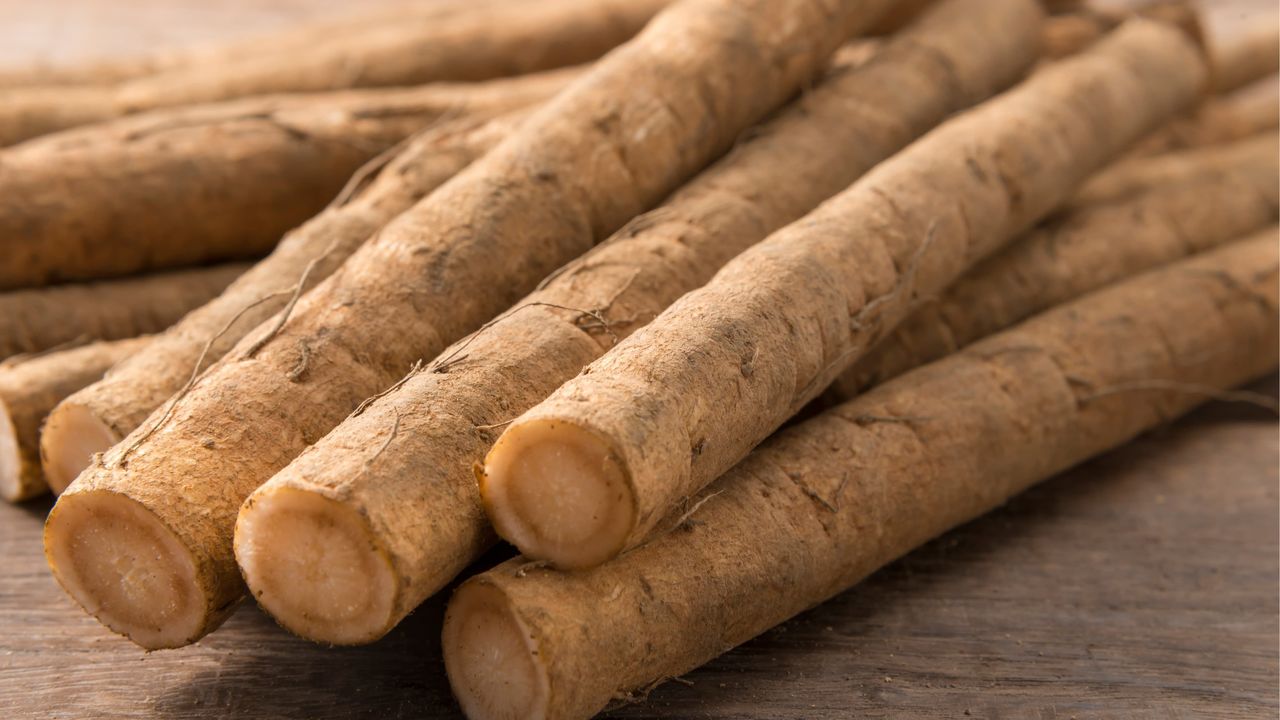
Gobō burdock roots reach their peak in autumn and winter, but can be found in stores throughout the year. In Japan, it is a staple familiar vegetable, but overseas it draws curiosity, with people thinking “Japanese eat tree roots!” Despite this, its rich earthy taste and satisfying texture are unparalleled.
Species of gobō are found throughout Eurasia, and it came to be used as a medicinal plant in Europe and China. In Japan, it is mentioned in records from the Heian period (794–1185) as an edible food, and it began being cultivated across the country around that time. In the Edo period (1603–1868), continuous improvements and seed collection led to the development of a superior variety in what is now the Takinogawa area of Kita, Tokyo. More than 90% of the gobō currently available in Japan is descended from this Takinogawa variety.
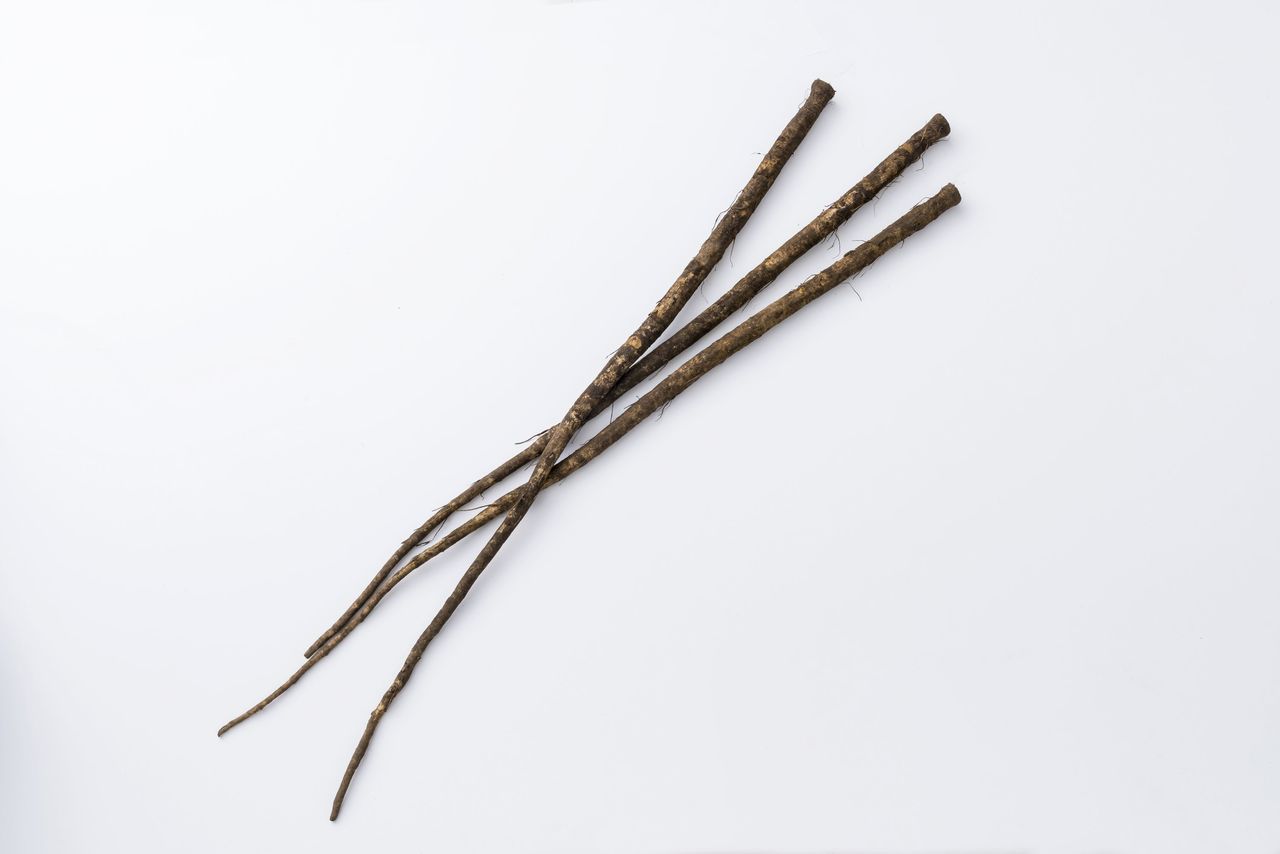
Takinogawa Gobō, which can grow to a length of 1 meter. (Courtesy the Tokyo Development Foundation for Agriculture, Forestry, and Fisheries)
Aomori Prefecture is prominent for its volume of production, and significant amounts are also produced in Ibaraki, Hokkaidō, and Miyazaki Prefectures. A wide range of regional varieties and brands exist, including the short, thick-set Horikawa Gobō, a type of Kyōyasai heirloom vegetable, and Kikuchi Suiden Gobō, grown in paddy fields (suiden) in Kikuchi, Kumamoto Prefecture.
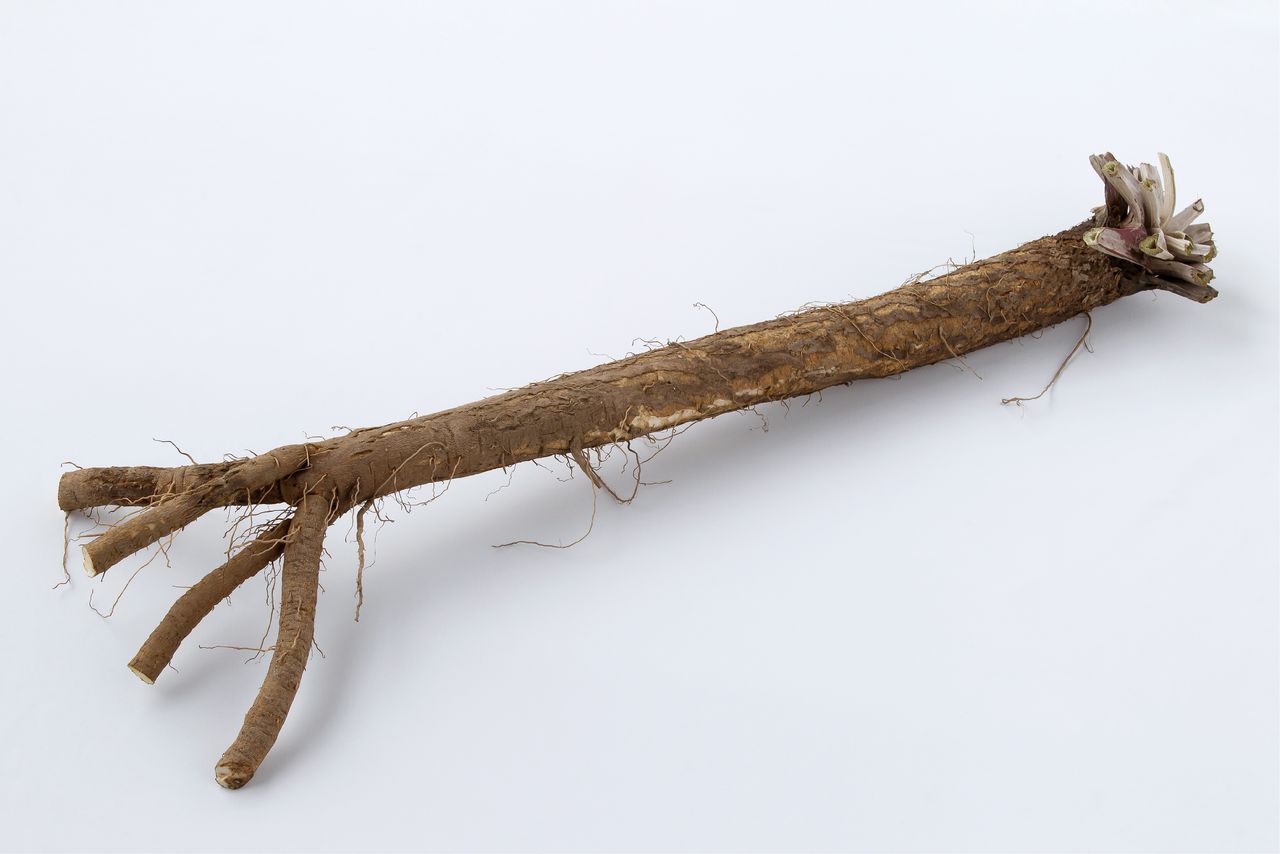
Horikawa Gobō. (Courtesy the Kyoto City Office of Industry and Tourism)
The most nutritious aspect of gobō is its high dietary fiber content, effective in preventing constipation. It also contains a lot of minerals, including calcium and magnesium. During cooking, it darkens in color, proof of how rich it is in polyphenols, which help to prevent aging and lifestyle-related diseases.
A Deep-Rooted Part of New Year
Gobō grows deep down into the earth, making it not only a symbol of good health and longevity, but also of a solid foundation for the home or firmly establishing a family business on the land, holding the meaning of household safety and stability for family businesses. It makes it an essential auspicious ingredient in osechi ryōri New Year food.
As gobō is so deeply rooted, it is not easy to pull up out of the ground, so each one has to be carefully harvested. In the commentary for the Ekiden long-distance relay running, the phrase gobō-nuki, or “pulling out gobō,” is used when a fast runner quickly overtakes a number of others. This leads to the misunderstanding that it is easy to pull gobō out of the ground, but in fact the phrase’s original meaning is to steadily overtake each runner one at a time. Incidentally, in recent years, more and more farmers are using specialized machinery to carry out the labor-intensive work of harvesting gobō.
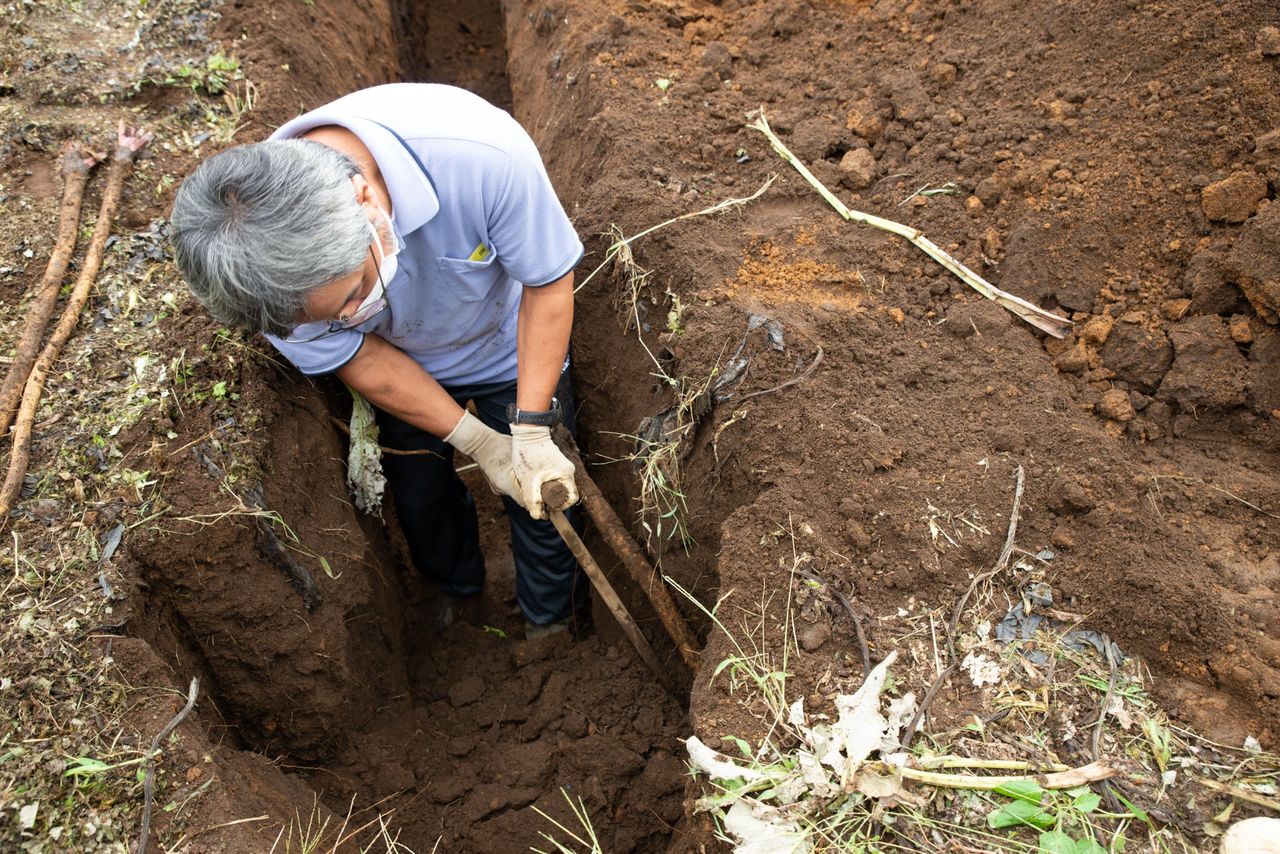
Harvesting Takinogawa Gobō. (Courtesy the Tokyo Development Foundation for Agriculture, Forestry, and Fisheries)
Data Sources
- Trends in Demand and Supply for Gobō, Vegetable Statistical Data, October 2023 Edition (Japanese) from the Agriculture & Livestock Industries Corporation.
- Takinogawa Gobō (Japanese) from the Tokyo Development Foundation for Agriculture, Forestry, and Fisheries.
(Originally published in Japanese. Text by Ecraft. Banner photo © Pixta.)