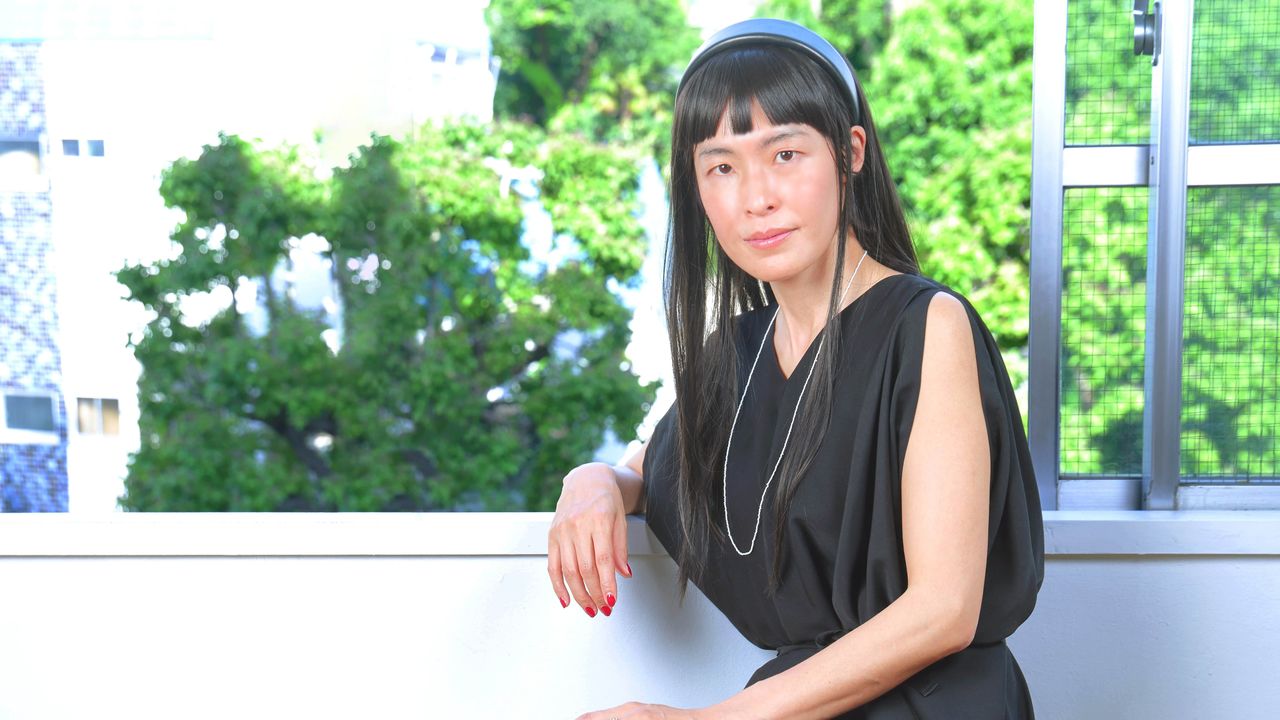
Author Kobayashi Erika’s War and Nuclear Writings Unearth New Perspectives
People Culture Society- English
- 日本語
- 简体字
- 繁體字
- Français
- Español
- العربية
- Русский
Inspirations and Influences
Kobayashi Erika’s roots as a writer lie in an early encounter with The Diary of Anne Frank and her parents’ work in researching and translating Sherlock Holmes.
She first read the diary at the age of 10, and as she recalls, “I was inspired by how a girl a little older than me clearly expressed her opinions on the injustices of the world. Anne said, ‘I want to go on living after my death,’ and dreamed of being a writer or a journalist. She influenced me to have the same ambitions.”
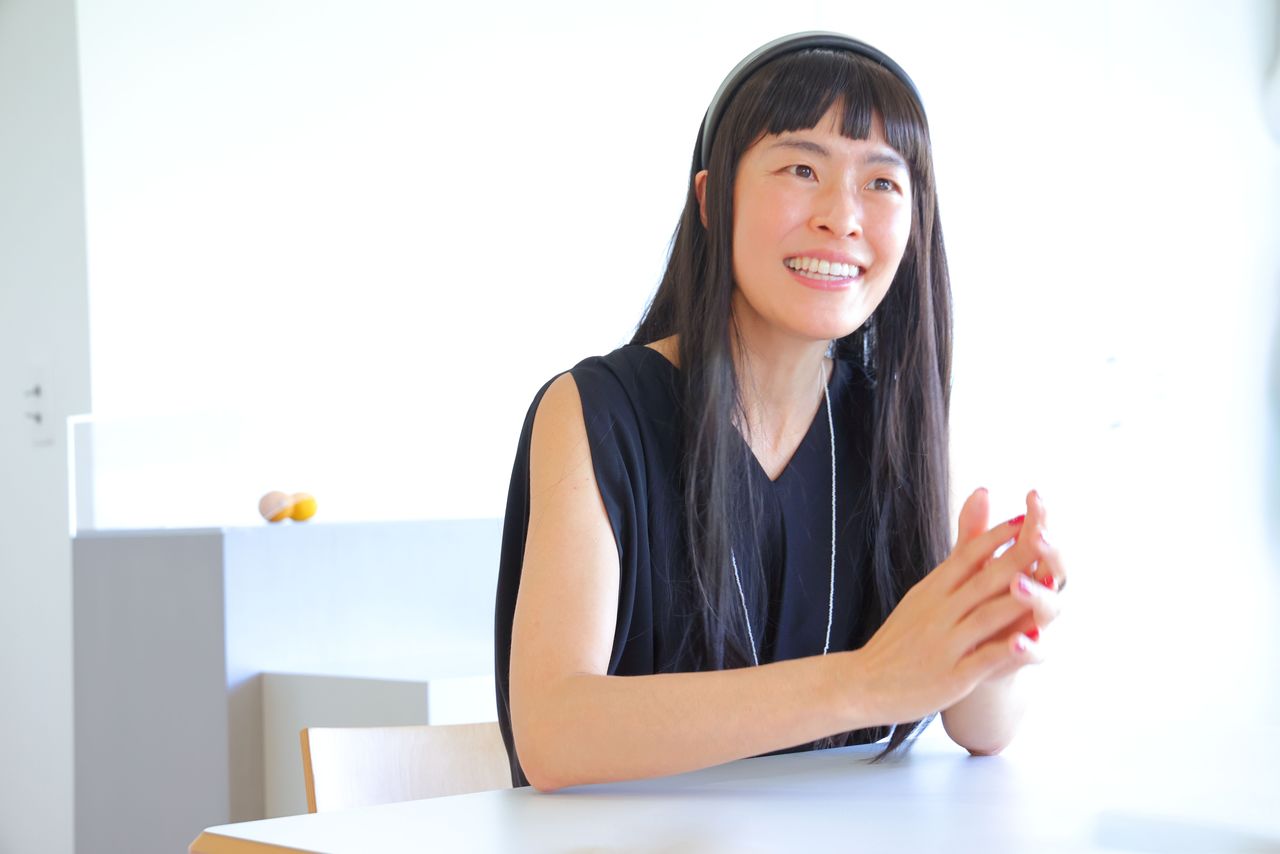
Kobayashi Erika took inspiration from Anne Frank. (© Hanai Tomoko)
Her father was Kobayashi Tsukasa, known as a Sherlock Holmes researcher, and her mother is Higashiyama Akane, a writer and translator. Her parents hard at work translating all 60 Sherlock Holmes short stories was a familiar sight while she was growing up. As Kobayashi tells it, she was raised in Nerima, Tokyo, “in the Victorian era,” where Baker Street and London seemed to be just around the corner.
“Through my parents’ translations, I felt that characters like Holmes and Watson, as well as their creator Conan Doyle, were right there living together with me. This idea that written sentences could bring back the voices of people past and gone was a first step on the road to where I am now.”
Diary Discovery
In her twenties, Kobayashi published essays, short stories, and comics, and also created installation artworks. A turning point came at 31, when she discovered an old diary of her father’s, written as a militaristic boy under the imperial government of wartime Japan.
“Dad was mobilized to build aircraft during World War II when he was sixteen,” Kobayashi says, “He’d write things like ‘I’ve survived another day.’ While air raids continued, he also described typical everyday life, such as problems with his studies and talking about a girl he liked. It was a side of my father that I couldn’t imagine. At the same time, it added a complexity to how I saw life in wartime, which I’d previously had a simplistic view of.”
By coincidence, her father was born in 1929, the same year as Anne Frank. “From a broad historical perspective, the father I loved and Anne Frank, whom I greatly respect, were a boy in the Empire of Japan, allied with Nazi Germany, and a Jewish girl—this means that indirectly he drove her to her death. I didn’t know how to respond to this,” Kobayashi comments. “Not long afterwards, I took both diaries and set off on a trip to places where Anne had been in Germany, Poland, and the Netherlands.”
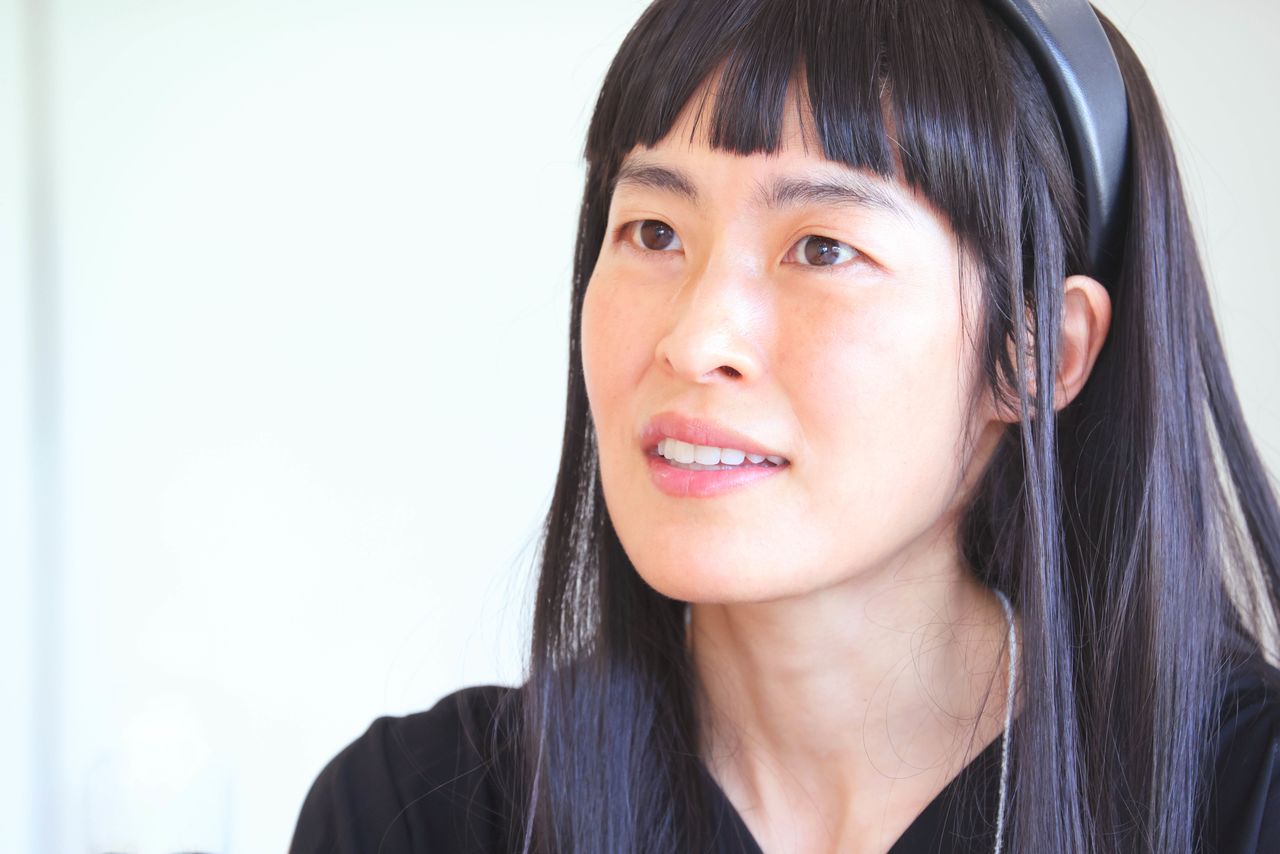
“I took both diaries and set off on a trip.” (© Hanai Tomoko)
That experience led to Kobayashi’s first full-length work Your Dear Kitty, published in 2011. This interweaves excerpts from diary entries on her own travel to places including concentration camps with the diaries of Anne Frank and her father, creating the sense that the international situation at the time she was writing was directly connected to historical events. The book helped her understand that Anne’s single death was the result of many choices by the people living in that period.
The Traces We Leave
After completing Your Dear Kitty, Kobayashi wanted to write next about radioactivity. One reason was the 2011 nuclear accident at TEPCO’s Fukushima Daiichi Nuclear Power Station, but she had been interested in radiation since much earlier as something that was real, but invisible.
“I’ve seen Marie Curie’s laboratory notebooks,” Kobayashi says. “Test them with a dosimeter and they still show a high level of radiation decades after her death. That’s because radioactive substances like radium and polonium, which she touched with her bare hands, remain in her fingerprints. These will be there for millennia, as 1,600 years is the half-life of radium 226. I feel an ironic connection with Anne’s statement, ‘I want to go on living after my death.’”
Hoping to draw readers’ attention to the invisible traces we leave after our deaths, since 2013 Kobayashi has published a number of works looking at the connections between people and radioactivity. These include the comic Seeing the Light, which explores the history of human dealings with radioactivity; Breakfast with Madame Curie, which was nominated for the Akutagawa Prize; and Trinity, Trinity, Trinity, which has been published in an English translation.
Unearthing Historic Voices
Kobayashi used to think that she wanted to leave traces of her own life through her writing, but recently she’s developed the strong desire to unearth and pass on the many voices buried in history. “Someone in the future might discover and listen to not only my voice but also the voices of people who lived around the same time as me. I find that very comforting. So now I want to devote my energy to putting into writing as many voices as I can, and passing them down to the future.”
Her 2024 novel The Paper Balloon Bomb Follies is based on the true story of how students at girls’ schools were mobilized to the Tokyo Takarazuka Theater to make giant paper balloons. The balloons—10 meters in diameter and constructed by gluing washi paper together with konjac paste—would be loaded with bombs by the Japanese Army with the aim of launching a direct attack on the US mainland. She researched for the book extensively, including interviews with people involved.
“We often hear that eighty years after the end of the war, the witnesses to that history are slowly dying out,” Kobayashi says. “But there are still many voices among us that we need to hear. Women’s voices in particular rarely appear in so-called history books. Writing about World War II tends to be packed full of men’s names like Adolf Hitler and Tōjō Hideki. But half of the people who lived through the war were women, too, and they had their individual thoughts and feelings. This is why I wanted to write about women and their perspective on the war.”
The girls are not portrayed as simply weak. The narrative conveys the violence that exists alongside their daily lives and the subtleties of their emotions, as in the thrill they feel when talking about “our soldiers,” or excitement over store sales held to mark the fall of Nanjing to Japanese forces.
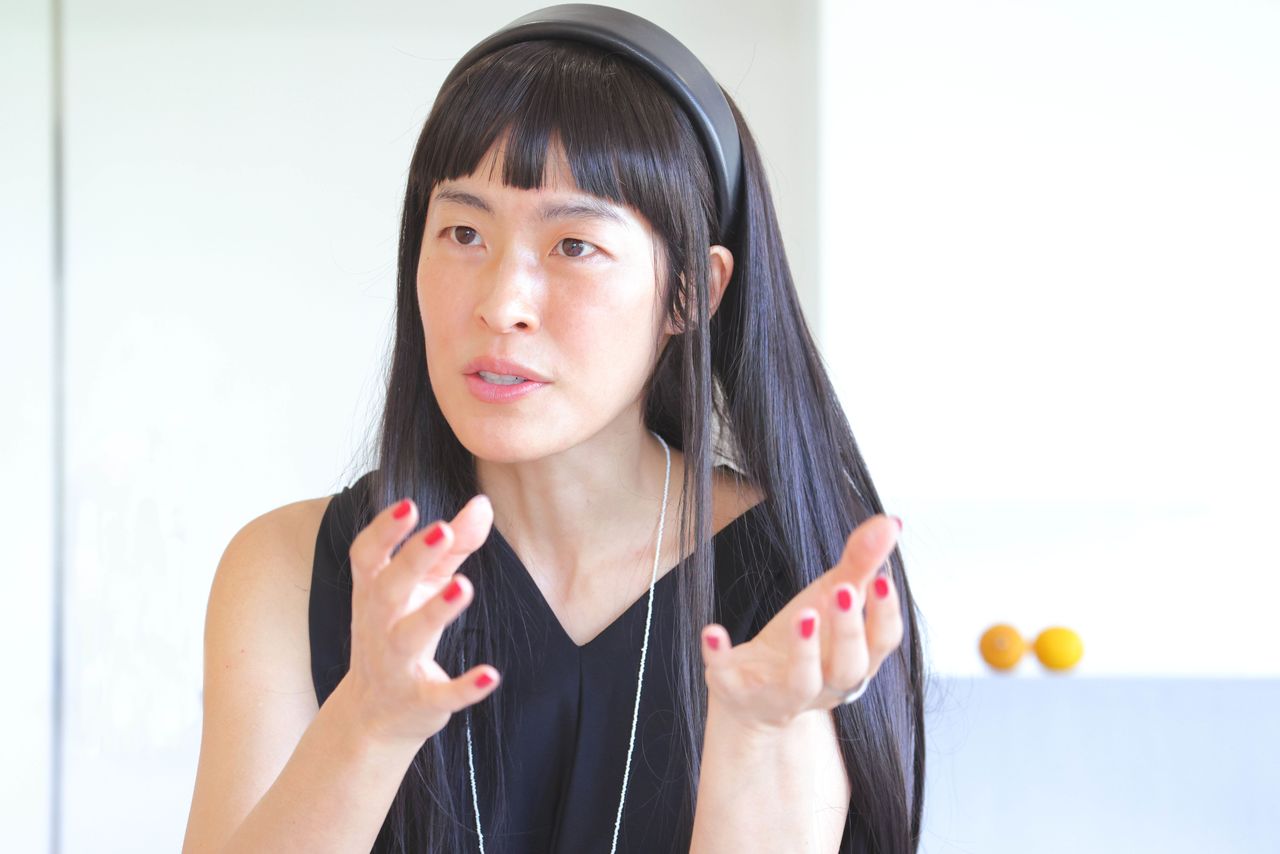
Kobayashi wants to convey as yet little-heard voices to the future. (© Hanai Tomoko)
“When the love you feel for your family, the wish to help others, and the small pleasures of everyday life become entangled in something larger, before you know it, you become a perpetrator of war,” Kobayashi says. “It was only when I was writing that I realized how terrifying this was. I also thought that there might be no difference between the girls making balloon bombs and us living today. For example, the Japanese government has lifted restrictions on the export of lethal weapons, which means arms manufactured in Japan will be used to kill people in other countries. I became frightened of myself, living oblivious to this, while I watched the news and sympathized with people in war zones.”
Growing a Forest
In the spring of 2025, Kobayashi established the ebook publisher Arbaro Books, with the aim of publishing English translations of works about nuclear weapons and radioactivity. Arbaro is the Esperanto word for “forest,” and just as trees come together to form forests, she hopes that books will help to connect people across the world.
The publisher started out with an English release of the first volume of Kobayashi’s comic Seeing the Light. A boy called Hikari, born in 2011, and his cat Erwin travel through time to Paris in 1900, and move back and forth between the past and present. This ambitious work tells the story of 115 years of the history of human interactions with radioactivity. Three volumes have been published to date, but Kobayashi says that it is not yet complete, as she plans to write more in the future.
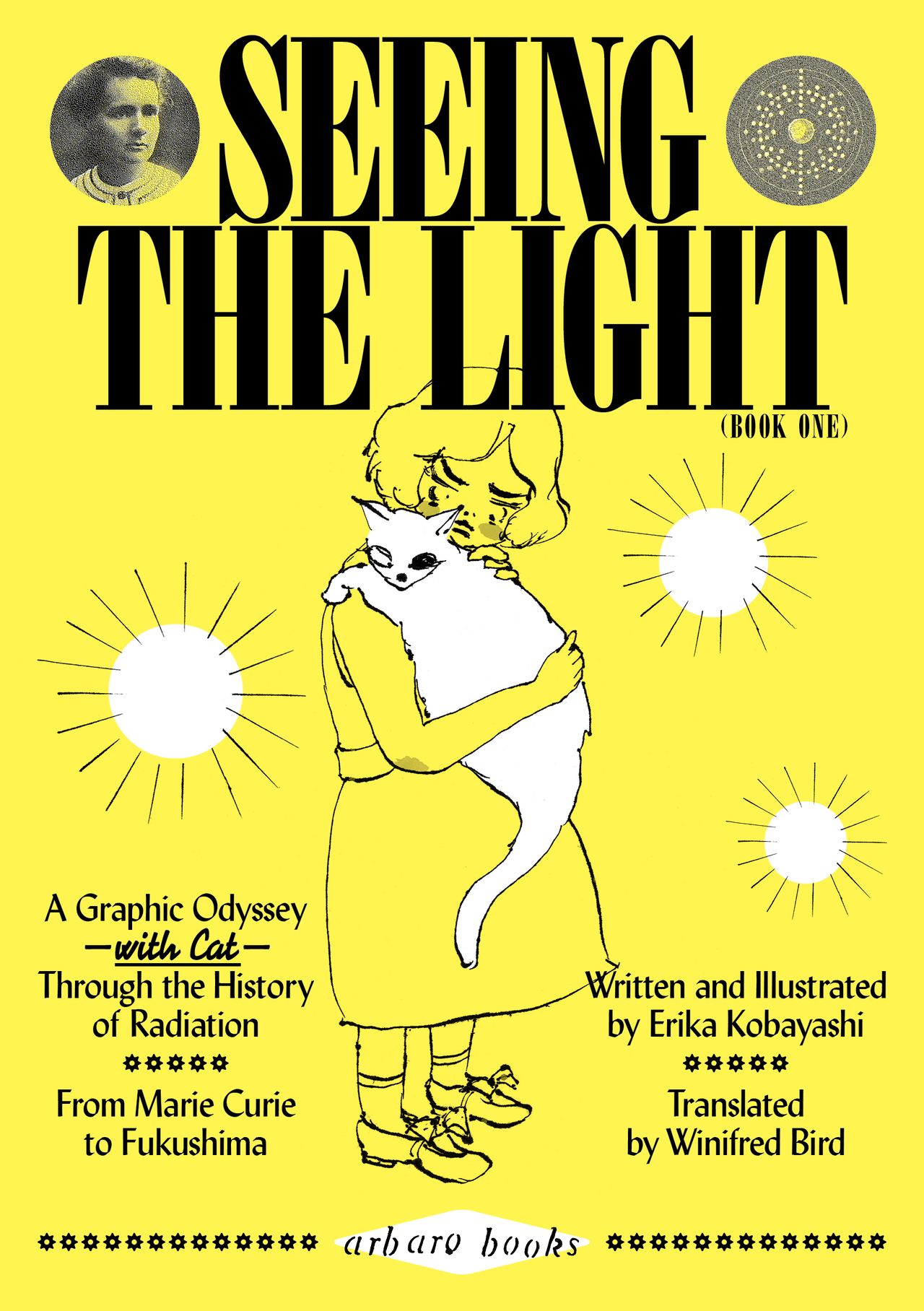
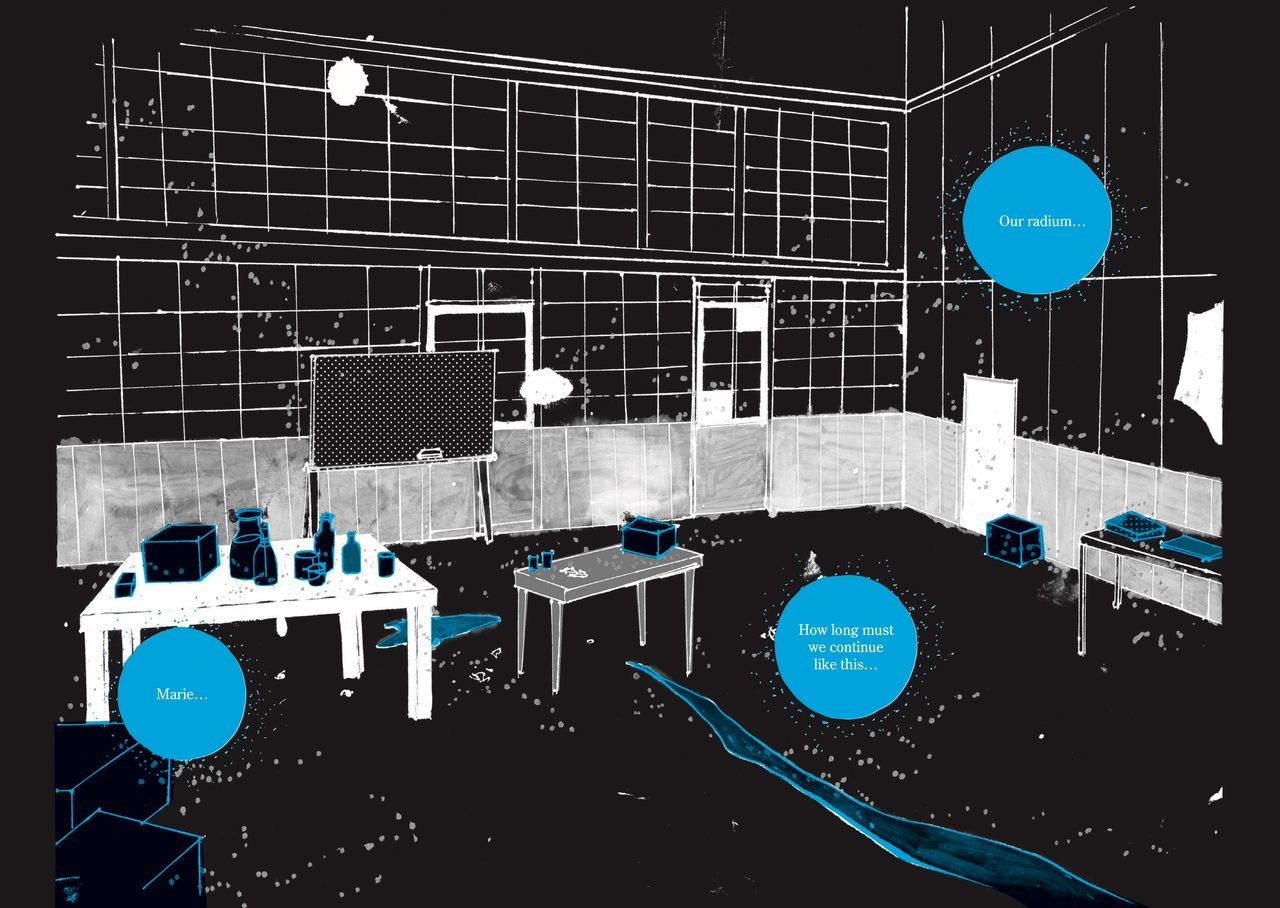
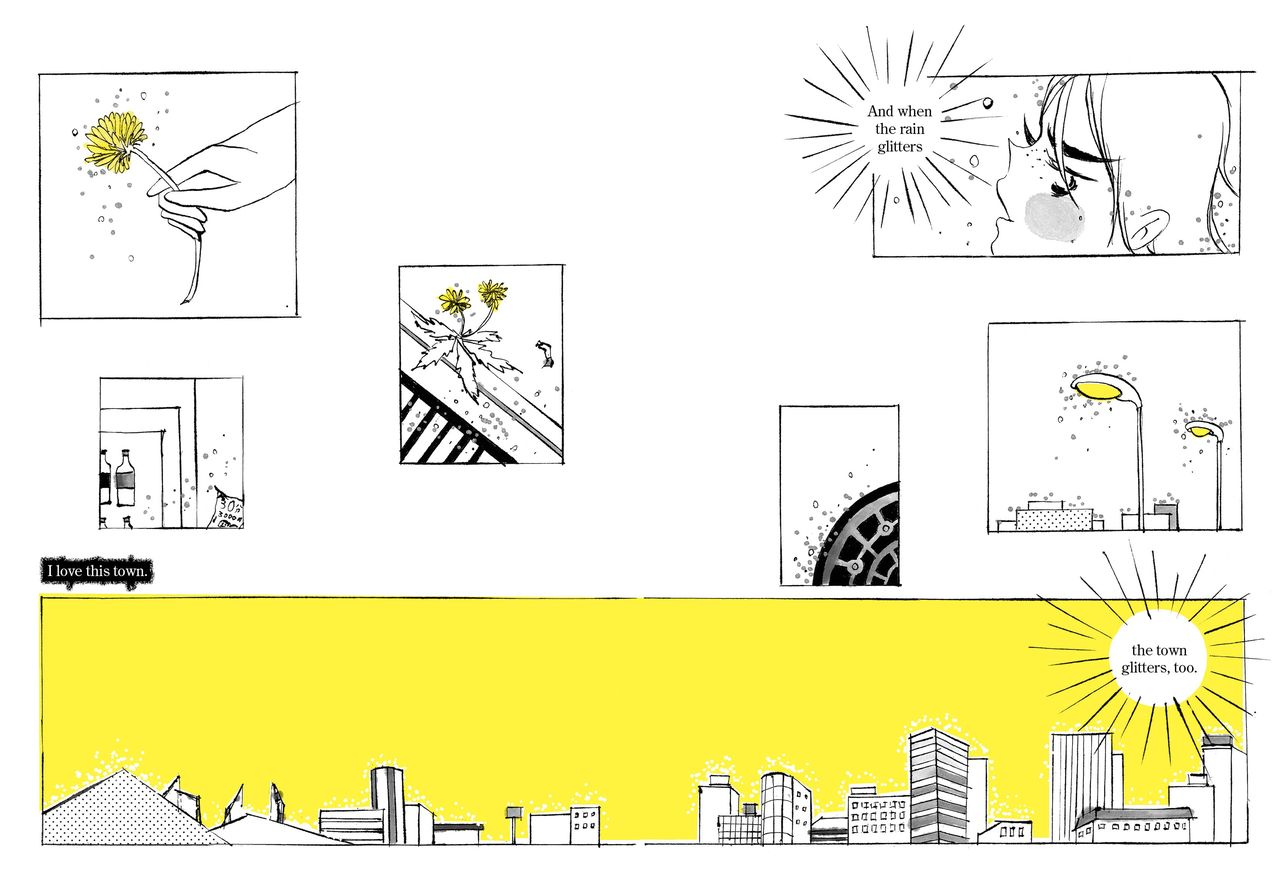
Seeing the Light was translated into English by the US translator Winifred Bird, while Canadian artist Brennan Kelly oversaw the book design. (© Arbaro Books)
The second publication is the short story “The Bride at Sixty” by Akutagawa Prize–winning author Hayashi Kyōko (1930–2017), who wrote a number of works based on her experience of the atomic bombing of Nagasaki. It is set to appear in both Japanese and English on August 6; Canada-based translator Brian Bergstrom, who also translated Kobayashi’s Trinity, Trinity, Trinity, produced the English version, while Brennan Kelly again handled the design.
“I very much look up to Hayashi among writers of a previous generation, and I’d like to talk about her writings with many people,” Kobayashi says. “I want this to become a platform where works written in Japanese on topics like atomic bombs and other nuclear weapons, as well as nuclear power, can be translated not only into English but also other languages. But I’m running it with my own money, so I’m still in the trial and error stage . . .”
Choices to Make
Kobayashi does not make judgements about good and evil in her writing. “This is because good and evil can switch around in an instant,” she says. “For example, after Japan was defeated in World War II, there was a sudden switch away from the belief that it was right to worship the emperor and support the imperial government. People who’d enthusiastically advocated for war used the very same mouths to sing the praises of peace. That’s why I want to carefully describe every detail when looking back at the past. This brings into focus that era’s various turning points, where people made choices. I think this could help us living now to consider our options when we’re forced to make influential decisions ten or twenty years from now, or even further in the future.”
A binary view of nuclear weapons and nuclear power will also only lead to confrontation. “As I write, looking back on history,” Kobayashi says, “I genuinely feel how nobody understands every aspect or detail of nuclear power and nuclear weapons. This is why we should do our best to work together to share our knowledge and consider these matters. I believe that this will mean that whatever paths we choose, as individuals we’ll understand the weight of our decisions. I want to create a space and an opportunity for everyone to think. This desire drives me on as I continue to write.”
Information on Works Mentioned
- Trinity, Trinity, Trinity (Torinitī, torinitī, torinitī) is translated by Brian Bergstrom
- The first volume of Seeing the Light (Hikari no kodomo) is translated by Winifred Bird
- Your Dear Kitty (Kitī tachi e), Breakfast with Madame Curie (Madamu Kyurī to chōshoku o), and The Paper Balloon Bomb Follies (Onna no ko tachi fūsen bakudan o tsukuru) are not yet translated in English
- “The Bride at Sixty” (“Kanreki no hanayome”) by Hayashi Kyōko is translated by Brian Bergstrom
(Originally written by Itakura Kimie of Nippon. com and published in Japanese on June 26, 2026. Banner photo: Kobayashi Erika in May 2026. © Hanai Tomoko.)
literature translation Fukushima Daiichi Nuclear Power Station nuclear author