
Tokyo Metropolitan Government Building an Observation Deck Trendsetter
Society- English
- 日本語
- 简体字
- 繁體字
- Français
- Español
- العربية
- Русский
A Tokyo Landmark
The Tokyo Metropolitan Government Building was completed in 1990 and towers over Shinjuku. Its Main Building No. 1, standing 243 meters tall, was the tallest structure in Japan at the time. Each of the main building’s twin towers features an observation deck on the forty-fifth floor, 202 meters up, that is open to the public free of charge. Now a well-established Tokyo landmark, the building has welcomed a cumulative total of around 55 million visitors to its observation areas over the past 35 years. While the annual number of visitors temporarily dropped during the COVID-19 pandemic to 150,000 in 2020 and 70,000 in 2021, it rebounded sharply to reach 1.6 million in 2024.
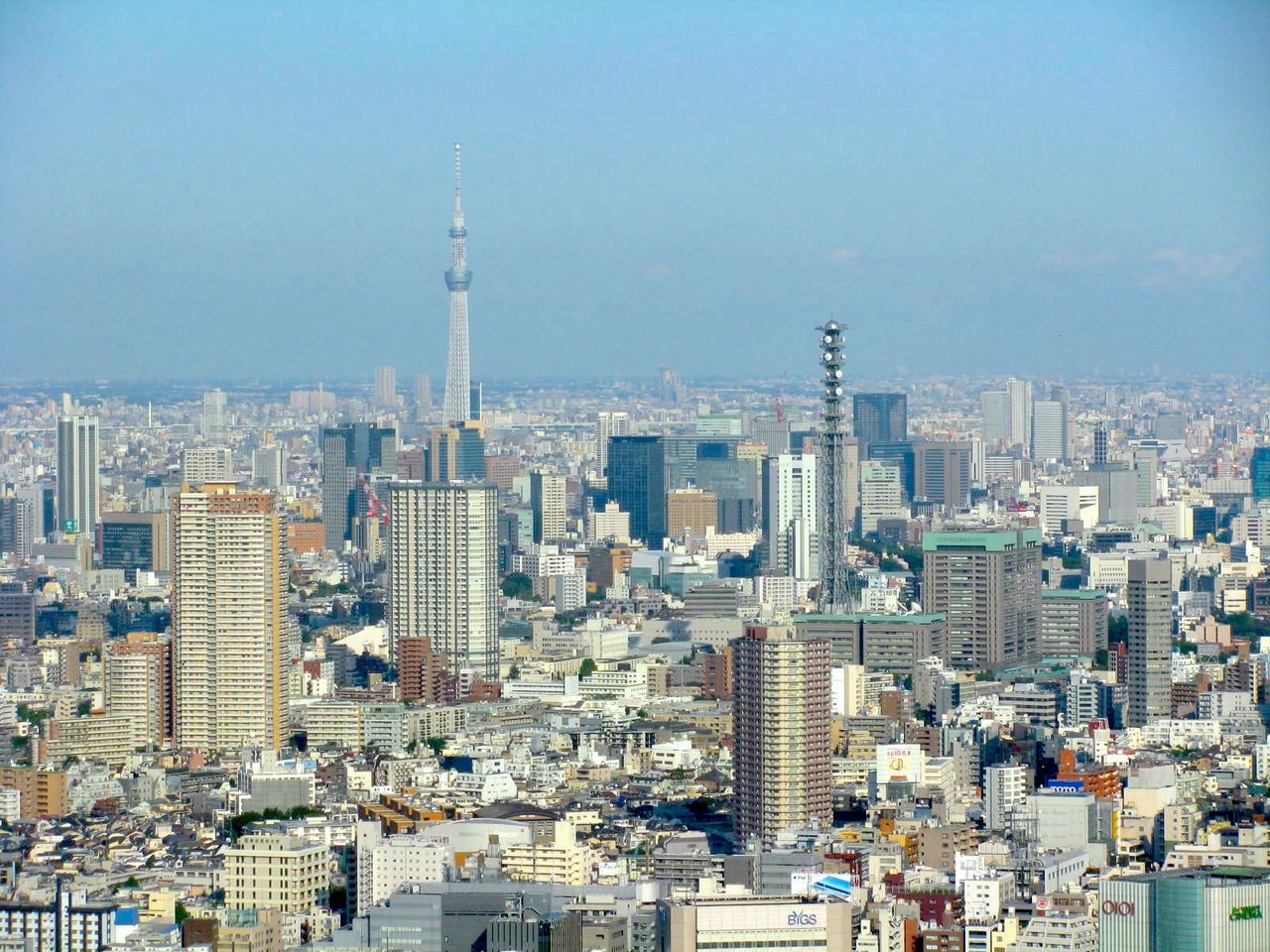
A panoramic view of the capital with Tokyo Skytree visible in the distance, as seen from the observation deck of the Tokyo Metropolitan Government Building. (Courtesy the Tokyo Metropolitan Government)
The North Tower’s observation deck includes a space where visitors can enjoy light meals and drinks while taking in the view. In the evenings, it can also be rented out for private events and parties. Meanwhile, the South Tower’s deck features a public piano; artist Kusama Yayoi supervised the design, and anyone is welcome to play on it.
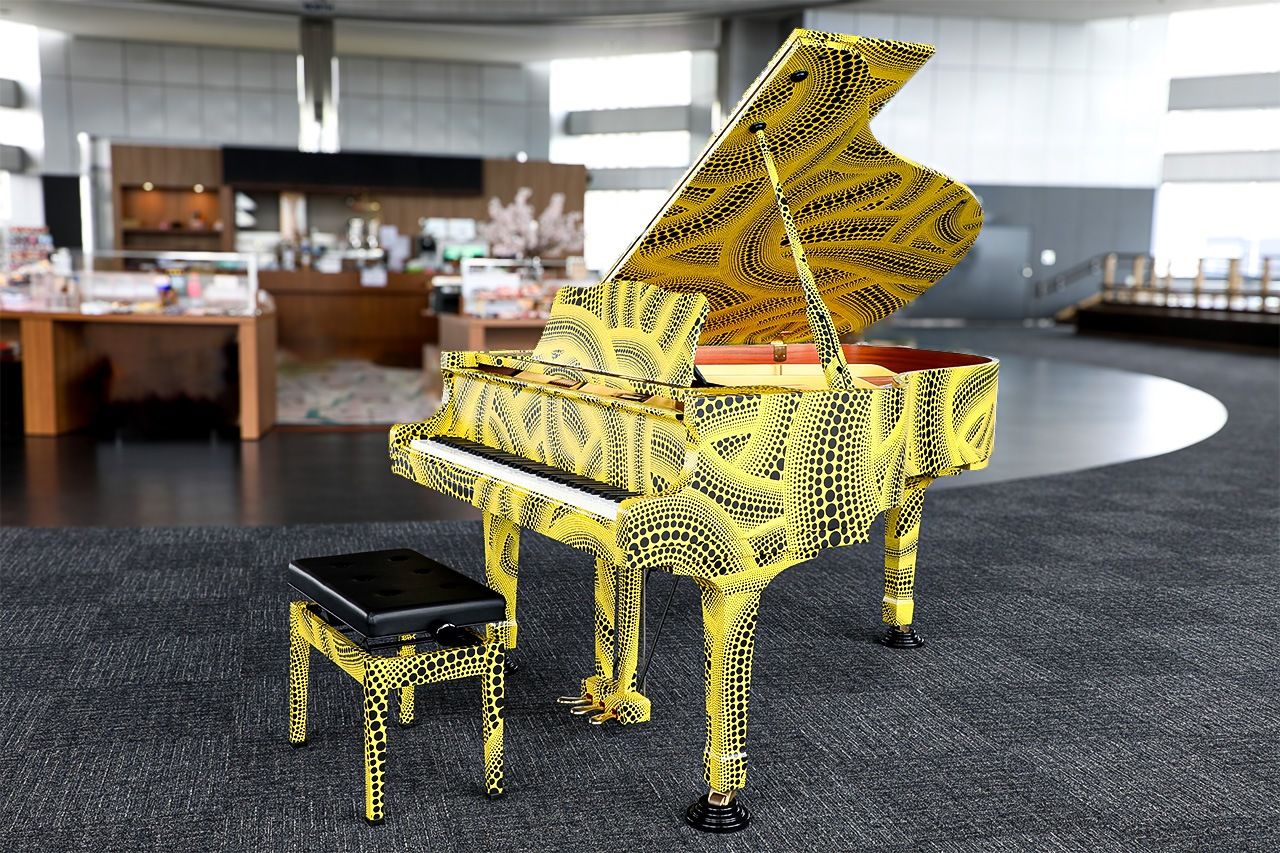
A public piano designed under the supervision of artist Kusama Yayoi. (© Ogawa Hiroo)
Most visitors are not from Tokyo, with foreign tourists now vastly outnumbering those from Japan. While visitors from Asian countries such as China and South Korea began to spike in the 2000s, recent years have seen an increasingly diverse crowd, with travelers arriving from Europe, Latin America, and beyond.
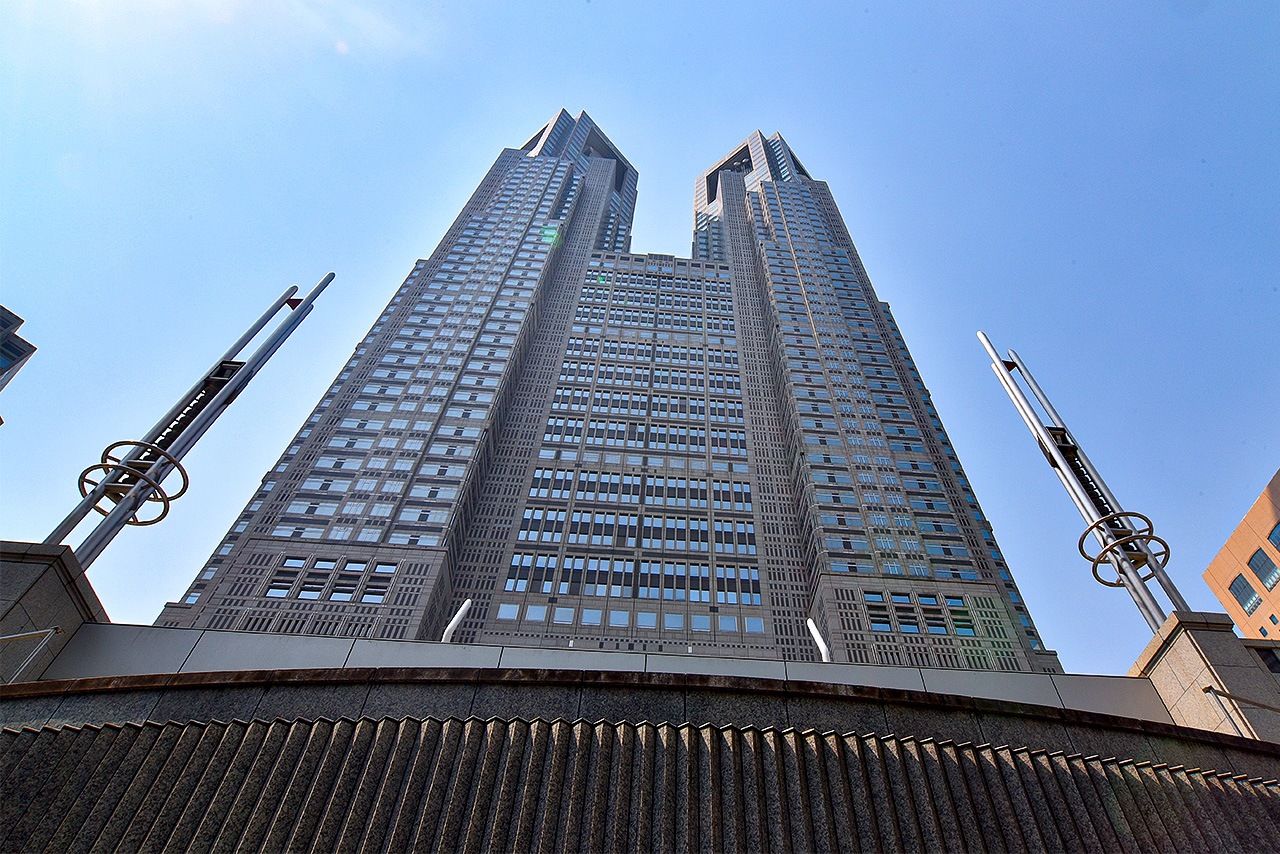
The Tokyo Metropolitan Government Main Building No. 1 has become a well-known landmark. (© Ogawa Hiroo)
Long Lines of International Tourists
When visiting one of the observatories in April for this report, a long line had formed on the first floor of the building where visitors register for entry. A sign indicated that there would be a 45-minute wait. In the past, guests could head straight up with little delay, but the recent surge in popularity is remarkable.
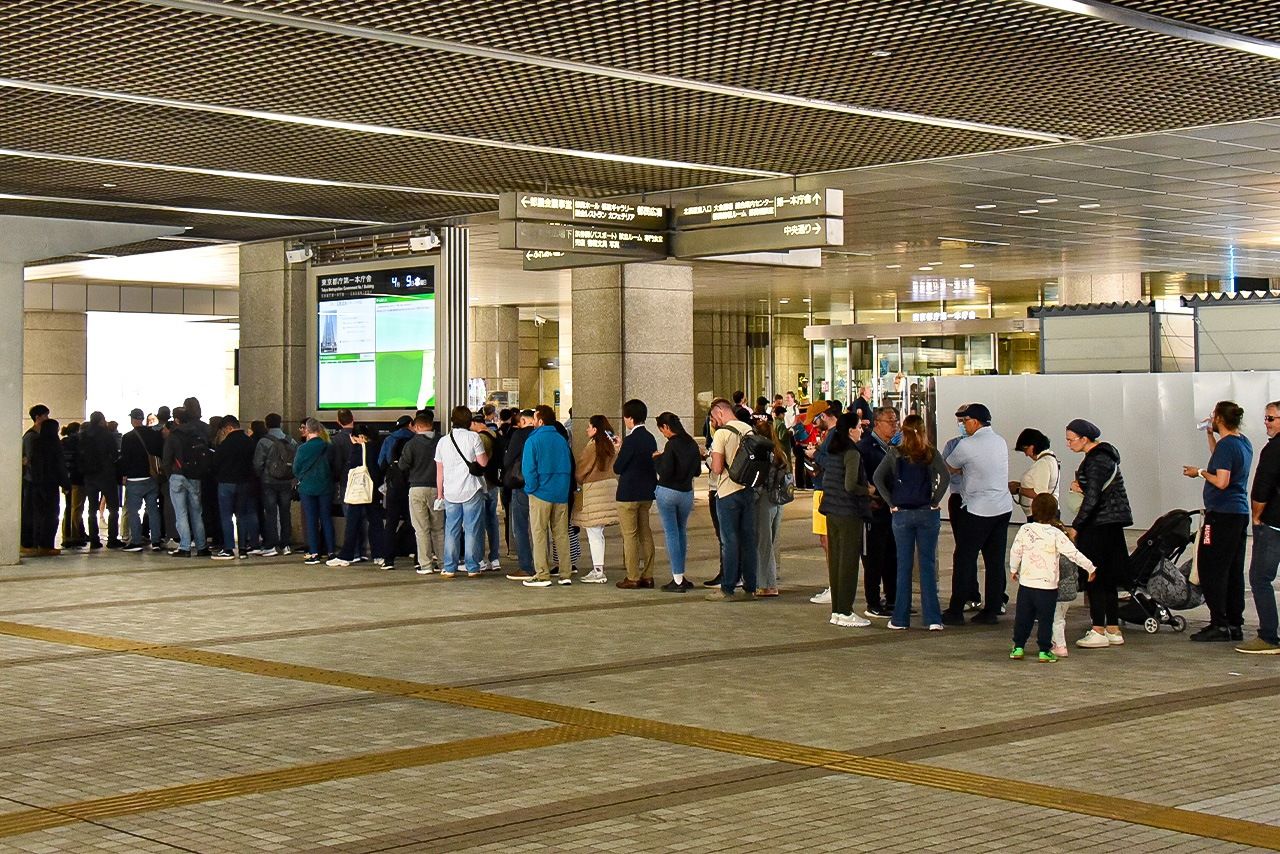
A long line of people waiting to take the elevator to the observation deck at the Tokyo Metropolitan Government Building. (© Ogawa Hiroo)
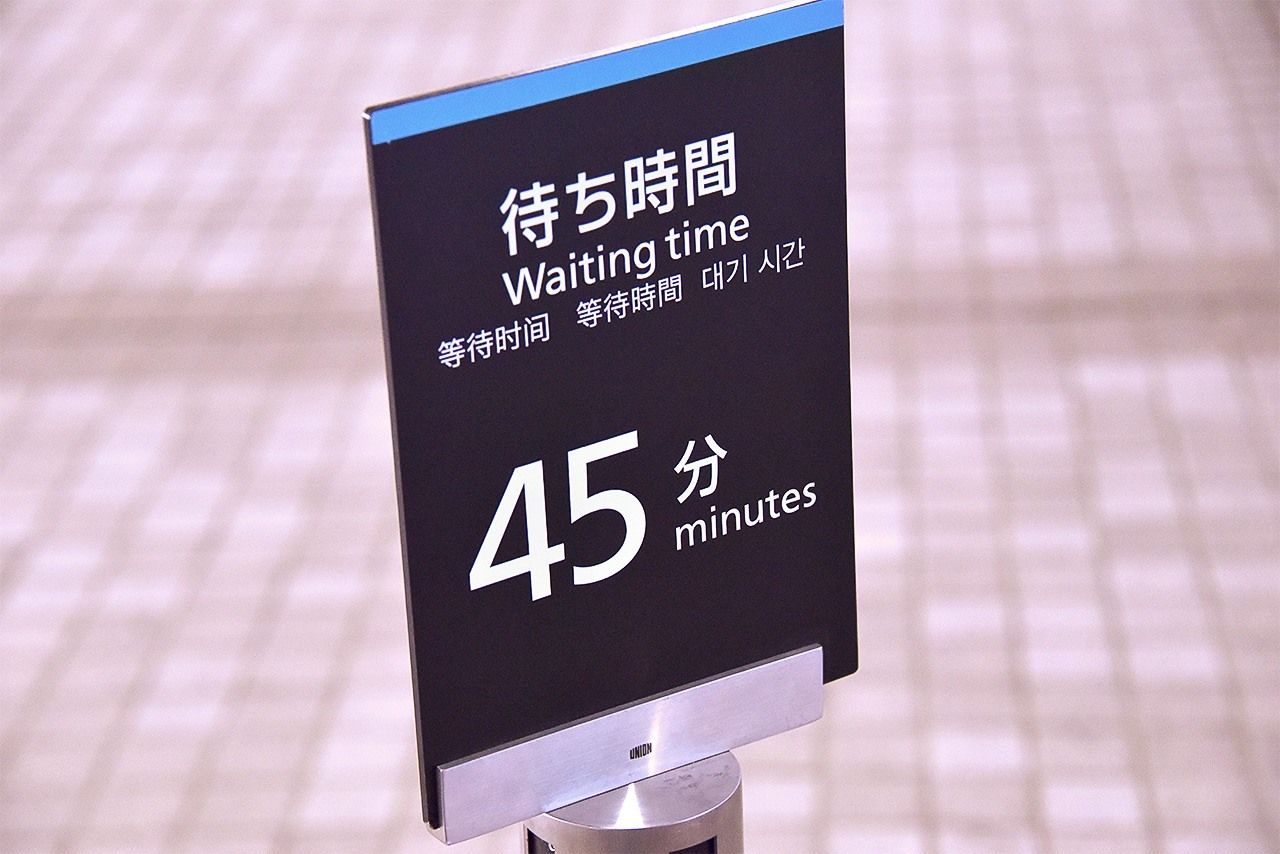
A sign displaying the current wait time for entry to the observation deck. (© Ogawa Hiroo)
Since fiscal 2011, volunteer interpreters have been stationed at the observation decks, offering guidance in English, Chinese, and Korean. One of the female volunteers commented, “Recently, we’ve been seeing a noticeable increase in visitors from Europe,” as she busily assisted the steady flow of foreign tourists.
One such visitor, Uyanbi from France, is a frequent guest. He has already visited the observation deck seven or eight times, often coming to Japan with his Japanese wife on family visits. A self-described Japan enthusiast, he praised the view from the deck, saying, “Even compared to places like Yokohama’s Landmark Tower or Tokyo Skytree, the view from here is absolutely stunning.”
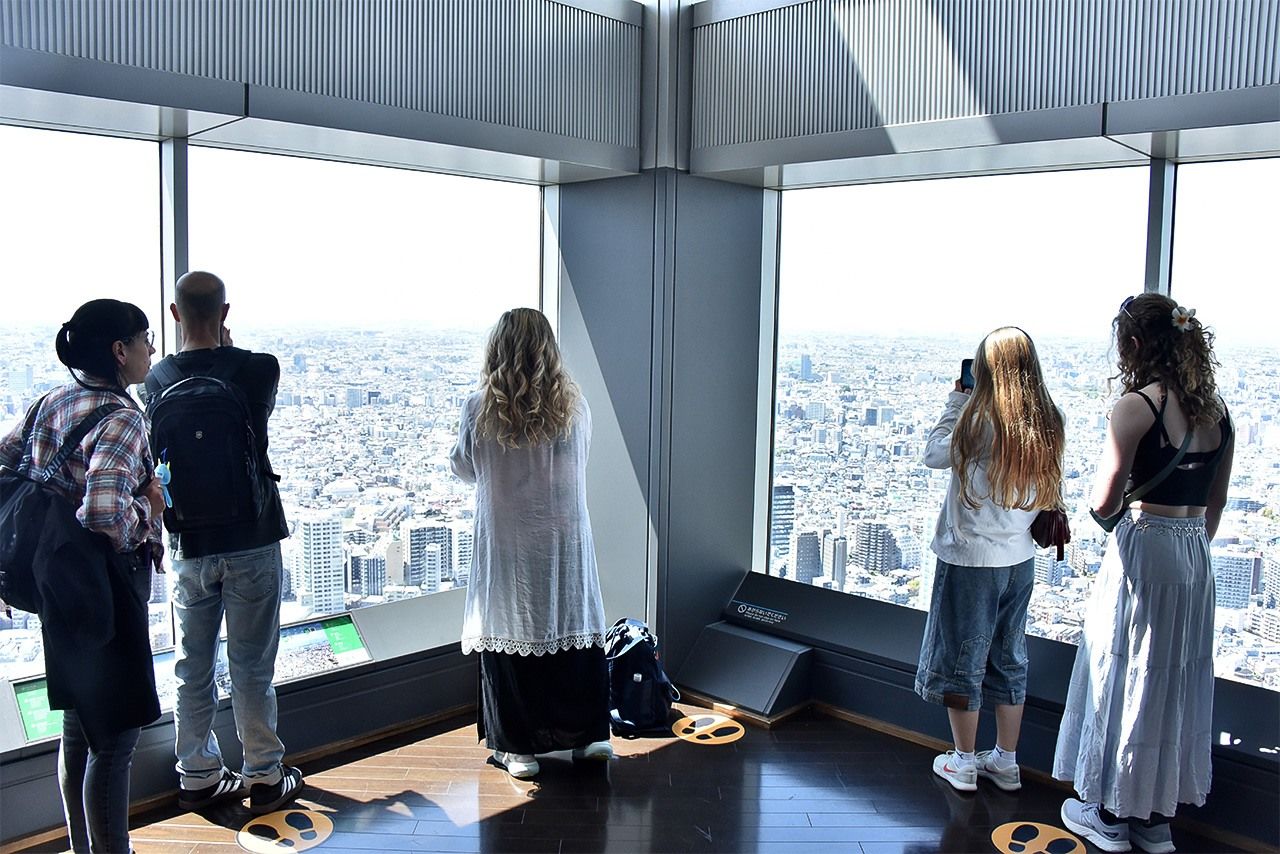
Tourists enjoying the view from the observation deck. (© Ogawa Hiroo)
Ciro Pizzi, visiting Japan from Italy for the second time, said he had discovered the observation deck through a video-sharing site and had been looking forward to the visit. He was busy snapping souvenir photos with his phone. For foreign tourists, access without charge to such a panoramic view is an enormous draw. Many interviewees echoed the same sentiment: “It’s hard to believe you can enjoy such an amazing view for free.”
Promoting Understanding of Government
As the main office of the vast Tokyo metropolitan government, the building does not inherently require a free observation deck. So why include a space that is not directly tied to administrative duties?
“The idea was to help people who visit the building feel a sense of connection to Tokyo while enjoying the view, and in doing so, deepen their understanding of the city and its government,” explains Hiratsuka Kenji, manager of the building’s Facility Maintenance Section.
It is common for local governments across Japan to make their offices relatively open and accessible so that residents can feel more comfortable engaging with public administration. This culture of openness, which has long been taken for granted by the Japanese public, underpins the idea of building observation decks and making them freely available.
Ishida Jun’ichirō, a professor at Mukogawa Women’s University and an expert in Japanese architectural and urban history offers additional insight. “The old Tokyo government building in Marunouchi featured a plaza where Tokyo residents could gather,” he explains. “Such open spaces reflect a public mindset rooted in the fact that government buildings are constructed with taxpayer money, and therefore should serve as shared spaces for the community.” As municipal buildings have grown taller over time, he adds, observation decks have naturally come to take on that role of a public gathering space.
The Rising Height of Government Buildings
According to Professor Ishida, the legal foundation that paved the way for the construction of taller government buildings was a revision to Japan’s Building Standards Act in 1963. Before the amendment, building heights were capped at approximately 31 meters, a limit rooted in the prewar shakkanhō (traditional Japanese units of measurement), where 100 shaku equaled roughly 31 meters. This restriction was commonly referred to as the 100-shaku rule.
With the repeal of this height limit, developers were free to build taller structures to meet the demands of Japan’s booming postwar economy. As land prices soared and the need for more efficient land use intensified, high-rise buildings began to flourish. One iconic example was the completion of the Kasumigaseki Building in 1968, which stood around 147 meters tall and captured nationwide attention.
The trend of high-rise municipal buildings began with the Iwate Prefectural Office Building, completed in 1965. However, the end of the 100-shaku rule didn’t immediately trigger a wave of high-rise construction among municipalities. Many local governments lost their original buildings during World War II and rebuilt them during the postwar recovery period—such as Tokyo’s previous metropolitan office, completed in 1957. As a result, most municipalities’ buildings were relatively new when the law changed, and they did not begin considering large-scale rebuilds until the late 1980s into the 1990s.
Over time, government responsibilities expanded, leading to a growing accumulation of administrative documents and records that needed to be stored. In densely populated urban centers, surging land prices made it increasingly difficult to secure additional property for expansion. These pressures made vertical development the more practical solution over a horizontal sprawl, especially in major cities.
A Must-Have Feature?
Across the 23 municipalities of central Tokyo, plans to rebuild or relocate municipal offices began in the 1990s and continue to this day. In 1996, Nerima completed its new office building—a 21-story tower standing approximately 93.8 meters tall. In 1999, Bunkyō followed suit with a 28-story, roughly 142-meter-tall building, the tallest among the 23 municipalities. Nerima’s is the second tallest. Both facilities include observation decks that are free to the public, although the Bunkyō building is currently closed for renovations until December 2026. A staff member from Nerima’s General Affairs Division explained the aim was to attract more visitors by offering sweeping views that include Mount Fuji and Tokyo Skytree.
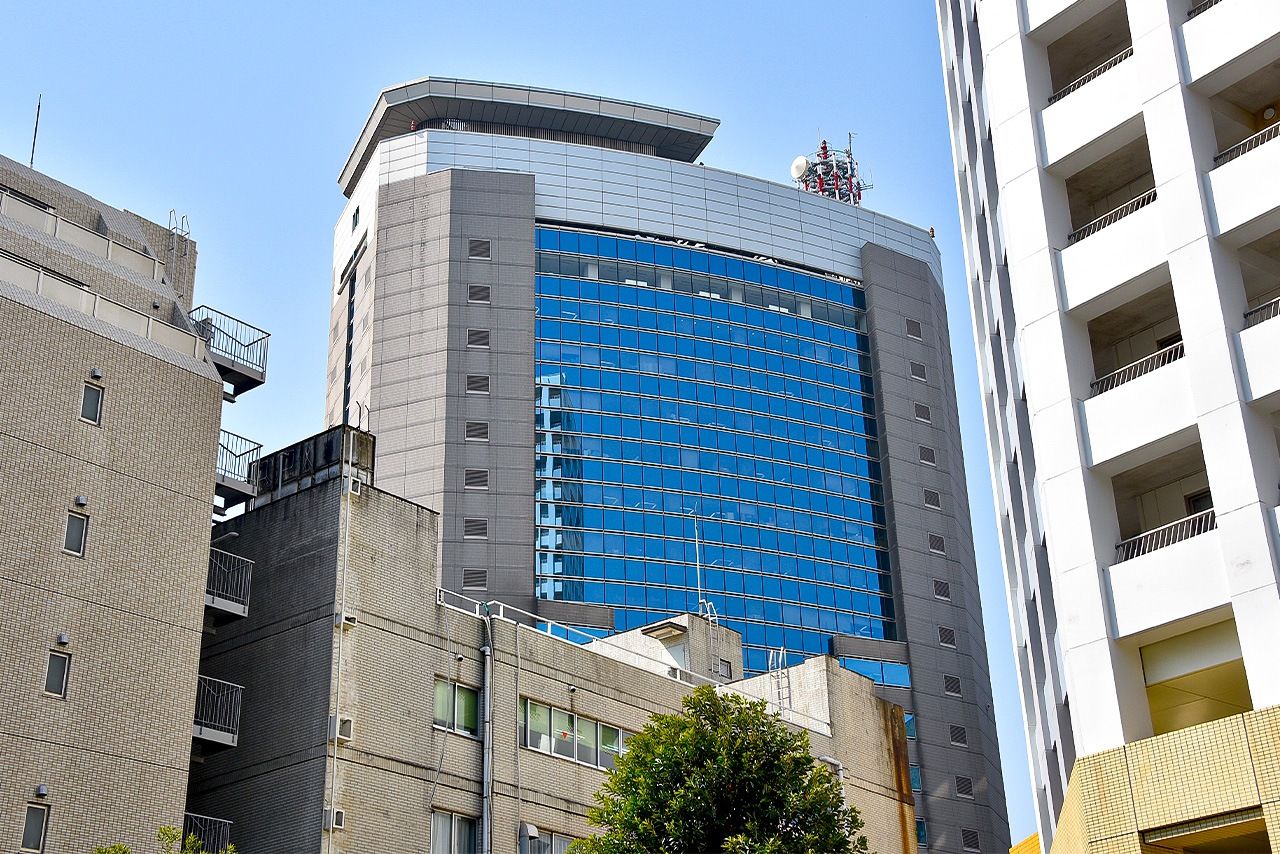
The Nerima municipal office, nestled within a residential neighborhood. A restaurant operates on the observation floor. (© Ogawa Hiroo)
In May 2024, Setagaya began using its new East Wing, which features an observation lobby on the tenth floor. While not a high-rise by modern standards, “there are no tall buildings nearby, so it offers a panoramic view of Setagaya’s cityscape,” notes Yamaji Hiroshi, section chief of the municipality’s facilities management division. When it opened, the lobby hosted a popular panel exhibition on Guri and Gura, a beloved picture book series by the late Nakagawa Rieko, an acclaimed children’s author and honorary resident of the ward.
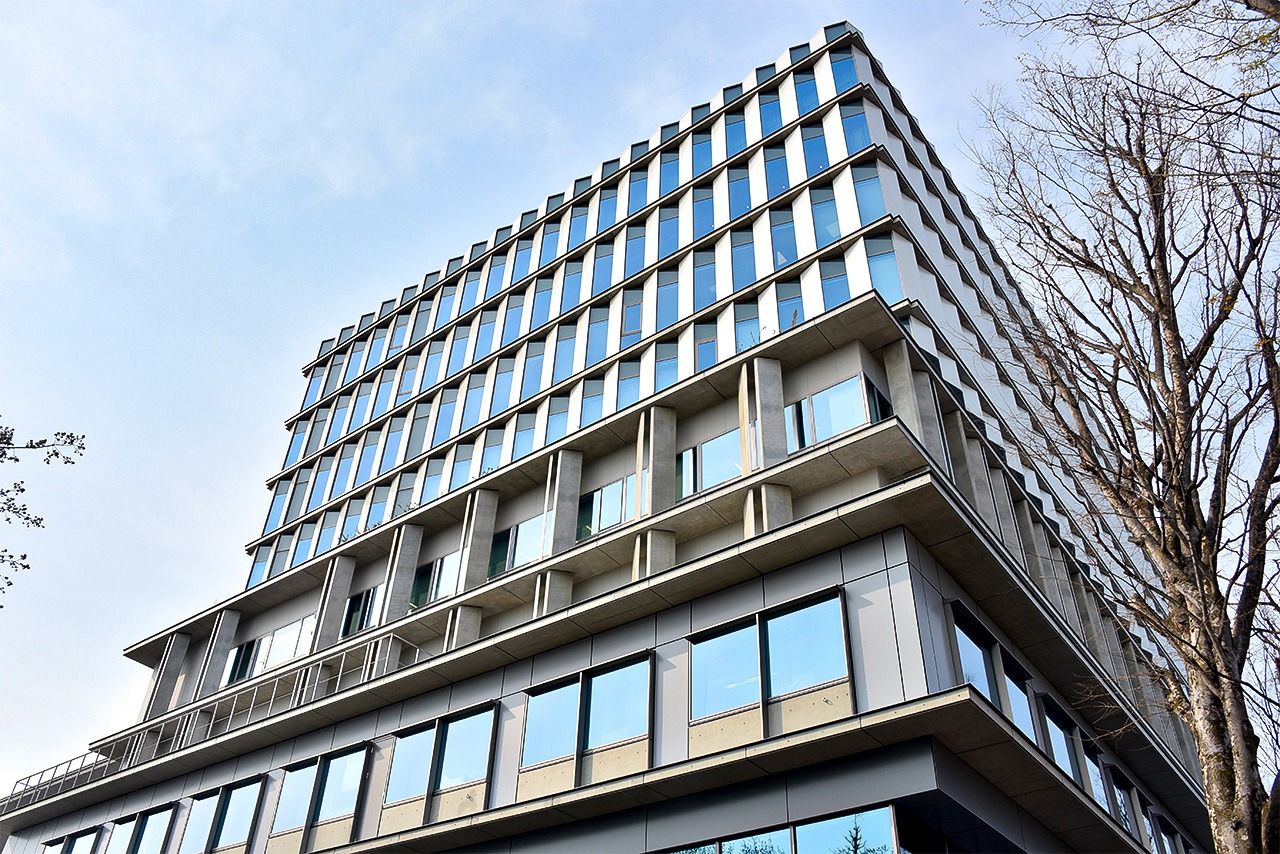
The Setagaya municipal office. With no tall buildings nearby, the observation lobby offers distant views of landmarks like Mount Fuji. (© Ogawa Hiroo)
Government officials may assume that by adding appealing features like observation decks to their buildings, they can strengthen their connection with residents, but the reality is not so simple. In practice, relatively few facilities are actively used as event spaces for residents. Instead, these areas tend to function more like tourist attractions, and in some cases, they fail to attract even tourists. Nevertheless, a sense of bureaucratic conformity seems to prevail: whenever a municipality rebuilds its office, it increasingly treats an observation deck as a must-have feature.
Professor Ishida cautions against such copycat tendencies. “Government buildings aren’t rebuilt often. Just because other municipalities are doing it doesn’t mean you should follow suit. Officials need to think carefully: what does their community truly need? Is an observation deck really necessary? These are questions that must be considered from a long-term perspective. Gaining the support of residents and the local assembly should be the first priority,” he emphasizes.
While more municipalities are adding observation decks to their buildings, only a handful like the Tokyo Metropolitan Government Building have succeeded in drawing large crowds and making meaningful contributions to local outreach or tourism. Municipalities would do well to seriously consider how to utilize these spaces effectively. Otherwise, they risk letting a valuable resource go to waste.
(Originally published in Japanese on May 13, 2025. Banner photo: Tokyo night view from the Metropolitan Government Building observatory. Courtesy the Tokyo Metropolitan Government.)