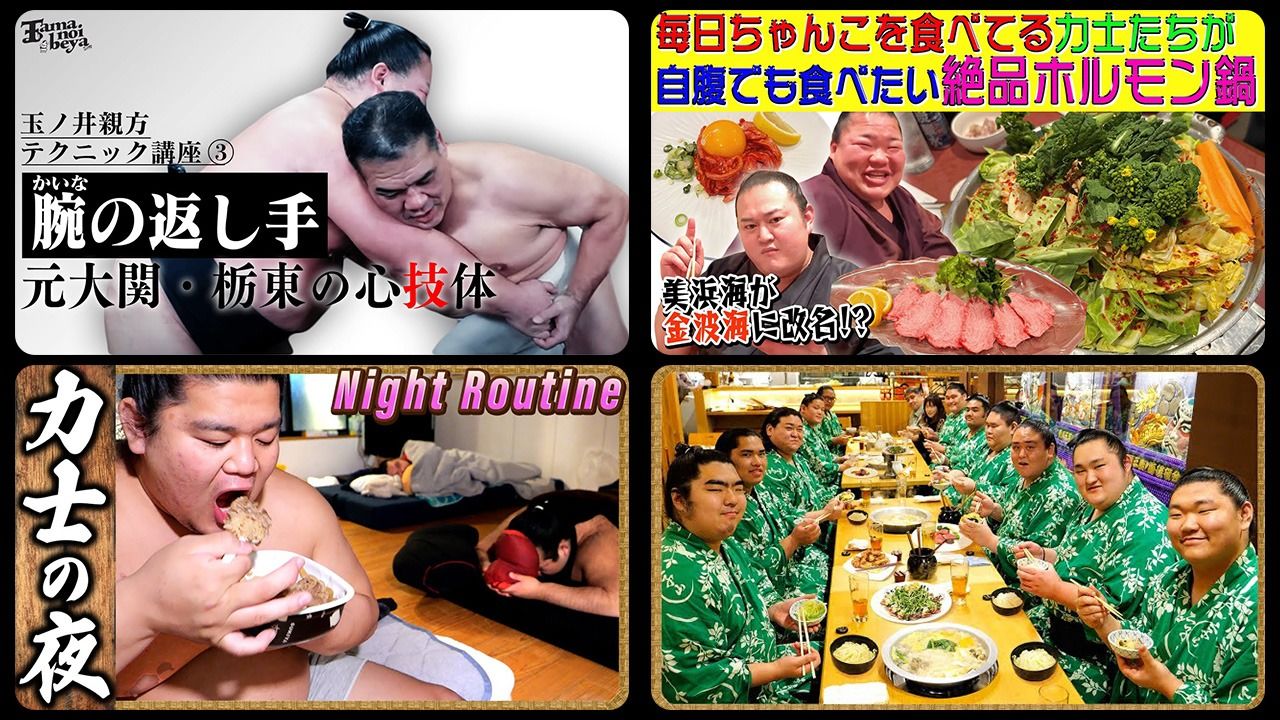
Streaming Videos Mix Sumō Tradition with Modernity
Culture Sports Society- English
- 日本語
- 简体字
- 繁體字
- Français
- Español
- العربية
- Русский
”Dig In, Boys!”
As heaping plates of noodles with dipping broth are brought to the table, a group of sumō wrestlers shout out in unison: “Gotchan desu!” This sumo-specific take on the standard dining phrase gochisō sama desu is their signal to dig in at once, commenting appreciatively on the broth’s rich seafood flavor and exclaiming “Mmmm, great!” as they eat. They also tuck into plates of deep-fried chicken served as a side dish.
These are scenes from a Futagoyama stable YouTube video, which has been viewed over 10 million times. It shows 11 rikishi and their oyakata, the “stablemaster,” or head coach, settling in on the second floor of a Mita Seimenjo noodle restaurant booked for the occasion. They start off by ordering two bowls each, tsukemen dipping noodles with “the works” and egg-topped noodles, along with karaage fried chicken. To finish off, they add extra servings of noodles with sea bream dipping broth.
The rikishi have reserved the entire second floor of the shop. (Courtesy of Futagoyama stable.)
Three years ago, the Futagoyama stable inaugurated its Futagoyama Stable Sumō Food YouTube channel, which has by now aired nearly 270 episodes including “Sumō Life,” “Rikishi Free Time,” and many more. Some videos, such as “Morning Practice Uncut,” give an unadorned view of daily rikishi life; the channel now has around 490,000 subscribers, the most of all the sumō channels. The videos, which can be captioned in English, have attracted many viewers outside of Japan too. All told, views now exceed 200 million.
Living the Stable Life
As has long been the tradition, wrestlers live under the same roof as the stablemaster and his family and eat meals together as they devote their days to practice. Videos show the daily routine at a sumō stable as young newcomers spar with their seniors and everyone vies to hone their skills.
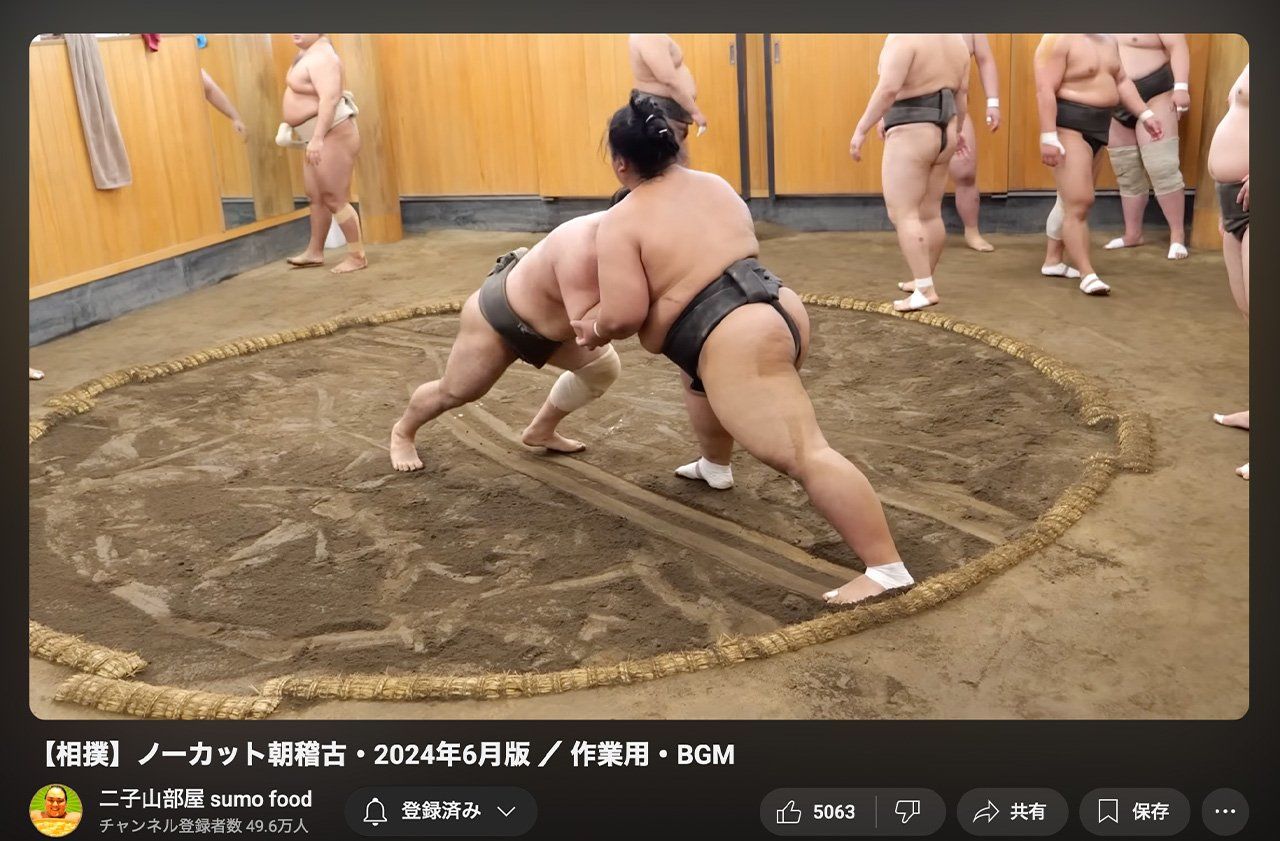
The Futagoyama stable’s morning practice, complete and unedited on YouTube. (Courtesy Futagoyama stable)
There are misconceptions that life in a sumō stable is governed by strict rules, so Stablemaster Futagoyama (the former ōzeki Miyabiyama) believes that videos showing the daily routine can help communicate the attractive aspects of sumō. As to why the videos show so many meal scenes, he explains that this is to emphasize the stable’s teaching that rikishi should eat every morsel they are served, right down to the last grain of rice in their bowls.
The Japan Sumō Association Goes Online
Training hard is the only path to becoming an accomplished rikishi. Sumō practice sessions continue to be as demanding as they have always been. But the sumō world, battered by match-fixing allegations, a fatal physical assault, and other scandals some years ago, has changed considerably. Gone are the days when seniors demanded unreasonable deference from their juniors and coaching sometimes involved physical violence. The inner workings of sumō stables have become more visible, and the Futagoyama stable’s videos show how things are changing.
The Japan Sumō Association operates an official YouTube outlet, the Oyakata Channel, with over 600 videos now available. The channel streams live commentaries on the bouts during tournaments and airs episodes where retired rikishi, now oyakata elders, reminisce about their younger days in the ring, or currently active rikishi laugh as they compete in measurements of their muscular strength.
Coaching Technical Skills
The Tamanoi stable headed by former ōzeki Tochiazuma, known for his technical excellence in his grappling days, has its own channel as well. Popular content there is a series of videos featuring Tamanoi’s demonstrations to his stable’s young fighters of the mawashi no kirikata, or how to break the opponent’s grip on the fighter’s belt; ottsuke, trapping the opponent’s attacking arm and applying leverage to push him backward; and kaina no kaeshite, going in deep with the shoulder and a forearm twist into the opponent’s ribs.
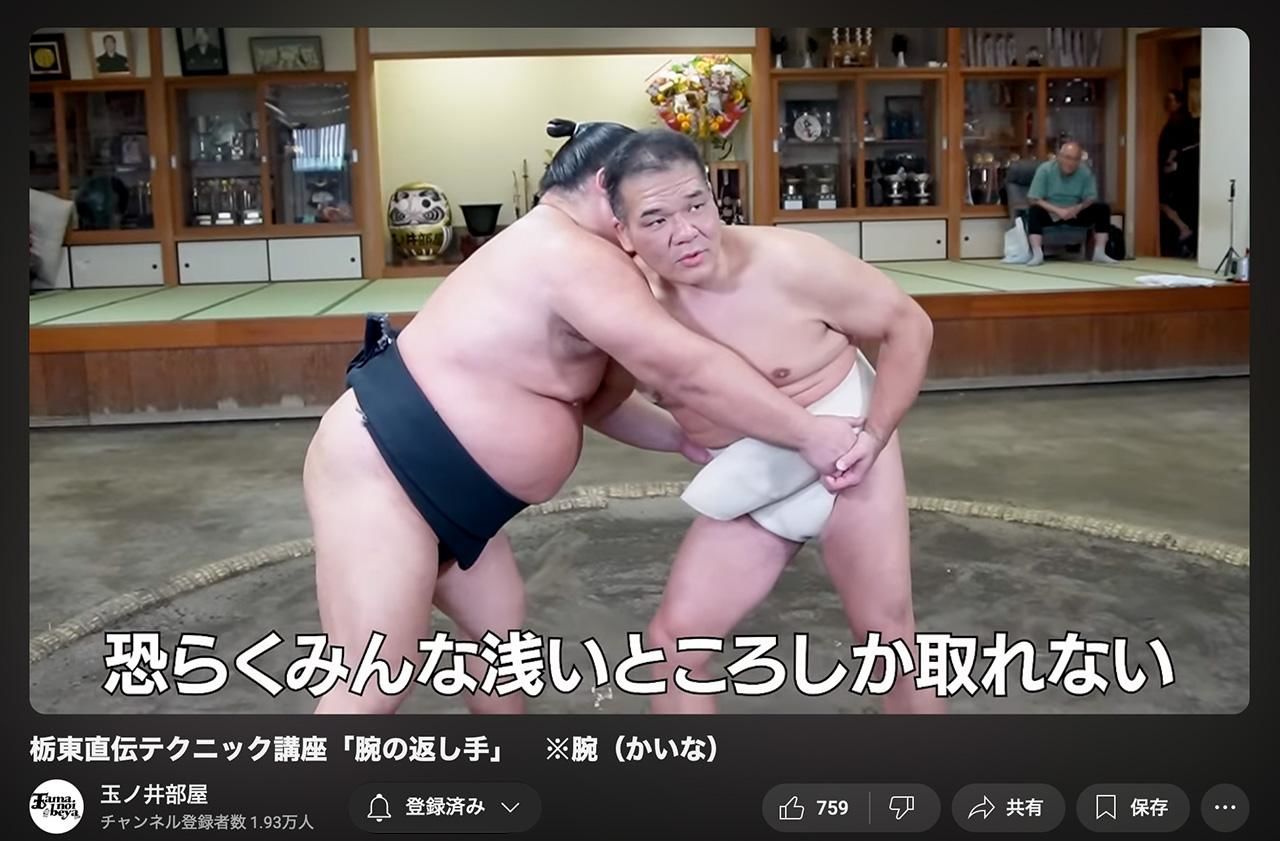
Tamanoi (the former Tochiazuma), at right, demonstrating a sumō technique. (Courtesy Tamanoi stable)
Tamanoi says: “Few rikishi these days use skills like breaking the opponent’s grip on their mawashi, so I thought video would be ideal for passing on the technical skills people like me acquired in our early days in the sport.” He also hopes that young sumō practitioners all over the world will get useful hints from these videos.
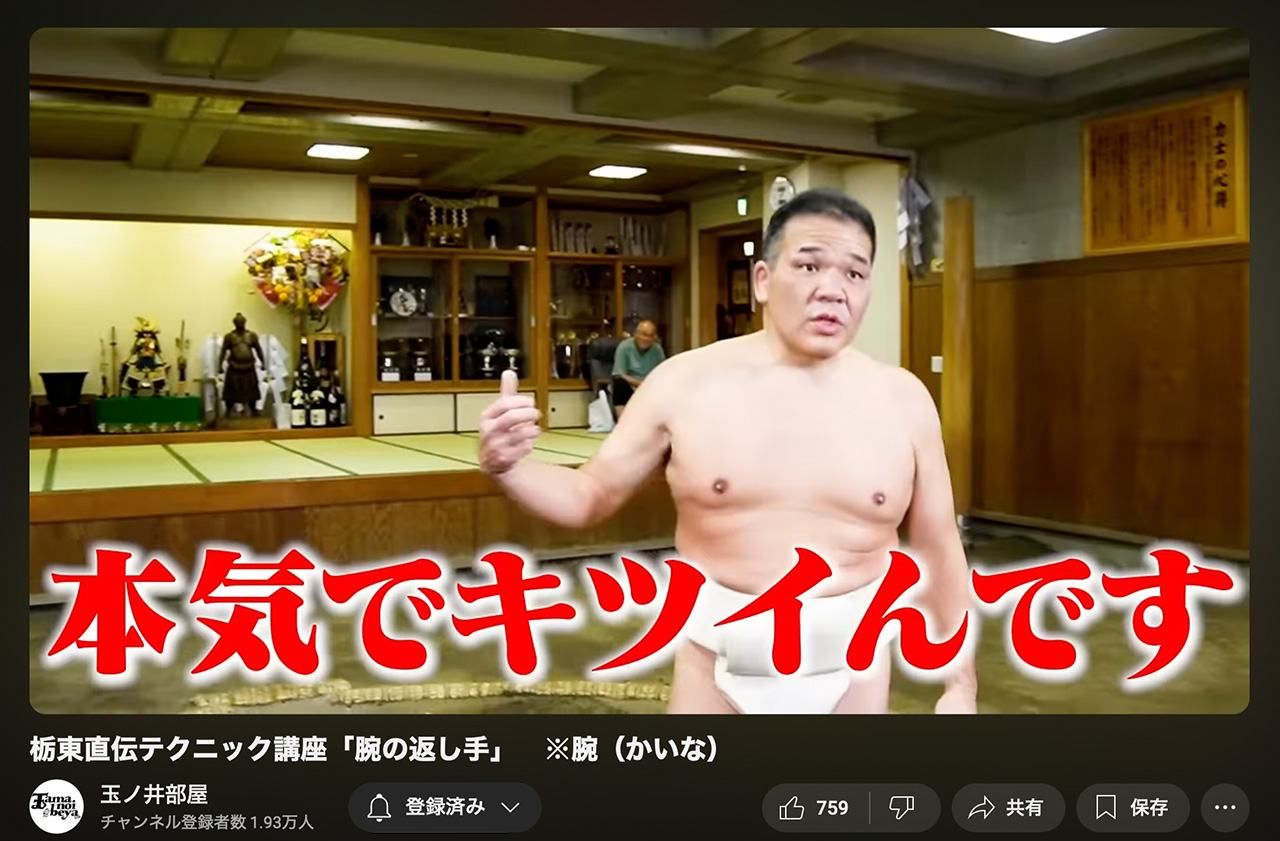
“I’m not going to lie. This is tough training,” Tamanoi explains. (Courtesy Tamanoi stable)
In sumō, victories are clear. As a result, there are not so many spectators engaging in detailed discussions of technique, but being able to distinguish the finer points can double enjoyment of the sport. Tamanoi is pleased at the effect his videos have had, with enthusiasts commenting that this visual information has deepened their understanding and appreciation of sumō.
Maintaining Decorum
Sumō videos are having a revitalizing effect, but rules are in place to ensure that their content upholds the traditions and prestige of the sport.
In April 2025, the JSA distributed YouTube channel management guidelines to all its stables. The stables can create their own videos, but only for the purpose of attracting new recruits; rikishi are not allowed to make personal social media content. Content must uphold the culture of sumō and the dignity of the rikishi, meaning, in effect, no “big eater” contests, no exaggerated sound effects, no pranks, and so forth. Breaching these rules can lead to a JSA ban on all social media activities of the offending stable. No problematic videos have surfaced up to now, so the guidelines seem to be working.
Furthermore, in June 2025, the JSA assembled 900 or so oyakata and rikishi at the Ryōgoku Kokugikan for a seminar on social media use. Following an address by Hakkaku, JSA chair and former yokozuna Hokutoumi, experts in the field spoke about the risks of social media use.
Originating approximately 600 years ago as wrestling matches held to raise money for temples and shrines, sumō in its present form has existed for more than two and a half centuries, since rules were codified in 1757. Having overcome two major crises—at the end of the Tokugawa shogunate in the 1860s and immediately after World War II—sumō culture continues today with chonmage topknot-wearing rikishi. The social media guidelines promulgated by the JSA demonstrate its embrace of the sport’s long tradition alongside its willingness to take advantage of the media of the digital era.
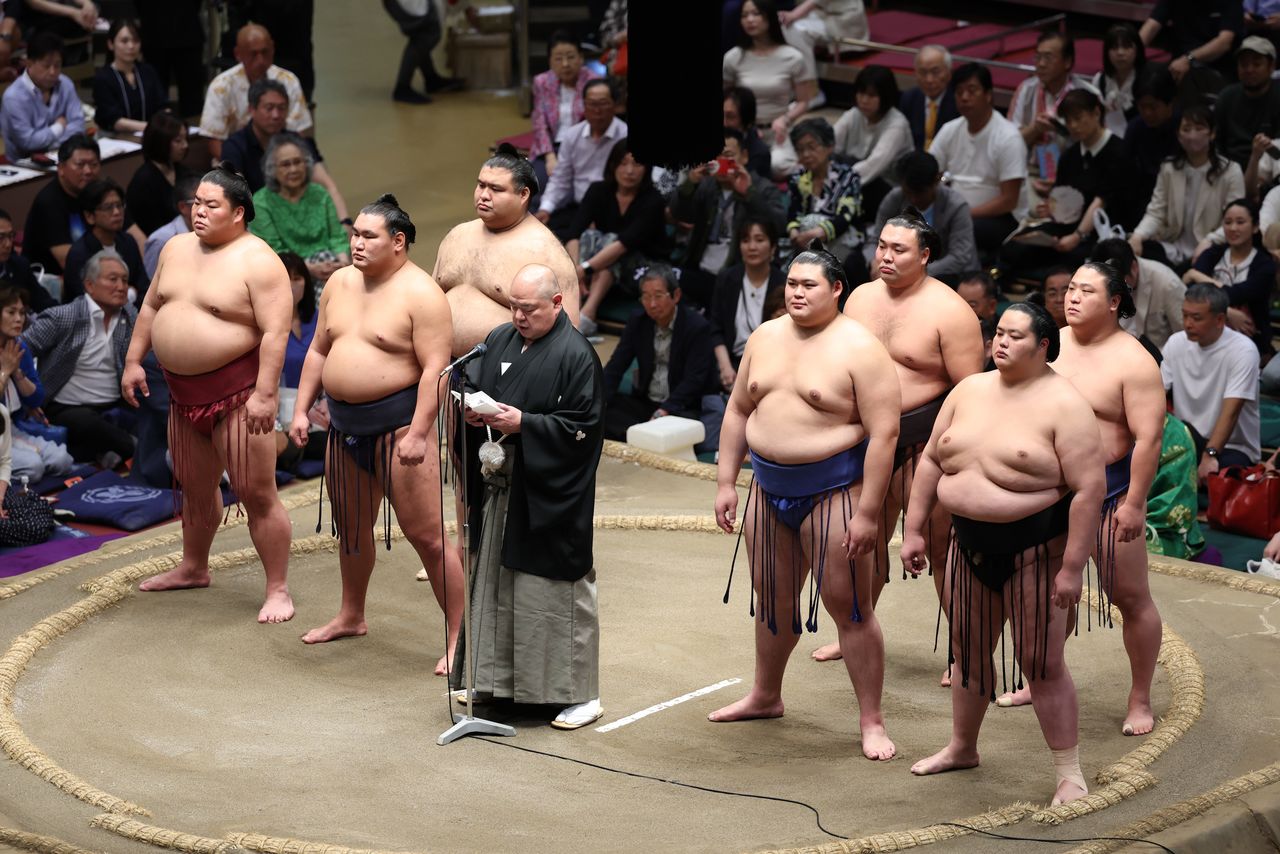
JSA chair Hakkaku addresses the audience on May 25, the final day of this year’s May tournament, at Tokyo’s Ryōgoku Kokugikan. (© Jiji)
Attracting New Recruits Online
The JSA recognizes today’s new media as a potent recruiting tool. Sold-out grand tournaments, thanks to demand from inbound visitors, would seem to indicate that sumō is on solid ground. But insiders are concerned that an ongoing drop in the number of new recruits for the stables could see sumō wither in the future.
In the past, many youngsters aspired to join a sumō stable. In the 51-year span from 1955 to 2005, the number of new recruits fell below 100 per year only three times. In fact, there were three occasions when over 200 young men applied, and 21 times when over 150 did so. But since 2006, there have been fewer than 100 applicants per year, and these days fewer than 70 apply annually. Even though minimum weight and height requirements were de facto eliminated in 2023, this has not stemmed the decline in new recruits.
According to Futagoyama, “Some children who joined kid sumō groups or visited our stable for a hands-on tryout did so after seeing our videos. With fewer and fewer people doing sumō nowadays, I hope these videos can communicate a positive image of our sport.” Tamanoi, meanwhile, notes: “We’ve received emails from people who want to give sumō a shot after seeing a video on YouTube, and some of them actually joined a stable later.”
Today, sumō stables are trying to find new ways forward, honoring tradition while doing away with outdated conventions. It is clear that YouTube and other social media are essential for communicating how stables have changed over the past few years. With the number of children dwindling and a great many more sports for young people to choose from, sumō is facing headwinds. Nevertheless, the stables are already forging a path toward ensuring the future of sumō as a uniquely Japanese physical culture.
(Originally written in Japanese. Banner photo: A collection of YouTube video snapshots capturing the daily life at sumō stables and the deep appeal of wrestling. Courtesy Tamanoi stable and Futagoyama stable.)