Women Set Out to Sea: Can Female Labor Save the Fishing Industry?
Society Work- English
- 日本語
- 简体字
- 繁體字
- Français
- Español
- العربية
- Русский
Women—and Girls—Looking Offshore for a Career
An increasing number of women are working as fishers, a profession long considered off-limits to females in Japan. In late July, a job-seeker event staged in Tokyo for the fishing industry saw an impressive number of female aspirants among the burly male contingent, with all attendees keenly focused on presentations by industry representatives from across the country.
A Tokyo-based fishing industry employment support center hosted the event. According to its executive director, Magami Atsuko, “Recently, we are seeing more women attending the event with no existing connection to the industry. Many have long been attracted to the job, and are seriously considering moving from the city to live in fishing ports.” This is in contrast with earlier times, when Japanese fisherwomen who did take to sea usually worked alongside their husbands or other male relatives.
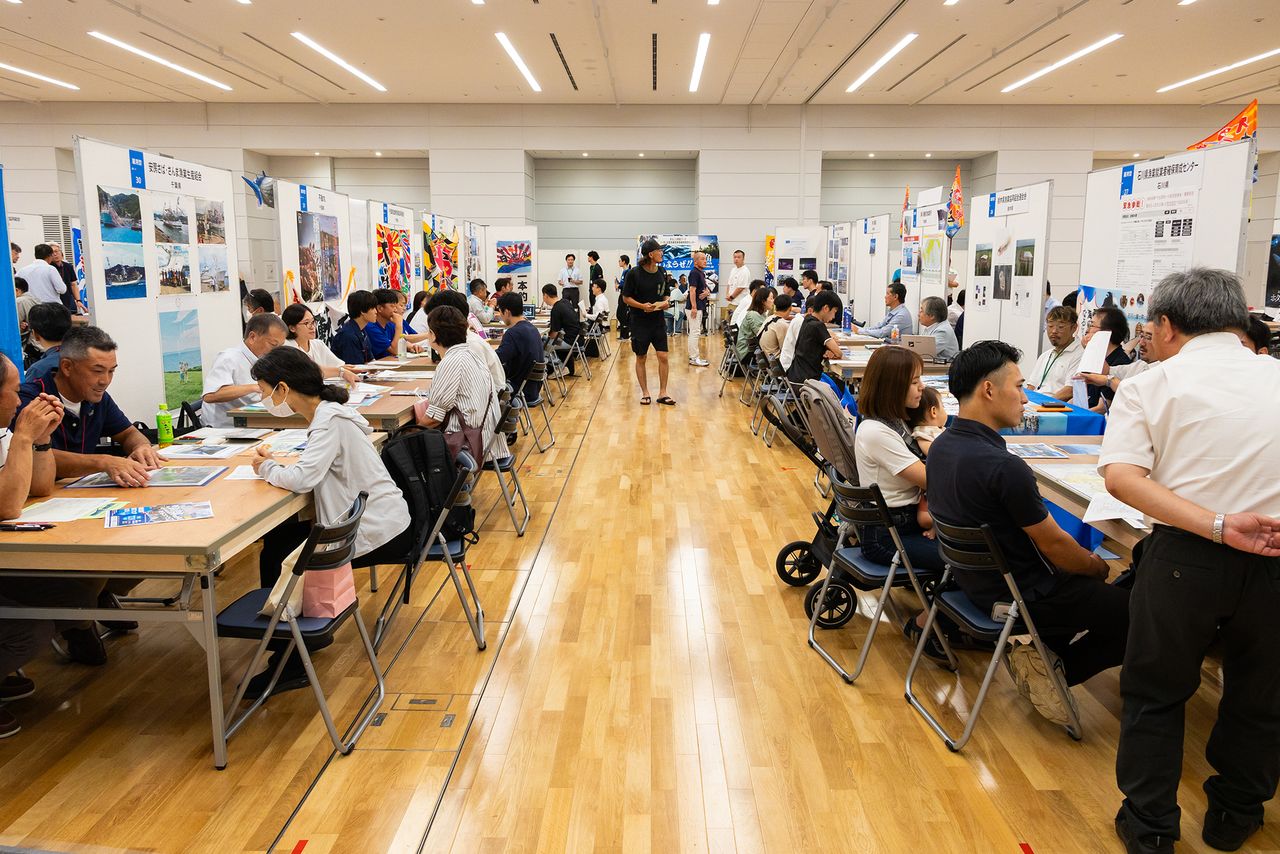
The buzzing fishing industry job-seeker event. (© Nippon.com)
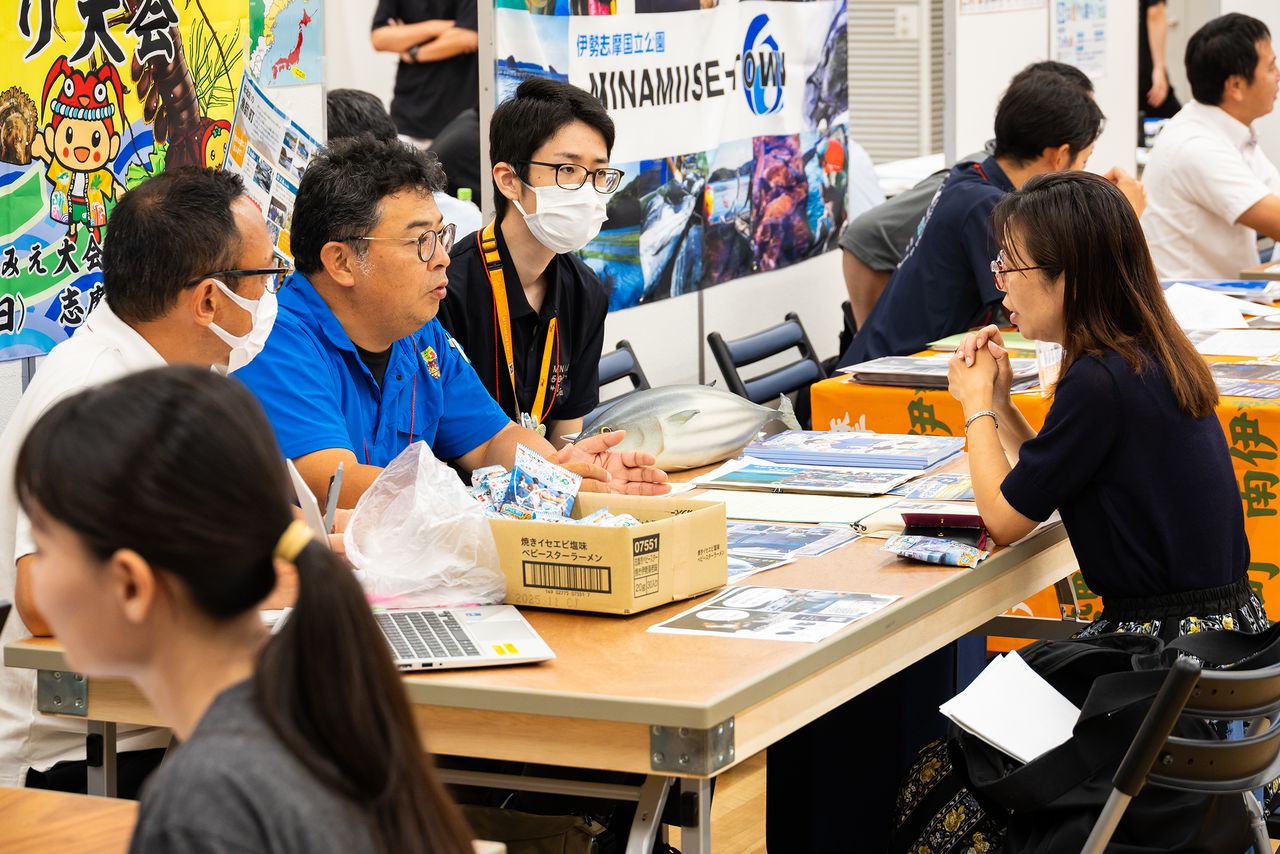
A female attendee eagerly asking questions. (© Nippon.com)
In line with the affirmative action being promoted by the Japanese government, the center designed a sticker, “We support women fishers,” aimed at boosting opportunities for their employment. The stickers were displayed at the event and their logo featured on Ryoushi.jp, a website for professional fishers, as part of efforts to raise awareness.
Magami believes it is paying off. “Until now, few fishing industry bodies or firms accepted women fishers, but according to our pre-event survey, over half of the booth organizers indicated that they were willing to consider or actively seeking to hire women.”
Kimijima Hiori, a high school senior who attended with her father, said, “I love the sea and I love the fishing industry, with the opportunities for physical work.” She received many ardent invitations at the event, giving her even greater courage and determination. She hopes to make her debut next spring.
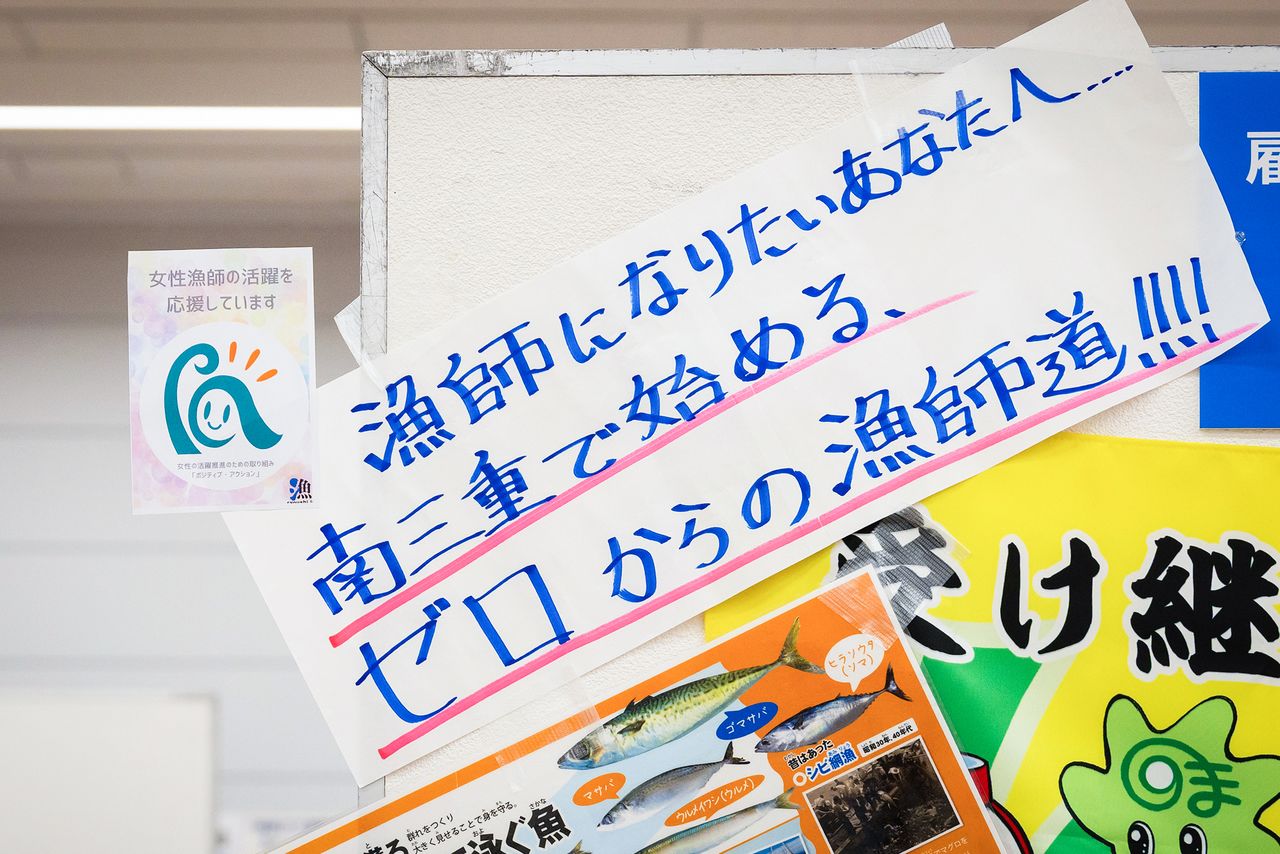
Many booths at the event displayed the “We support women fishers” sticker, seen here at top left. (© Nippon.com)
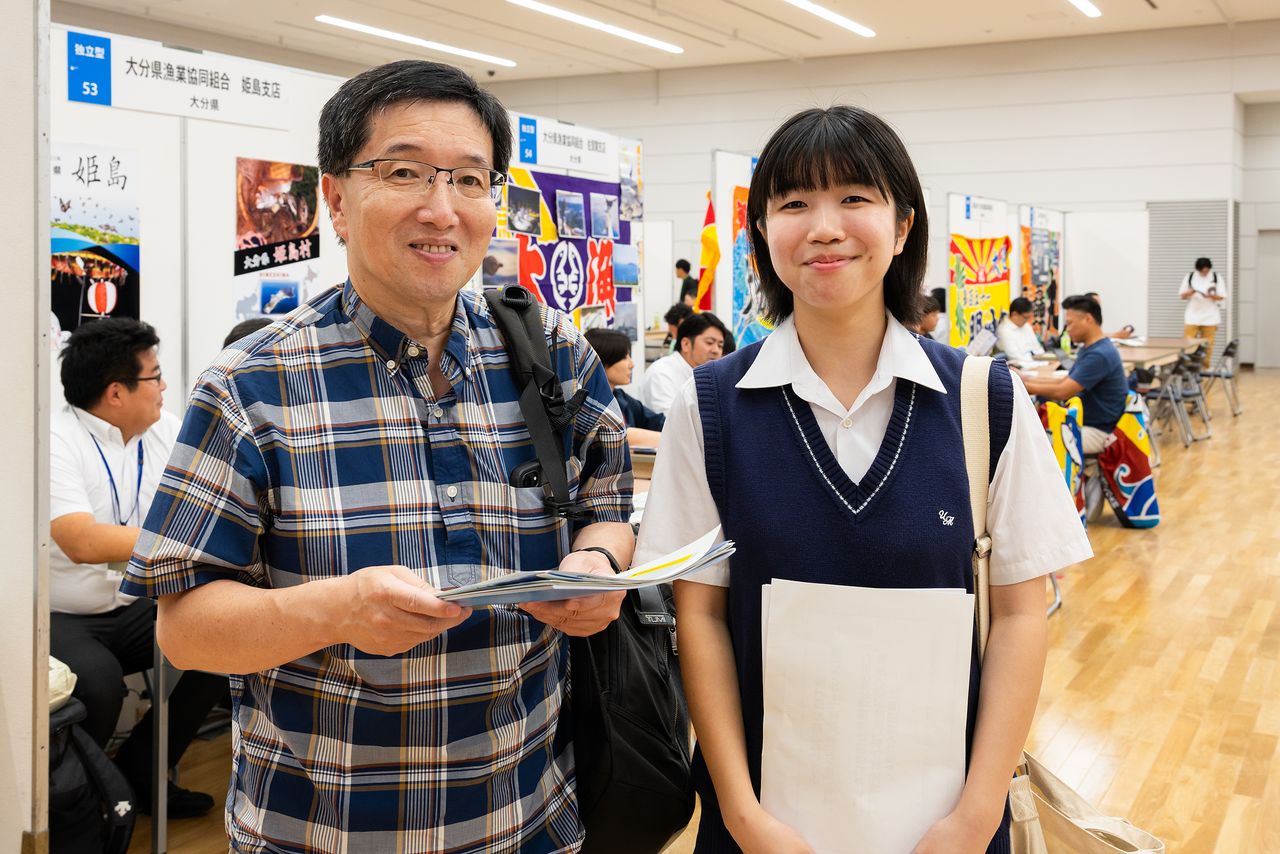
Kimijima Hiori, hailing from landlocked Saitama, would need to move away from home to pursue a fishing career. Even so, her dad supports her aspiration. (© Nippon.com)
An Aging, Overwhelmingly Male Workforce
For many years, women were prohibited from fishing. This was based on the belief that Funadama, the guardian deity of fishing boats, was a woman, and would cause rough seas and poor catches in her jealousy. Nowadays, such superstition has fallen by the wayside, but many in the fishing industry have still been reticent to hire women because, in addition to the work being considered tough, dirty, and dangerous, the workplace environment, for example ship toilets, was not adapted to women.
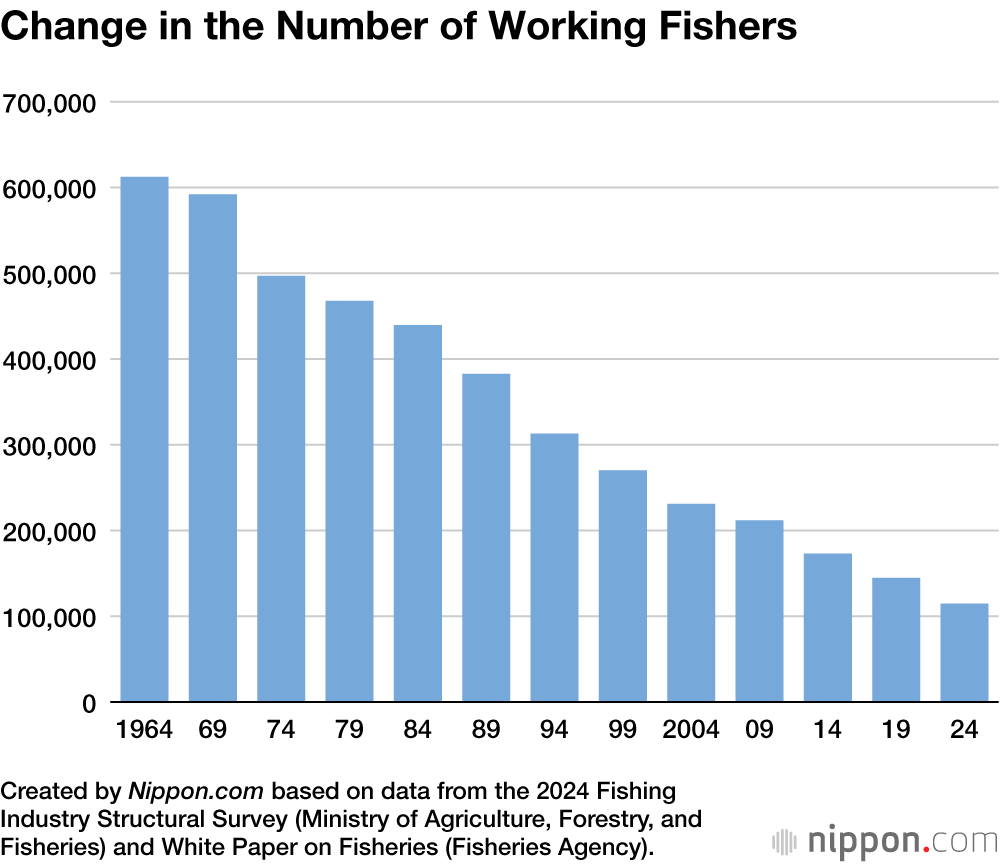
But in recent years, members of the fishery industry are deeply concerned by the ongoing fall in fisher numbers. The Ministry of Agriculture, Forestry, and Fisheries’ 2024 Fishing Industry Structural Survey indicated there were 114,820 people employed for 30 days or more in the industry over the past year. This was a decline of 5.4% from the previous year, and was just 40% of the 312,890 fishers working 30 years ago in 1994.
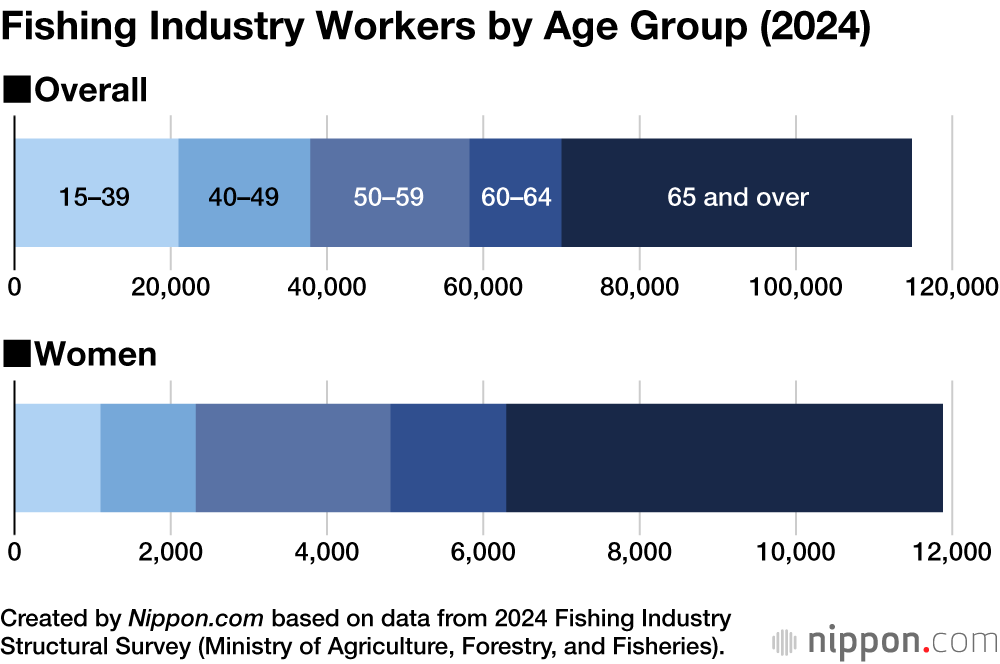
There were 44,840 aged 65 or over, the highest number for any age group. This is close to 40% of the total, and in fact fishers aged 50 or over account for around 70% of all industry workers. The most physically able-bodied, aged from 15 to 39 years old, numbered just 20,980, or less than half of the number aged over 65, and their retention rate is low.
Women, numbering 11,890, accounted for around 10% of the total. Only 1,100 of them were aged 15 to 39, with those aged 40 or older making up over 90% of all women.
Fishing Culture on the Brink
According to the Fisheries Agency, roughly 1,700 to 2,000 new fishers are employed each year, including fishery high school graduates. But according to one industry representative, around half of them quit in the first five years. Many reasons are cited for this. The work is tough, and in many cases income is unstable. Newcomers often find it difficult to get used to the work, or suffer harassment from their senior colleagues. In addition, early starts and offshore operations make it difficult to maintain friendships in the community or, looking to the long term, to find a partner. Many observers point out that it’s hard to get cellphone reception at sea, and many young people can’t bear not having phone or Internet access.
There are cases where non-Japanese crew have been hired, such as in tuna fishing, but the Japanese yen’s depreciation makes this more challenging. Furthermore, it takes years of experience to become a fully capable fisher. Japan’s fishing industry needs workers who carve out their places in fishing ports and can carry on the tradition. This leads, of course, to the conclusion that the industry should welcome motivated women with open arms.
In recent years, conventional and social media have carried stories of women being accepted and thriving as fishers, which is steadily encouraging job applications from other women. Urata Shizuku works for Ajiro Gyogyō, a fishery in Atami, Shizuoka Prefecture. Since graduating from a fishery high school in the city of Yaizu, also in Shizuoka, three years ago, she has happily appeared on television and in newspapers.
As a fisher, she leaves port before sunrise six days a week to work the fixed shore nets. After retrieving the nets, she deftly helps separate and convey the fish. Urata says, “I’m more used to the work now, but it’s physically demanding, which makes it tough in some ways.” But her determination is also evident, “I’m glad if my efforts can make more women interested in the fishing industry or in becoming a fisher. I hope my existence can make them think, ‘I want to be a fisher too.’”
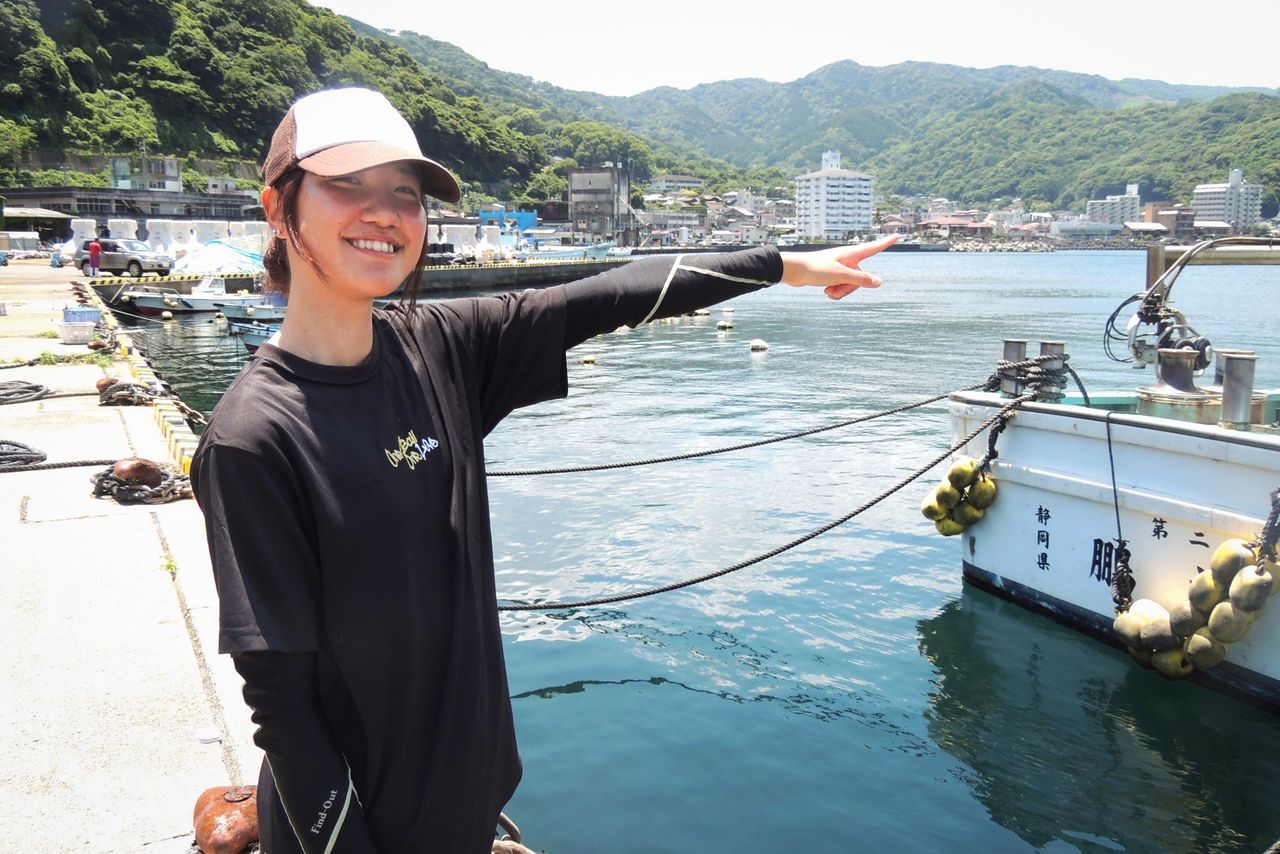
Urata’s cheerful presence has become a feature of Ajiro’s port. (© Kawamoto Daigo)
A Fisherwoman Takes to the Podium
Kanazawa Maki, of the fishing company Haida Ōshiki based in Owase, Mie Prefecture, gave a presentation at the job fair aimed at children. She introduced the job and tools of a fisher, along with the large variety of fish caught by the company’s fixed shore nets, particularly Owase Port’s famous spring amberjack.
Kanazawa explains that she loved fish since her childhood, and studied oceanography at university. After graduating, she gave up plans to become a fisher, partially due to opposition from her parents. She worked at a department store and a marine transport company, but she never stopped dreaming. She herself attended the fishing job-seeker event, and took part in experiential tours of numerous ports before reaching out to a company that ended up being her current employer. Now, she is in her third year as a fisher.
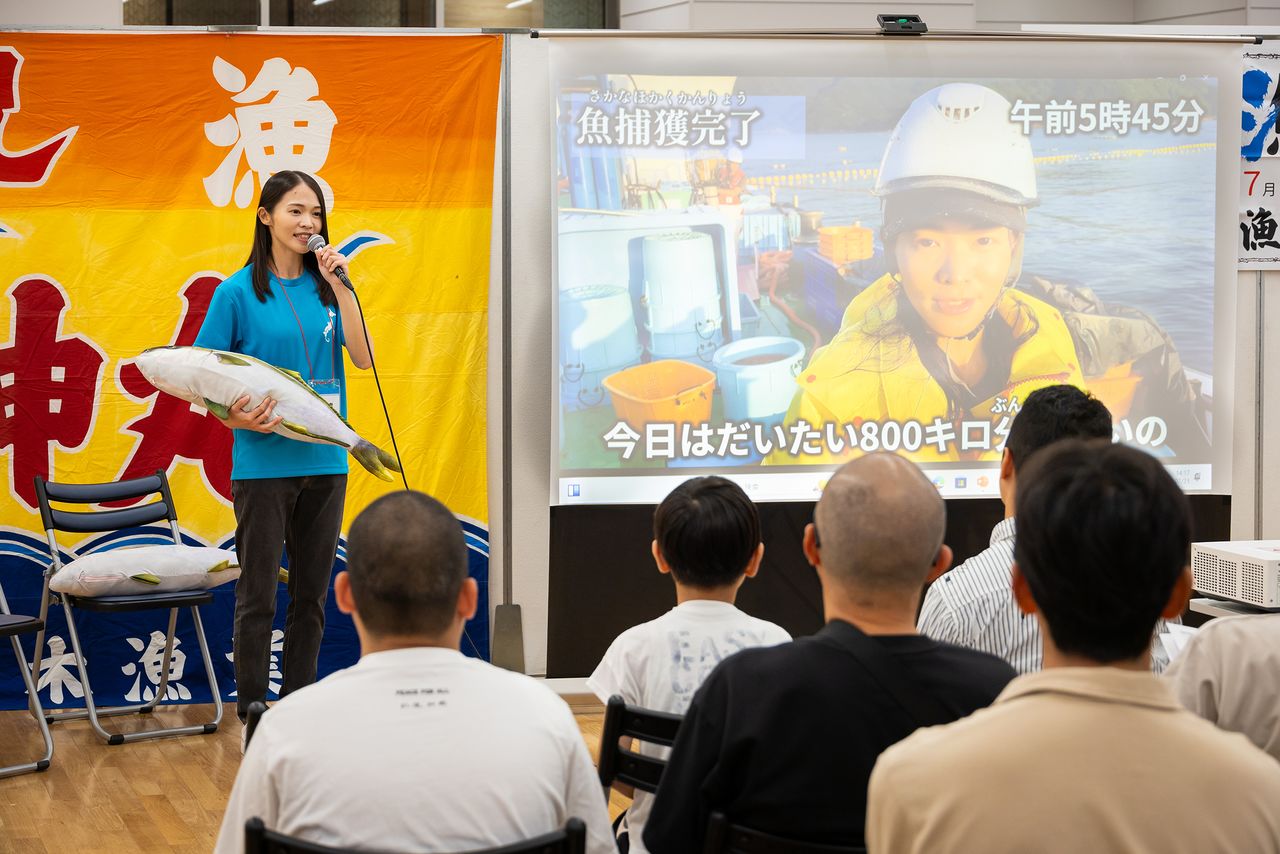
Armed with a toy amberjack, Kanazawa touts the appeal of the fishing industry. (© Nippon.com)
She sets sail each morning just after 4:00 am to help pull up the 100-meter-long, 60-meter-deep fixed nets. The lifting is done by cranes and rollers, but some fish weigh up to 10 kilograms, and pulling them out of the net is heavy work.
Listing half a dozen breeds of fish, she explains: “There is such a variety of fish in the nets that I can’t wait to get to work each day.”
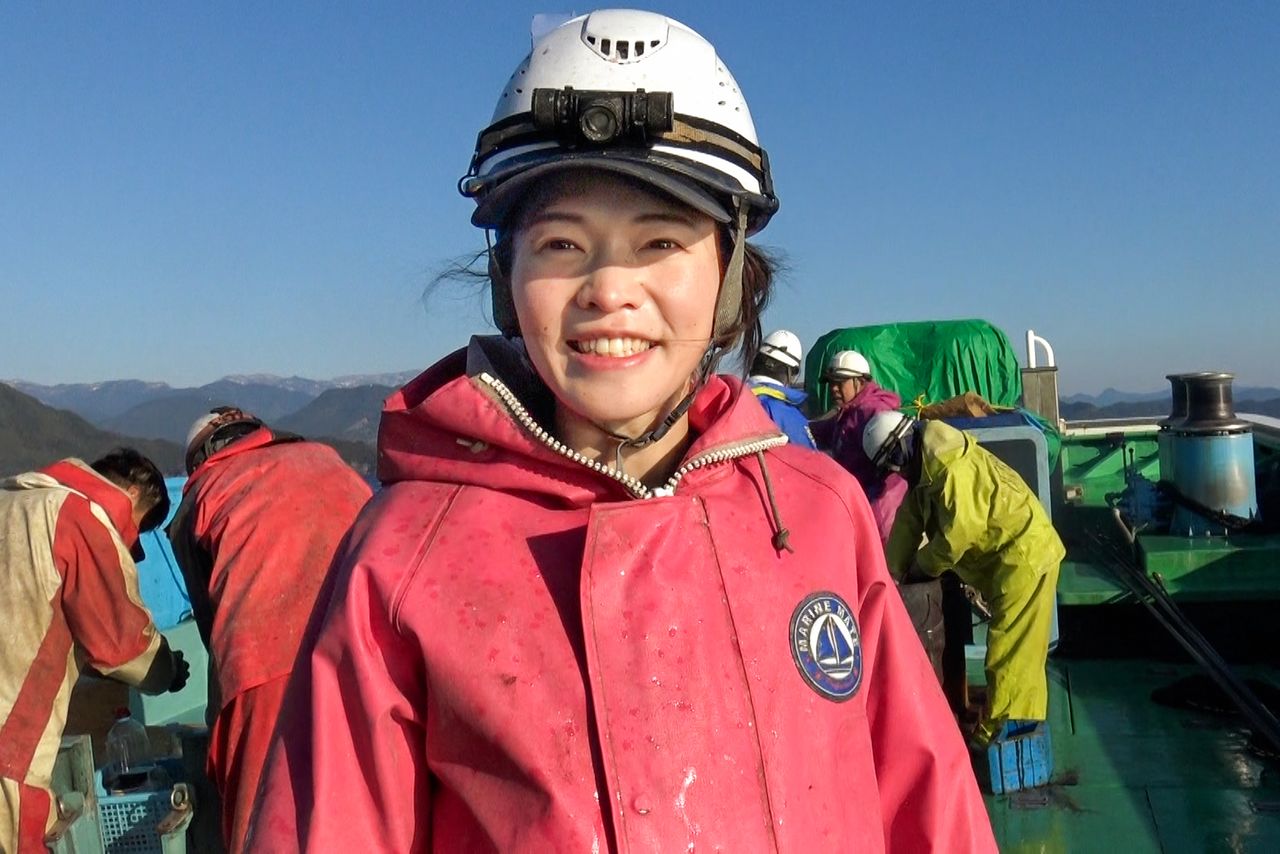
Kanazawa aboard the fishing boat. (© Ryoushi.jp)
Linking the Industry and the Dining Table
Kanazawa is currently advancing branding of spring amberjack using her experience in PR for the marine transport company. Using the ikijime instant-kill method that allows the fish to maintain top freshness, her company markets the fish under the brand name “Yui” as a top-shelf product with high fat content and flavor. This is an attempt by Haida Ōshiki to boost the added value of its products. Kanazawa passionately explains, “Brand creation not only increases our revenue—it enables consumers to recognize good quality fish, and helps to preserve seafood culture. I believe that women fishers can bridge the gap between the fishing industry and the dining table.”
Her senior fishing colleagues appreciate her approach to work, which factors in distribution and consumption. The company has also boosted efforts to make the workplace more supportive of women, including the installation of women’s bathrooms. In autumn 2024, they hired their second female employee.
Japan’s fishing industry faces extreme challenges, but as society strives for gender equality, women who once quietly dreamed of being fishers are now proving themselves on the front line. No doubt their fresh perspectives and ideas will also be of great benefit in ensuring the survival of the fishing industry in Japan.
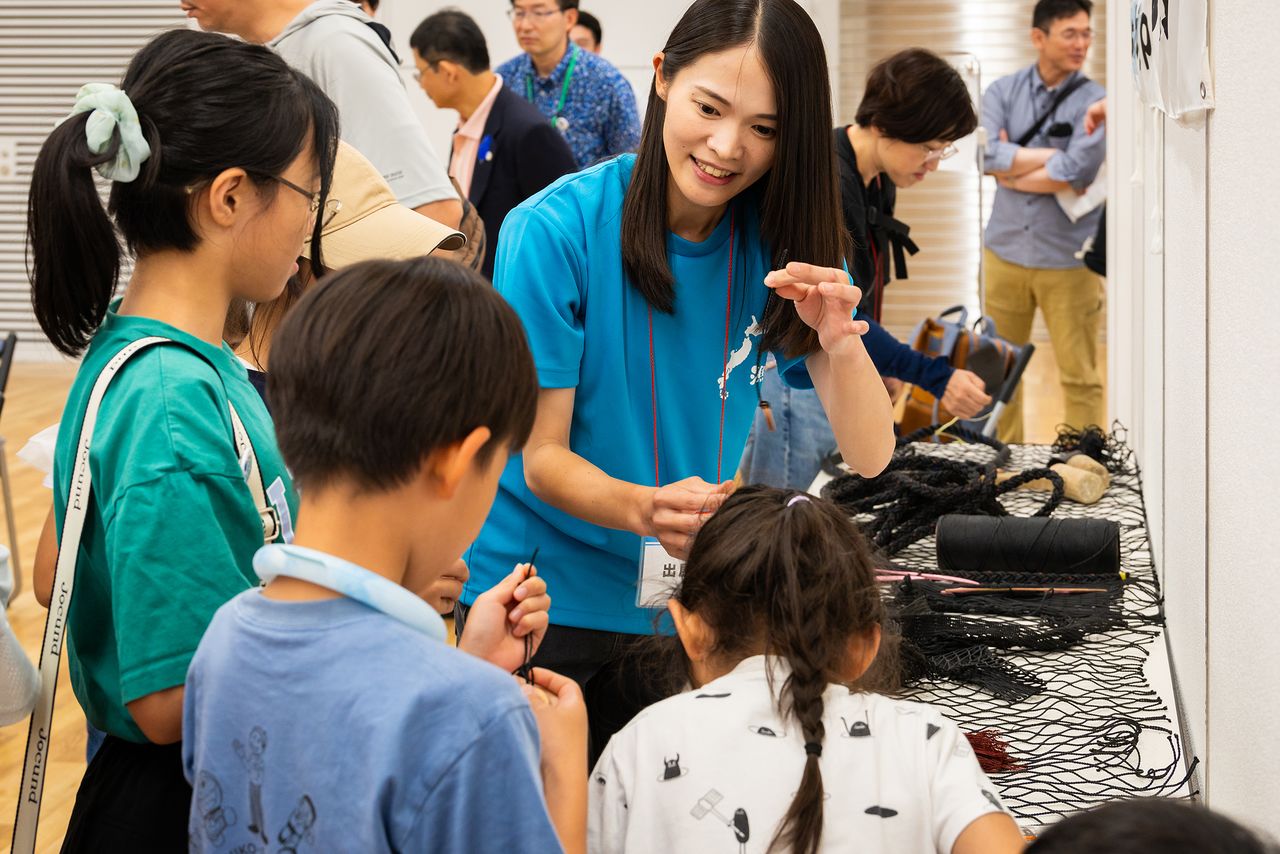
Kanazawa presents the tools of her trade to children interested in fishing. (© Nippon.com)
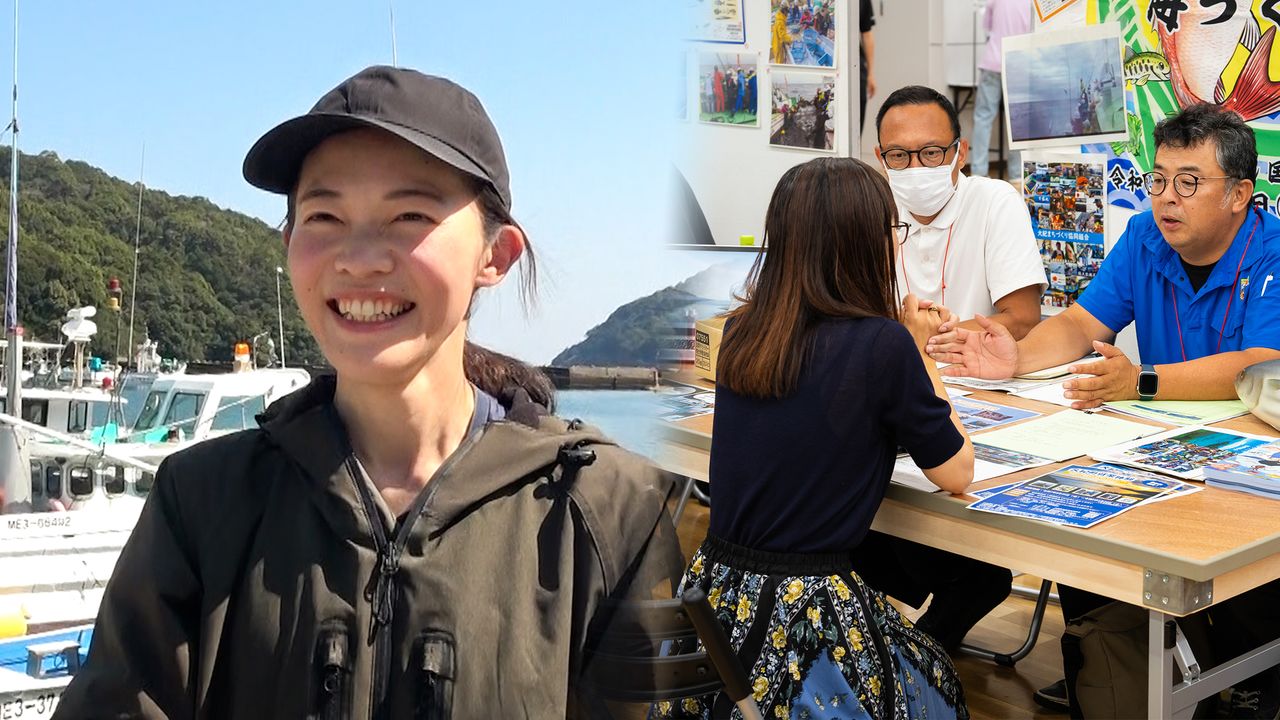
(Originally published in Japanese. Banner photos: At left, Kanazawa Maki of fishing company Haida Ōshiki [© Ryoushi.jp] and a female attendee at the fishing industry job-seeker event [© Nippon.com].)