Ride the Ninja, Wield the Katana: The Japanese-Named Motorcycles That Conquered the World
Economy Society- English
- 日本語
- 简体字
- 繁體字
- Français
- Español
- العربية
- Русский
Naming Motorcycles for a Global Market
Naming a child is a great joy for parents, but it also comes with the weight of knowing that it’s a decision that can shape the child’s whole life. Motor vehicle manufacturers face a similar challenge when releasing new models. Factors such as local customs and religious views must be taken into consideration when launching a product globally, which can give these companies a headache when it comes to producing a name that can succeed worldwide. In the past, it was not uncommon for a single model to carry different names in different countries or regions.
Take the case of Japanese motorcycle manufacturer Kawasaki Motors. In 1975–1976, the company adopted a marketing strategy that gave every vehicle a name starting with the letter “K”; these include the KR racing machine, the KX motocross bike, and the KH series of motorcycles with two-stroke, three-cylinder engines. However, when Kawasaki tried to brand their popular four-stroke road-sport Z series as “KZ,” European distributors raised concerns. In Europe, KZ was widely understood as an abbreviation for Konzentrationslager, the German word for concentration camp—hardly a favorable association. As a result, the company decided to simply use “Z” as the name in Europe and reserved KZ for the North American market.
In the monolithic linguistic market of the United States, evocative nicknames can work well, and vehicles are often given names that capture their features or underlying concepts. By contrast, in Europe, where there are many different languages in play, vehicle names tend to be combinations of letters and numbers, since these are less likely to clash with regional taboos or be subject to slang interpretations. Such being the case, finding a vehicle name that works universally anywhere can be difficult.
Even so, some Japanese names have proven to work well on a global scale. Let’s take a look at a few.
The Ninja
The most iconic Japanese-named motorcycle that went global is the Kawasaki Ninja. In 1984, the company launched a groundbreaking 908 cc road sport motorcycle. During preparations for international release, including catalog production, the model was slated to be called the GPZ900R, but the marketing manager in the United States suggested using “Ninja” as the model name.
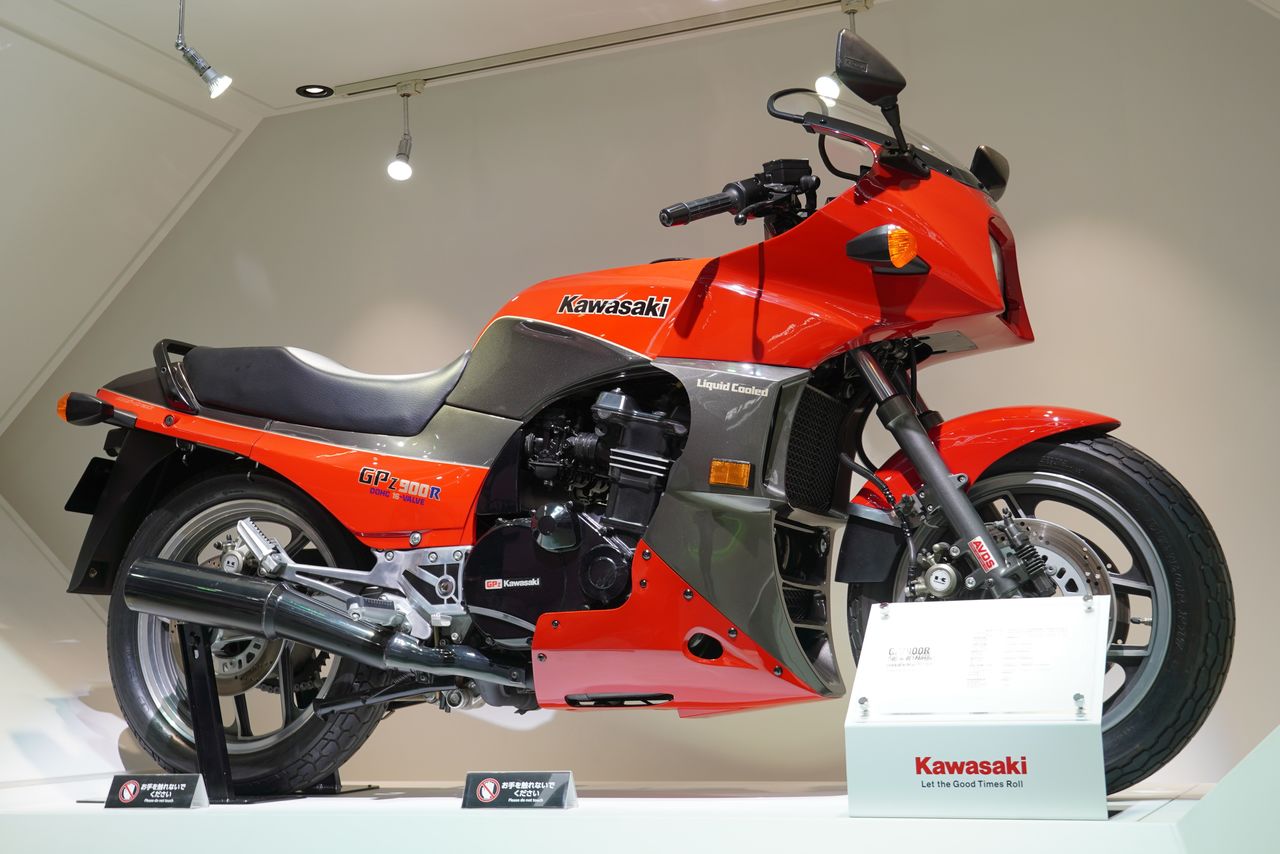
The Kawasaki GPZ900R, released in 1984. In the United States, it was sold under the name “Ninja.” Notably, Tom Cruise rode this motorcycle in the movie Top Gun. Photograph taken on October 25, 2023, at the Japan Mobility Show 2023. (© Ōya Yūichi)
Japanese people’s image of the ninja is not entirely positive, due to associations with covert operations and assassinations. In the United States, however, people’s impressions are closer to charismatic spies like James Bond or superheroes like Super Man. At the time, the American TV drama Shōgun (of which the 2024 version is a remake) was a major hit, and the country was in the midst of a Japan boom. Ninjas appeared in the show as well, and people saw them as powerful, swift, and extremely cool.
The company accepted the proposal, and the motorcycle was sold as GPZ900R in the European market and Ninja in the North American market. In the US market, “Ninja” was later adopted by Kawasaki as an additional brand name in models like the Ninja 1000R, Ninja 250R, and Ninja ZX-6R.
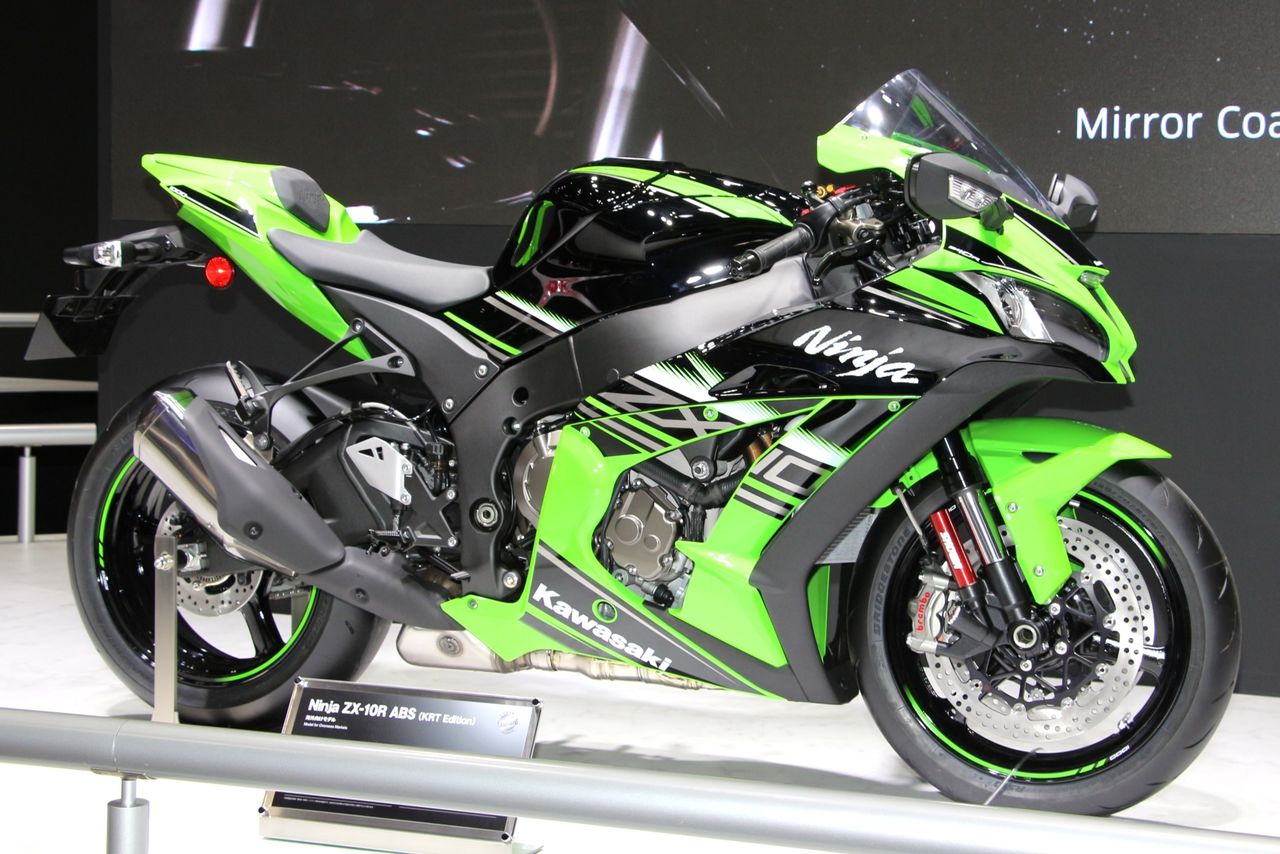
Kawasaki’s Ninja ZX-10R ABS has achieved notable success in the Superbike World Championship, the highest level of road racing for mass-market vehicles. Photograph taken on October 28, 2015, at the Tokyo Motor Show 2015. (© Ōya Yūichi)
As the name Ninja eventually became well known even outside of North America, Kawasaki moved to formalize it as a brand. In 2013 and 2014, the company applied the name to its road-sport models with full fairing—the aerodynamic plastic parts covering up the otherwise exposed engine and other components of the bike—embedding in riders’ minds the idea that the name Ninja promised “a fast bike.”
The Katana
Another outstanding motorcycle with a Japanese name is Suzuki Motor’s Katana. It appeared a few years before the Ninja GPZ900R, and the original GSX1100S Katana was a pioneer of Japanese-named bikes that left a lasting mark on the world.
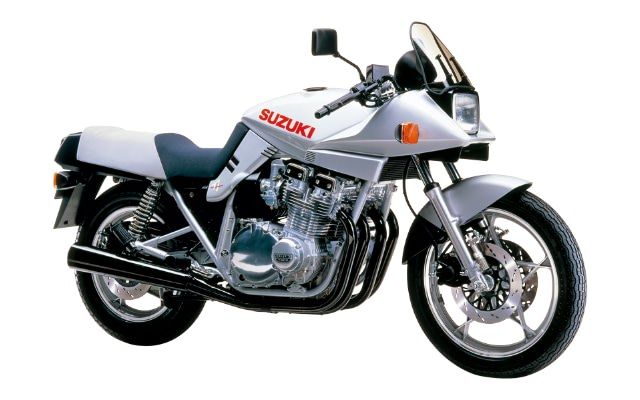
Suzuki’s GSX1100S Katana, released in 1981. (Courtesy Suzuki Motor)
The story began in 1979, when Suzuki commissioned the West German firm Target Design to style a new motorcycle. The designers presented a concept rooted in bushidō and the samurai spirit, symbolized by the katana, which they described as both a weapon and a work of art. The sketch they provided gave expression to this concept with a motorcycle that really looked like a katana drawn from its sheath, leading to the simple naming of the bike as “Katana.”
The prototype was unveiled in 1980 at the Cologne Motor Show in West Germany. Its combination of high functionality and radical styling stunned those who beheld it. A survey of attendees revealed opinions split evenly between praise and criticism. Sensing the power of its impact, Suzuki decided to proceed with production. In 1981, the GSX1100S Katana was launched in Europe. The event, popularly known as the “Shock of Cologne” among Japanese bike-industry watchers, remains legendary today.
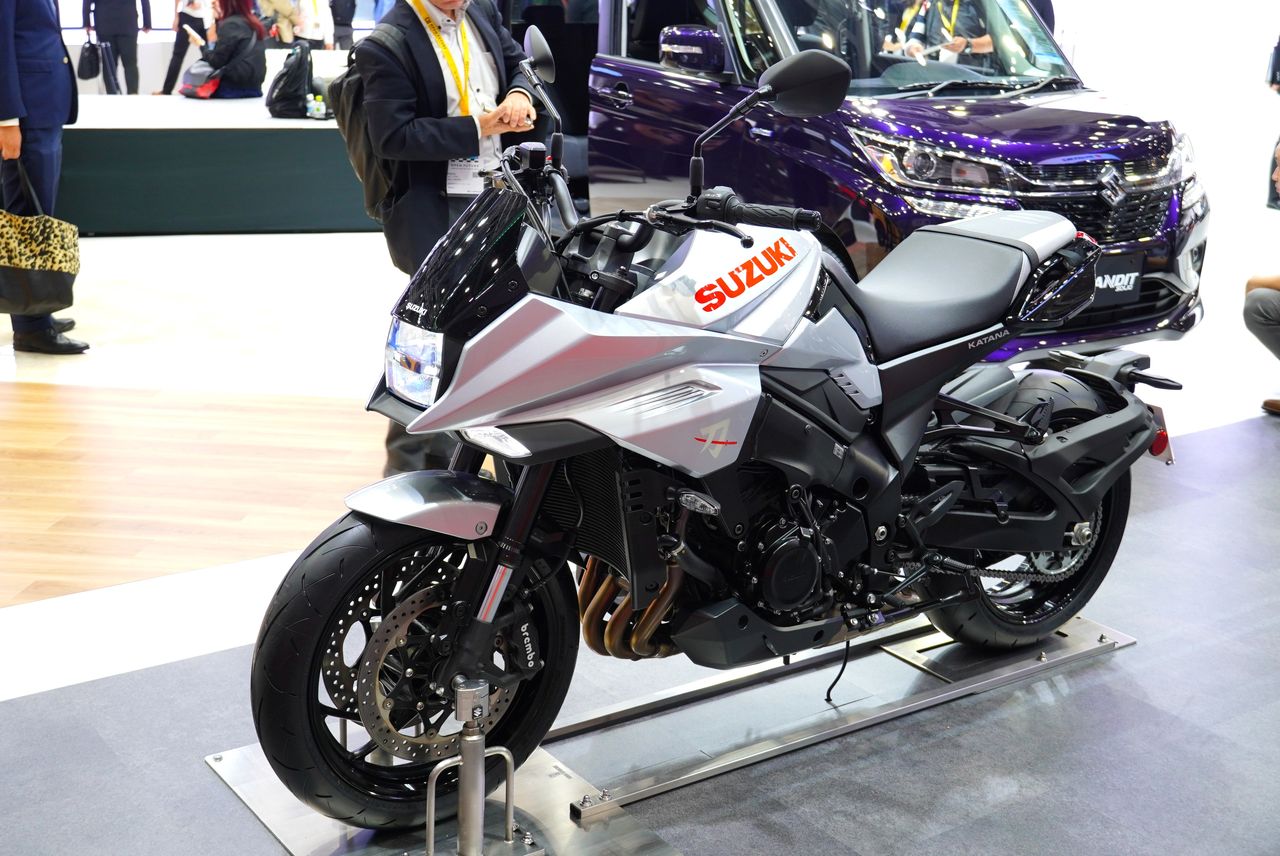
The Suzuki Katana, based on the design of the original GSX1100S Katana. Photograph taken on October 23, 2019, at the Tokyo Motor Show 2019. (© Ōya Yūichi)
As the GSX-S series expanded across different engine sizes, the Katana name was applied broadly, appearing on Suzuki’s fully faired road-sport models in North America and used even for scooters in Europe. In 2018, Suzuki announced a 998 cc Katana inspired by the original GSX1100S, and it continues to be sold around the world today.
Named after the Japanese sword, a distillation of uniquely Japanese aesthetics and functionality, the Katana successfully translated that imagery into motorcycle form. Its unique appearance was able to instantaneously communicate the bike’s character to riders everywhere.
The Hayabusa
Suzuki’s Hayabusa is unique in that the kanji character 隼 is used as a logo, both in Japan and overseas. Hayabusa is the Japanese name for the peregrine falcon, a relatively small bird of prey known for its ability to reach speeds of up to 320 kilometers per hour—making it perhaps the fastest animal on the planet—when diving on its target. This image of quiet sharpness and explosive acceleration made the name a perfect fit.
The first model was the 1,298 cc GSX1300R Hayabusa, which was released in 1999. The following year it recorded a speed of 312.29 kilometers per hour, which earned the bike a Guinness World Records certification as the fastest production motorcycle in the world.
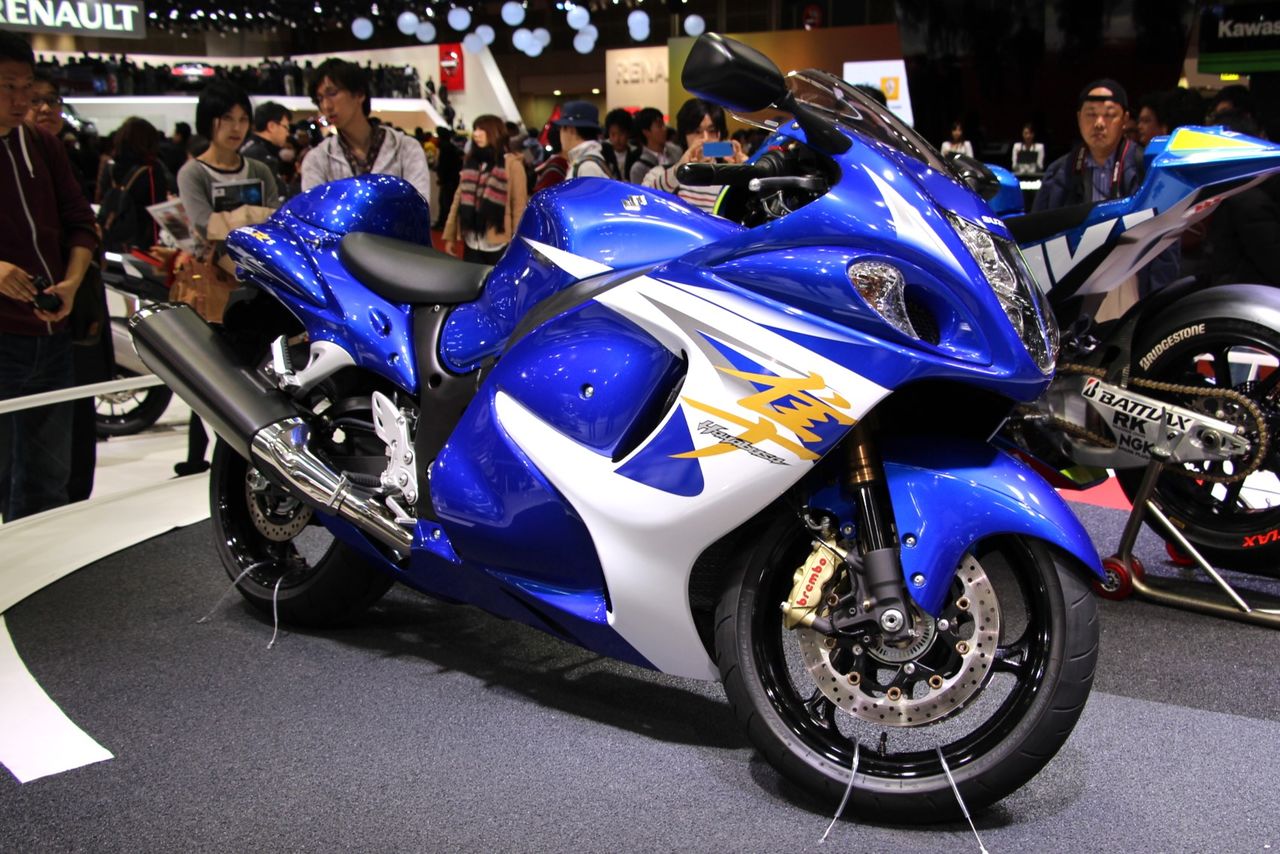
The 1999 Suzuki GSX1300R Hayabusa was followed by the Hayabusa 1300 in 2008, which featured an engine upgrade from 1,299 cc to 1,340 cc. Photograph taken on November 27, 2013, at the Tokyo Motor Show 2013. (© Ōya Yūichi)
With its unique styling inspired by the kabuto (the helmet of traditional samurai armor), and the large kanji logo on the fairing, initial reactions were divided, much like those for the GSX1100S Katana. However, once released, it became a major hit, and even now, a quarter of a century later, the third-generation Hayabusa continues to be sold, carrying forward the same concept.
The Meguro Brand
In 2021, Kawasaki revived the Meguro brand after nearly half a century with its announcement of the Meguro K3. Founded in 1924, Meguro Manufacturing was a pioneer of large-displacement sport motorcycles, and Kawasaki’s Meguro pays homage to that legacy. Meguro entered into a business partnership with Kawasaki Aircraft (now Kawasaki Motors) in 1960 and merged with it in 1964, bringing the Meguro brand to its end.
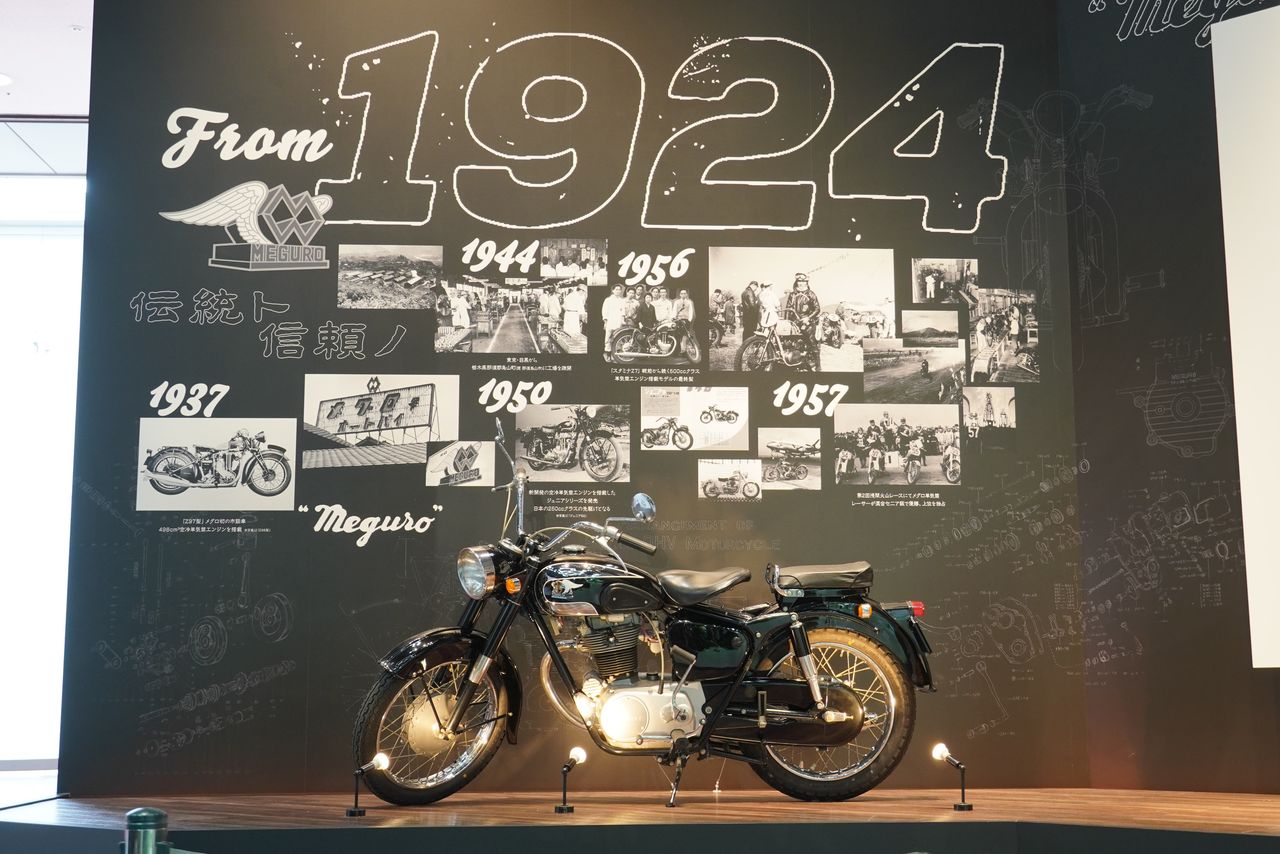
The final model by Meguro Manufacturing was the Kawasaki 250 Meguro SG, built at Kawasaki’s Akashi factory in Hyōgo Prefecture and first released in 1964. “Meguro” was removed from the name the following year. Photograph taken on October 25, 2023, at the Japan Mobility Show 2023. (© Ōya Yūichi)
Meguro was renowned as a brand symbolizing “heritage and trust.” Its revival carries the message that while organizations may change, technology and the spirit of engineers are passed down through generations. By using a Japanese name, Kawasaki also sought to convey intuitively to riders around the world that this is a motorcycle built with pride by a Japanese manufacturer using Japanese technology. Now, the company is pushing to expand Meguro globally, something the brand couldn’t achieve in its earlier days. It may not be long until we see the rise of a new generation of Meguro fans overseas.
Expressing the Japanese Spirit
The names discussed here go beyond simple model names for Japan-made motorcycles. More than just catchy, exotic labels, they have come to be accepted globally as representations of Japanese culture, aesthetics, and technology.
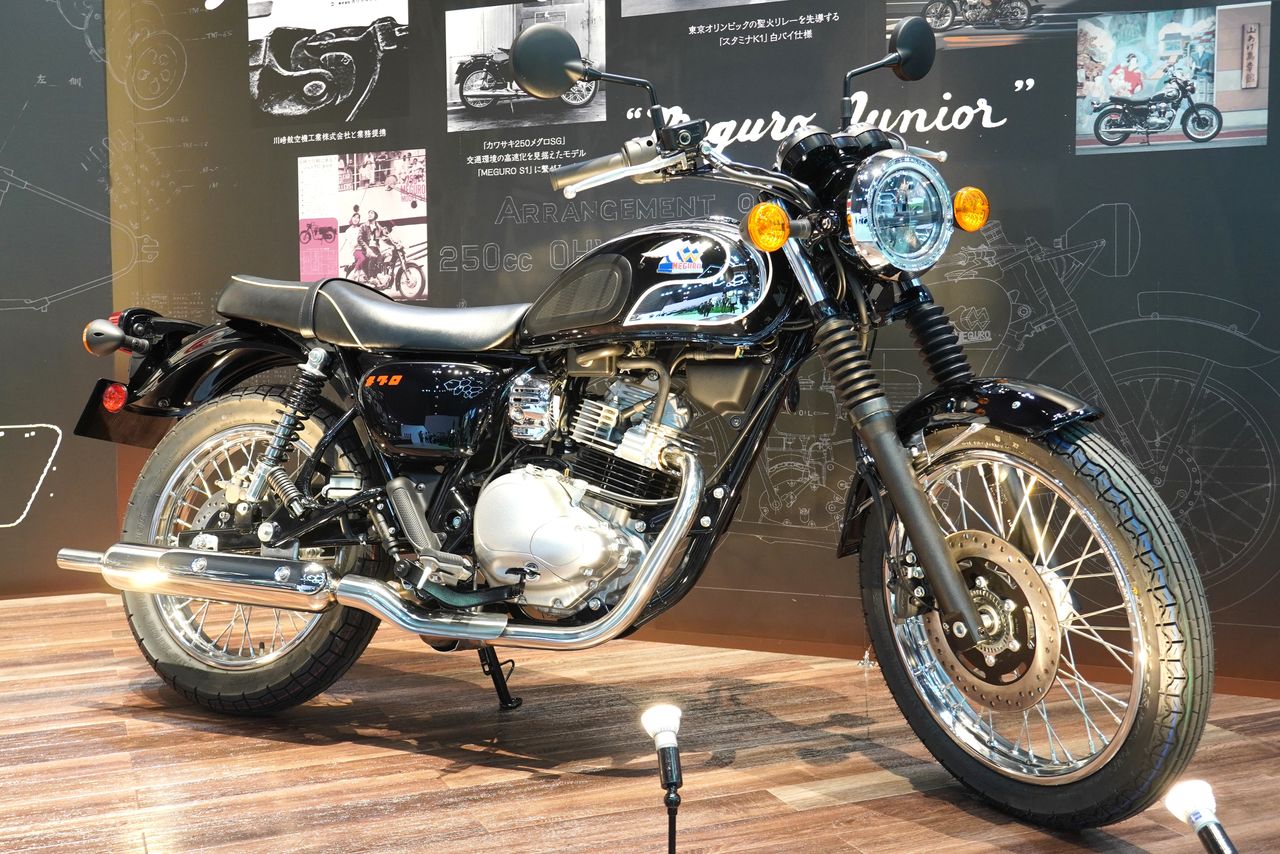
The Meguro S1 was announced in 2024 as the official successor of the Kawasaki 250 Meguro SG. Its chrome-plated fuel tank and elegantly colored emblem masterfully re-create the atmosphere of 1964. Photograph taken on October 25, 2023, at the Japan Mobility Show 2023. (© Ōya Yūichi)
These names accurately express the character of the vehicles, strongly evoke brand imagery, and carry the trust and history built up by manufacturers. The model names themselves convey the narratives and culture behind each brand, giving owners a deep sense of pride in what they ride.
The value of Japanese-named brands that directly express the spirit of Japanese motorcycles will continue to remain unshaken, and there may yet be more motorcycles that will take the world by storm.
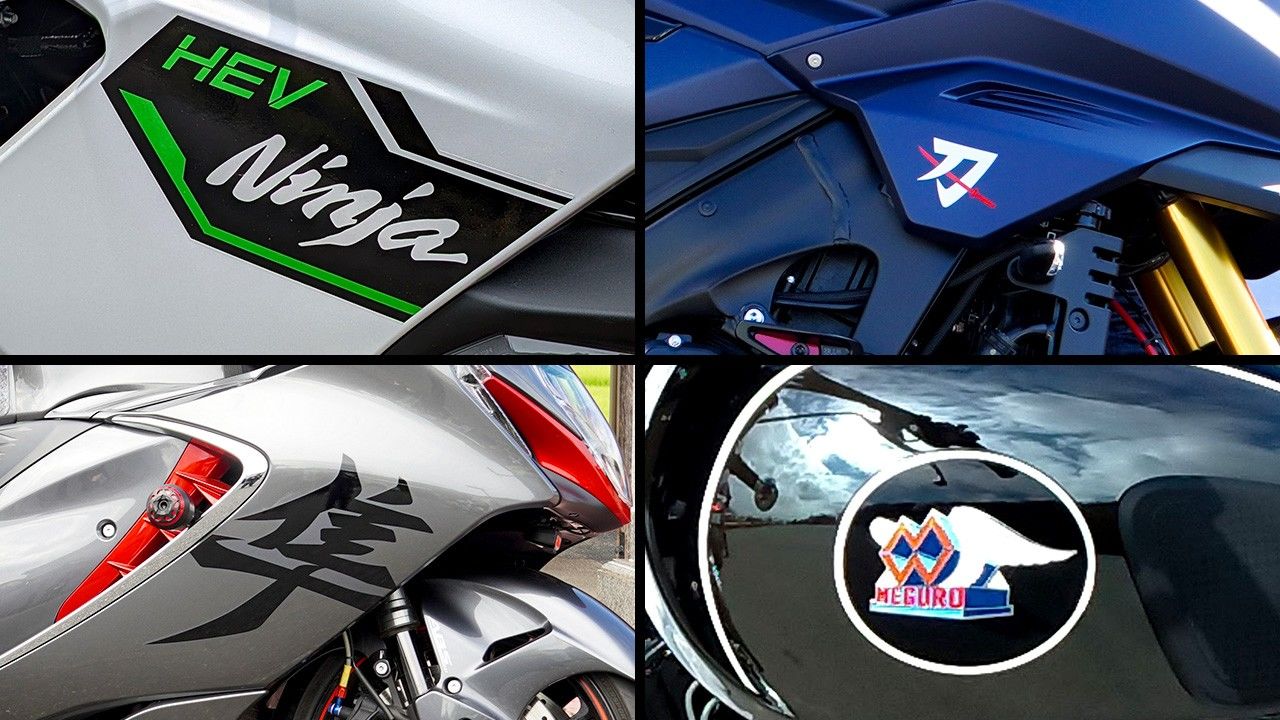
(Originally published in Japanese. Banner photo: Emblems of motorcycles with Japanese names. Clockwise from the top left: The Kawasaki Ninja, Suzuki Katana, Kawasaki Meguro, and Suzuki Hayabusa. © Ōya Yūichi.)