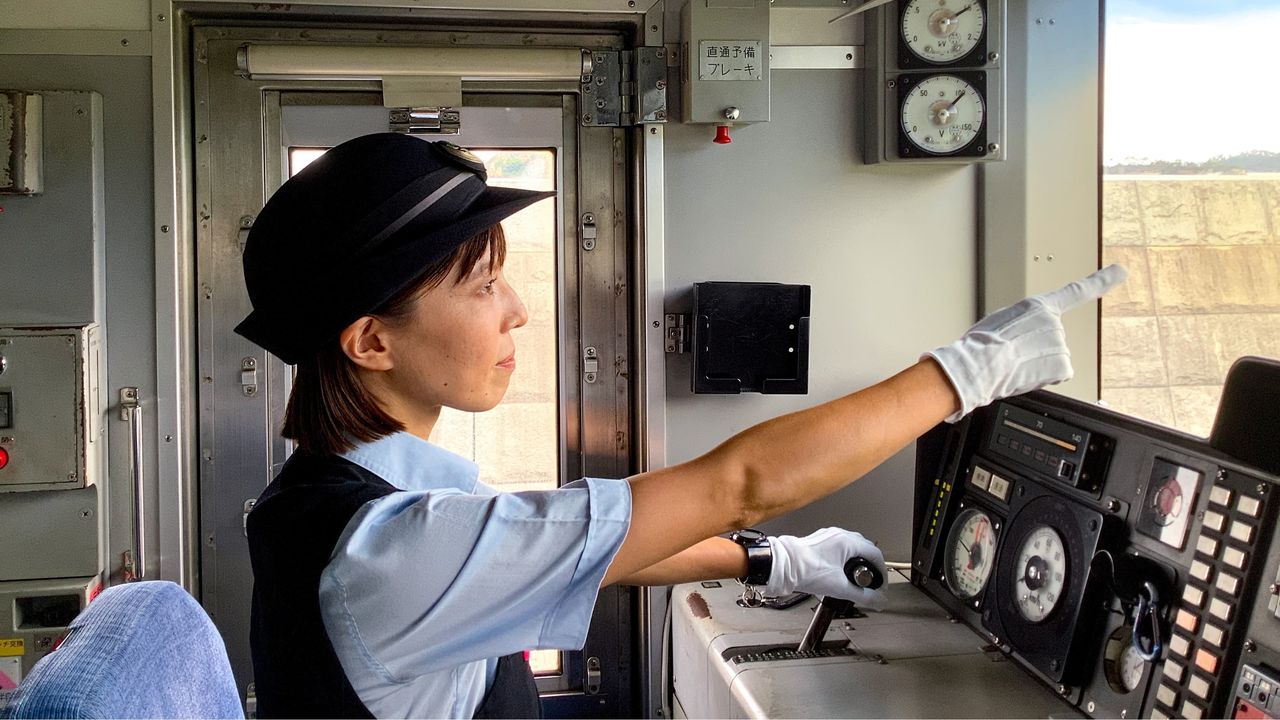
Pointing and Calling: Japan’s Railway Safety Technique
Society Work- English
- 日本語
- 简体字
- 繁體字
- Français
- Español
- العربية
- Русский
Over a Century of History
Peer inside the driver’s cabin of any train in Japan, and you may notice drivers speaking while pointing their index fingers in various directions and at the controls. This practice, known as shisa kanko (pointing and calling), is an occupational safety technique where crew members point toward things that require attention, name them, and describe their status, whereby they reconfirm the details both visually and aurally in an effort to prevent mishaps.
The use of pointing and calling is not limited to the railways—it is also employed at factories, construction sites, and other workplaces. Recently, it has been gaining attention outside of Japan, where it has been introduced by some railway operators. The technique’s efficacy has been scientifically verified, and it is becoming widely recognized as a means to bolster safety.
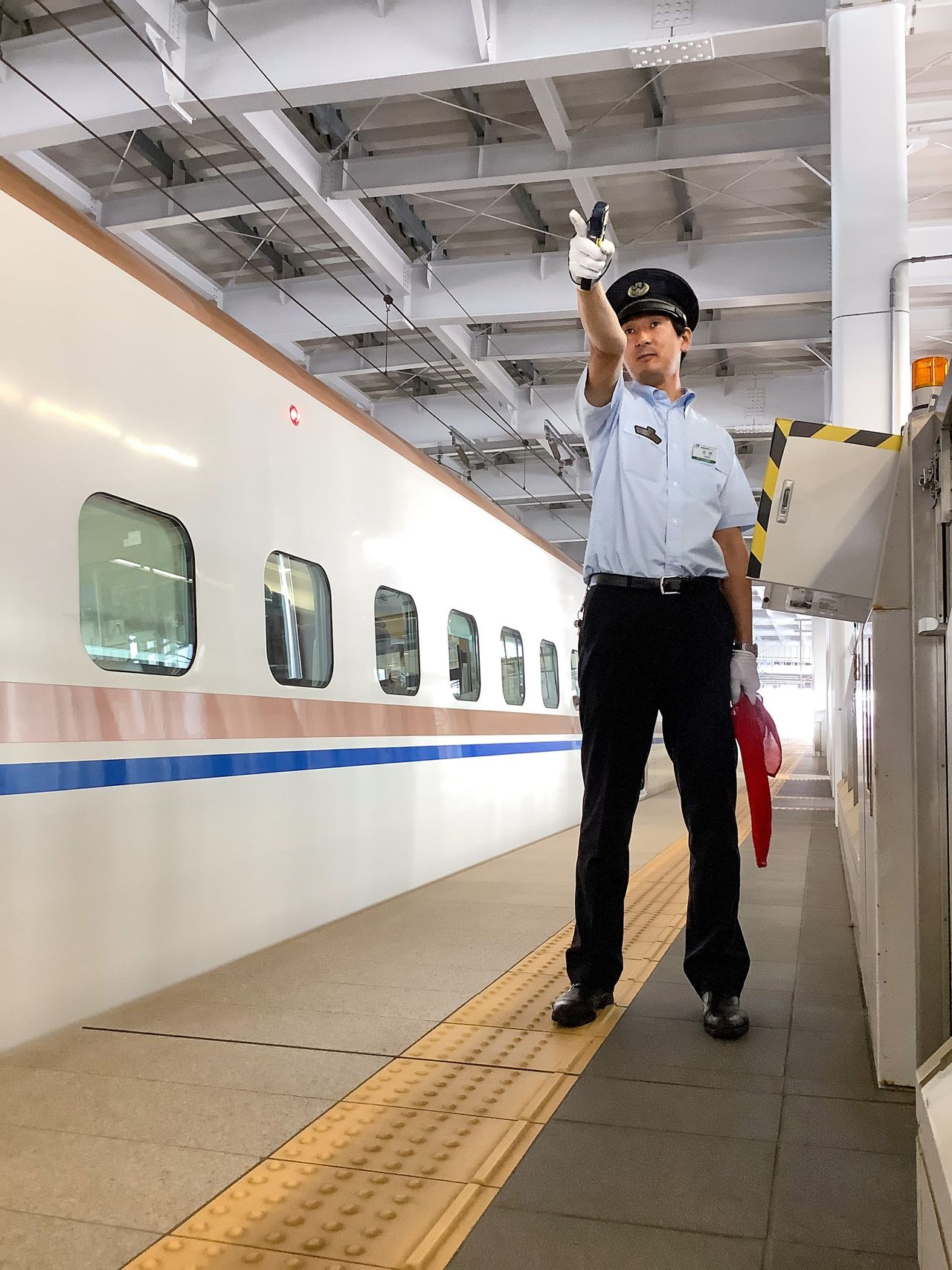
A station worker uses pointing and calling to confirm conditions on the platform for the Shinkansen. (© East Japan Railway Company)
The technique can be traced back over a century, when Japanese rail was still in its infancy. At first, the procedures used were less intricate than today—with crew calling out information as they performed the required operations. Engineers operating steam locomotives and their assistants called out the names of signaling equipment and their current status to prevent misunderstandings and accidents. This method of “calling and response” became widespread, and from the 1910s, was included in the instruction manuals for train crew.
Pointing was added from the late 1920s. When train crew began to point at the object they were referring to with their calls, it was found to increase concentration and reduce oversights. The technique gained wider recognition, and in 1970, the former Japanese National Railways first stipulated in its regulations that employees must point when calling out signals. This formally established today’s pointing and calling method, combining visual and audio confirmation with physical gestures, and led to the introduction of standardized gestures by railway operators throughout Japan.
Techniques to Enhance Attention
Railway safety does not depend solely upon systems and equipment—the decision-making capability of drivers, conductors, and other staff is extremely important. They must process vast amounts of information—including signals, the speedometer, track conditions, and the situation inside the carriages—often in split-seconds, to make vital decisions that impact safety. The task also incorporates unquantifiable sensory aspects such as smell. According to former University of Tokyo Professor Mizuma Takeshi, relative evaluation is a characteristic of safety assessments for railways in Japan. When assessing the safety of a train’s operation, the focus is upon achieving a level of safety equal to or higher than the judgment standards acquired by crew members through experience.
Pointing and calling is one of the mechanisms that ensures consistency in the reliance on people’s decision-making abilities. Users view an object, point at it, call out its name, and confirm the information by hearing their own voice. This sequence of actions focuses attention on one thing, ensuring a high standard of verification. When people grow accustomed to performing repetitious tasks, they can become negligent and are easily distracted. The pointing and calling method, developed in workplaces over many years, is a practical means to prevent this.
I would like to share an incident reinforcing the importance of pointing and calling from when I was a train crew member. In this industry, new recruits acquire many of their skills on-the-job, by accompanying senior drivers or conductors. Standing in the driver’s position, they eagerly performed the required calls “ATS [automatic train stop] good, radio good. . .” and so on.
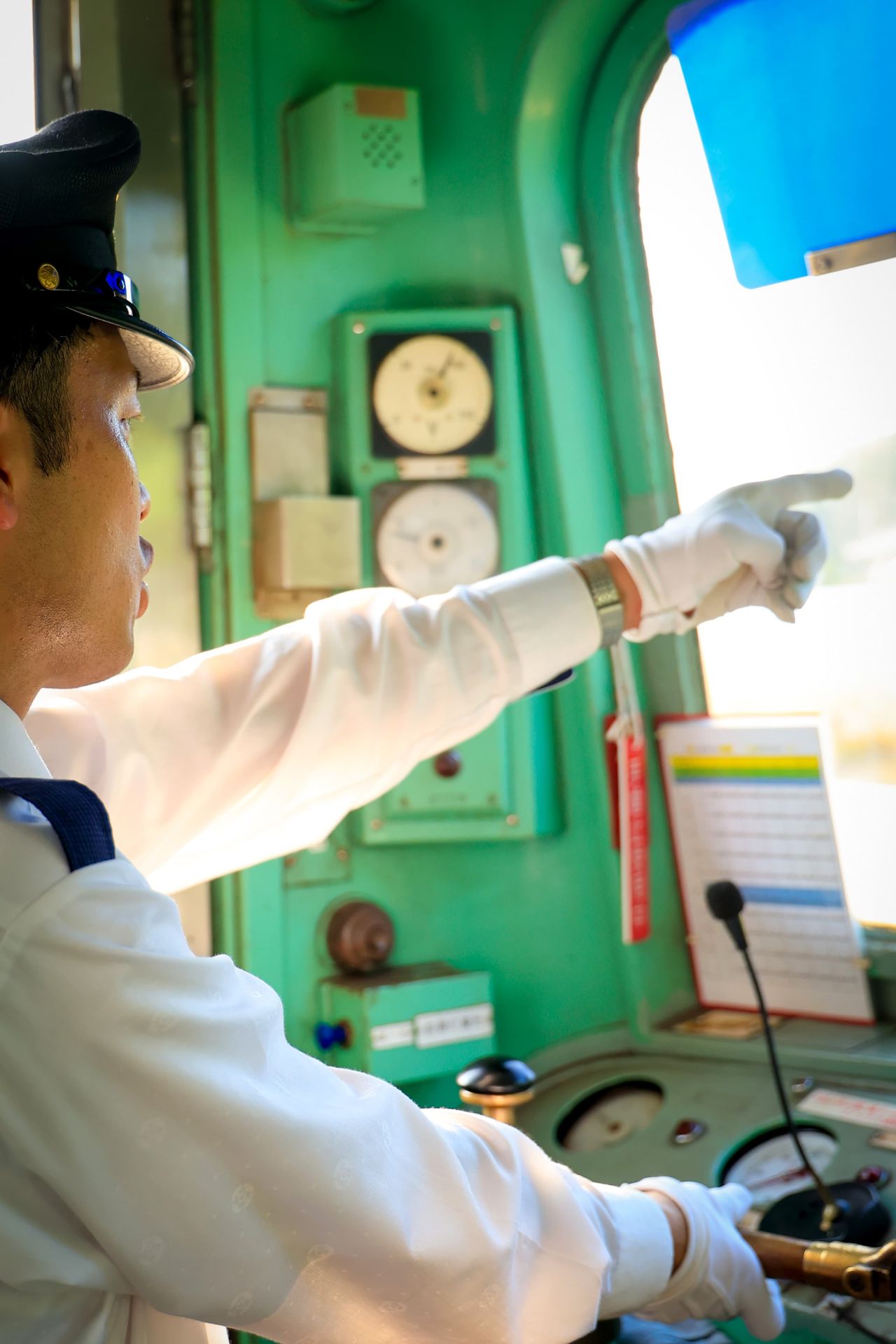
The author pointing and calling in the driver’s position of the Chōshi Electric Railway in Chiba in 2024. (© Nishiue Itsuki)
Initially, when I was training to become a conductor, I thought the actions were just for show, and copied whatever I was told. But one day, soon after I began conducting on my own, I gave the sign for departure one minute early without calling out the departure time for confirmation. Fortunately, the driver recognized my mistake, and did not depart ahead of schedule, but when I thought about the possible consequences of just a one-minute error, it startled me.
If that train had been a limited express, which only leave twice an hour, I might have caused a significant delay to passengers who missed the train. Had it been a single-line section of track, it could have caused a collision with an oncoming train. Through this painful experience, I learned the significance of the inviolable rule of punctuality in train operations, and the role of pointing and calling in preventing mishaps.
Errors Drop Dramatically
Pointing and calling’s effectiveness has been verified scientifically. Experiments by Japan’s Railway Technical Research Institute have shown that when pointing and calling is performed, the error rate in confirmation operations falls to one-sixth.
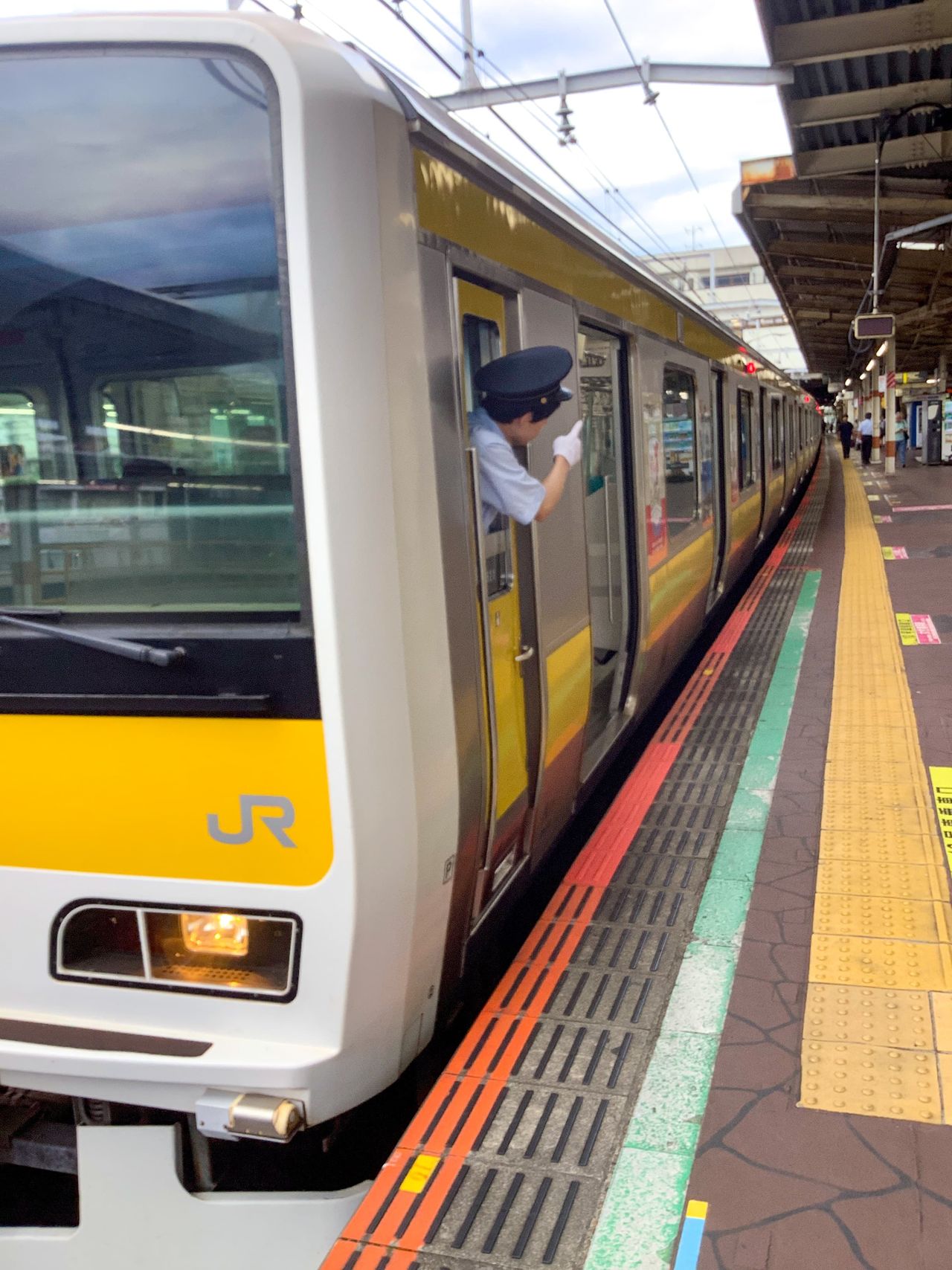
A train conductor uses pointing and calling to confirm door opening and closing. (© East Japan Railway Company)
The physical actions of pointing and calling during tasks produce a rhythm that helps maintain concentration over long working hours. Its powerful impact is substantiated by ergonomics, which has led to the practice being adopted in a wide range of workplaces and industries across Japan, including factories, construction sites, energy, and logistics—all areas where human error can have serious consequences. Another reason it has spread to different industries is the relatively low cost of introducing the simple actions.
Adoption Outside of Japan
Pointing and calling has attracted international attention as a Japanese safety technique. For example, New York’s subway system has introduced a practice in which staff check monitors, point, and verbalize to confirm conditions on platforms, with noticeable success in reducing errors. France’s state-owned railway operator and China’s high-speed railways have also incorporated pointing into their coaching, based on the Japanese method.
Japanese railway operators are also actively working to spread this safety culture overseas. As part of its carriage export project, East Japan Railway Company provides training support to railway operators in Indonesia and other Southeast Asian countries that includes the introduction of Japanese-style pointing and checking. They report that confirmation procedures have been standardized and are being implemented by local staff as fundamental.
The widespread attention gained by pointing and calling stems from Japan’s different perception of safety. Here, there is an underlying belief that safety is produced through the collaboration of humans with systems, and attention is paid to developing mechanisms to boost people’s decision-making abilities. This relates to the relative evaluation discussed earlier.
In contrast, Europe employs safety integrity levels based on international standards, and absolute evaluation, or numerical assessment of reliability of physical equipment, is mainstream. This difference in perception influences safety confirmation techniques. Confirmation accompanied by physical actions, such as pointing and calling, is not common outside of Japan. However, the recent spread of pointing and calling overseas is partly due to the physical limits to the pursuit of safety, and because it is a rational technique for enhancing caution that can be adapted to different workplaces.
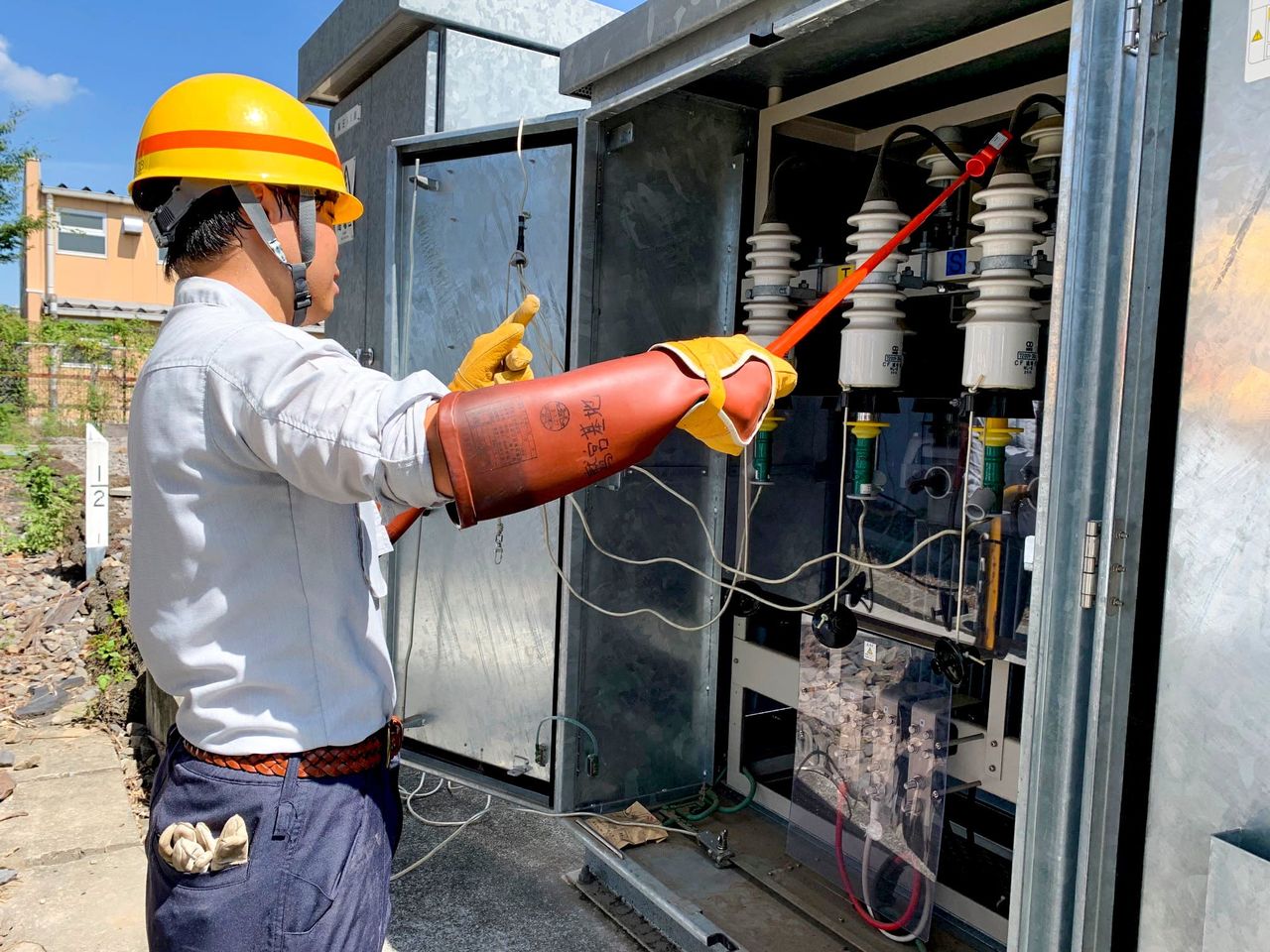
A maintenance worker uses pointing and calling to check equipment. (© East Japan Railway Company)
While technology will continue to become infinitely more sophisticated, it is unlikely to eliminate the role of humans in the final checking of conditions, decision-making, and selection of appropriate actions. On the contrary, the advancement of automation will no doubt increase the importance of basic confirmation performed by humans. Expanding the practice of pointing and calling around the world will help to enhance our safety.
(Originally published in Japanese. Banner photo: A train driver checking the situation ahead with pointing and calling. © East Japan Railway Company.)