Is the Washitsu Facing Extinction?
Culture Society Lifestyle- English
- 日本語
- 简体字
- 繁體字
- Français
- Español
- العربية
- Русский
Zashiki, the Home’s Principal Room
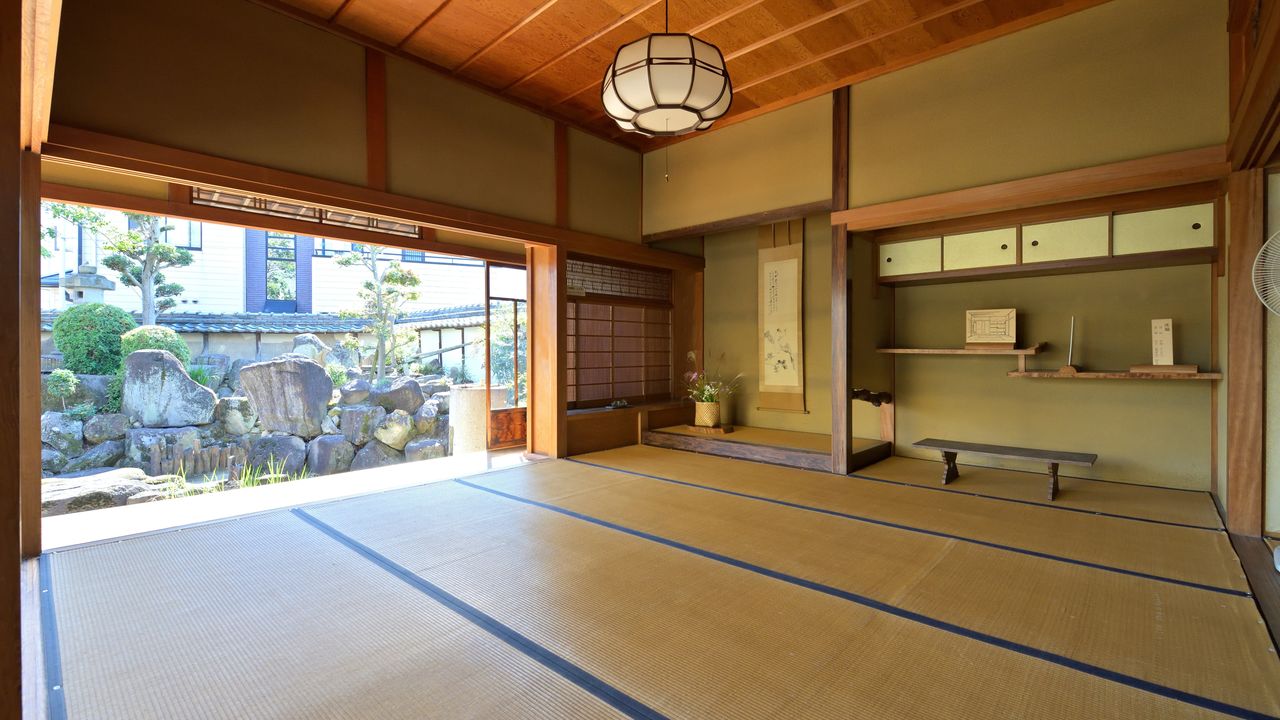
Let me take you on a tour of a traditional Japanese home with washitsu tatami-floored rooms. At the genkan entrance, the visitor removes his or her footwear, is guided along a wood-floored corridor, and is ushered into the zashiki, the grandest room in the home. Along one wall is a tokonoma alcove, where a hanging scroll or flowers with seasonal associations are displayed. The visitor sits on the floor to relax. Greeting the guest, the host slides the shōji open to reveal a verdant garden, a pond, and artfully arranged rocks for the visitor’s enjoyment.
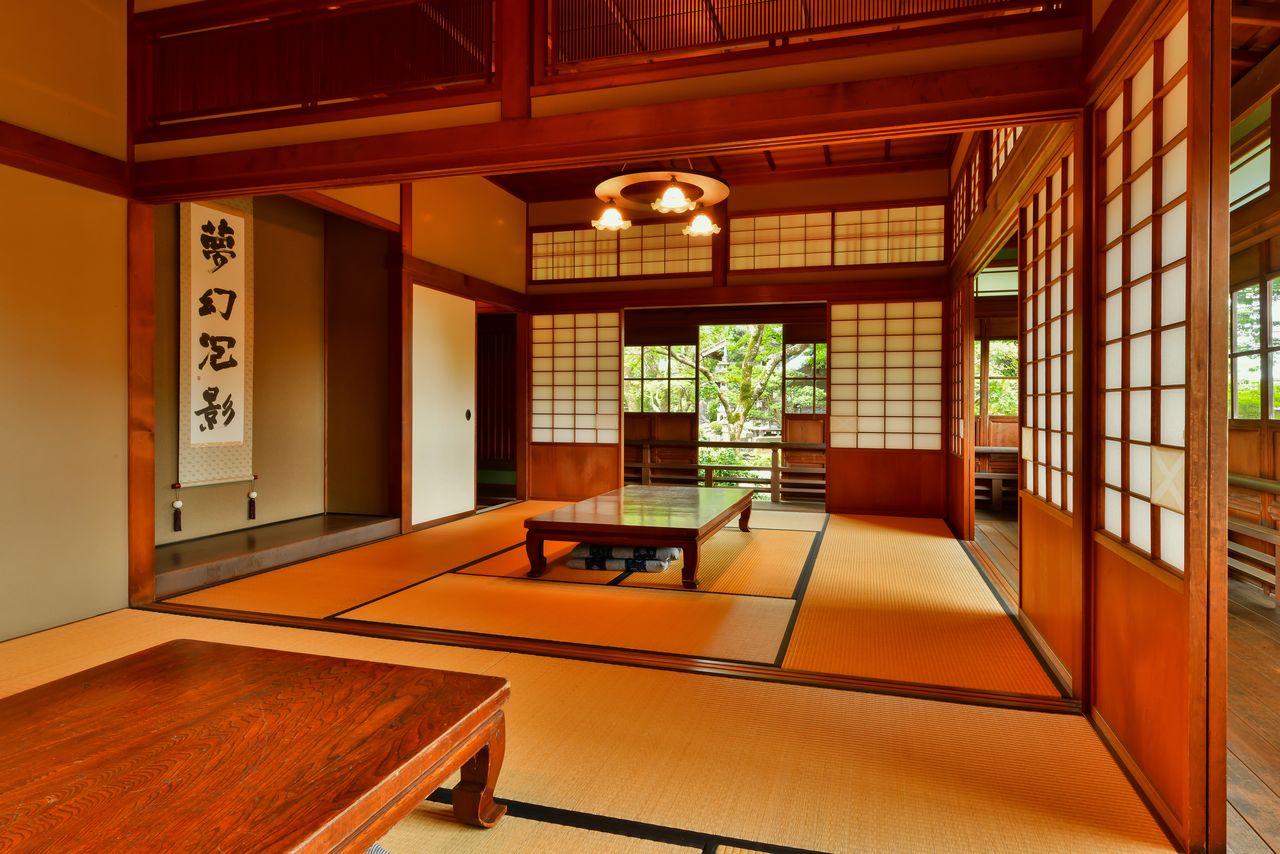
The zashiki at Chinjusō, the former home of a wealthy farmer in Tagami, Niigata Prefecture. (© Pixta)
The fluid connection between the home’s interior and the garden was a hallmark of traditional Japanese dwellings. Up until half a century ago, most homes had a zashiki—not just large homes in the countryside or the homes of wealthy families, but even modest, urban rented dwellings. The zashiki was the most important room, used as the family’s gathering place. It was the site of seasonal celebrations and of ceremonies marking life milestones such as births, milestones in a child’s life, or marriages.
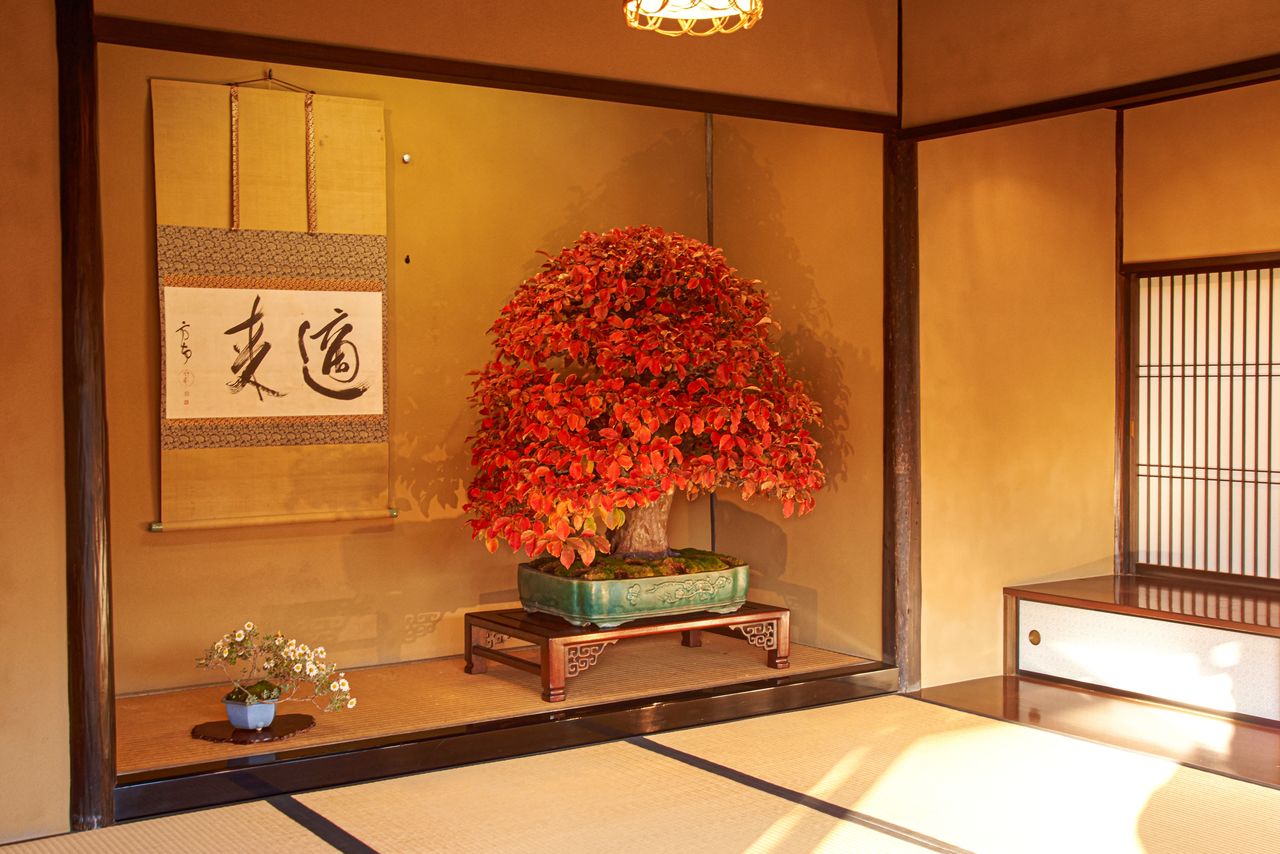
The tokonoma, where a hanging scroll, a prized bonsai, or an ikebana flower arrangement was displayed. (© Pixta)
The family gathered in the zashiki for a festive New Year meal in January. A kagami mochi, a mound of round rice cakes offered to the deities, was arranged in the tokonoma. A scroll depicting auspicious motifs such as a rising sun, or cranes or turtles, symbols associated with longevity and happiness, also hung there. In March, hina dolls and peach blossoms were arranged in the tokonoma for Girls’ Day, to pray for health and happiness for the family’s daughters. A similar festival, this time for boys, was observed in May with a display of war helmets and warrior figures. In this room the entire family participated in seasonal observances throughout the year.
Tatami: The Basic Module
Washitsu are defined primarily by the presence of tatami. These are mats with a core made of compressed rice straw or other materials and topped with a covering, the tatami omote, of woven igusa rushes. Cloth strips called heri bind the edges of the tatami.
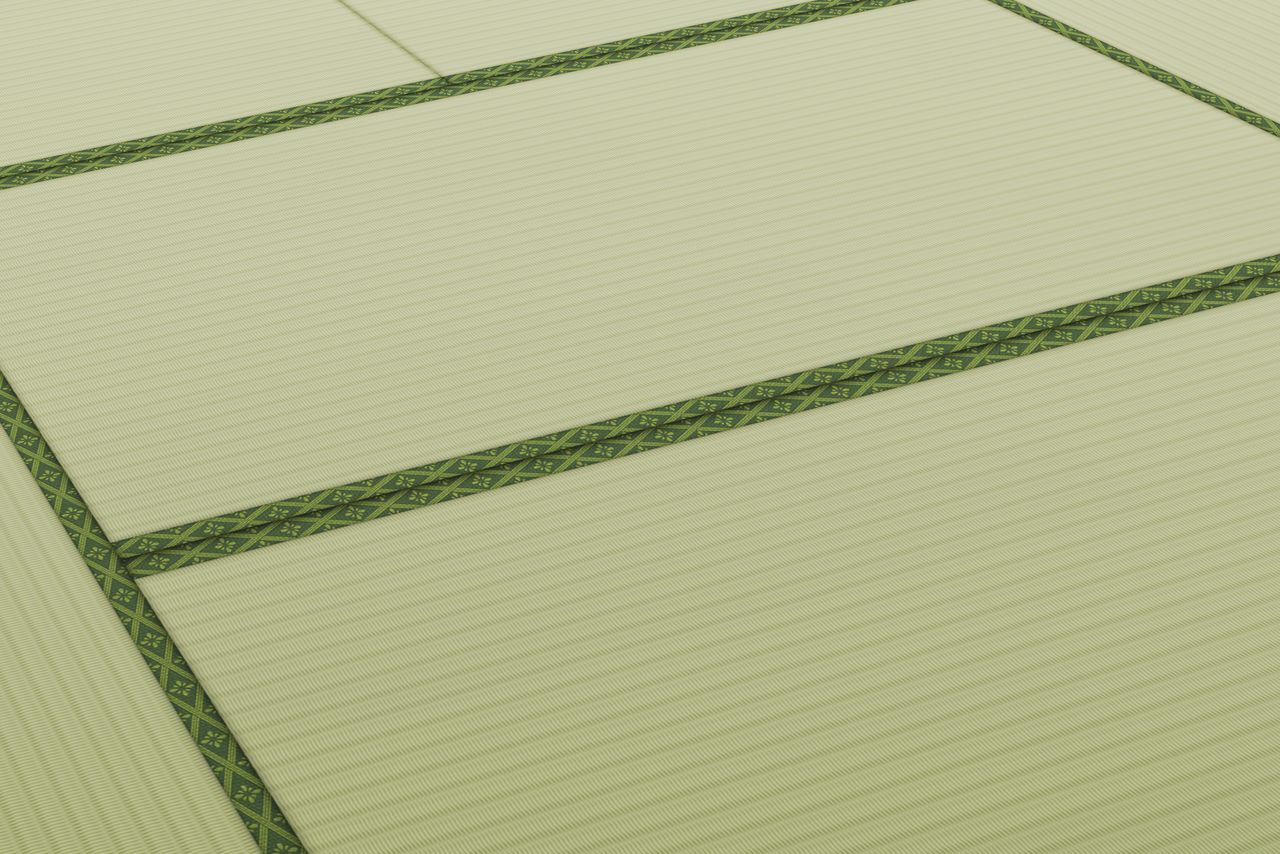
Freshly-laid tatami have a greenish tinge. (© Pixta)
Tatami are made in a standard size, generally 180 centimeters (one ken) by 90 centimeters (half a ken). Ken is a traditional unit of measurement for length that expresses the distance between posts in traditional post-and-beam construction. Since lumber in ken lengths was the most easily available, this became the unit used to describe the footprint of homes and room sizes.
Room size was determined by the number of tatami each contained. For example, a room measuring one ken by one ken would be large enough for two tatami, one measuring two ken by two ken would hold eight tatami, and so forth; rooms were described by the number of tatami they contained. (Indeed, they are described in terms of how many jō, or tatami mats, they can hold to this day.) Japanese who grew up in homes with tatami will generally be able to picture the size of a room, the number of people it can hold, and the disposition of the furniture simply by hearing the jō measurement of the room.
Tategu Fittings
Tategu fittings are another component of washitsu. Traditional Japanese homes have few fixed walls. Instead, interiors are separated by tategu, which range from wooden doors to fusuma paper sliding doors and shōji wooden lattices covered in translucent washi paper. Since the distance between posts is fixed at one ken, these tategu also come in standard sizes.
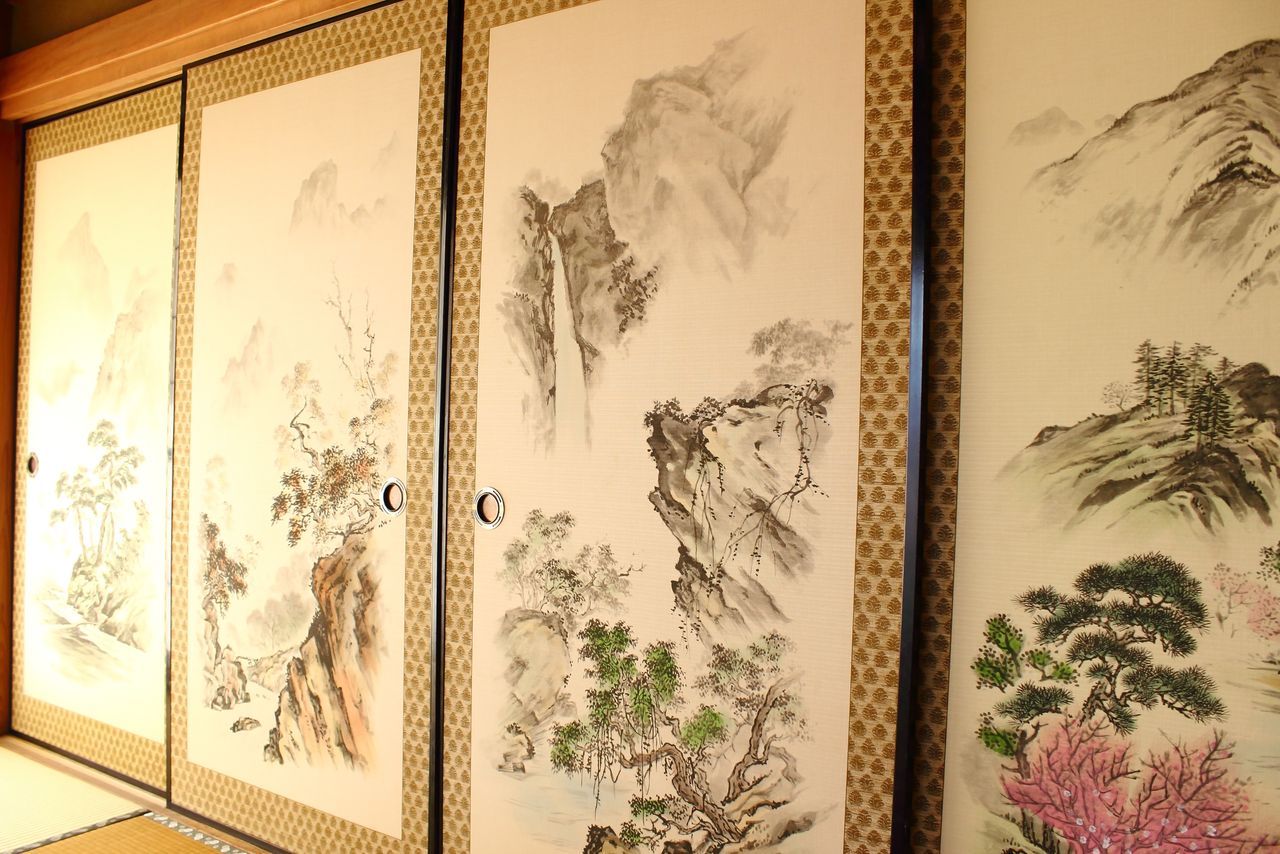
Fusuma in a washitsu decorated with landscapes or designs. (© Pixta)
Fusuma often carry designs or illustrations. Shōji, meanwhile, consist of lattices set in wooden frames covered with washi, which lets in soft light while affording privacy.
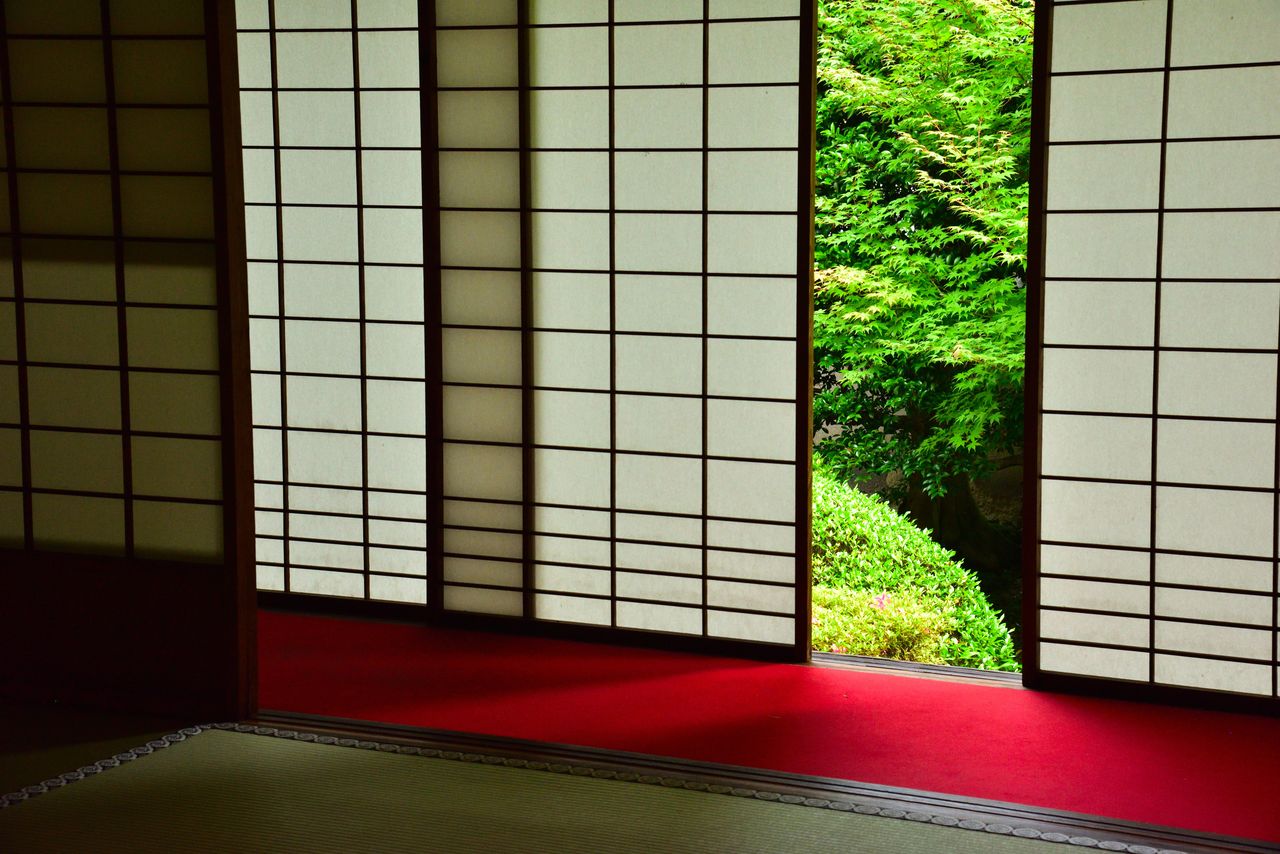
A glimpse of the garden at Unryūin, a branch temple of Sennyūji, Kyoto, through partially open shōji. (© Pixta)
The wood-floor corridor separating tatami rooms in the home’s interior from the exterior is called the en. It can be enclosed in wooden shutters to keep out rain and wind. Fusuma and shōji enclose the interior rooms, making the en an intermediate space serving as a buffer against cold or heat.
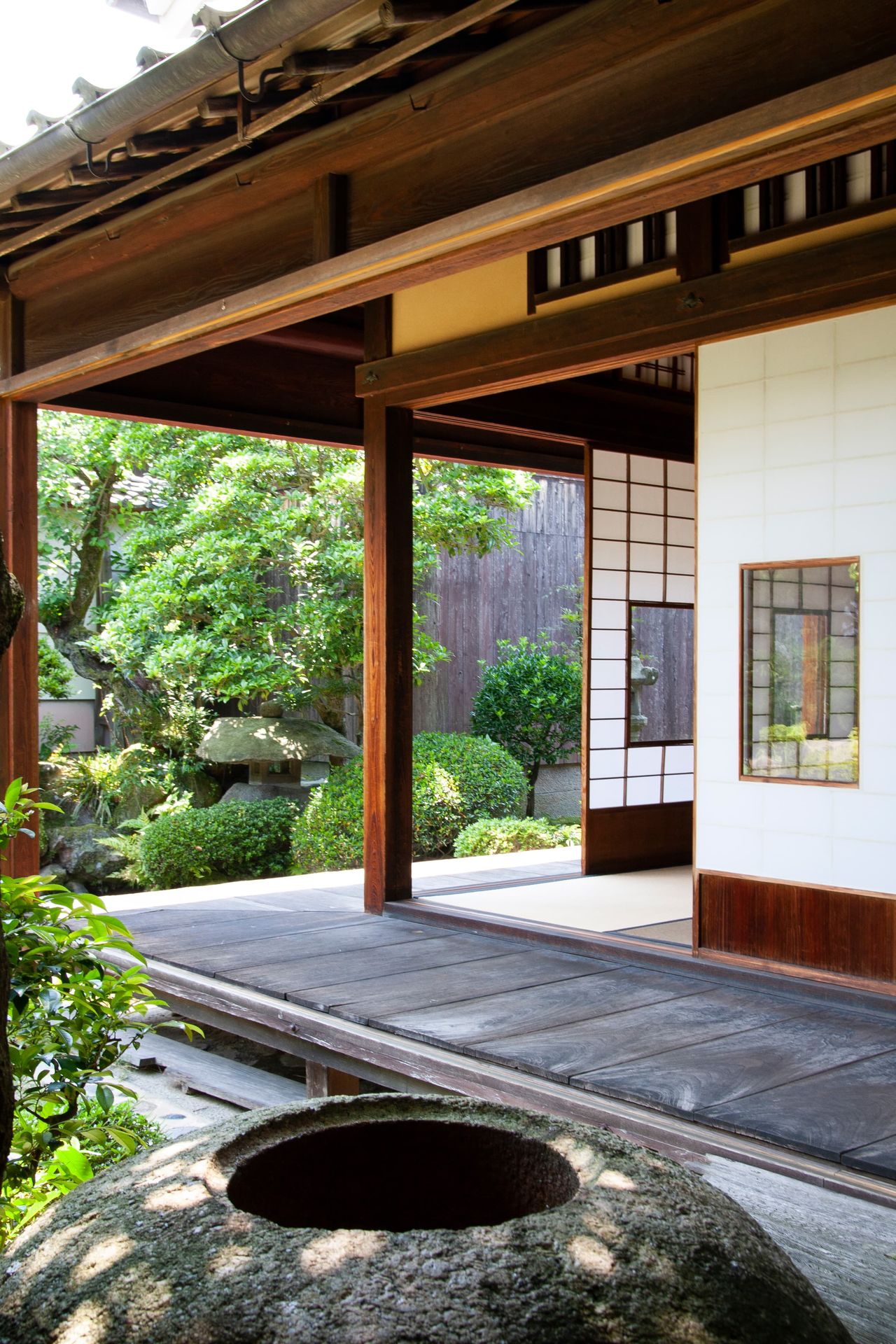
The en facing the garden at the former Mikami family home in Miyazu, Kyoto Prefecture. The structure is designated an important cultural property. (© Pixta)
Japanese summers are hot and humid. For this reason, homes are basically built to allow air to flow freely through the structure. Tategu, which can be moved or removed, are the easiest way to achieve this; opening or removing fusuma or shōji creates a path for breezes. In summer, tategu made of woven bamboo or reeds, called sudare or sudo, were used to protect against direct sunlight and offer privacy while still letting air flow through.
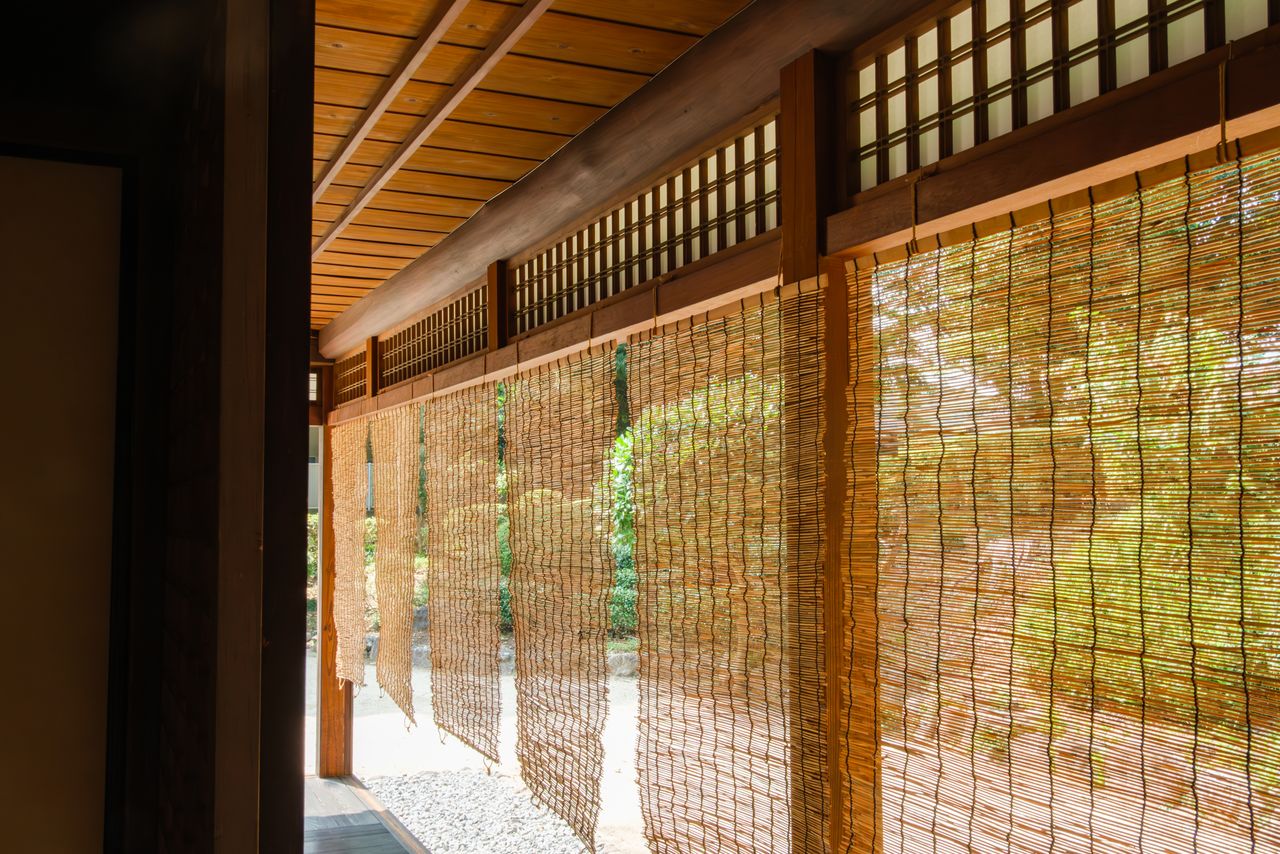
Sudo hanging from the eaves let air through while screening against the sun and providing privacy. (© Pixta)
Washitsu can thus be adapted to the seasons simply by changing or adjusting tategu. This flexibility characteristic of washitsu harmonizes with nature rather than completely shutting it out.
Multipurpose Spaces
Tatami were not reserved for special rooms such as zashiki. They were used virtually everywhere in homes, except for kitchens and storerooms.
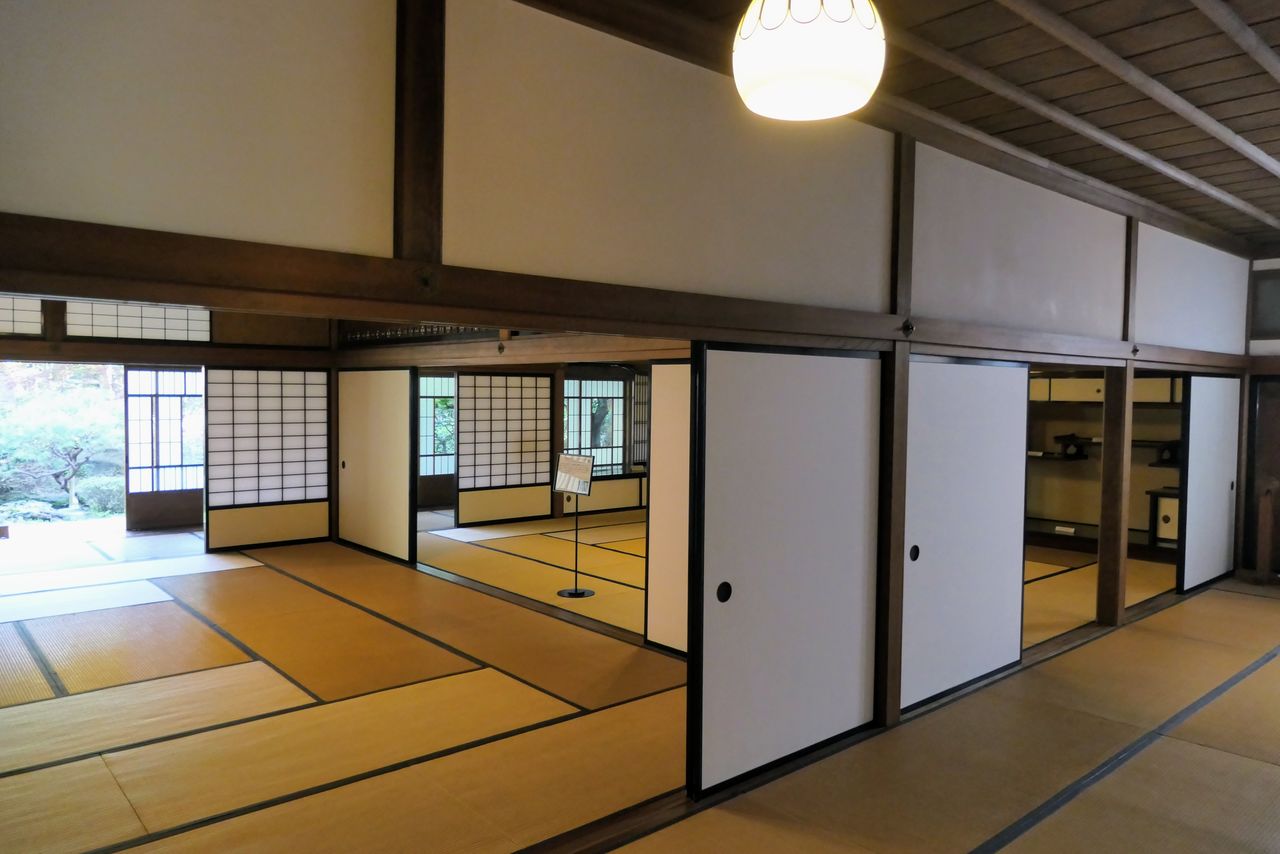
Adjoining tatami rooms can be turned into one large space by opening or removing fusuma or shōji. (© Pixta)
Washitsu could be used for many different purposes. People slept there, on futon spread on the tatami. In the morning, the futon were put away in the oshi-ire closet, a table or a desk was brought out, and the rooms could be used for eating or studying or as a space for family relaxation. By removing fusuma or other partitions, adjoining rooms could transform into one large space capable of accommodating large groups. Rooms were not assigned specific functions, such as bedroom or dining room; they could shift shape to meet the needs of the moment.
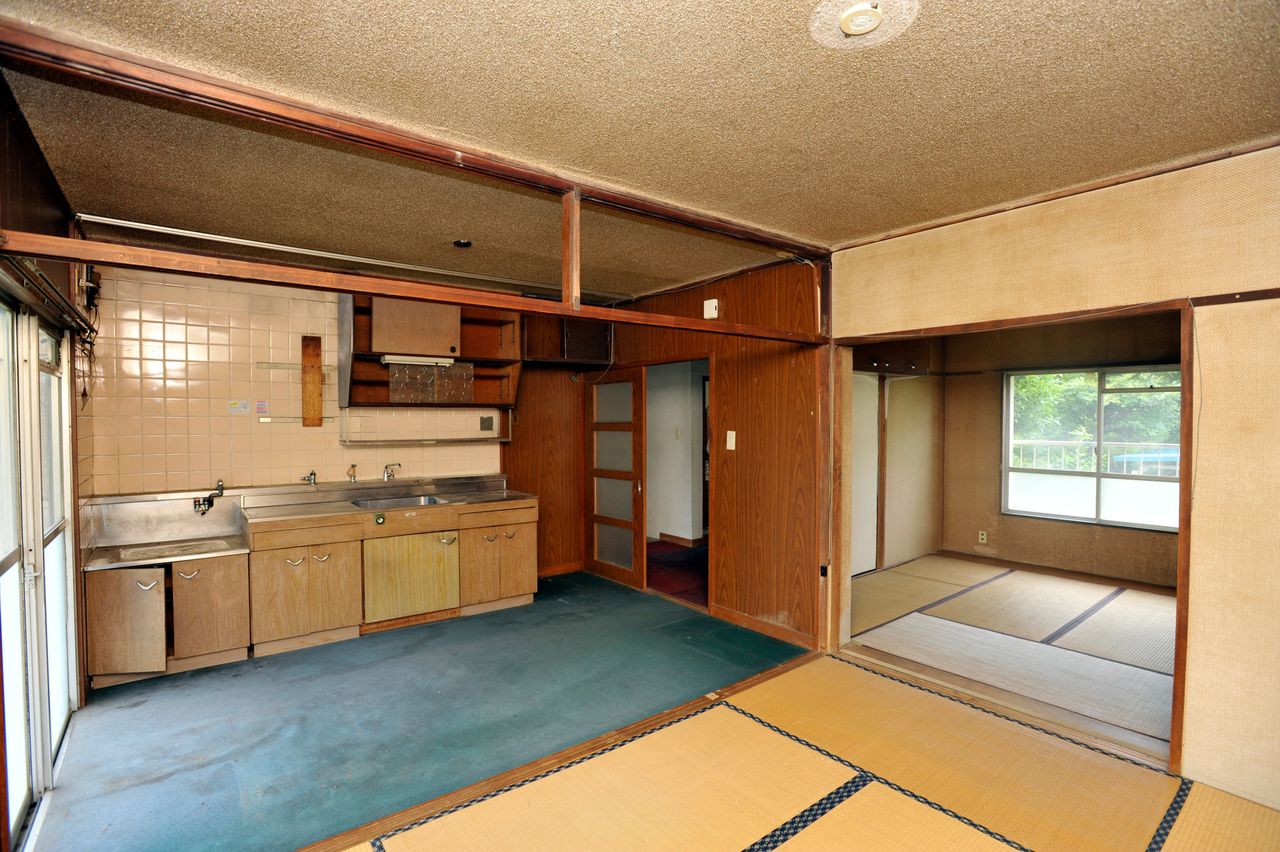
A tatami space in a danchi apartment, the dream home for many an urban family in the 1960s and 1970s. Suwa 2-chōme Apartments, Tama New Town, Tokyo, July 23, 2011. (© Jiji)
Washitsu continued to be prominent in homes even as lifestyles during the postwar era. Massive public housing developments of reinforced concrete apartment buildings called danchi sprang up throughout the country to house a booming population. Likened to rabbit hutches because of their cramped size, they could still accommodate large families because they consisted mostly of versatile washitsu.
Housing in Japan Today
But recent years have seen radical changes in housing in Japan. One homebuilder’s website shows that in 2018, about 60% of single-family homes the company built included washitsu. By 2022, however, that figure had fallen to below 40%. In the trendy high-rise apartment towers that have shot up in Tokyo and other large urban centers, almost none include washitsu.
This may be because people nowadays, accustomed to using tables and chairs, shun sitting directly on the floor. It has also become a matter of course for family members to have their own bedrooms or other private spaces, making flexible repurposing of space difficult.
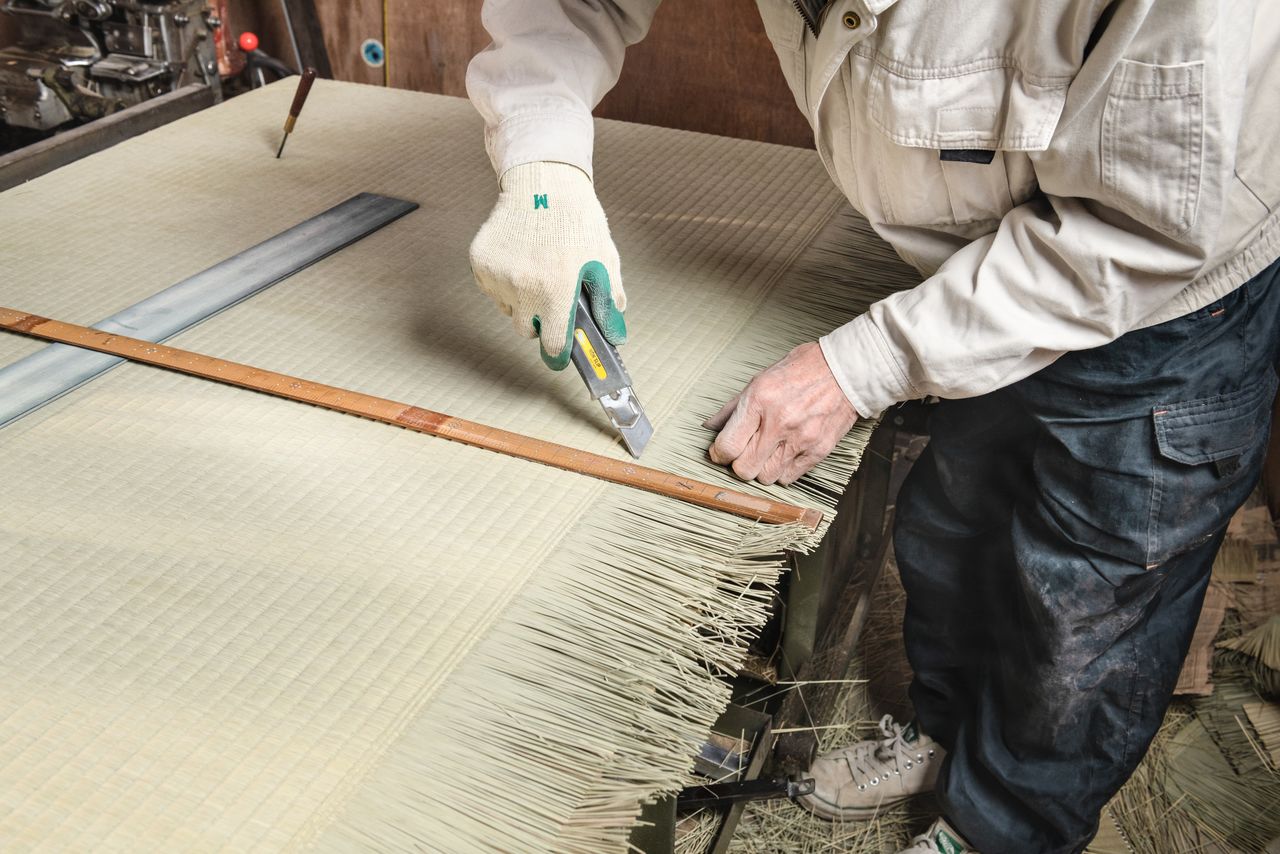
Refurbishing a tatami with a new igusa rush covering. (© Pixta)
Shifts in the housing environment have also affected the industries supporting washitsu. A government report on changes affecting igusa tatami coverings stated that while 26.9 million coverings had been produced in 1996, that number had dropped to 1.0 million in 2025. Furthermore, while 70% of tatami coverings had been made in Japan in 1996, in 2025 only 18% were domestically produced. Although the decline in demand for washitsu is the main factor, imports, mostly from China, account for the majority of the material today. Japan-made tatami coverings are now two or three times more expensive than imports; their high quality and increasing rarity has made them a luxury product.
Growing Overseas Interest
The rapid drop in the number of washitsu has also had an impact on daily life among the Japanese. Tokonoma, where seasonal scrolls or decorative crafts were displayed, have disappeared, taking with them the tradition of encouraging art appreciation as a natural part of everyday life. Today, authentic washitsu are found mostly in high-end traditional ryōtei restaurants or traditional ryokan inns, made available only to those seeking out this sort of Japanese culture.
But while washitsu culture is an endangered species in Japan, it is attracting increased attention abroad. A young Chinese student of mine showed me a photo of a café in China that she visited while conducting research. Atypically for that country, it had a raised tatami-covered area, where customers sat on the floor after removing their footwear. She said that this type of café was popular among young Chinese, and that they could easily obtain Japanese lifestyle goods, from tatami to zataku low tables and zabuton floor cushions, from online shops.
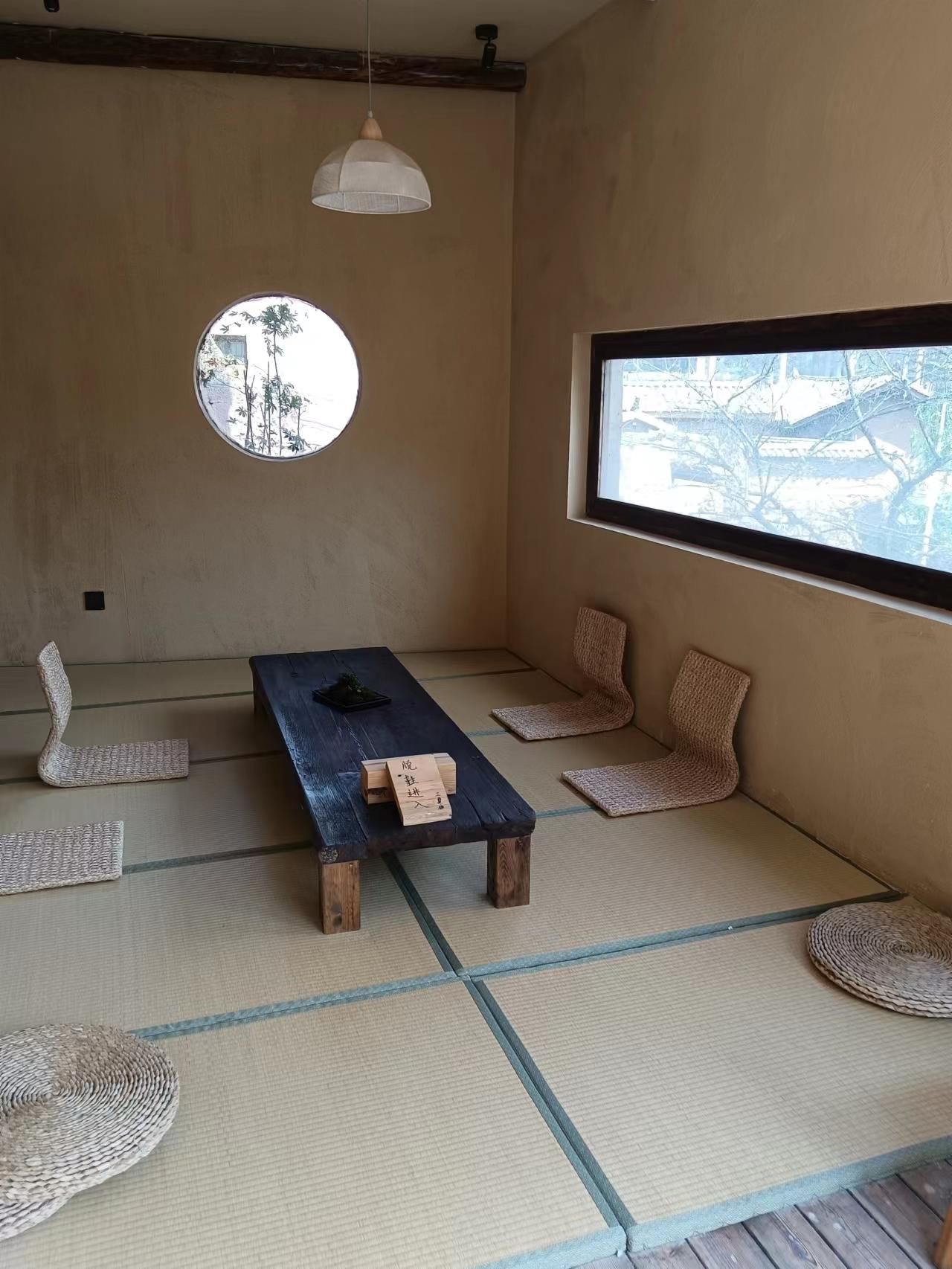
This café in Kunming, Yunnan Province, features a space with tatami, a zataku table, and zaisu seats. (© Lu Gao)
The French language now has tatamiser, a verb meaning “living on tatami.” By extension, it describes incorporating Japanese-style elements into one’s lifestyle. Jūdō is a popular sport in France, which may be a factor contributing to familiarity with tatami, the standard floor material for that sport.
Interest in washitsu among people abroad also extends to other aspects of Japanese culture, for example, valuing nature and incorporating Japanese approaches to daily life and ways of thinking.
Japanese homes in the past utilized natural materials, from roof tiles to posts and tatami, which degraded naturally and returned eventually to the earth. Traditional Japanese living left only a light footprint on its surroundings. Today, as we face a global environmental crisis, we should show renewed appreciation for life as it was lived in previous generations, and spread awareness of this worldwide.
(Originally published in Japanese. Banner photo: The former Kishi residence in Nishiwaki, Hyōgo Prefecture, a national tangible cultural asset. © Pixta.)