Asteroid Traces in Japan May Be Linked to Dinosaur Extinction
Newsfrom Japan
Science Society- English
- 日本語
- 简体字
- 繁體字
- Français
- Español
- العربية
- Русский
Katsuyama, Fukui Pref., May 21 (Jiji Press)--A team of Japanese researchers has discovered traces of an asteroid collision in the northernmost prefecture of Hokkaido that may have caused the mass extinction of dinosaurs at the end of the Cretaceous period some 66 million years ago.
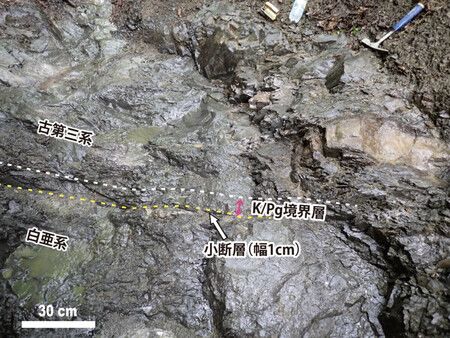
The discovery of a layer in the eastern part of Hokkaido is the first-ever confirmation of such traces in Japan, according to the recent announcement from the team, led by researchers from Tohoku University, the University of Tokyo and Fukui Prefectural University.
The asteroid, which was 10-15 kilometers in diameter, hit an area near the present-day Yucatan Peninsula, Mexico, and is considered to have been one of the causes of the extinction of dinosaurs by triggering rapid global cooling.
The traces of the asteroid impact have been found globally in strata with a high concentration of platinum group elements, which were abundant in the asteroid, known as the Cretaceous-Paleogene (K-Pg) boundary.
Tohoku University professor Reishi Takashima and others have spent 10 years studying the Nemuro Group, a set of sedimentary layers in the Hokkaido town of Urahoro that were once the seabed during the Cretaceous period.
[Copyright The Jiji Press, Ltd.]