Japan Study Unravels Brain Mechanism behind Feeling Hate
Newsfrom Japan
Society- English
- 日本語
- 简体字
- 繁體字
- Français
- Español
- العربية
- Русский
Tokyo, July 10 (Jiji Press)--A University of Tokyo group that studied mice has unraveled the mechanism of how the feeling of hate develops within an individual's brain when suddenly attacked by a familiar individual that suddenly turned aggressive.
The team found that changes in how one feels toward a certain individual are linked to changes in the neural circuit. Its findings have been published in an online edition of the U.S. journal Science.
The study may lead to a better understanding of conditions linked to interpersonal relationships, such as depression, as well as the development of new treatment methods, according to the team.
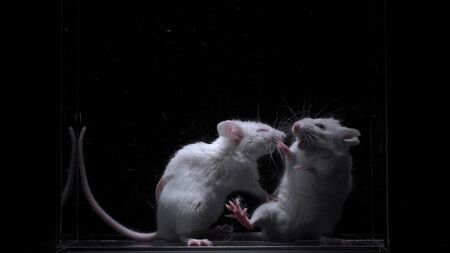
Professor Teruhiro Okuyama and his colleagues in the team had a target mouse remember two other mice and then made one of the two more aggressive artificially. The target mouse started to avoid only the attacking mouse.
As it studied changes in the target mouse's brain before and after this event, the team discovered that connections grew stronger between nerve cells of a region in the hippocampus, responsible for memory, and those of the amygdala, which processes emotions.
[Copyright The Jiji Press, Ltd.]