FOCUS: Ex-Nurse Passes On JAL Crash Practice of Caring for Deceased
Newsfrom Japan
Society- English
- 日本語
- 简体字
- 繁體字
- Français
- Español
- العربية
- Русский
Tokyo, Aug. 16 (Jiji Press)--Fumiko Yamamoto still vividly remembers the moment she entered a gymnasium-turned-morgue as a nurse in the aftermath of the 1985 Japan Airlines jumbo jet crash.
As she passed through the blackout curtain, "something heavy pressed down on my shoulders," recalled Yamamoto, now 82. "(That feeling) still remains in my heart. I felt it might have been the souls of the deceased."
With 520 passengers and crew members killed, the crash remains the world's deadliest single-aircraft accident. Its enormous impact and subsequent fires left many victims' bodies badly damaged, with some missing body parts or burned beyond recognition.
Yamamoto and other nurses dispatched to the gymnasium helped arrange the remains using cardboard and cotton, seeking to restore the victims' bodies to a form closer to how they had appeared in life.
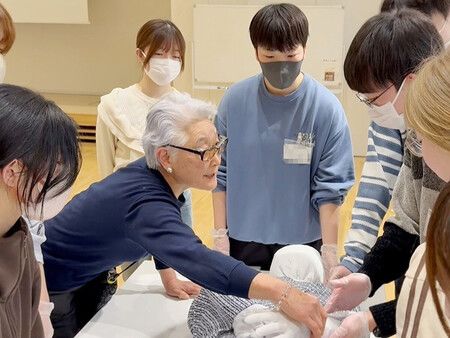
Forty-one years after the crash, the practice known as "seitai," or arrangement of the deceased's body, is being passed on to a new generation, along with the respect for the deceased that guided the nurses who began it.
[Copyright The Jiji Press, Ltd.]