Nobel-Winning Japanese Scientist Hideki Shirakawa Dies at 90
Newsfrom Japan
Science Society Technology- English
- 日本語
- 简体字
- 繁體字
- Français
- Español
- العربية
- Русский
Tokyo, Sept. 3 (Jiji Press)--University of Tsukuba professor emeritus Hideki Shirakawa, who won the Nobel Prize in Chemistry in 2000 for developing conductive polymers, died of metastatic liver tumor and cancer of unknown primary origin at a hospital in Yokohama, Kanagawa Prefecture, eastern Japan, on Aug. 24. He was 90.
A Tokyo native, Shirakawa graduated from the science faculty at the Tokyo Institute of Technology, now the Institute of Science Tokyo, in 1961.
After serving as an assistant at the Tokyo Institute of Technology, he became a researcher at the University of Pennsylvania in 1976, an assistant professor at the University of Tsukuba in 1979 and a professor at the Japanese university in 1982. He retired in 2000.
Plastics and other polymers had been thought to be nonconductive. While he was serving as a Tokyo Institute of Technology assistant, Shirakawa noticed a thin film that was accidentally formed when a research student failed to synthesize polyacetylene.
After a detailed analysis, he made a lustrous thin film like aluminum foil.
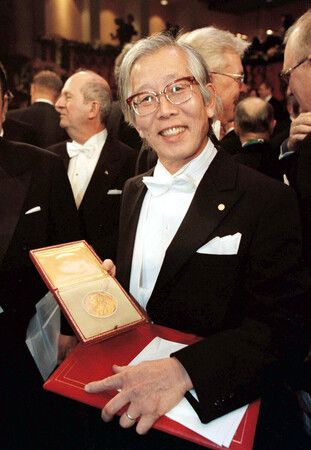
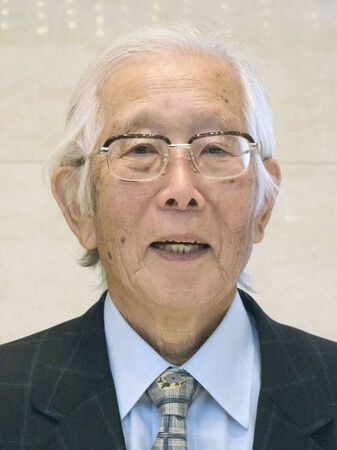
[Copyright The Jiji Press, Ltd.]