Nobel Winner Soai Inspired by Pasteur's Experiment in 19th Century
Newsfrom Japan
Science Society Technology- English
- 日本語
- 简体字
- 繁體字
- Français
- Español
- العربية
- Русский
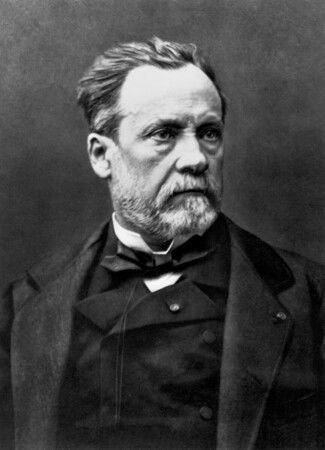
Tokyo, Oct. 11 (Jiji Press)--An experiment by French chemist and microbiologist Louis Pasteur in the mid-19th century had inspired 2026 Nobel Prize in Chemistry winner Kenso Soai's research.
Discovering a reaction known as the "Soai reaction," the 76-year-old Japanese chemist, who is a professor emeritus at Tokyo University of Science, has worked to unravel the mystery of why substances such as amino acids and sugars favor one of the two mirror-image forms over the other.
The discovery of nonlinear effects and autocatalysis in asymmetric organic synthesis, as cited by the Royal Swedish Academy of Sciences as the reason for Soai's Nobel prize, is part of this area called chiral chemistry.
At a press conference held Wednesday after he was named a Nobel Prize in Chemistry co-winner for this year, Soai said that during a visit to the Institut Pasteur in Paris, he "was quietly impressed personally" by crystals in a small box that may have been used by Pasteur.
Chirality is a property in which objects or molecules look identical to their mirror image but cannot be stacked on top of one another, just like a person's right and left hands.

[Copyright The Jiji Press, Ltd.]