A Consideration of the Japanese Psyche
Society Culture- English
- 日本語
- 简体字
- 繁體字
- Français
- Español
- العربية
- Русский
Calm and Collected Kindergarten Kids
Shortly after the disaster, I happened to visit a new kindergarten-cum-daycare facility called Kodomo-en (Children’s Garden) in the Shinjuku ward of Tokyo. I asked the head teacher how the children had coped when the earthquake hit on March 11. What I heard astonished me. Apparently not one single child had cried or screamed or panicked. The kids stayed calm and collected and followed their teacher’s instructions to the word.
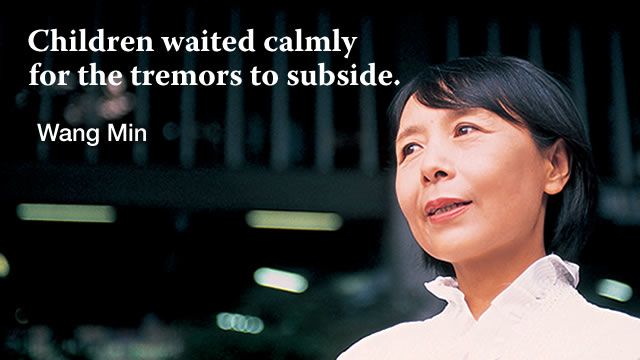
But these are extremely young children we are talking about: from newborns to preschool toddlers. If even a grown adult like me was left quaking with terror after what happened, how had these tiny children managed to remain so calm? The answer I got was that the children had regularly taken part in earthquake drills from an early age, and were therefore well prepared for the earthquake when it hit. Their training had prepared them to act calmly in a group without panicking. In situations like this, if one person panics it can easily affect the whole group. But at Kodomo-en the children kept together and waited calmly for the tremors to subside.
Foreigners Wonder: “How Do They Do It?”
I feel strongly that the calm, collected behavior shown by these young children illustrates in an extreme form something typical about the Japanese psychology.
“I think of Japanese people as quiet and retiring. They tend to be extremely shy and easily embarrassed. Their awkwardness can sometimes make them seem helpless and unreliable. I can’t fathom how such retiring people have been so successful economically.”
I suspect that many foreigners who come to live in Japan ask themselves similar questions during their early days here. At work, it is the same thing. Foreigners are often astonished to find that no one speaks up in meetings. In China, it would be unthinkable for a meeting to proceed in silence, everyone’s attention focused on the person speaking. In many countries, if someone thinks they have a better idea, they will thrust their hands in the air and demand to be heard, whether anyone has asked for their opinion or not. It is common for people to argue vigorously back and forth long after the scheduled finishing time, until eventually someone in a position of leadership has to calm everyone down and call for order.
Japan’s Cohesion Is Its Strength
In one of his books examining Japanese culture from the perspective of Western society, Aida Yūji recounts an interesting anecdote. A researcher asks the following question: “Imagine you are out for a walk with your child in the woods, when a bear suddenly attacks. What stance do you adopt to protect your child?” Most American parents give a similar response: “I would clutch my child to me with one arm, and reach the other out toward the bear, bracing myself to fend it off if it comes closer.” It goes without saying that most Japanese parents would reply differently. In Japan, parents would shelter their children with their own body and turn their back on the bear, resolved to sacrifice themselves to save their children.
Comparative studies of this kind make it clear that when confronted suddenly with a crisis, people in the West have a deeply rooted instinct to brace themselves for a fight. The same is true of the Chinese. I don’t mean to imply that the Japanese are defensive and weak. Instead, I want to suggest that the spirit of resilience that comes from this defensive stance has become a strength in its own right. The shared Japanese instinct to defend is linked to the strong sense of group cohesion. I believe that this forms an important part of the Japanese psyche. And I am convinced that this strong sense of cohesion at the root of Japanese society is the key to solving the riddle of Japanese economic success.
The unprecedented circumstances facing Japanese society today will seriously test the remarkable cohesion of Japanese society. It is my sincere hope that people will cooperate closely, sharing their wisdom and working with persistence and perseverance to overcome this time of crisis.
(Originally written in Japanese based on a March 31, 2011 interview.)