Hinamatsuri: Dolls and Festive Foods on Japan’s Girls Day
Culture- English
- 日本語
- 简体字
- 繁體字
- Français
- Español
- العربية
- Русский
Dolls on Display
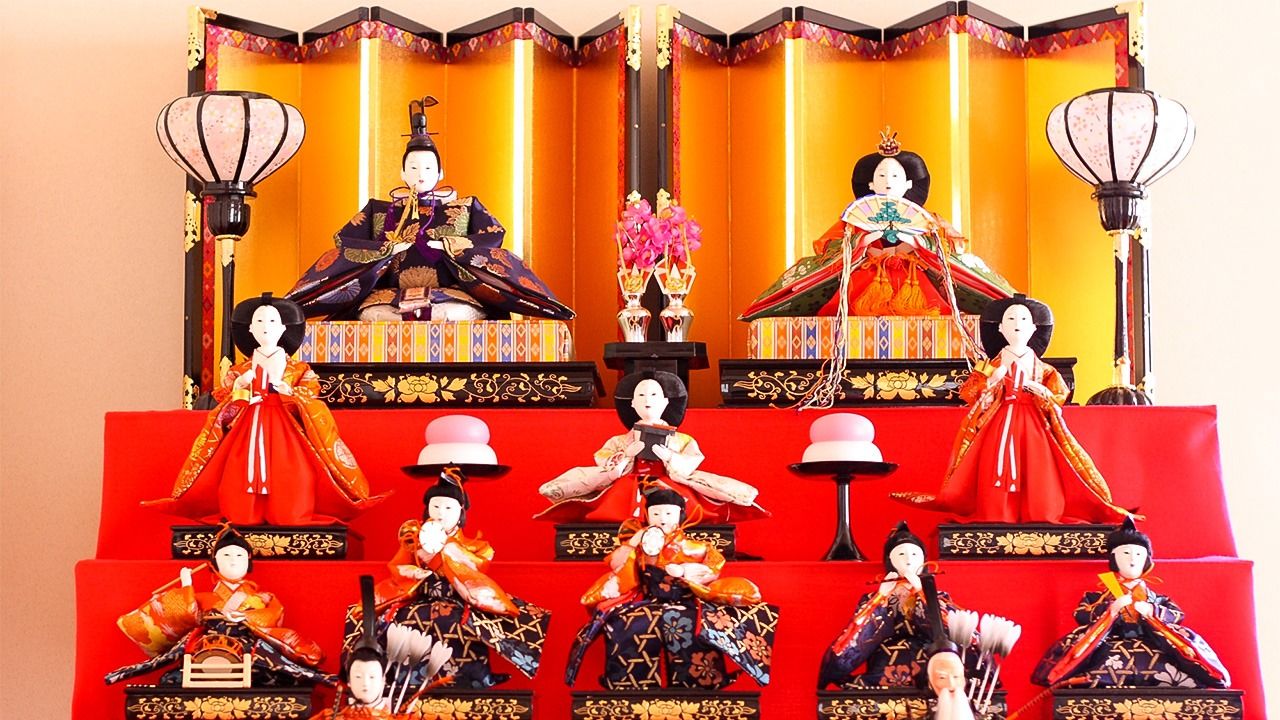
Hinamatsuri, also known as the doll festival, is celebrated on March 3. As the festival approaches, families with girls display hina ningyō, ornate dolls expressing wishes for their daughters’ health and happiness. These figures are said to represent imperial family members and courtiers at a Heian period (794–1185) wedding; they have traditionally also been associated with hopes for a happy marriage.
Home displays of dolls range from a simple pairing of the bride and groom (odairisama) to elaborate seven-tier arrangements with 15 figures, including three court ladies (sannin kanjo) and a group of five musicians (gonin bayashi), as well as wedding goods and vehicles. Today, compact sets in glass cases suitable for the smaller spaces of modern Japanese homes are the norm. Iwatsuki in the city of Saitama is one of Japan’s leading production centers for hina dolls.
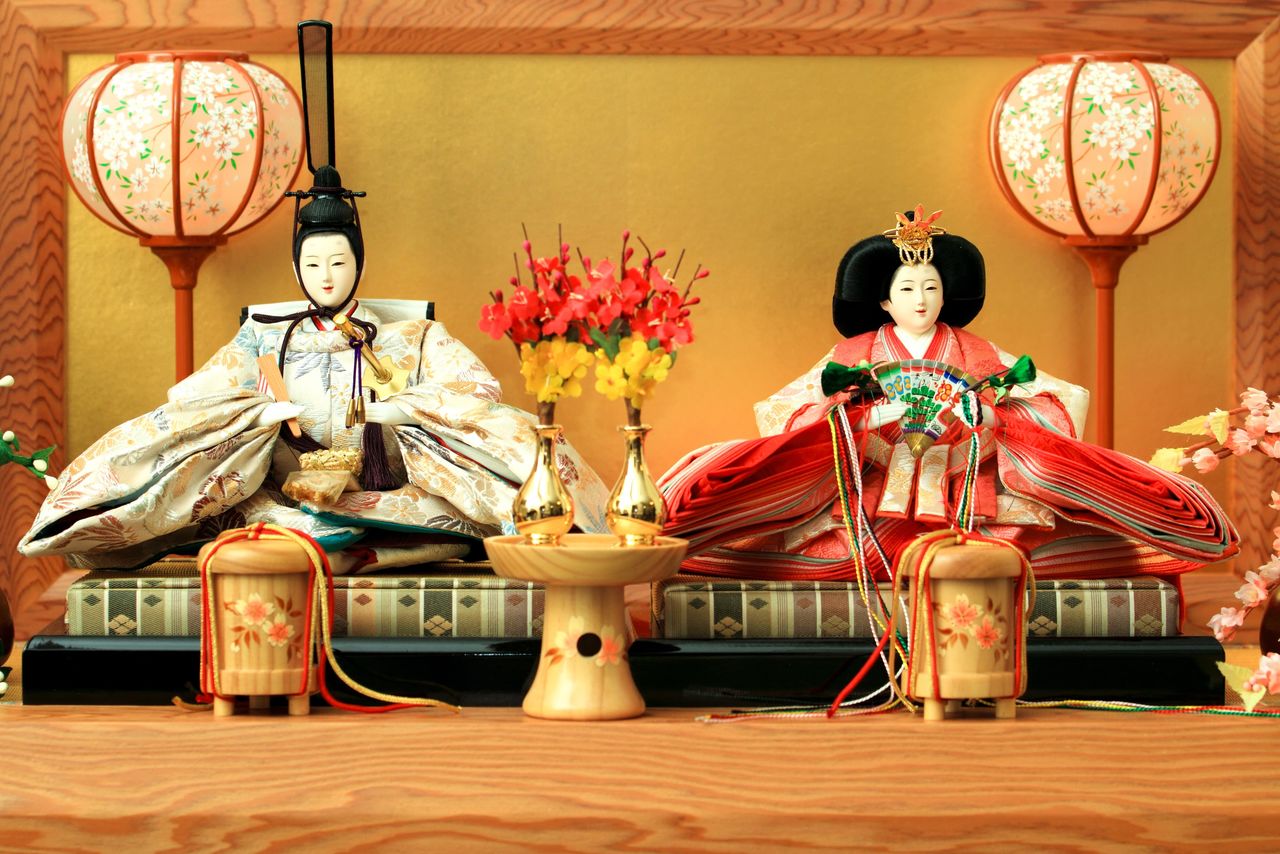
A bride and groom. (© Pixta)
Celebratory Food and Drink
Various kinds of food and drink are associated with the festival, as listed below.
Hishimochi: Diamond-shaped pink, white, and green mochi (rice cakes). According to one theory the colors represent life, snow, and the buds on trees, respectively.
Shirozake: A cloudy white, sweet liquor made from glutinous rice and kōji. Children drink amazake, a similar nonalcoholic version.
Hinaarare: Multicolored rice crackers that are sometimes displayed together with the dolls. In the Kantō region in eastern Japan, they are typically sweetened puffed rice, while in Kansai in the west, round crackers made from glutinous rice are most common.
Chirashizushi: A type of sushi dish made with auspicious ingredients like shrimp and lotus root (renkon) scattered over vinegared rice.
Clam soup: This dish made with a variety of clam called hamaguri is associated with wishes for marriage. This comes from the way the two halves of the shell fit perfectly together, symbolizing marital harmony.
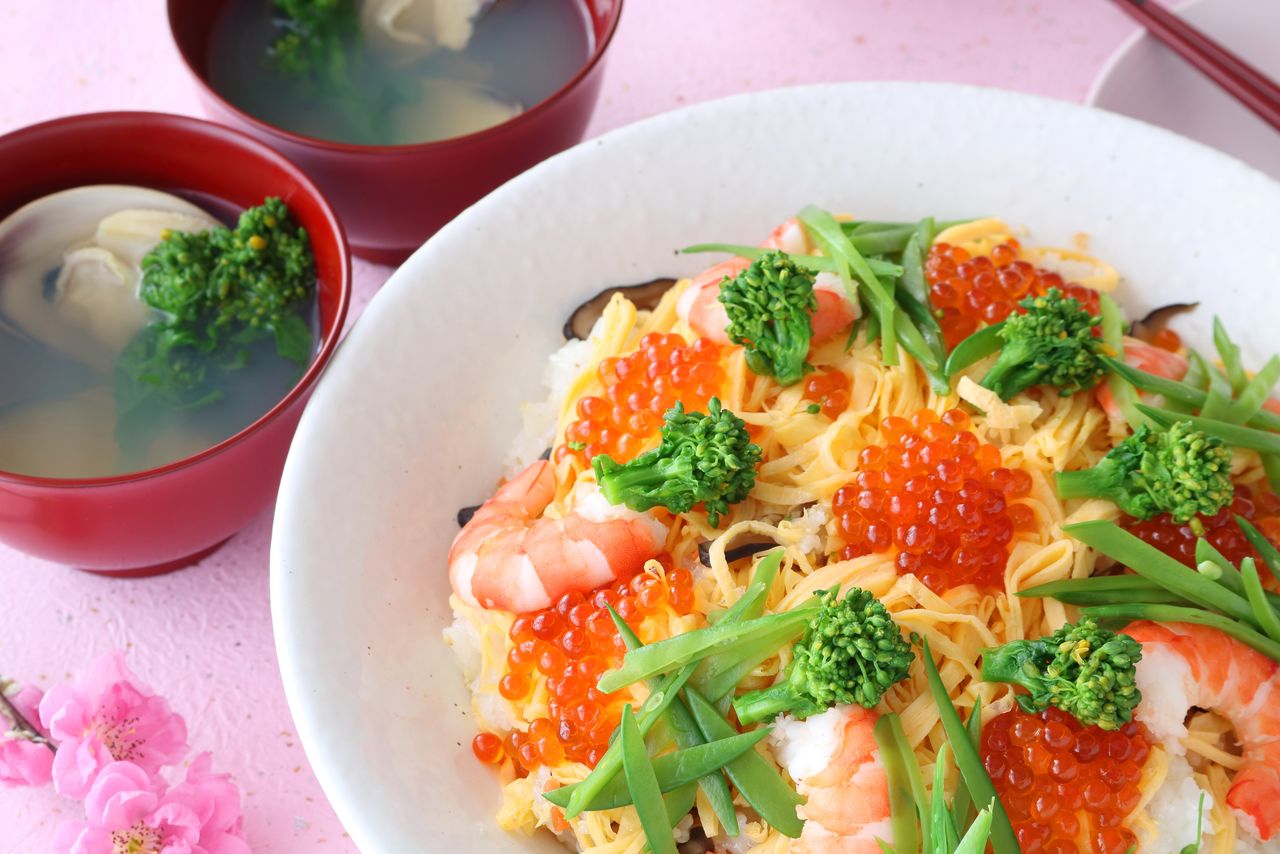
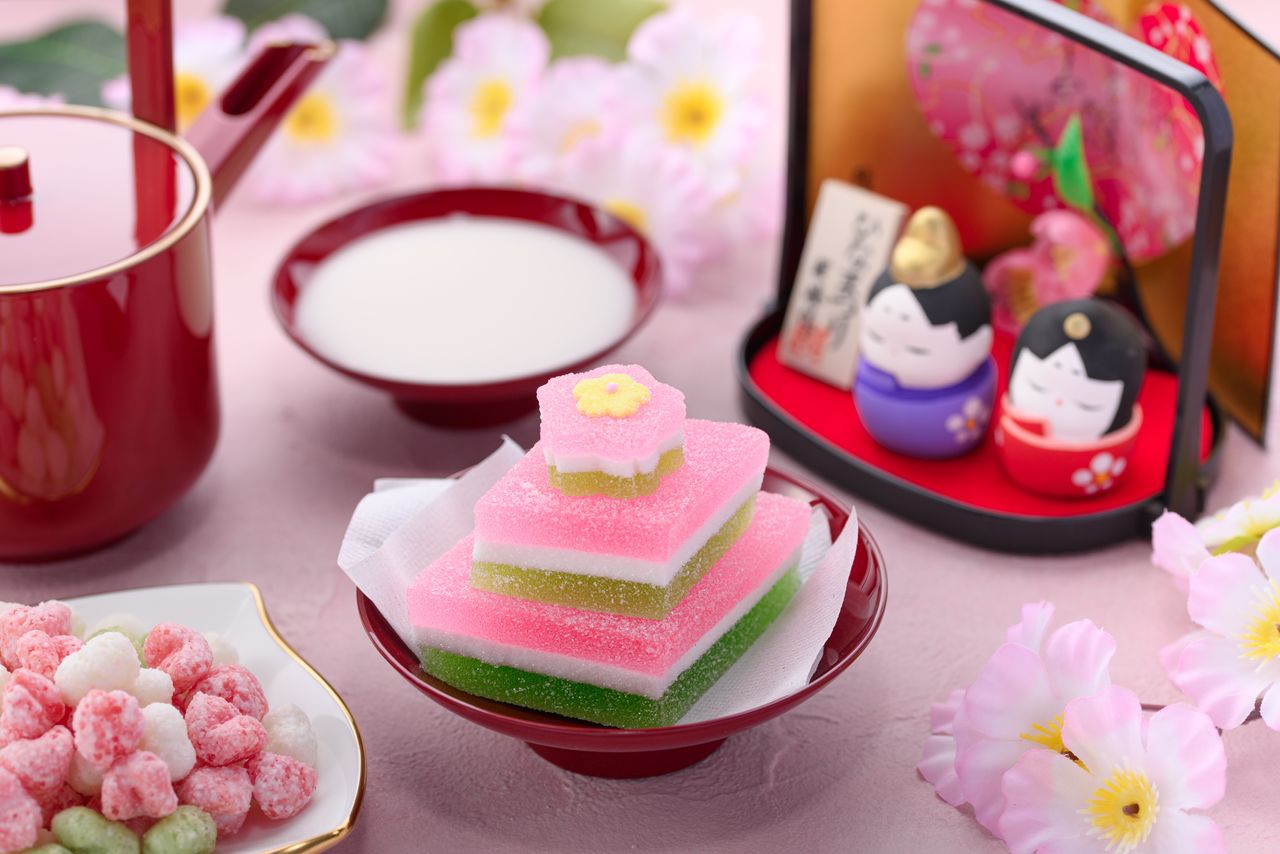
Hinamatsuri dishes: (Top) Clam soup, at left, with chirashizushi; (bottom) clockwise from left, hinaarare, shirozake, and hishimochi. (© Pixta)
The Origins of the Festival
The third day of the third month is one of the five sekku or seasonal festive days in the traditional calendar. The festival has its roots in ancient China and is sometimes called Momo no Sekku, which can be traced to the Chinese belief that peaches (momo) have the power to purify as well as keep away evil spirits.
In Japan, these beliefs gave rise to the custom of using dolls as surrogates to take on spiritual impurities. The dolls were then dropped into bodies of moving water so that any contaminants were carried away with the current. In some parts of Japan, dolls called nagashibina are still set afloat in rivers. Another tradition arose for girls of the Heian aristocracy to play with wooden or paper dolls. These two customs came together to form the festival of Hinamatsuri.
(Banner photo: Hina dolls on display at Hinamatsuri. © Pixta.)