Children’s Day: Carp Streamers and Samurai Traditions
Society Culture- English
- 日本語
- 简体字
- 繁體字
- Français
- Español
- العربية
- Русский
A Traditional Male Focus
May 5 marks Tango no Sekku, which in Japan is also known as Children’s Day. The sekku are five ancient seasonal festivals influenced by Chinese philosophy that are held at various times of the year deemed auspicious according to the lunar calendar. In Japan, the focus of Tango no Sekku was traditionally on male children—it was once called Boys’ Day—with decorations and specially prepared dishes intended to ensure that sons grew into healthy and prosperous adults.
The emphasis broadened to include both boys and girls when the day was adopted as the national holiday Children’s Day in 1948, although the traditions remain strongly connected with boys; meanwhile Hinamatsuri, on March 3, is a festival for girls.
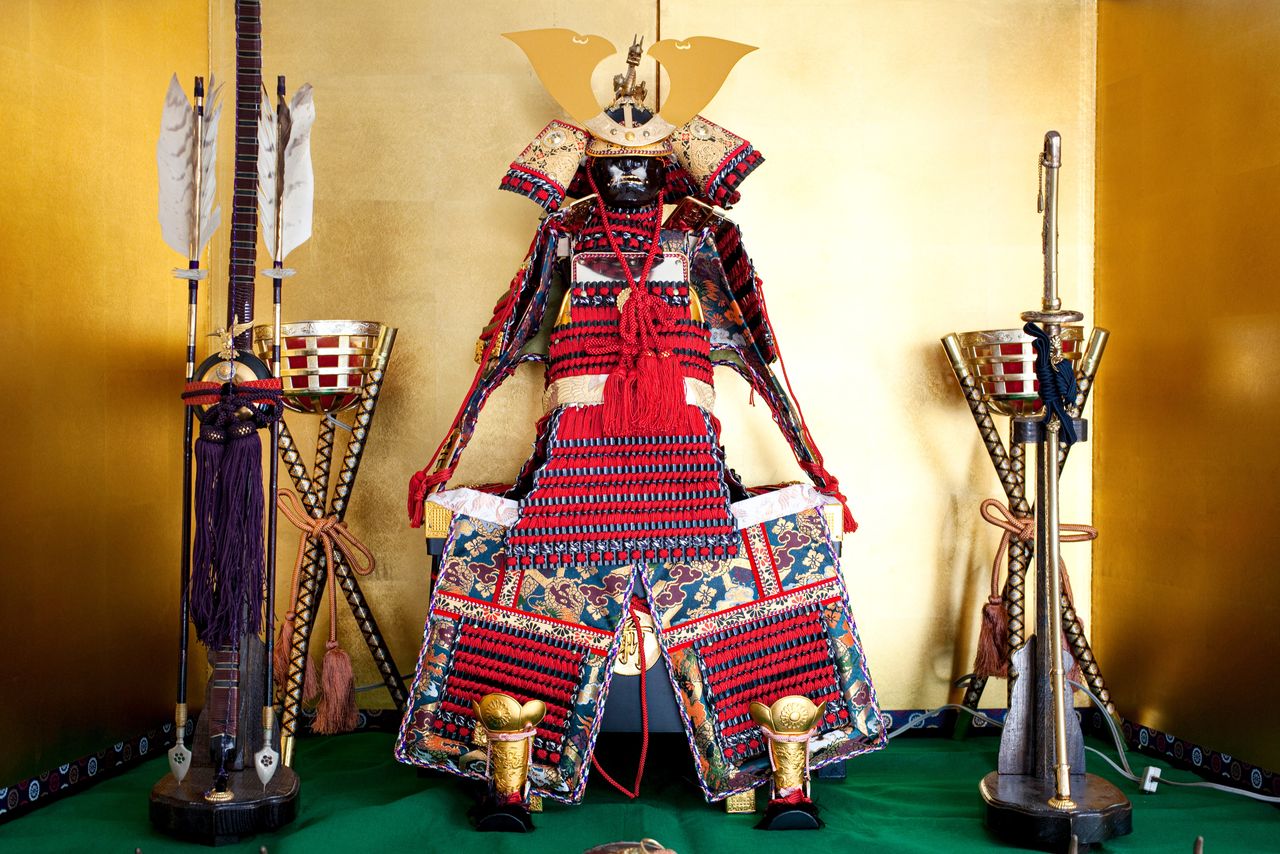
A traditional display of armor and other symbols of Children’s Day. (© Adobestock)
Armor and Carp Streamers to Ensure Health and Prosperity
The festival is rich in both indoor and outdoor decorations. One interior tradition started by members of the warrior class is the display of military symbols, such as dolls clad in armor (yoroi), decorative samurai helmets (kabuto), and ornamental swords (katana). The warrior figurines, known as gogatsu ningyō (May dolls), and other military regalia symbolize strength and courage, and are traditionally held to protect children from misfortune and disease.
Another tradition was to hang bunches of iris leaves (shōbu) and dried mugwort (yomogi), which are considered to have medicinal properties, in home entrances to ward off evil spirits. These were also placed in bathwater to increase bathers’ fortitude; around this time of year, iris leaves and mugwort continue to go on sale in some supermarkets and other outlets for use in baths.
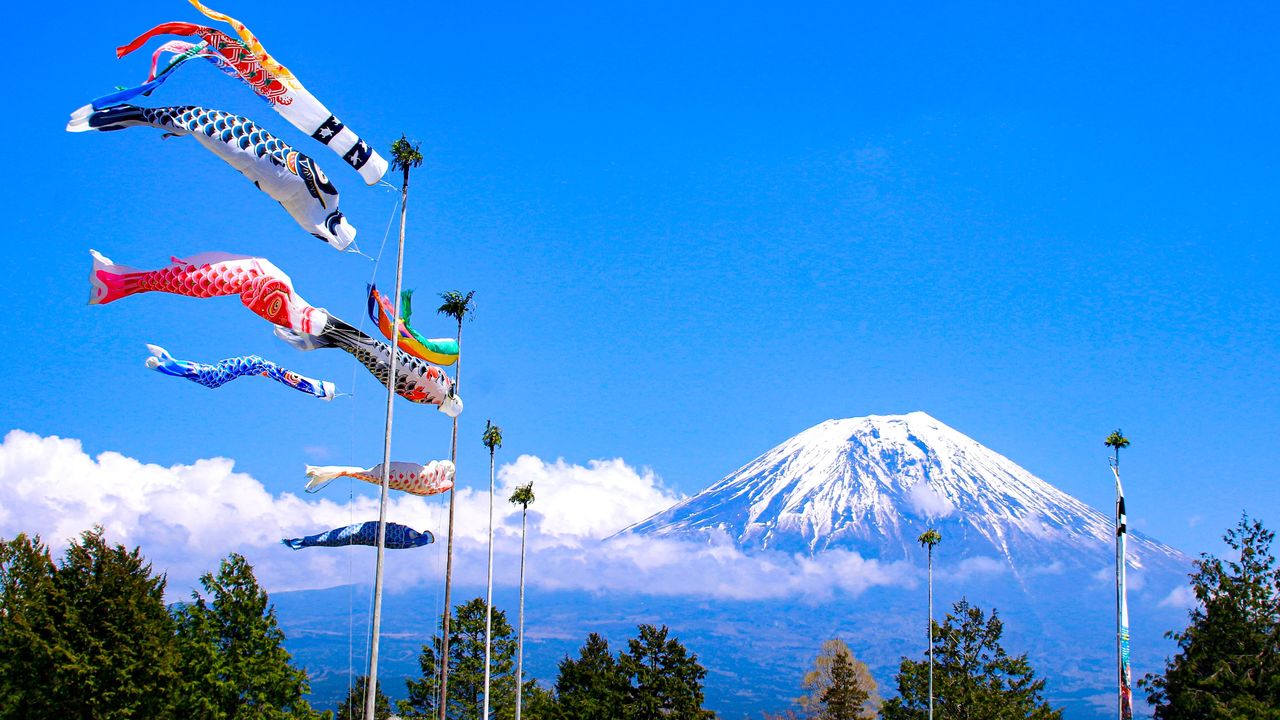
Koinobori flying in the wind. (© Adobestock)
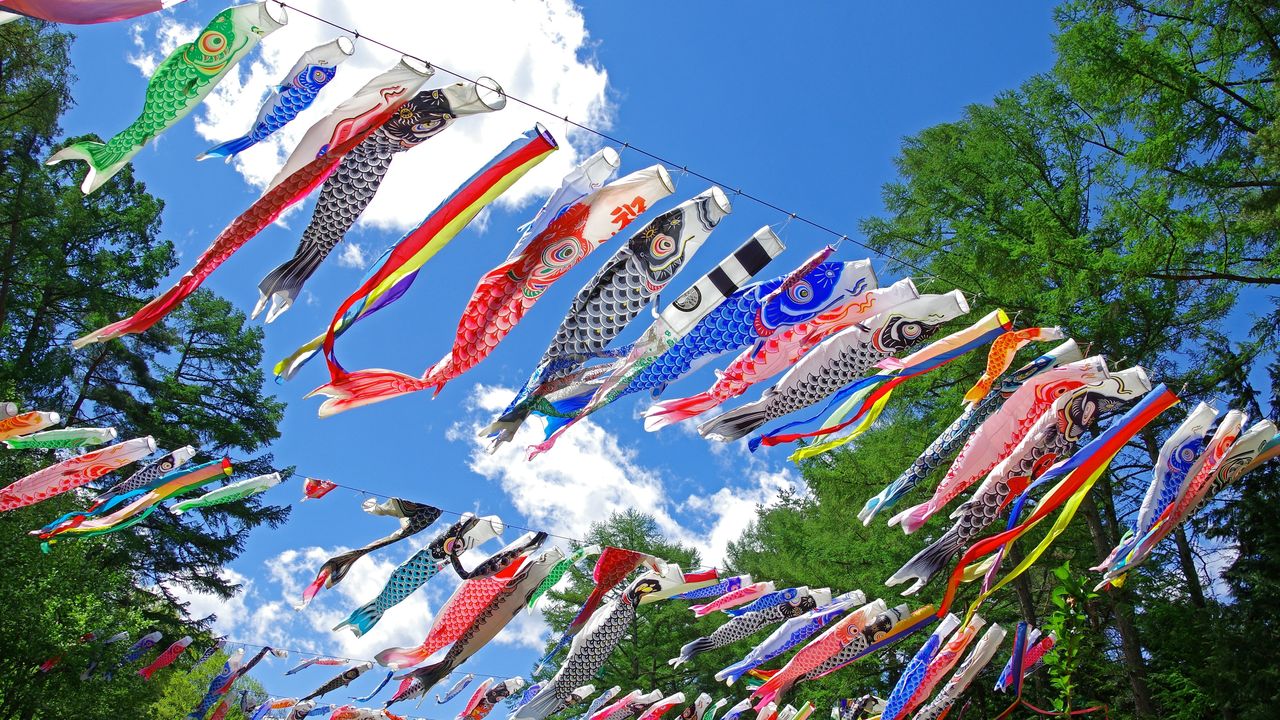
The most prominent decoration for outside are large multicolored windsocks called koinobori designed to look like swimming carp, or koi. This tradition, which began during the Edo period (1603–1868), has roots in a Chinese legend of a carp that became a dragon by ascending a swiftly flowing stream to the gates of heaven. Koinobori are hung out in hopes that children, like the koi from the story, will be blessed with vigor and determination to succeed in life.
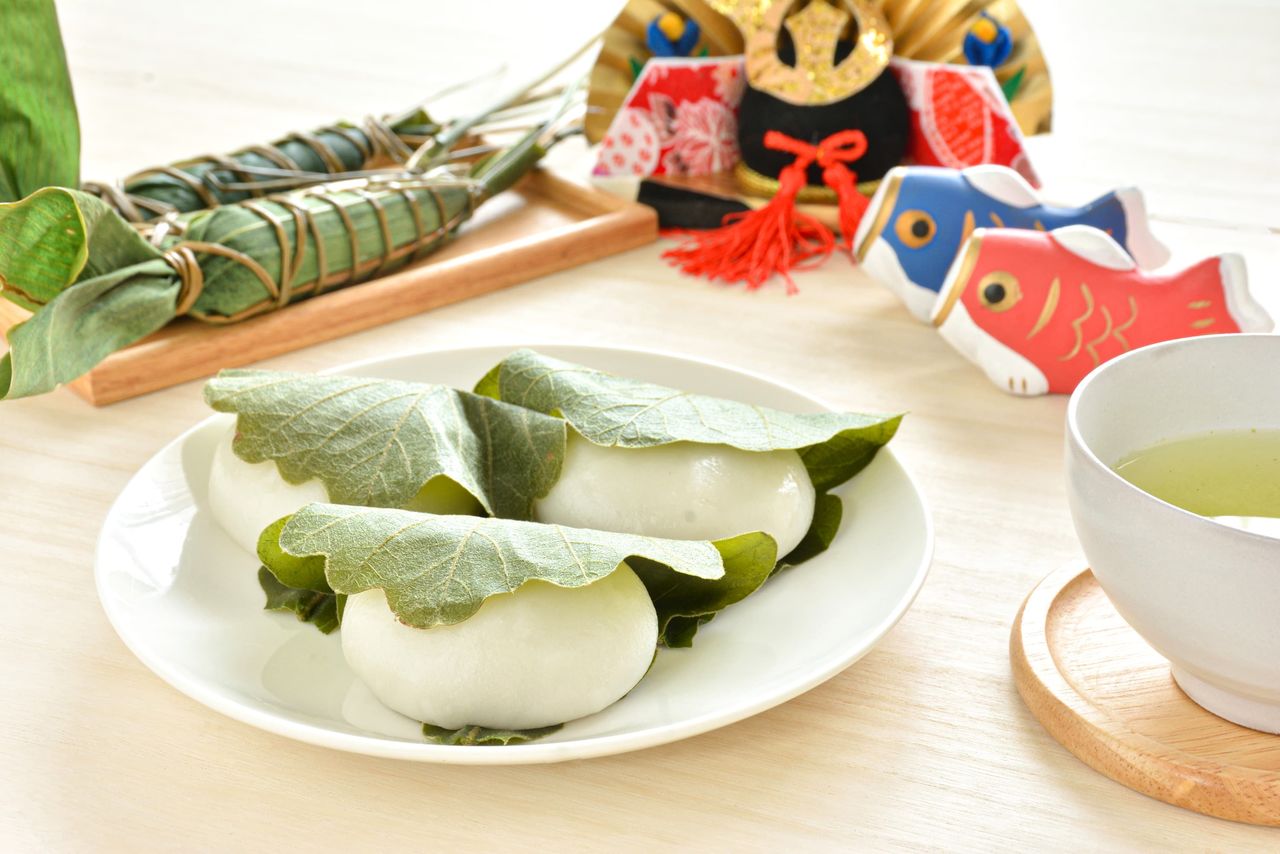
Kashiwamochi, on the plate, and chimaki in the background to the left. (© Adobestock)
The first observance of the festival for a son is referred to as hatsusekku. Families often commemorate the event with a large celebration attended by grandparents and other relatives. During festivities, special foods thought to build vigor and ward off illness are served. These include chimaki, steamed glutinous rice wrapped in bamboo leaves and tied with string, and kashiwamochi, rice cakes filled with sweetened bean jam and wrapped in oak leaves.
Seasonal Decorations for the Modern Home
A modern take on traditional ornamental helmets has become popular in recent years, with many families choosing wearable kabuto over decorative varieties. Helping drive demand for the child-sized headgear is a growing household trend of taking commemorative Boys’ Day photos of sons dressed as mini-samurai. As people continue to move to the city, however, limited living space has kept many families from displaying large koinobori and full sets of seasonal trappings at home.
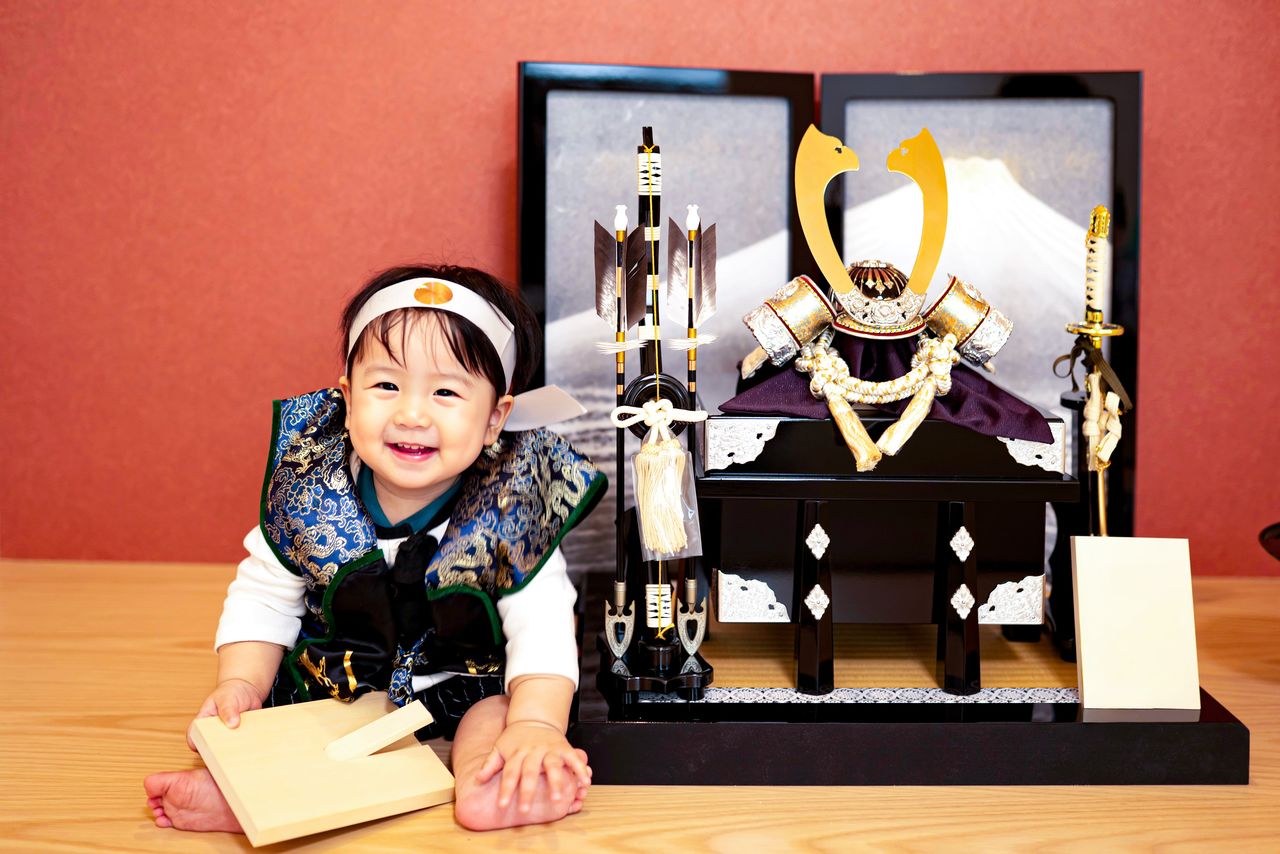
Compact sets of decorations are becoming popular. (© Adobestock)
This has led to the development of simple, compact sets of miniature helmets, armor, and other decorations that are prearranged in glass cases and can be easily displayed and stored. Small carp streamers designed to fit on apartment balconies are common sights around the holiday. Interior varieties hung on walls or from ceilings are also available for homes where outside decorations are not an option.
May 5 is one of a cluster of four national holidays that make up Golden Week. Almost every region in the country has a river or park famous for displaying hundreds of koinobori. These are popular destinations for holiday sightseers of all ages, who stroll along riverbanks or through fields admiring the different sizes of fluttering fish.
(Translated from Japanese. Banner photo: Koinobori fluttering in the sky. © Adobestock.)