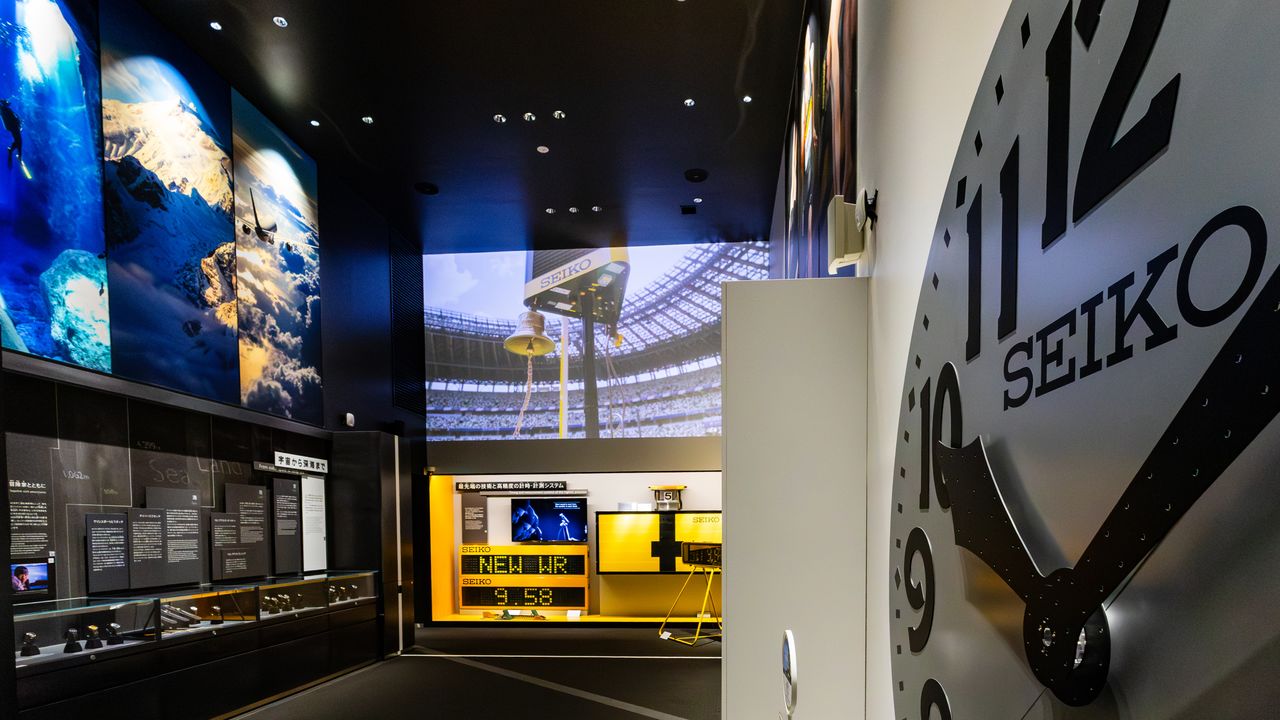
The Seiko Museum Ginza Highlights the Craftsmanship Behind Precision Timepieces
Guideto Japan
Travel Technology History- English
- 日本語
- 简体字
- 繁體字
- Français
- Español
- العربية
- Русский
Ginza, a Seiko Center
Ginza in central Tokyo is one of Japan’s most prestigious shopping districts and a popular destination for international tourists. Alongside sophisticated luxury brand stores from around the world, Ginza is home to cultural landmarks such as the Kabukiza Theater, antique shops, and long-established restaurants. Its streetscape’s mix of modern trends and tradition gives the district a unique charm.
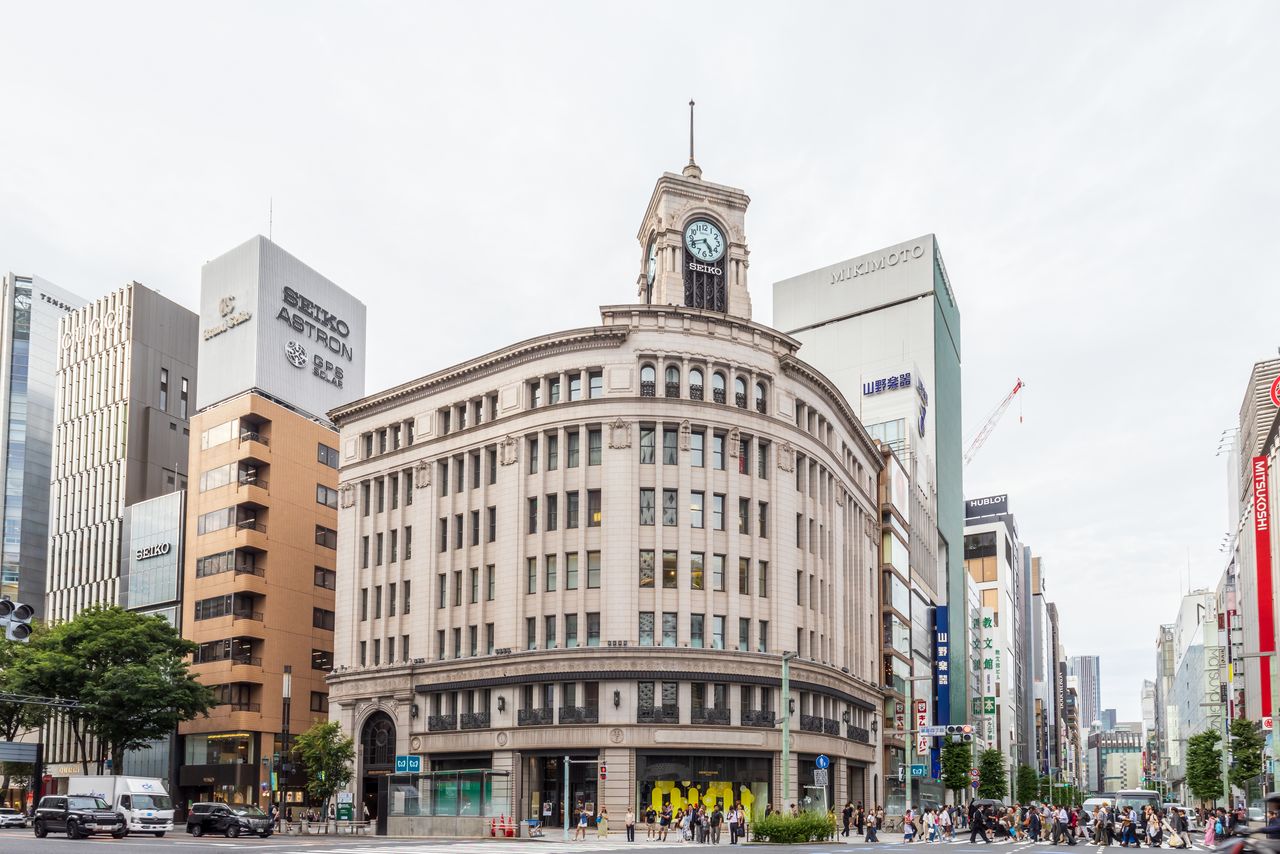
The Seiko House Ginza, also known as the Wakō Building, is near to the Seiko Dream Square store. (© Nippon.com)
A major Ginza landmark is the Seiko House, an elegant building with a clock tower overlooking the Ginza 4-chōme intersection. The original clock tower was completed in 1894 as the headquarters of K. Hattori Clock Store (now Seiko Holdings) founded by Hattori Kintarō. The current second-generation building was completed in 1932, and in the postwar period it has served as the main building of Wakō, the retail division of the company.
The surrounding area is also home to several other Seiko-related stores, including the flagship boutique of the luxury watch brand Grand Seiko. For Seiko fans, Ginza is a must-visit destination.
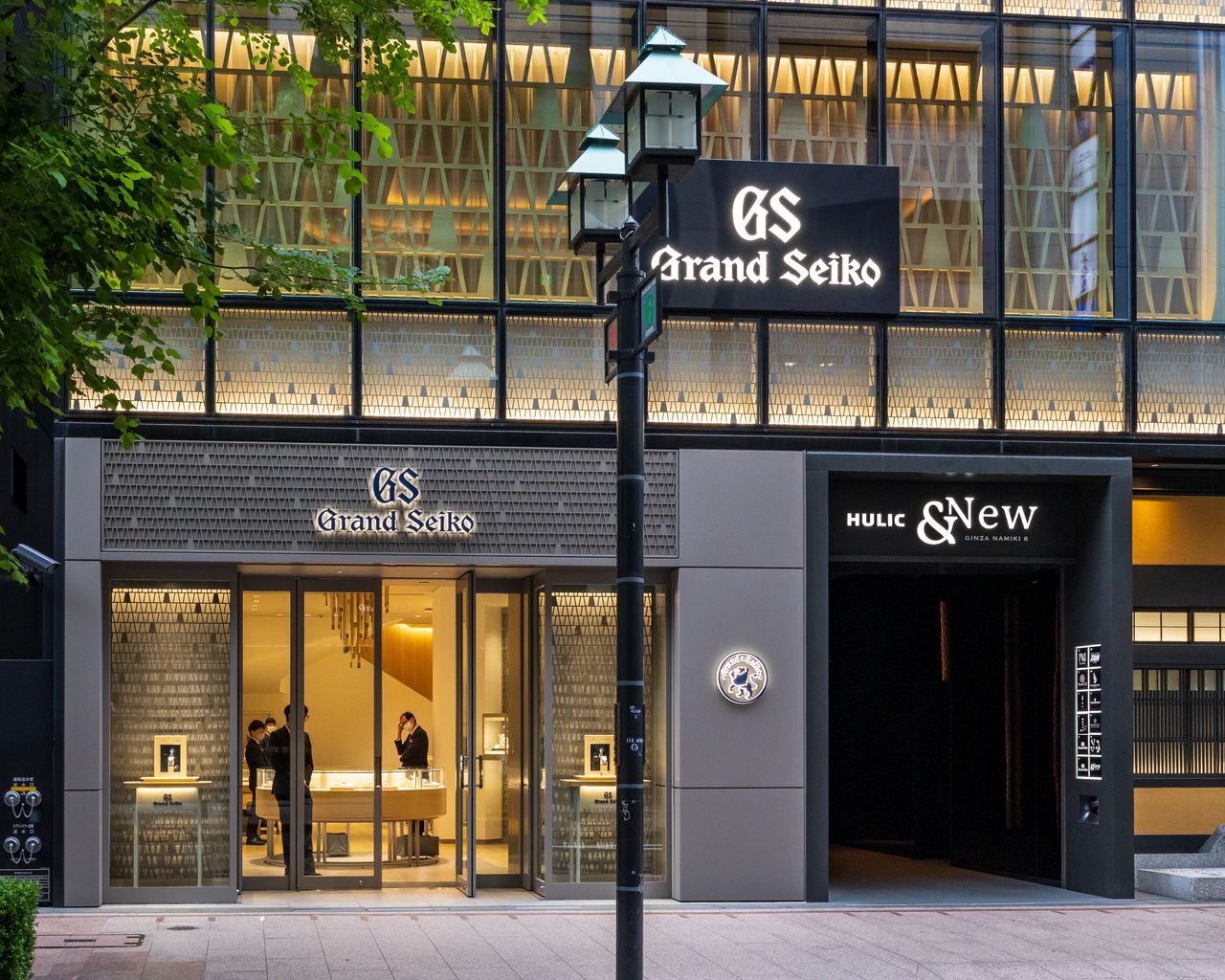
The Ginza Seiko Flagship Boutique. (© Nippon.com)
In 2020, the district was fortunate to welcome the long-awaited Seiko Museum Ginza. Going beyond what is expected of a typical corporate museum, it displays some 650 items, including clocks from overseas and from Japan’s Edo period (1603–1868). A visit to the museum offers an opportunity to reflect on the relationship between people and time. Its reputation has spread through word of mouth, and in fiscal 2025 the museum drew 63,000 visitors, half of whom came from overseas.
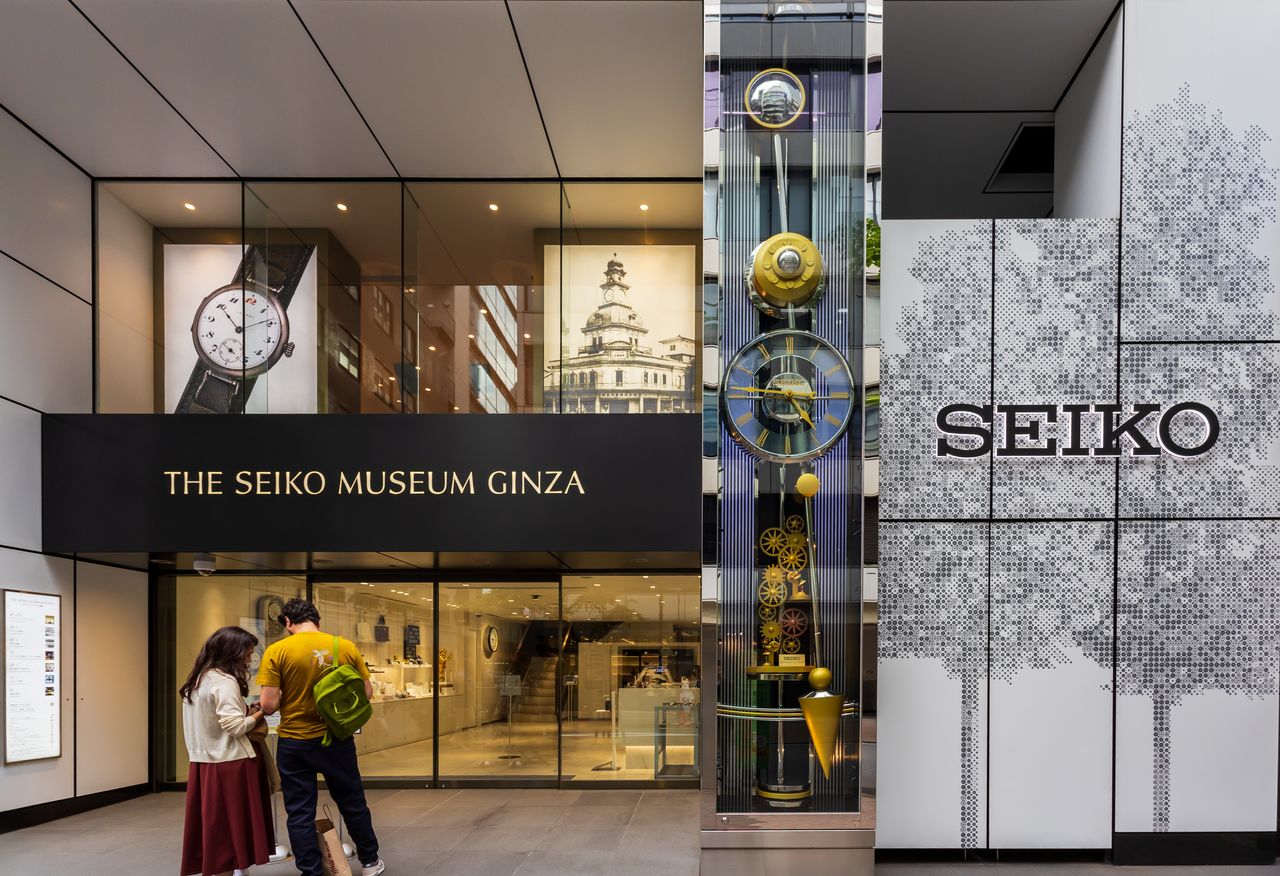
Entrance of the Seiko Museum Ginza. (© Nippon.com)
The museum’s predecessor was an archives center established in 1981 within the Seikōsha factory in Sumida, Tokyo. The reason it relocated to Ginza was that the area is the birthplace of both Seiko and its founder Hattori. “It was the ideal place to share the history of the Seiko Group,” explains Nakahara Takeki, the museum’s senior manager. The relocation has also created positive cycles for the company. “Grand Seiko enthusiasts visit here after shopping, and those who are inspired by the exhibits go visit the shops.”
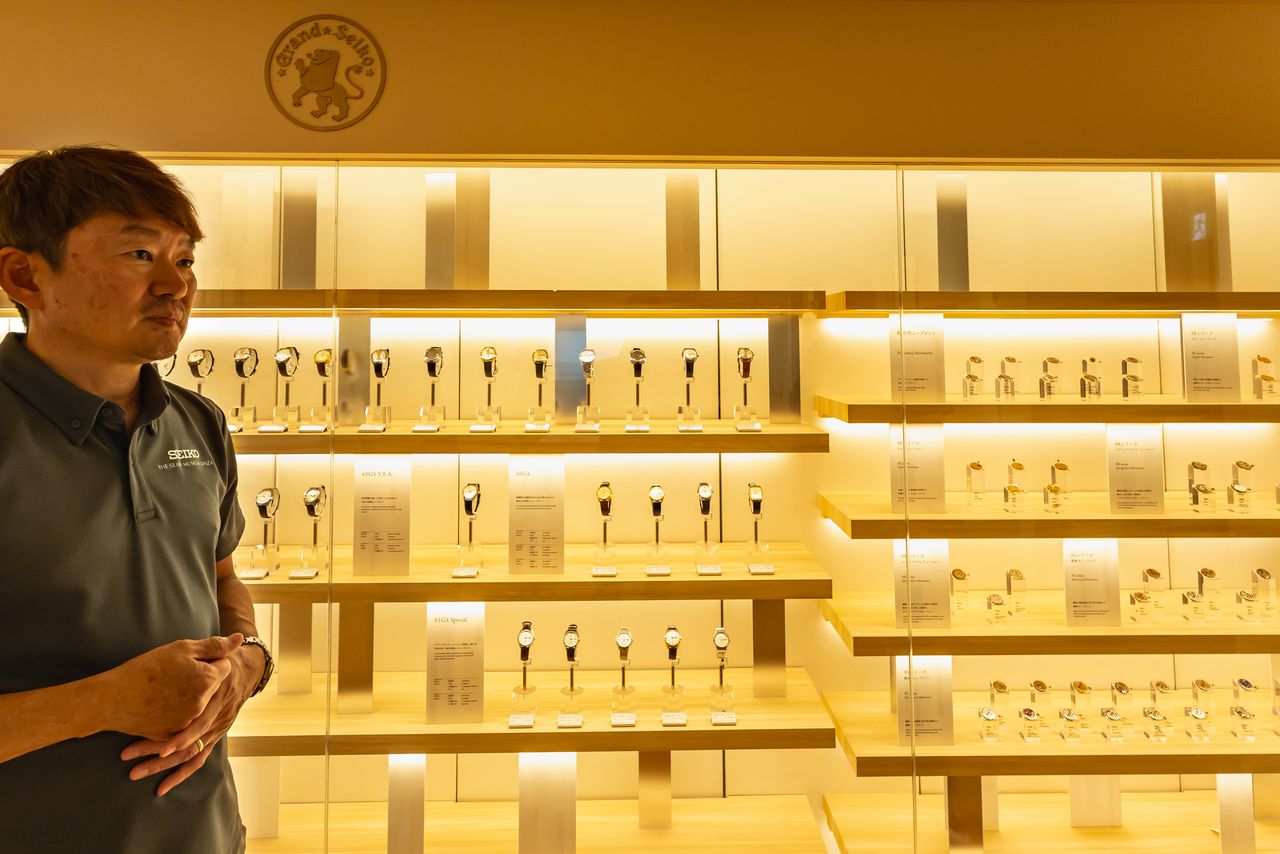
Nakahara taking visitors through the Grand Seiko exhibition room. (© Nippon.com)
Edo-Period Clocks a Must-See
The Namiki-dōri street, where the Seiko Museum is located, is lined with boutiques from many of the world’s leading luxury watchmakers and has therefore earned the nickname “watch street.” Visitors to the museum are greeted by a large pendulum clock standing 5.8 meters tall at the entrance.
While admission into the museum is free, entry may be limited during busy periods, so making an online reservation in advance is recommended. The first floor opens to the reception area and has a space where visitors can watch a video about the life of Hattori Kintarō. It also has a shop selling exclusive museum merchandise.
The second to sixth floors as well as the basement floor each house exhibits with different themes. In this article, we will explore the highlights in chronological order.
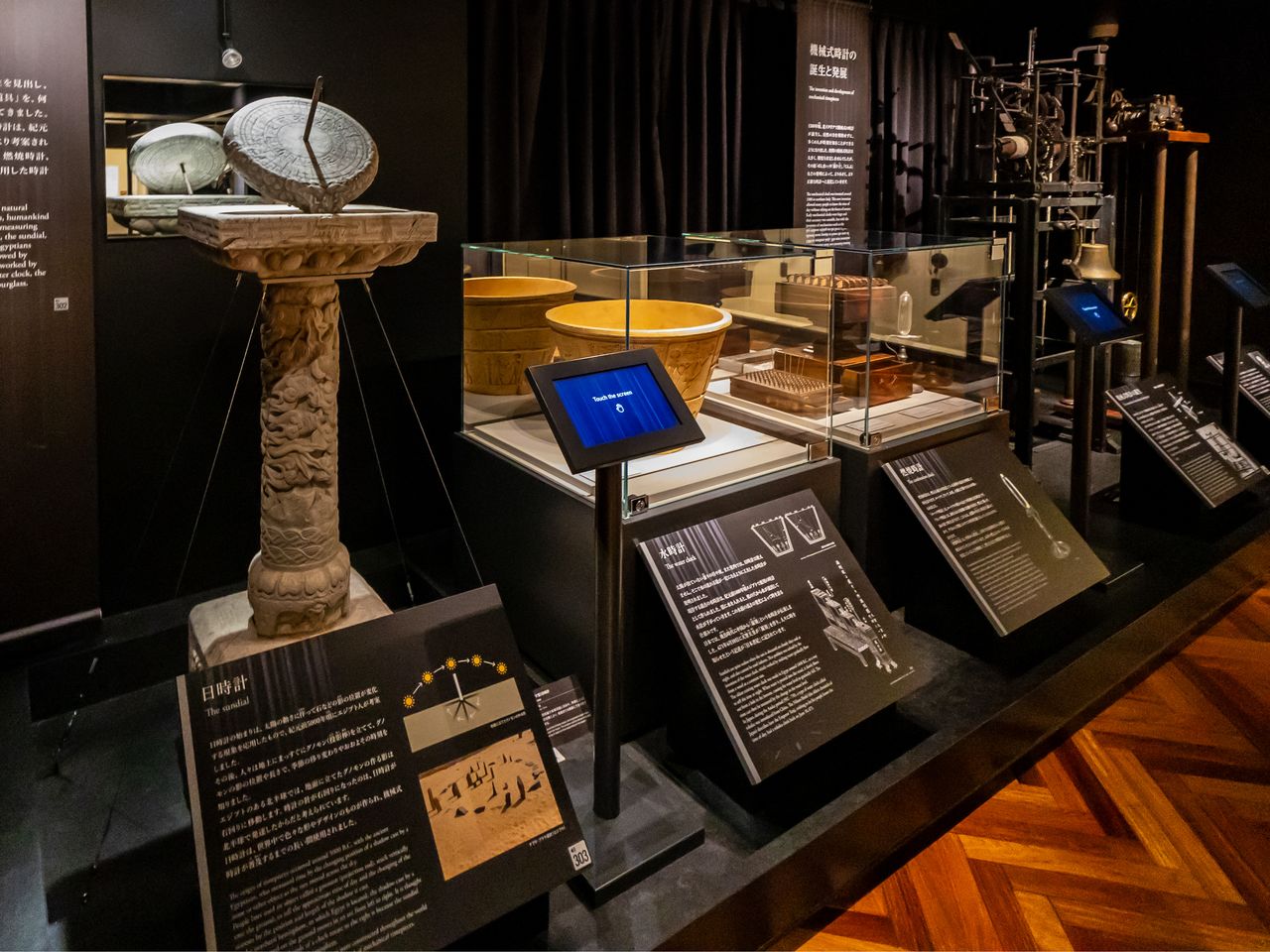
Exhibits include a sundial (an eighteenth-century piece is displayed) and an early pendulum tower clock. (© Nippon.com)
We begin on the third floor, which starts with the oldest timepiece invented by humans, the sundial (which dates back to around 5000 BC), and displays various time-keeping devices from around the world. The most interesting exhibits here are the wadokei, Japanese clocks developed in the sixteenth century based on mechanical clocks introduced from Europe. The museum boasts one of the world’s finest collections of these unique timepieces.
In Europe, with the invention of the mechanical clock around the beginning of the fourteenth century, the continent gradually adopted a fixed time system, where the day is divided into hours of equal length. Meanwhile, Japan maintained its system, where the length of the six “hours” of the day and night, respectively, varied with the season until the early Meiji period (1868–1912). Japanese clocks that keep this form of time are on display.
The collection includes a lantern clock said to have once been installed in Inuyama Castle, shaku-dokei or “pillar clocks” with vertically arranged markings, and wall clocks whose hands extend or retract automatically based on the season.
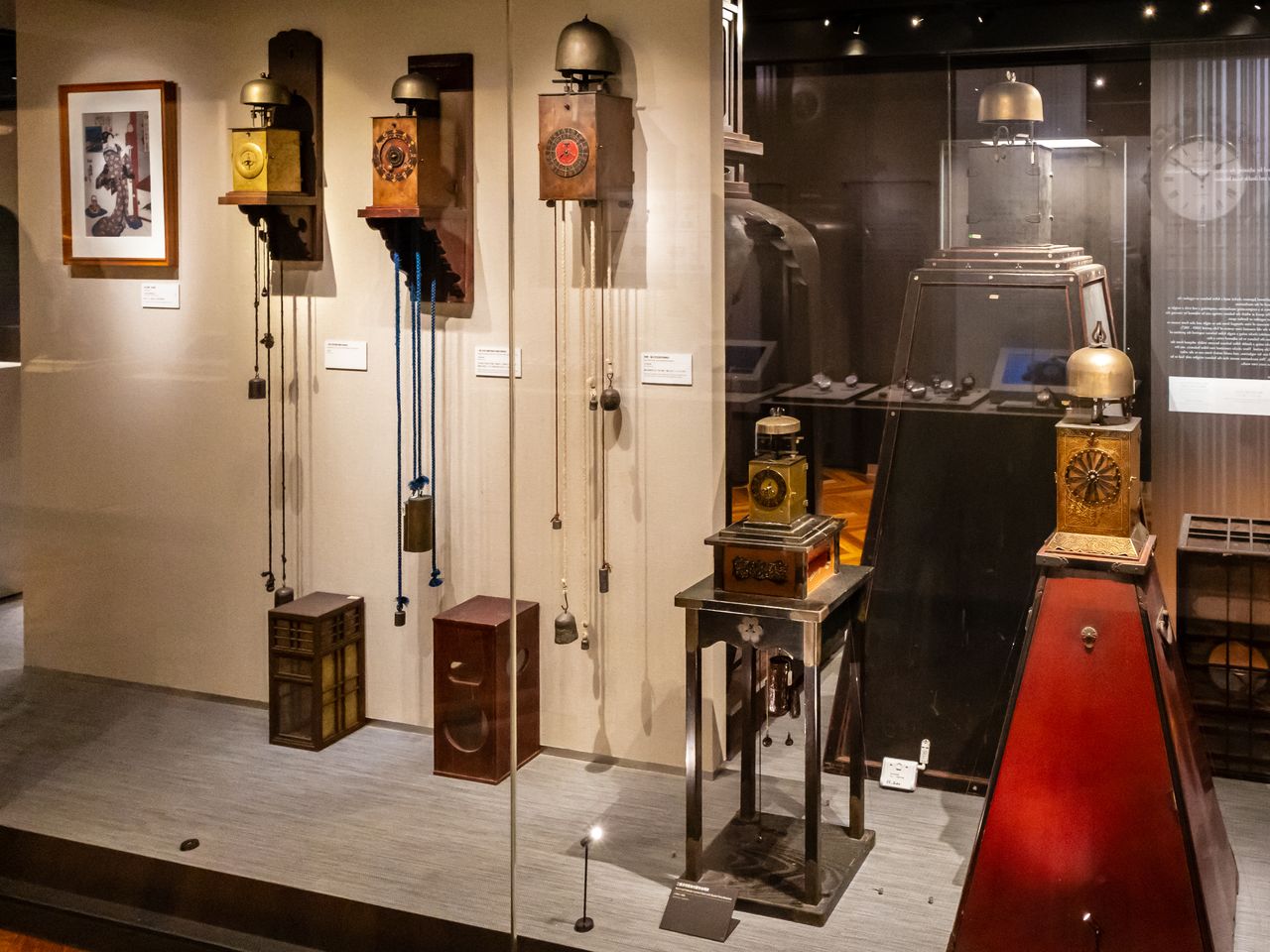
These wadokei from the Edo period announced the time with dials and chimes. (© Nippon.com)
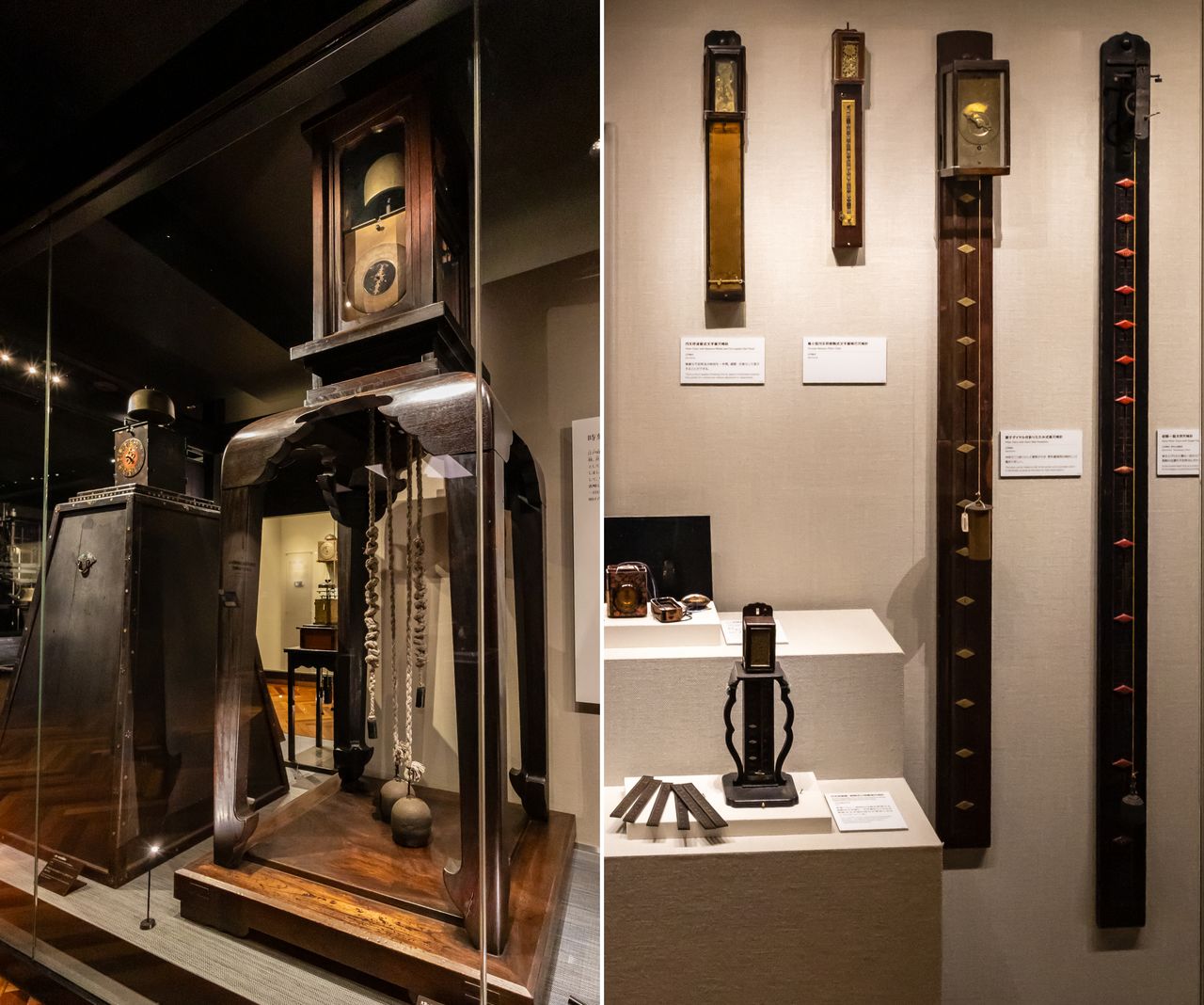
A lantern clock 2.18 meters tall (left) and pillar clocks using weights. (© Nippon.com)
Quality and Trust
The second floor introduces the early years of Seiko under its founder, Hattori Kintarō. Born in Ginza in 1860, Hattori quickly recognized business opportunities created from Japan’s adoption of the Western calendar and fixed time system in the wake of the Meiji Restoration, and decided to pursue a career in clocks and watches. After apprenticing at a clock repair shop, he established his own business, K. Hattori, in 1881 based in Ginza. By building trust with foreign trading companies, he expanded his business through the wholesale and retail of imported Western clocks.
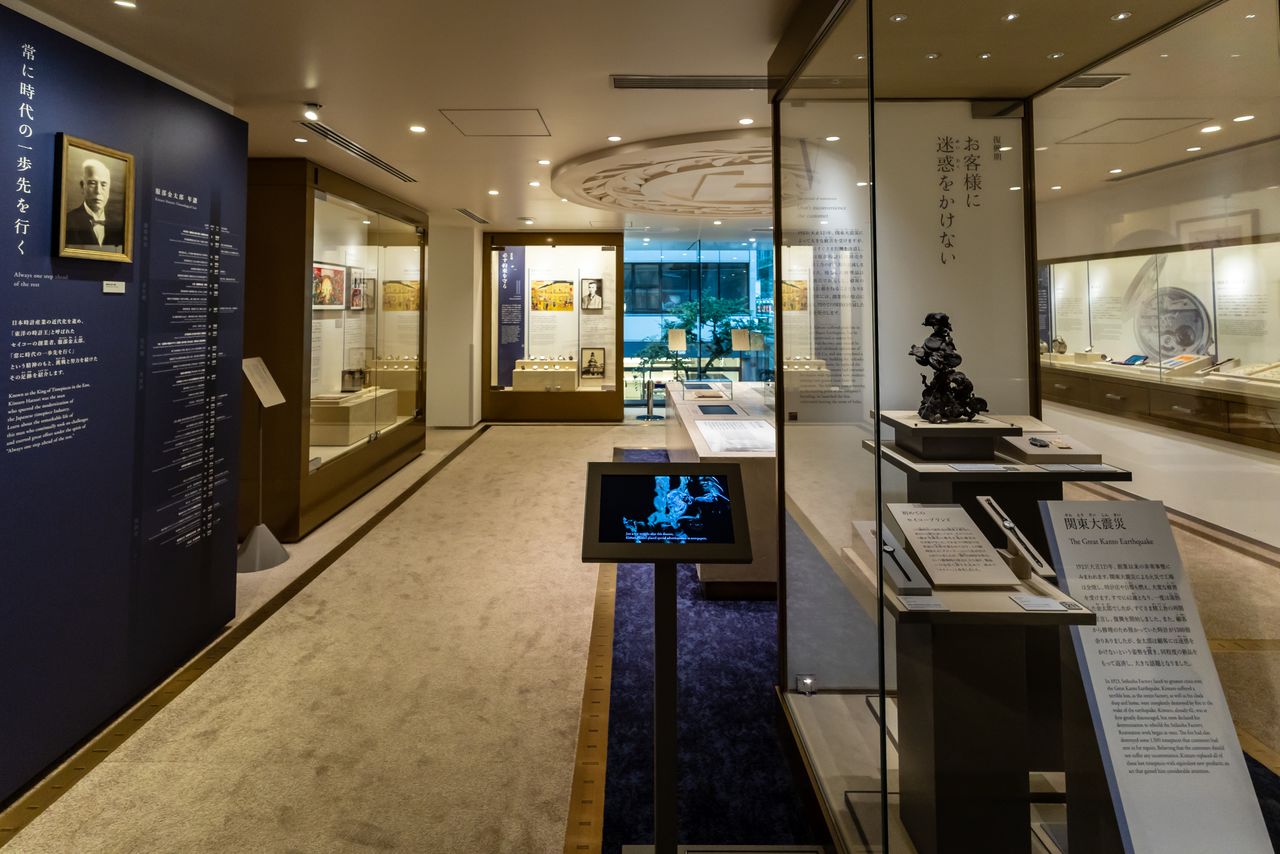
The second floor delves into the life of Seiko founder Hattori. (© Nippon.com)
The Seikōsha factory was established 11 years after the founding of the company, and it began producing wall clocks and alarm clocks. Through Hattori’s efforts to create smaller and more accurate timepieces, his company successfully developed Japan’s first pocket watch and wristwatch. Its alarm clocks became particularly popular overseas due to their reasonable price and high quality.
Using early products, ukiyo-e prints, and historical photographs, the exhibit follows Hattori’s rise to fame as the “King of Timepieces in the East.” It also shows how Japan transformed from a society once regarded by Westerners as careless with time into one known for its punctuality.
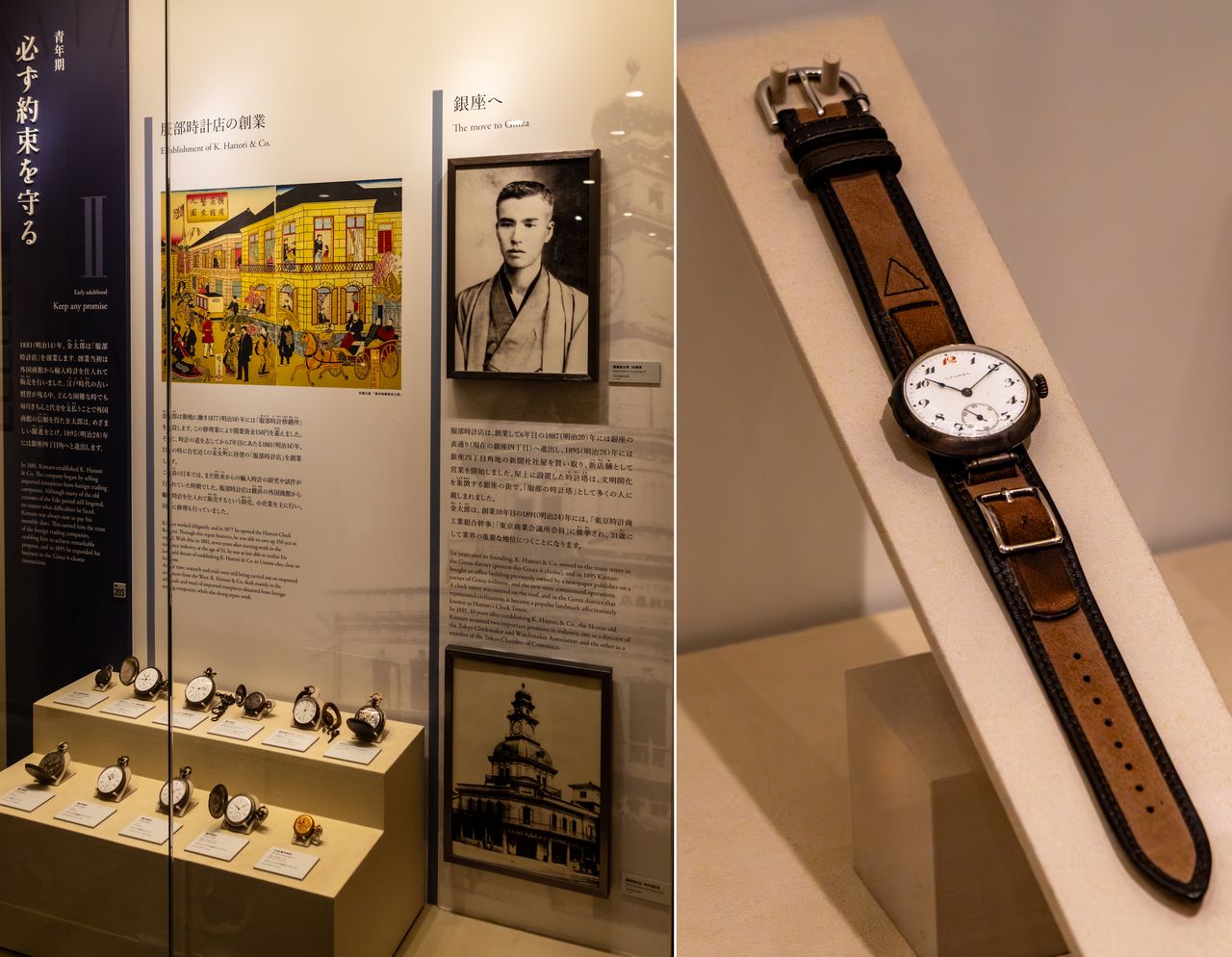
The company initially got going through the sale of imported pocket watches (left); Japan’s first wristwatch, Laurel, from 1913. (© Nippon.com)
The Pursuit of Precision
The fourth floor traces Seiko’s pursuit of greater accuracy. In 1968, Seiko’s mechanical watches placed fourth through tenth at the Geneva Observatory Competition, a watch accuracy contest in Switzerland. As they finished just behind Swiss quartz watches, the results demonstrated that Seiko’s technology had reached a level comparable to the world’s best.
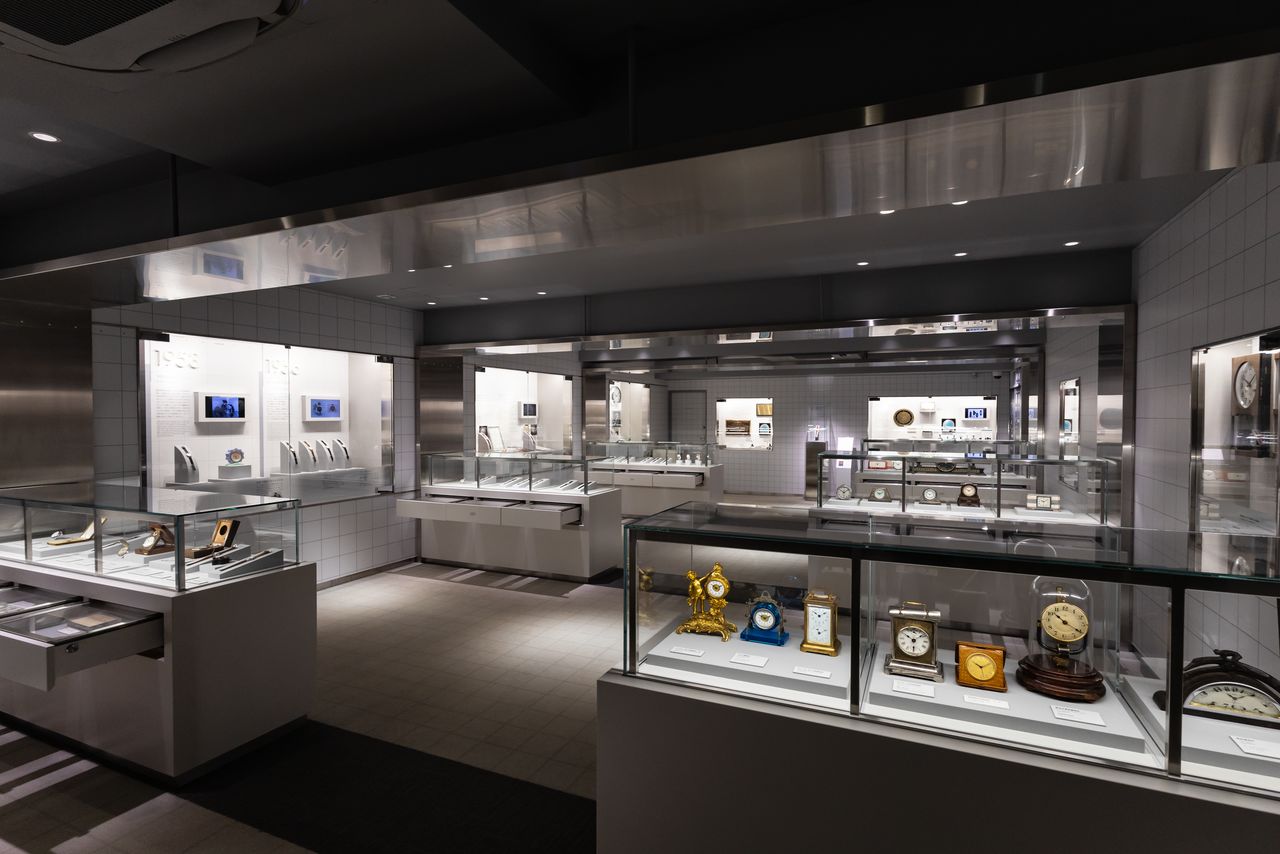
The fourth floor looks back at Seiko’s technological development. (© Nippon.com)
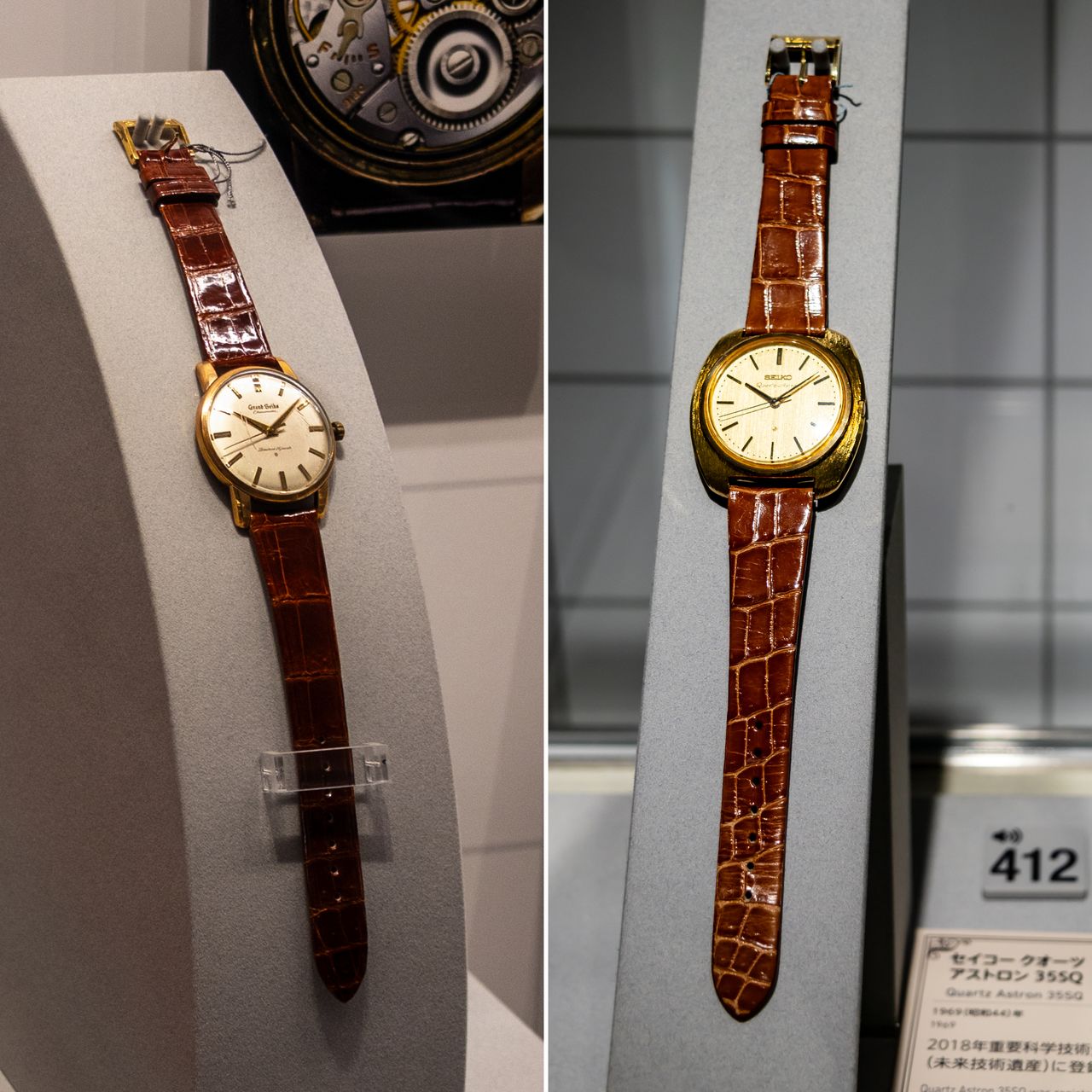
The first Grand Seiko model, released in 1960, at left. It was the first Japanese wristwatch to rival the standard set by Switzerland’s Bureaux Officiels de Contrôle de la Marche des Montre; Quartz Astron from 1969, at right. (© Nippon.com)
At the same time, the company was pioneering quartz timepieces, which maintain their precision through the vibrations generated by quartz crystals when electricity is applied. In 1969, it launched the Quartz Astron, which was the world’s first quartz wristwatch and over 100 times more accurate than mechanical watches. Even after spending a decade miniaturizing this mechanism that was originally as large as a door, Seiko made the decision to release the technology patents publicly. As a result, quartz wristwatches rapidly spread around the world.
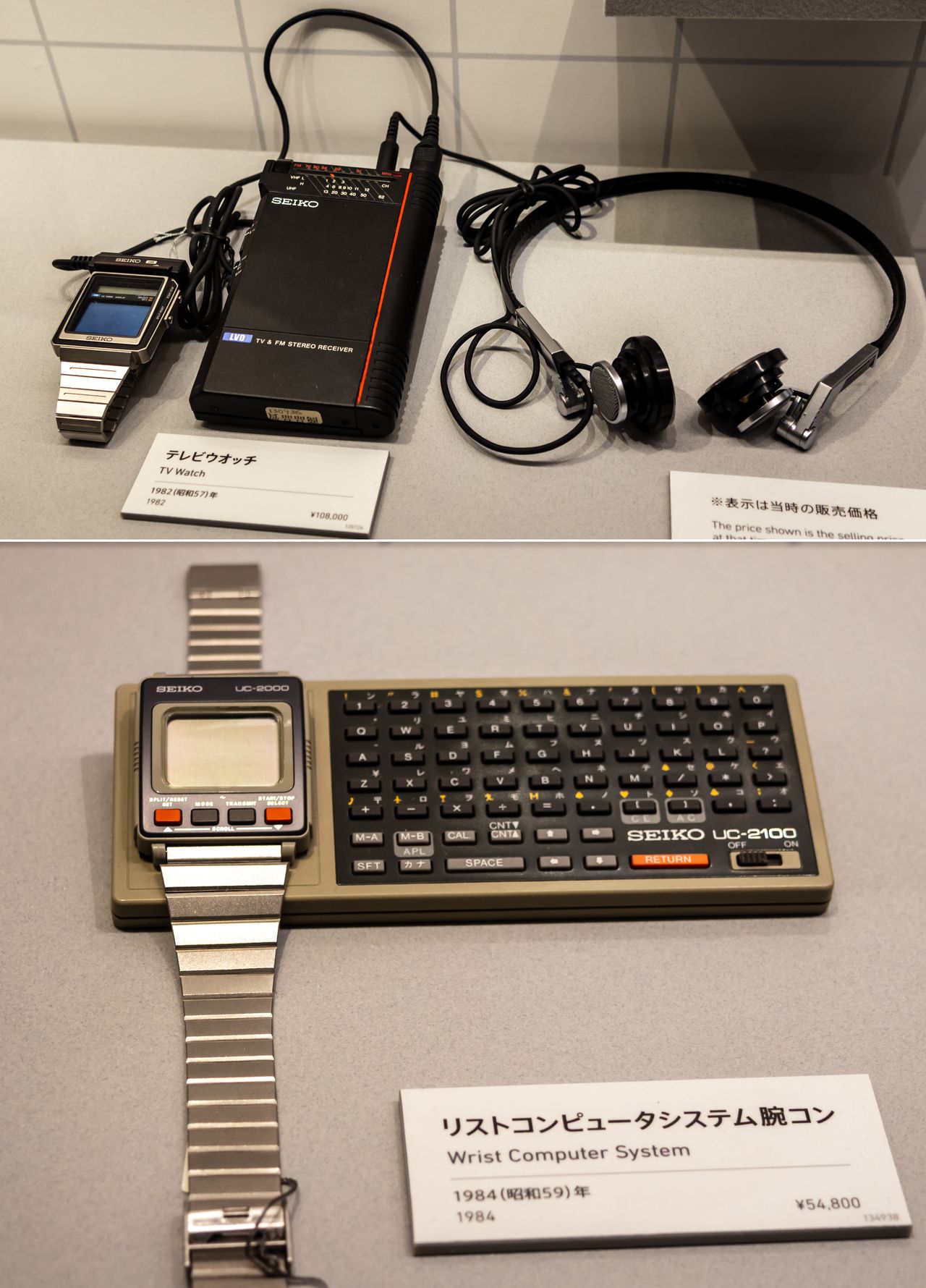
Seiko was ahead of the times in launching its TV watch (above) in 1982 and wrist computer system in 1984. (© Nippon.com)
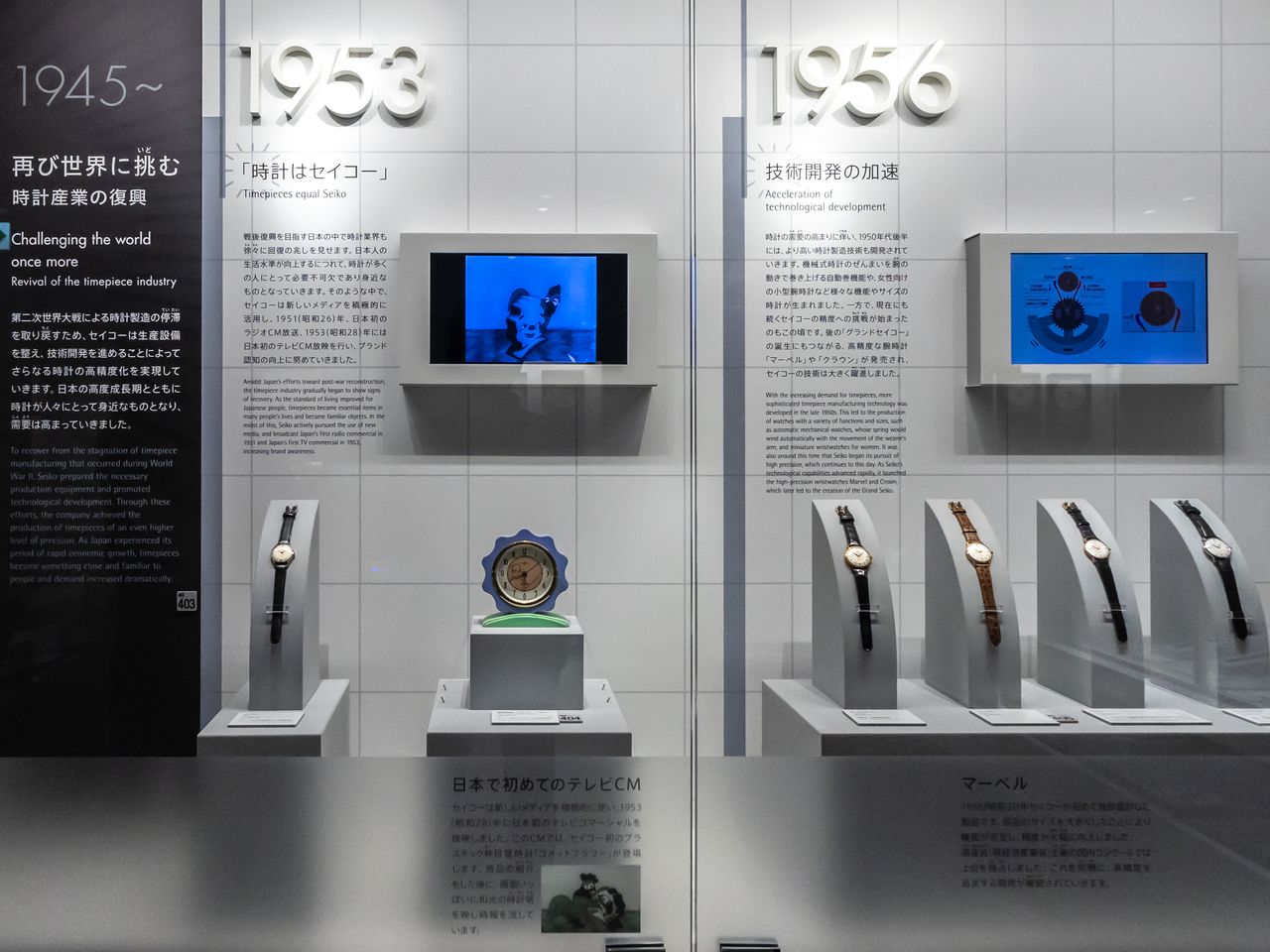
In the middle is Japan’s first alarm clock to be marketed via TV commercials (launched in 1953). (© Nippon.com)
The fifth floor exhibit introduces some of Seiko’s more recent and diverse products, such as fashion watches and satellite radio watches. Particularly notable are the Spring Drive models, which have the precision of quartz watches even while operating as mechanical watches that require no batteries. This technology represents the culmination of Seiko’s relentless quest for ever-greater accuracy.
The sixth floor is dedicated entirely to the generations of Grand Seiko watches. Many visitors come just to see this collection.
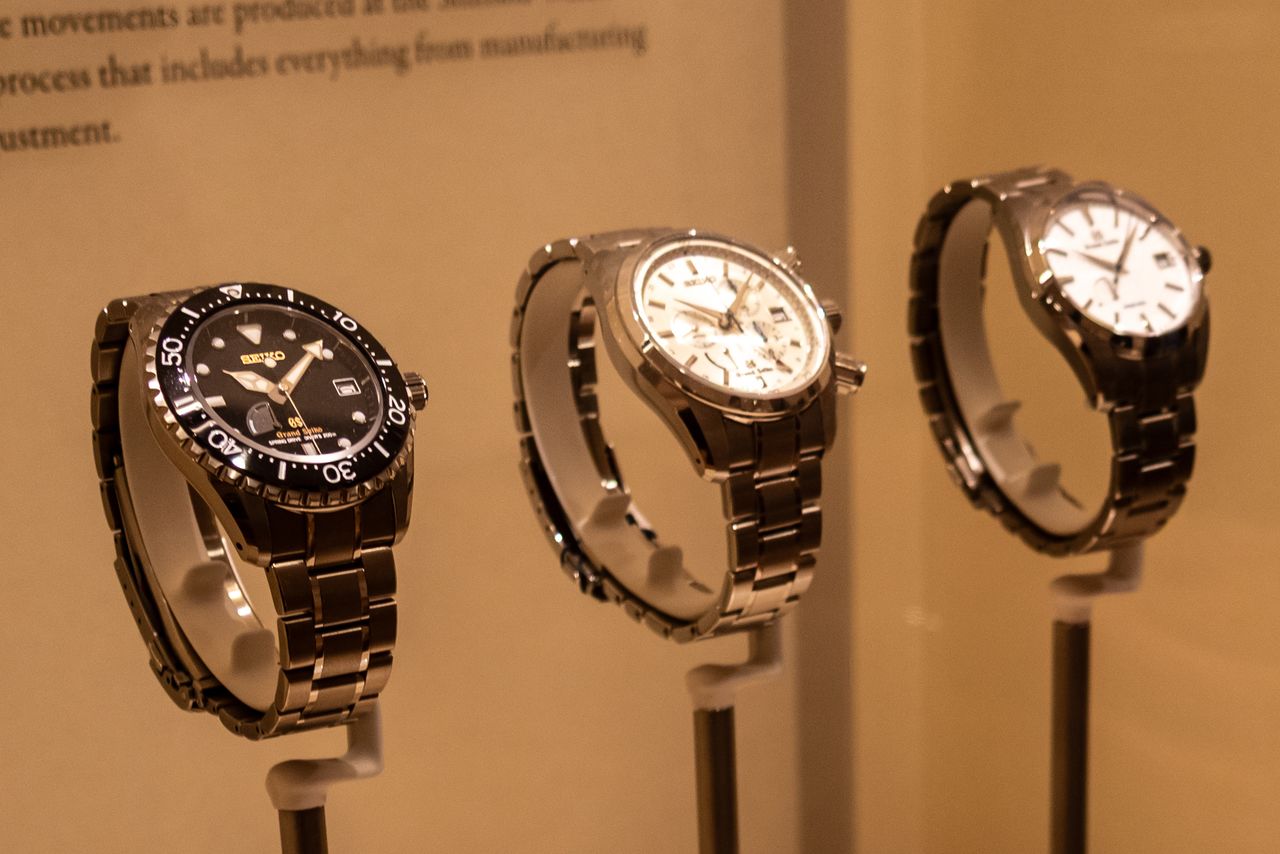
Grand Seiko’s 9R Spring Drive models. (© Nippon.com)
Contributing to International Sports
The basement exhibit showcases specialized watches for deep sea and outer space, along with sports timing equipment. Seiko first took on the role of official timekeeper of an international sporting event at the 1964 Tokyo Olympics. For major events like the Olympics and World Athletics Championships, each individual competition requires dedicated timing and measurement equipment, along with image analysis systems, specialized operation teams, and much more. Only a handful of companies around the world are capable of providing all of these as a complete package.
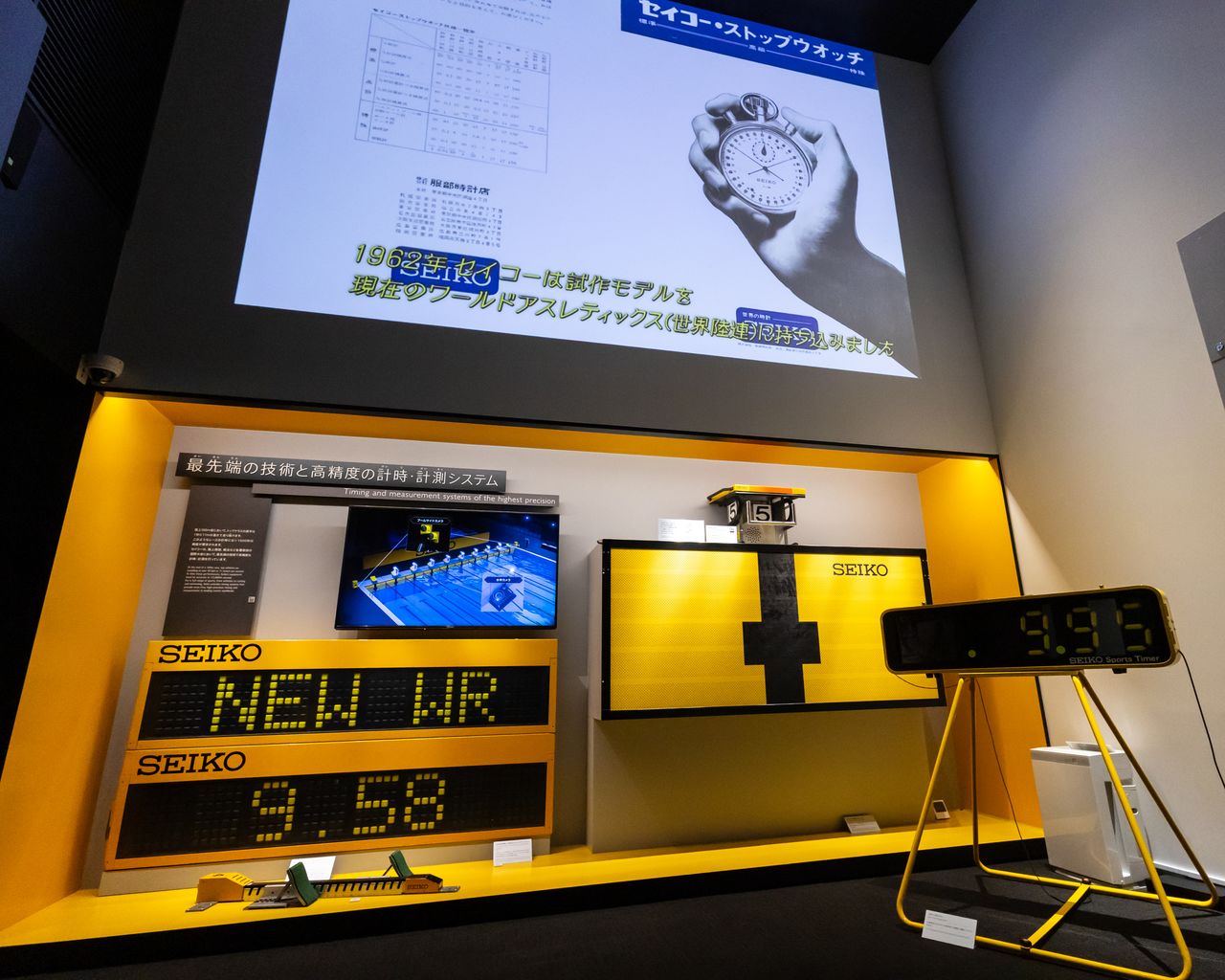
The starting block at bottom left was used by Usain Bolt when he set the 100-meter world record of 9.58 seconds at the 2009 World Athletics Championships. (© Nippon.com)
“Seiko is well known overseas, but not everyone knows the history of how the company refined its technology with the goal of becoming a world leader,” says Nakahara. “It’s rewarding to see visitors discover how Seiko earned its reputation as a trusted brand.” For anyone looking to experience Japan’s spirit of craftsmanship and commitment to quality, the Seiko Museum Ginza is an excellent place to visit.
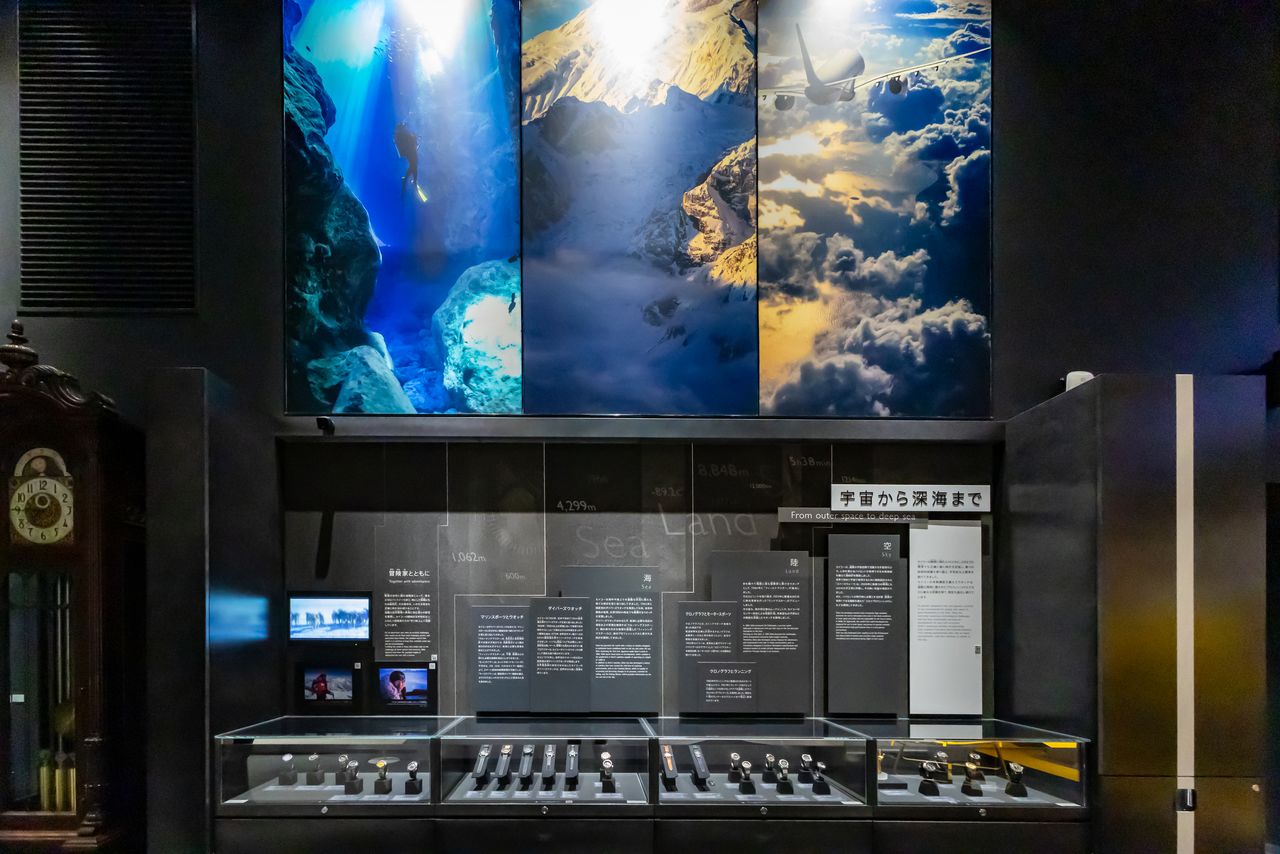
Seiko’s watches engineered for ultimate airtightness and durability are trusted by divers, mountaineers, and even astronauts. (© Nippon.com)
Seiko Museum Ginza
- Address: 4-3-13 Ginza, Chūō, Tokyo
- Hours: 10:30 am–6:00 pm
- Closed: Mondays and during the New Year holidays
- Admission: Free
- Website: https://museum.seiko.co.jp/en/ (Online reservations available)
(Originally published in Japanese. Reporting and text by Katō Madomi. Photographs by Nippon.com. Banner photo: Exhibition hall at the Seiko Museum Ginza. © Nippon.com.)