Japanology: Deep Dives into Daily Life in Japan
Doing Waste Right: The Challenge of Navigating Japan’s Diverse Disposal Rules
Society- English
- 日本語
- 简体字
- 繁體字
- Français
- Español
- العربية
- Русский
A Critical Gaze on Trash-Sorting Skills
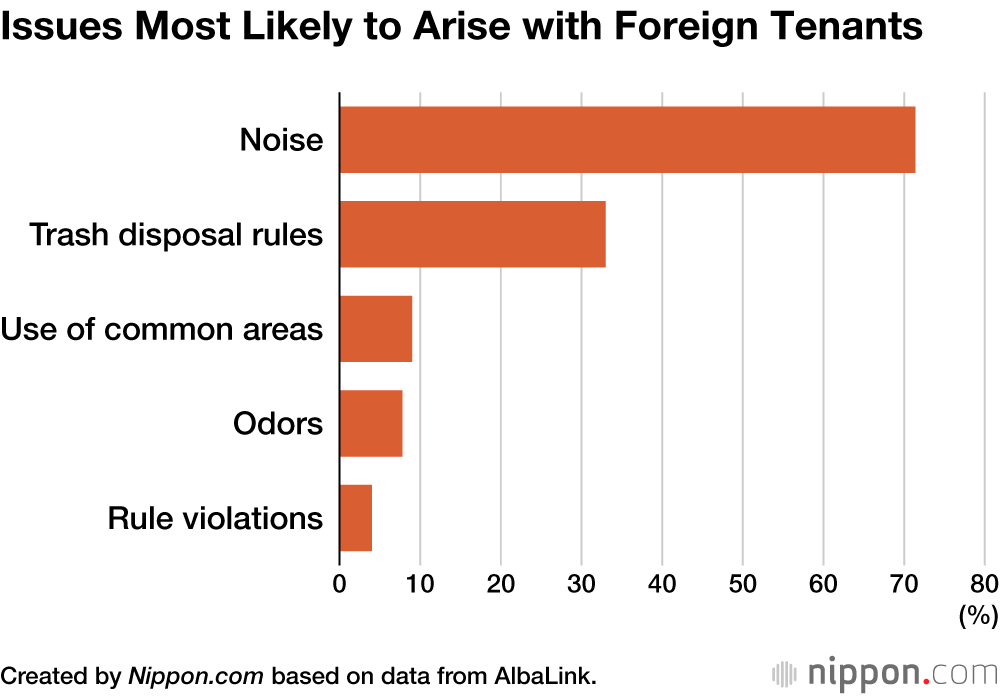
In 2025, the Tokyo-based real estate company AlbaLink surveyed 500 people living in rental properties to identify the issues that most often cause friction with foreign residents. Asked which issues are most likely to arise, 71.4% cited “noise,” while 33% mentioned “not following the garbage rules.” Specifically, many respondents pointed out that foreign residents failed to put their trash out on the designated days or to sort it according to the categories prescribed by their municipalities.
Indeed, garbage disposal has been one area where foreigners have struggled to adjust. In a 2019 survey conducted by the job site Yolo Japan, 60% of the 513 foreign nationals who responded said they had found themselves in difficult situations due to a lack of awareness of local rules or etiquette, with garbage disposal being the most common issue.
In most Japanese municipalities, residents are expected to sort their trash into categories like burnable, nonburnable, recyclable, and bulky waste, and put it out for collection on designated days. The rules, however, can vary considerably from one area to another, and even Japanese residents can find themselves in violation of them at times. In a survey carried out as part of the Tōyō Seikan Group Holdings 2025 white paper on waste management, 85.8% of those questioned said that they understood the different categories for sorting trash. At the same time, 53% said they view those who do not properly sort trash as “self-centered,” while 27.6% saw them as “uneducated,” illustrating how the way people dispose of their trash tends to be seen as a reflection of their conscientiousness and character.
Management and cleaning of garbage collection points are usually handled by local residents or apartment staff. Neighborhood associations assign people to take turns cleaning the collection points or putting up nets to keep crows out. Since the cleanliness of neighborhood streets is maintained by local residents themselves, there is a strong collective emphasis on following the rules.
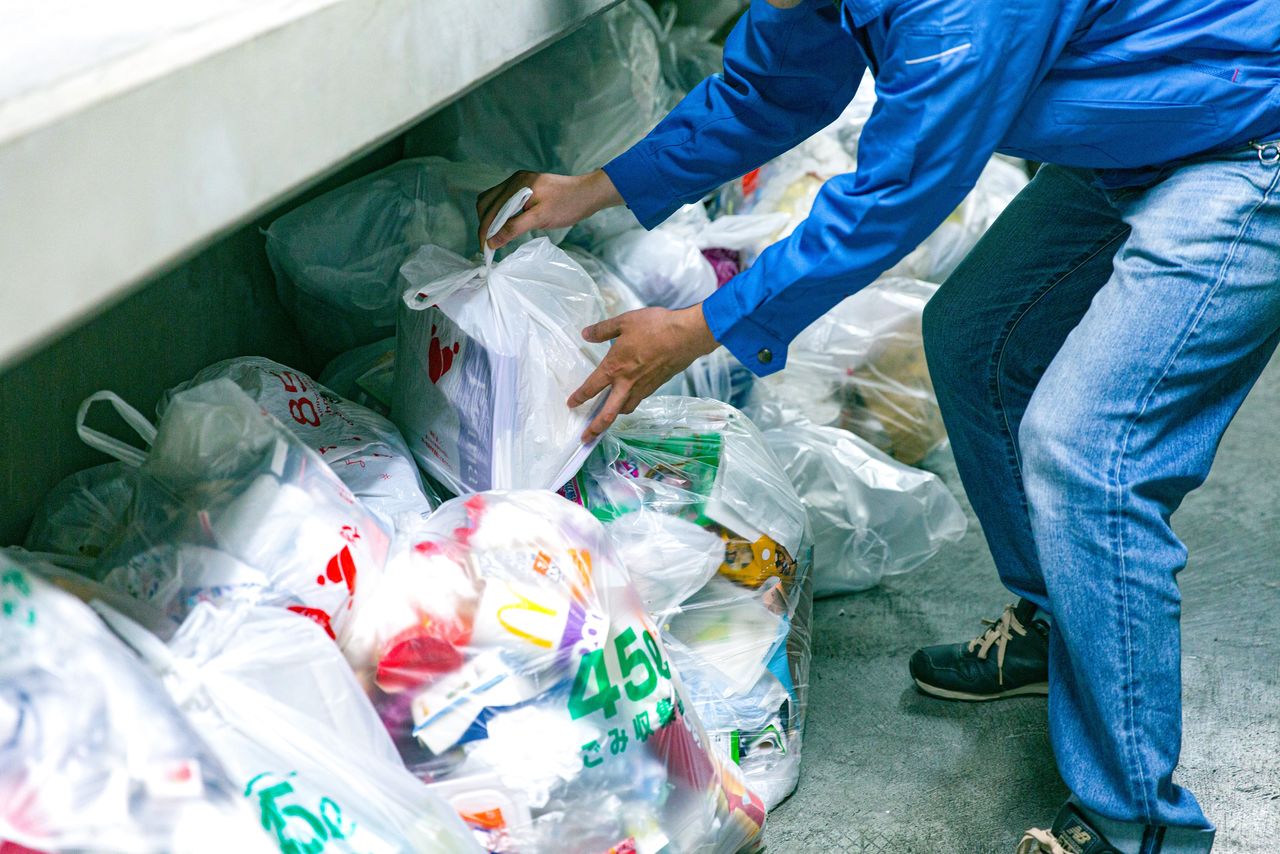
Local residents and apartment building managers are usually responsible for cleaning garbage collection points. (© Pixta)
Why Trash-Sorting Rules Differ by Region
In Japan, each municipality is responsible for managing the collection of general household waste. Consequentially, garbage-sorting categories and disposal rules differ from one area to another depending on factors such as processing capacity, population size, and financial resources. The differences are surprising even to Japanese people, and newcomers from abroad may require some time to learn and adjust to these rules.
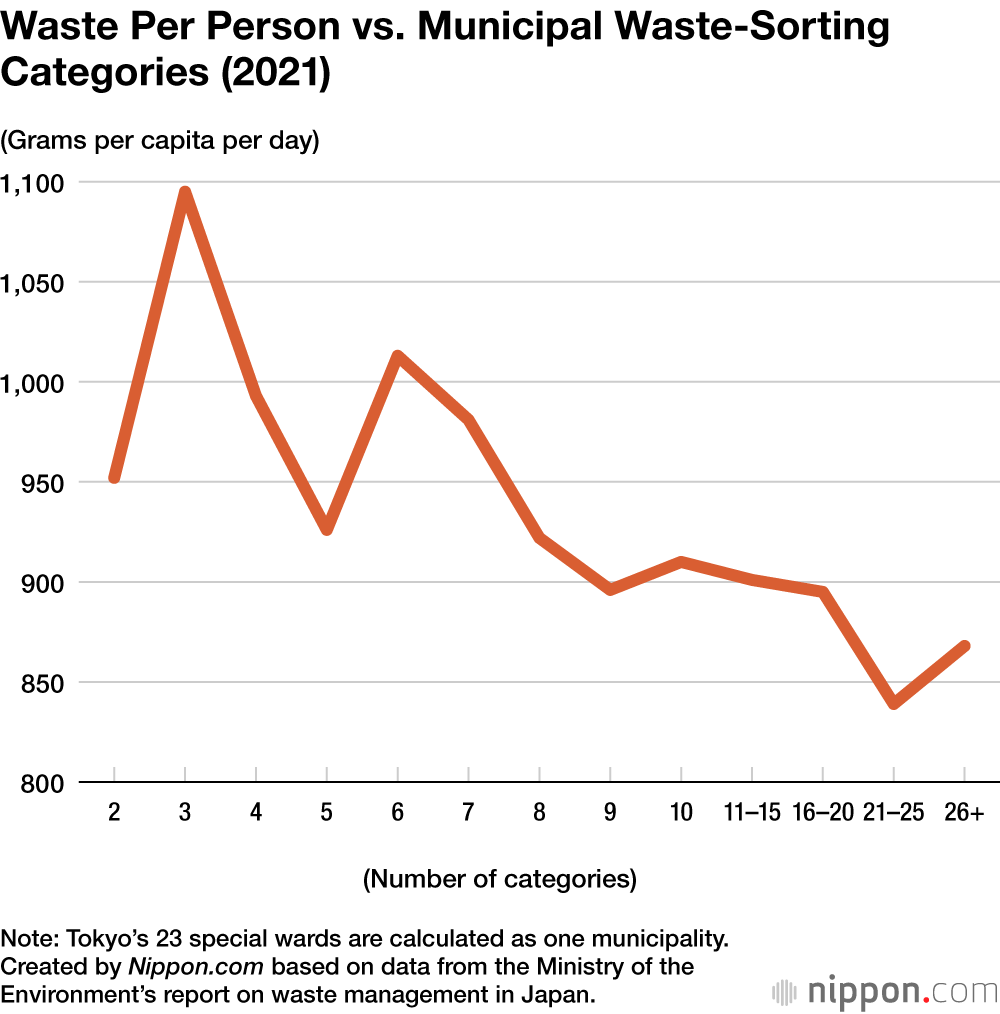
According to a 2021 Ministry of the Environment report, 496 of Japan’s 1,719 municipalities have 10 or fewer categories for sorting garbage, while the largest group, comprising 638 municipalities, has 11 to 15 categories. In fact, more than 70% of municipalities have at least 11 categories. The municipalities with more detailed sorting systems tend to generate less waste per person. Separating trash into different categories not only serves the purpose of allowing materials like cans and plastic bottles to be recycled, but also reduces the burden on incinerators and slows the rate at which landfill sites reach capacity.
The city of Furano, Hokkaidō, has 14 different categories for sorting trash. (Courtesy Furano municipal government)
Take the example of the disposal of PET-marked products, which include beverage and soy sauce bottles. Some municipalities require residents to remove the caps and wrapping material and dispose of them as “plastic packaging,” and to rinse and crush the PET bottles, which are disposed as their own category. Municipalities with different categories may require residents to dispose wrapping material as burnable waste.
Even rules for garbage bags differ. Some municipalities require designated bags to be purchased, while others allow any bag as long as it is translucent. The place where trash is put out also differs, with some municipalities using neighborhood collection points and others collecting trash from outside individual homes.
In big cities, plastic waste is sometimes grouped together with burnable waste, and the number of sorting categories tends to be relatively smaller. This is partly because the sheer volume of waste makes it difficult for sorting to keep up.
Smaller municipalities, on the other hand, may rely more heavily on residents themselves to sort their waste and take it directly to processing facilities. This helps to keep costs down and also makes more meticulous garbage sorting possible.
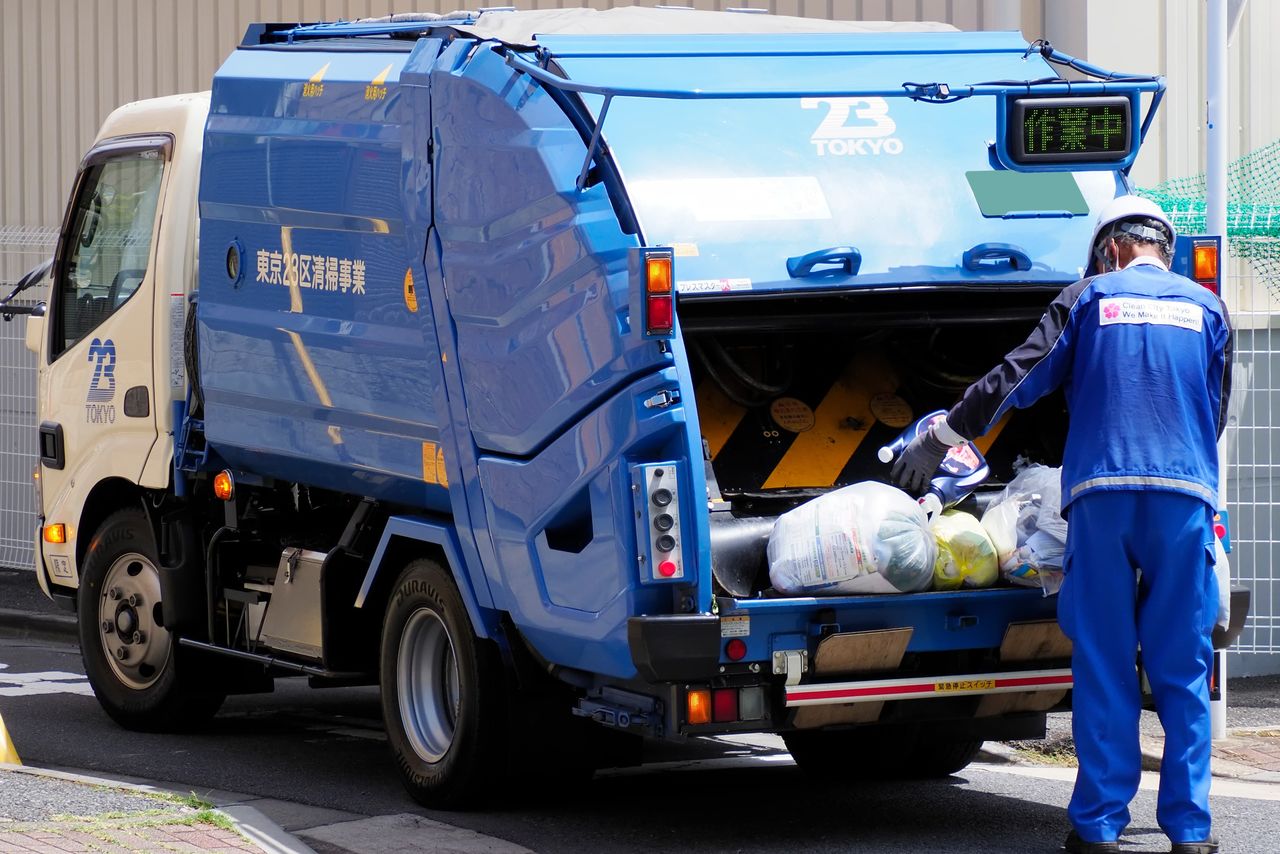
A typical garbage collection truck in Japan. (© Pixta)
Thorough Waste Sorting in Kamikatsu and Furano
The municipality known for having the most detailed waste sorting system in Japan is Kamikatsu, a town in Tokushima Prefecture with a population of 1,300. It has 44 waste categories in total. Paper alone is divided into nine categories, including newspapers, magazines, and cartons. According to the Environment Ministry, Kamikatsu had a 76.1% recycling rate in fiscal 2024, roughly four times the national average of 19.3%, ranking second nationwide. The town’s average daily waste generation per person was 482 grams, less than 60% of the national average. Rather than having waste collected from individual homes, residents of Kamikatsu bring it to the town’s sole collection station, where they sort it themselves. There is also a section where residents can leave unwanted items for others to reuse.
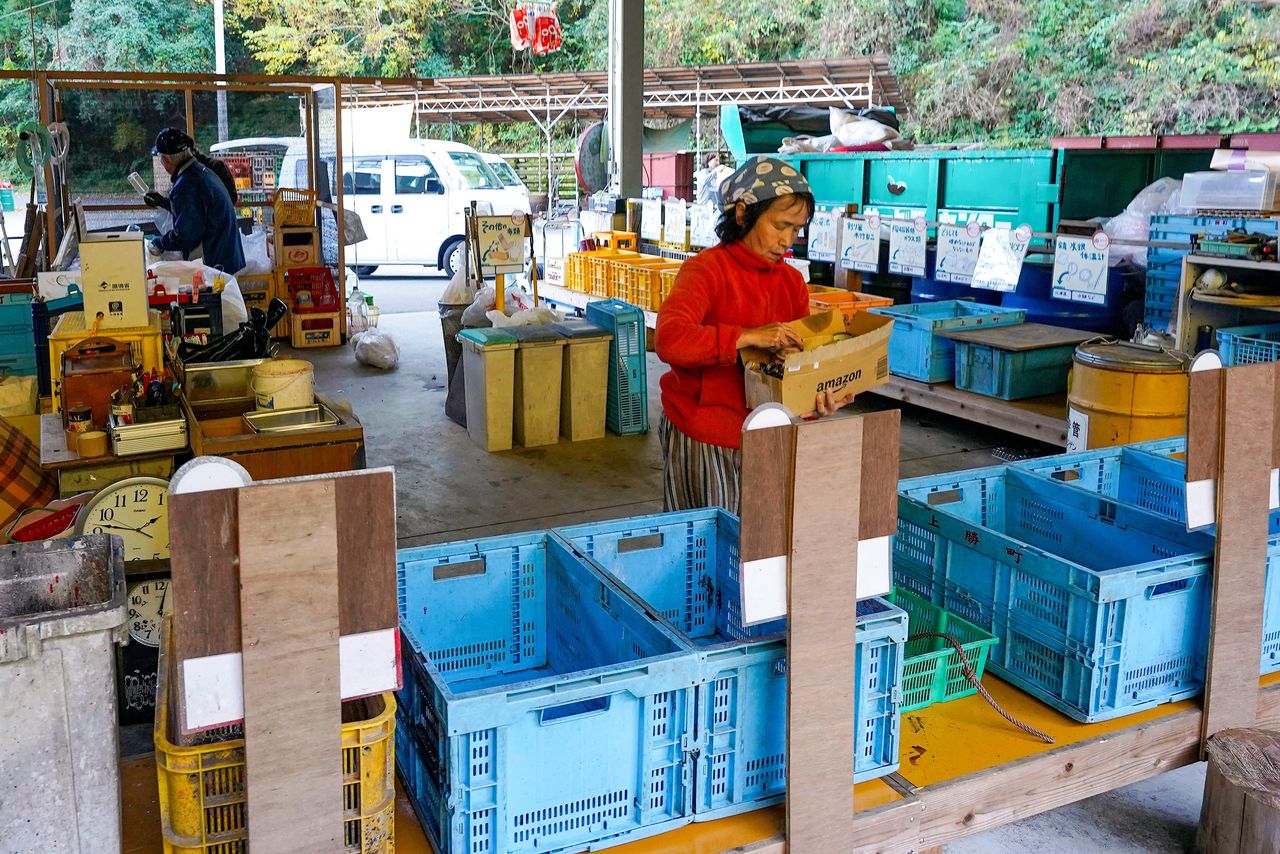
The waste collection station of Kamikatsu, a town that has declared itself “zero waste.” (© Jiji)
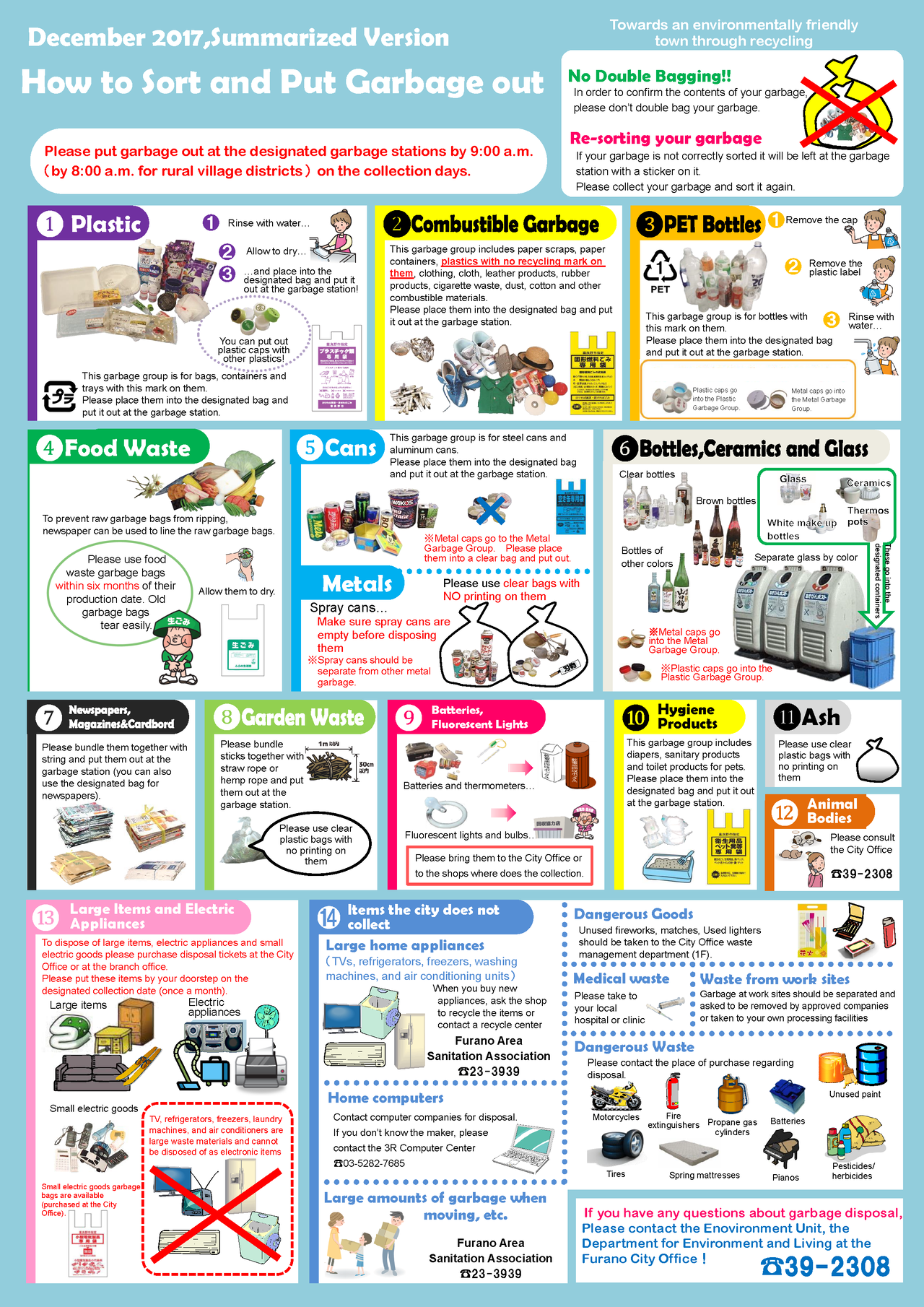
Another municipality known for its detailed waste-sorting system is the city of Furano in Hokkaidō, which has developed its own criteria for finely sorting waste and increasing its recycling rate. The city began sorting waste in the 1980s, later adopting the slogan “no burning, no burying.” In 2001 it adopted a 14-category sorting system. According to the city’s estimates, its recycling rate has reached 90%. Even burnable waste is divided into three categories: clothing and paper waste, food waste, and sanitary products such as disposable diapers. Clothing and paper waste are compressed into solid fuel, while food waste is turned into fertilizer. The city has also installed multiple collection stations where empty glass bottles are sorted by color and type.
Some changes have come about due to advances in recycling technology. Starting in December 2027, the city of Chiba will begin collecting fully plastic waste as a new category called “plastic resources.” Currently, the city uses the categories of “burnable” and “nonburnable,” but a new facility will melt plastic waste and recycle it into new resources. Plastics containing metals or other materials will be excluded. Anticipating that the changes may be confusing for some foreign residents, the city is preparing leaflets that will explain the new rules in multiple languages.
Most Municipalities Charge Residents for Waste Collection
A 2024 Environment Ministry survey found that 1,172 municipalities, or 67.3% of all municipalities nationwide, charge residents for collecting household waste (excluding bulky waste). Such an approach is aimed not only at reducing the amount of waste generated but also ensuring that those who benefit from waste collection bear part of the cost of processing it.
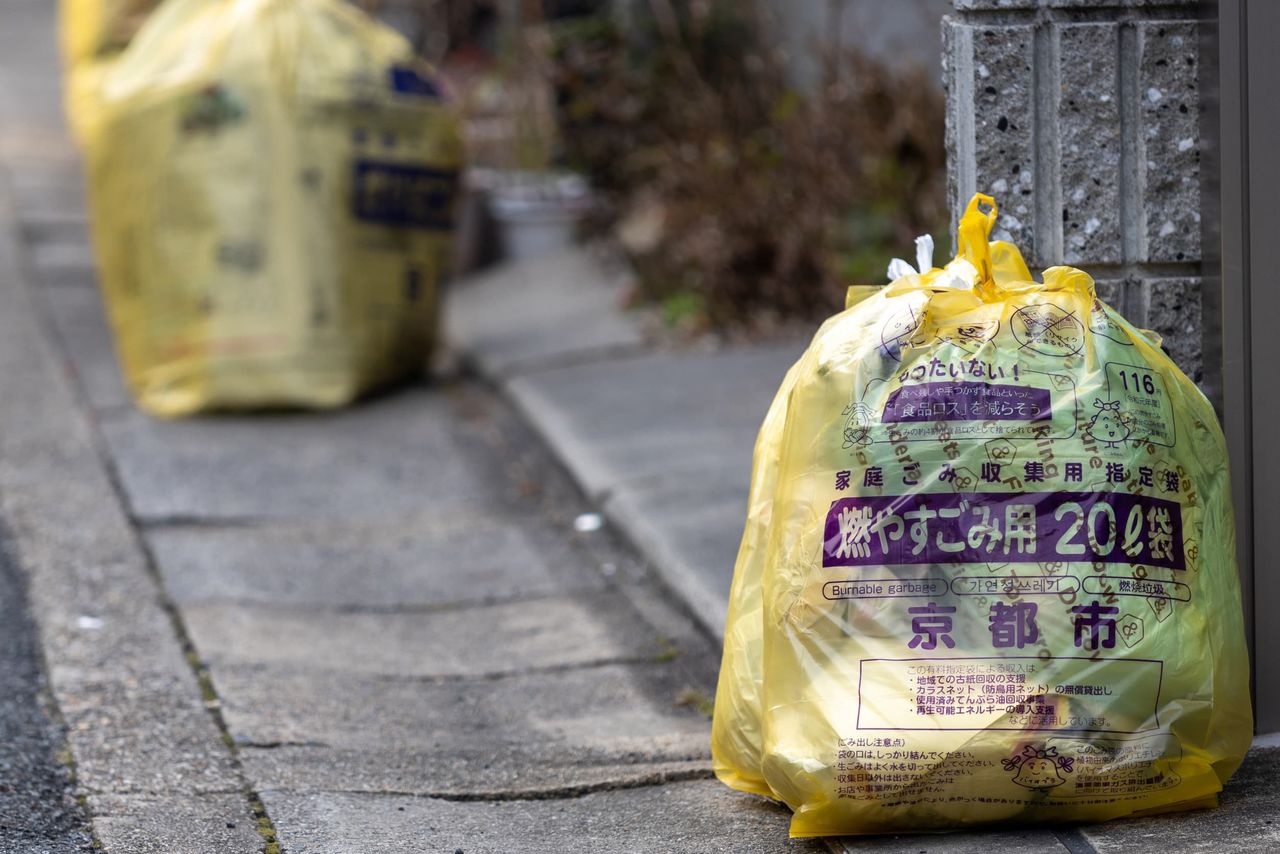
Household waste put out in paid garbage bags in Kyoto. (© Pixta)
The charge is typically built into the price of designated garbage bags. A 40-liter bag may cost around ¥20 to ¥50. These bags can be purchased at shops throughout the municipalities.
There are, however, considerable regional differences in how much residents are charged for waste collection. The town of Erimo in Hokkaidō, which has a long coastline, collects from individual homes, and a 45 liter bag there costs ¥200. In Tokyo’s 23 special wards, on the other hand, household trash collection is generally free. However, it is becoming increasingly difficult to expand existing landfill sites or establish new ones in Tokyo Bay, and the possibility of introducing charges is being discussed. In the Tama region of western Tokyo, 29 of the 30 municipalities already charge for household waste collection.
According to the Ministry of Environment, Japan generated a total of 38.11 million tons of waste in fiscal 2024. Daily waste generation per person was approximately 839 grams, down nearly 10% from a decade earlier. Possible factors behind the decrease include the introduction of charges and the growing adoption of paperless practices. Meanwhile, the recycling rate stood at 19.3%, remaining largely unchanged for about a decade.
Among cities with a population of at least half a million, Hachiōji in Tokyo had the lowest daily waste generation per person at about 691 grams; Kawasaki, Kanagawa, and Matsudo, Chiba, followed. The city of Chiba had the highest recycling rate, at 34.3%, followed by Okayama and Hachiōji.
Multilingual Information and Apps on the Rise
Japan is far from the only country where waste is sorted, but the extent to which sorting has become established varies by country and region. Even if foreigners understand that municipalities in Japan have different sorting rules, they may still find it difficult to understand their minute differences and strictness.
For this reason, municipalities with large foreign populations are increasingly turning to multilingual booklets, flyers, and notices, as well as smartphone apps and AI-powered tools, to make local waste rules easier to understand.
In January 2026, Tokyo’s city of Kōtō launched Kōtō Waste Navi, an AI-powered service that helps residents determine how to sort and dispose of their waste. The service is available in Japanese as well as English, Chinese (simplified characters), Korean, Tagalog, and Vietnamese. Users can upload a photo or enter the name of an item they want to dispose of, and the AI analyzes it and provides instructions on how to sort and dispose of it properly. Users can also search for garbage collection days and collection locations.
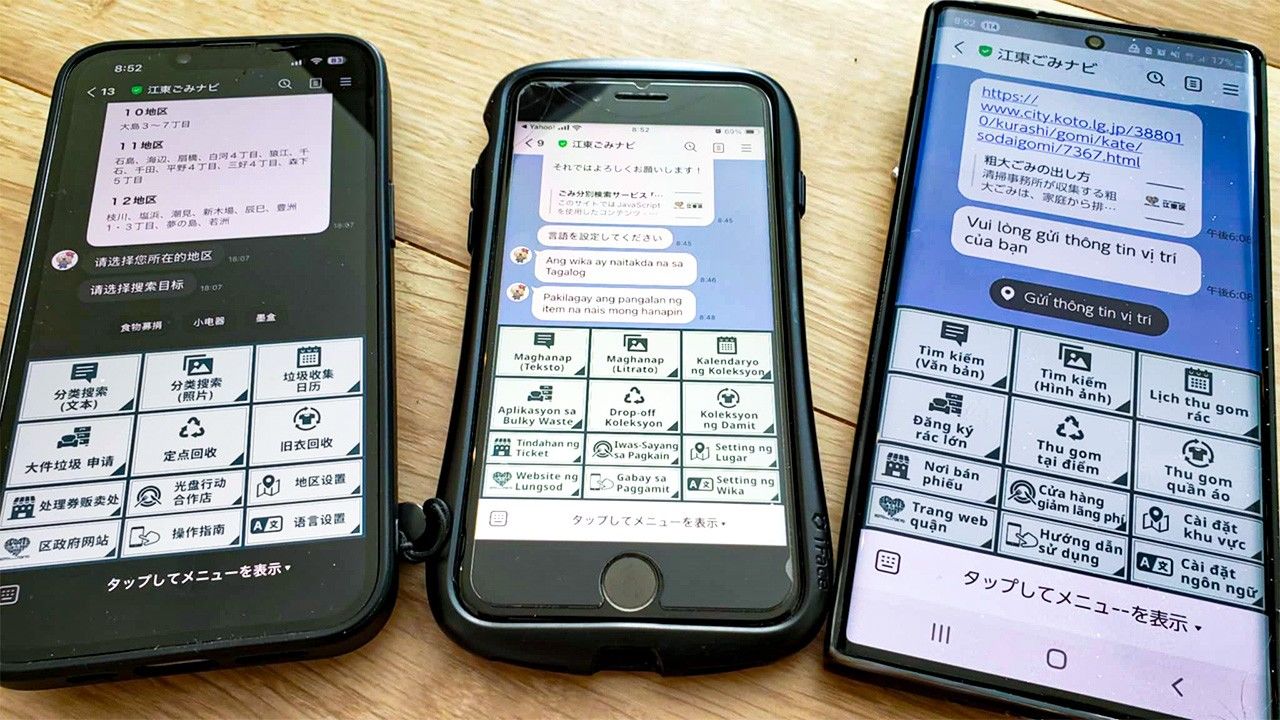
The AI waste-sorting search service Kōtō Waste Navi operates through the Line communication platform, and is supported in multiple languages. (© Nippon.com)
Kawaguchi, a Saitama city whose population is becoming increasingly international, revised its ordinance enforcement regulations in April 2024, requiring owners and managers of apartment and condominium buildings to display garbage disposal rules in the languages spoken by their residents.
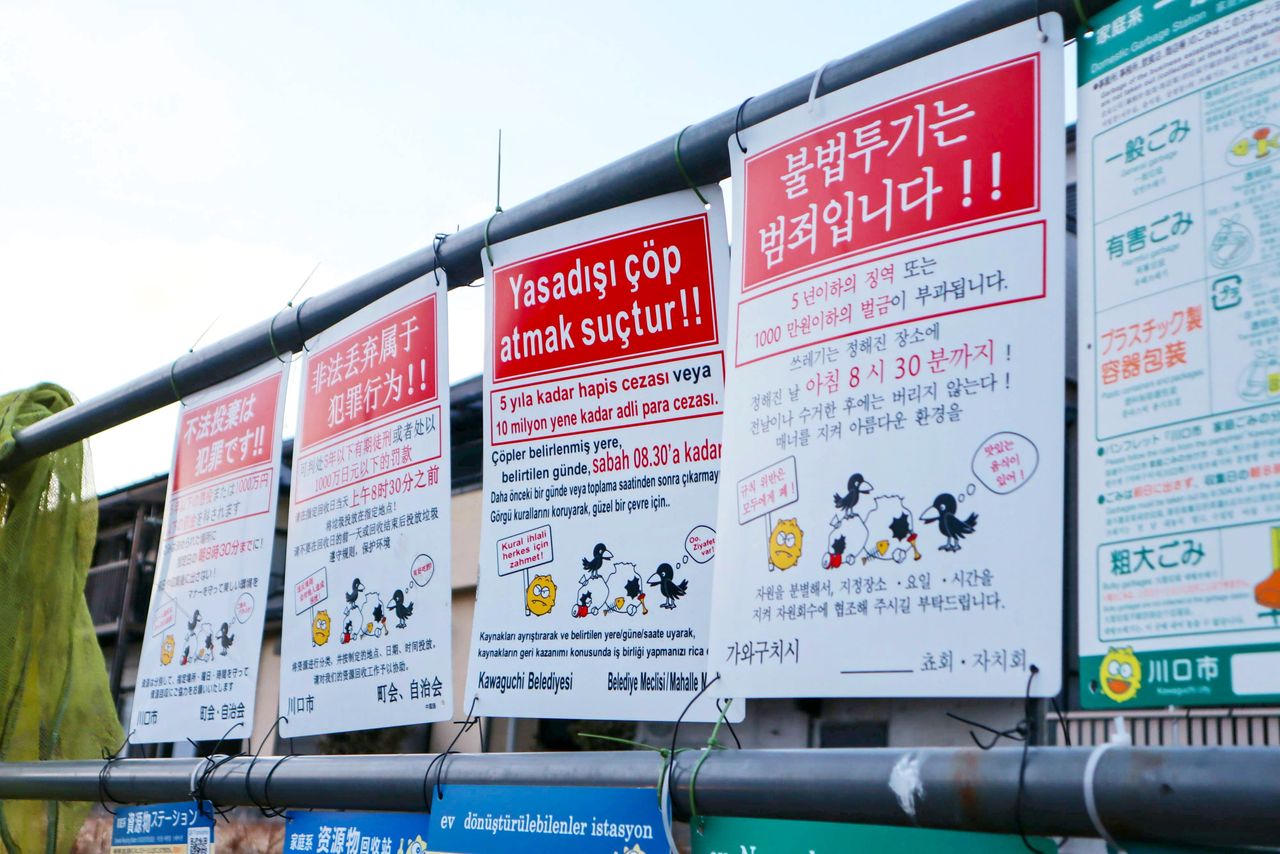
Multilingual notices in Kawaguchi urging residents to sort their waste properly and refrain from illegal dumping. (© Sankei Shimbun)
In areas experiencing a rapid surge in foreign national residents, there are still many cases where multilingual explanatory materials have failed to keep pace. The Comprehensive Measures for Acceptance and Orderly Coexistence of Foreign Nationals, compiled by the administration of Prime Minister Takaichi Sanae in January 2026, calls for greater efforts to help foreign residents understand everyday social norms, including garbage disposal rules, while expanding the provision and dissemination of information in foreign languages and in simple Japanese. The government has also established programs to support municipalities in these efforts and, as a result, initiatives that help foreign residents better adapt to local communities are gradually spreading nationwide.
(Originally published in Japanese. Banner photo © Pixta.)