JFL Today: Considering Japanese-Language Education for Foreign Residents
Yasashii Nihongo: The “Simple Japanese” Initiative for Better Communication with Nonnative Speakers
Society Culture Education- English
- 日本語
- 简体字
- 繁體字
- Français
- Español
- العربية
- Русский
Lowering the Barrier
Japanese has three scripts for different purposes—hiragana, katakana, and kanji—with notably more than 2,000 kanji in regular use, meaning that it is difficult to study for speakers of other languages. Yasashii Nihongo (simple Japanese) is a tool for lowering the barrier to entry and enabling smooth communication.
Guidelines on using yasashii Nihongo to support foreign residents, produced by the Immigration Services Agency and the Agency for Cultural Affairs, describe how it works as follows: “Yasashii Nihongo is an easy-to-understand version of Japanese that considers the listener by methods such as substituting easier words for more difficult ones. This is not intended to minimize the beauty or richness of the language, but rather to convey a message in Japanese that can be understood by many, including people from other countries, the elderly, and people with disabilities.”
For example, avoiding the use of words with multiple kanji simplifies a sentence. When describing higher ground, substitute 高いところ (takai tokoro) for 高台 (takadai), or if telling someone to run for safety 逃げる (nigeru) is simpler than 避難 (hinan). Similarly, when saying people should take off their shoes, 靴を脱いで (kutsu o nuide) is easier to understand than 土足厳禁 (dosoku genkin).
Example sentences:
Run to higher ground!
❌ 高台に避難してください (Takadai ni hinan shite kudasai)
✔️ 高いところに逃げてください (Takai tokoro ni nigete kudasai)
Take off your shoes here.
❌ 土足厳禁 (Dosoku genkin)
✔️ ここで靴を脱いでください (Koko de kutsu o nuide kudasai)
Use of honorific language (keigo) should be limited, and particularly specific vocabulary indicating respect (sonkeigo) or humility (kenjōgo) should be avoided. Instead, it is better to stick with basic, polite desu and masu forms.
Example sentences:
Please show me your ticket.
❌ チケットを拝見させていただきます (Chiketto o haiken sasete itadakimasu)
✔️ チケットを見せてください (Chiketto o misete kudasai)
Please refrain from smoking.
❌ たばこはご遠慮いただいております (Tabako wa goenryo itadaite orimasu)
✔️ たばこを吸わないでください (Tabako o suwanaide kudasai)
To promote the use of yasashii Nihongo, I advocate what I call the hasami (scissors) rules, taking the first syllables of the ideas that communication should be clear (hakkiri), continue to the end (saigo made), and be short (mijikaku). By keeping these “scissors rules” in mind, speakers’ and writers’ expressions will be close to those found in textbooks for leaners of Japanese, and more likely to be understood by foreigners.
Reaching More People
The idea for yasashii Nihongo was initially prompted by the 1995 Great Hanshin-Awaji Earthquake. The proportion of foreign nationals killed and injured was higher than that for Japanese citizens, as calls to evacuate and safety warnings did not adequately reach them.
Satō Kazuyuki, a sociolinguistics professor at Hirosaki University, led a research group conducting a study that found disaster information relayed during a disaster to be more easily understood when conveyed in simple Japanese than in English or Chinese. Satō defined yasashii Nihongo for mitigating disasters as simplified language that can be understood by 80% of foreign residents.
The yasashii in the phrase carries the meaning of two Japanese words with this pronunciation, so it signifies not only “plain” or “simple” but also “kind” or “caring.”
In Use by Local Authorities and in Education
In the 2000s, as more Nikkei Brazilians and Peruvians made their homes in Japan, yasashii Nihongo became increasingly adopted by local authorities, with information in simple Japanese alongside multilingual administrative and lifestyle guides. In the second half of this decade, Professor Iori Isao of Hitotsubashi University was among researchers who collaborated with the Yokohama municipal administration and others on research and practical application of yasashii Nihongo for everyday life.
This initiative could be described as positioning simplified Japanese as a common language within communities. Researchers called on local governments to make use of it when sharing information, and noted the necessity of ensuring a basic level of Japanese education for foreign residents. It spread among native-speaking volunteers with usage in language classes for working adults, who have little time for their studies, as well as families and children.
The NPO Eboard, which supports access to education opportunities, has been promoting the adoption of yasashii Nihongo subtitles in educational videos since 2020. At first, these were intended to support children with hearing difficulties, but their usage has expanded as they are also helpful for children with foreign backgrounds. The subtitles can be automatically translated into different languages with a standard YouTube feature. As of March 2024, videos with simplified Japanese subtitles had been used in more than 100 educational institutions and viewed more than 1.5 million times. According to Eboard, users have made comments like: “If there are subtitles, I can understand words I wouldn’t be able to from the sound alone,” and “Automatic translation means I can understand the video in both my native language and Japanese.”
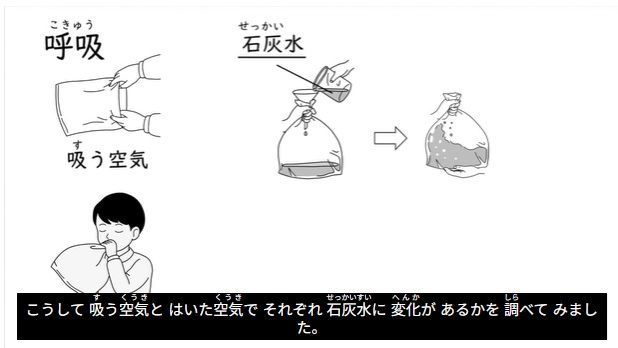
A video with yasashii Nihongo subtitles on the topic of breathing. (© Eboard)
https://www.eboard.jp/content/501/v/1/
The municipal government of Hamamatsu, Shizuoka, which has many Japanese Brazilian residents, has produced a guide to yasashii Nihongo in schools, where it is used for communication with parents, as well as homework and report cards. The Kumamoto International Foundation, meanwhile, has compiled a collection of example sentences for use in school announcements and distributed it to all the city’s schools.
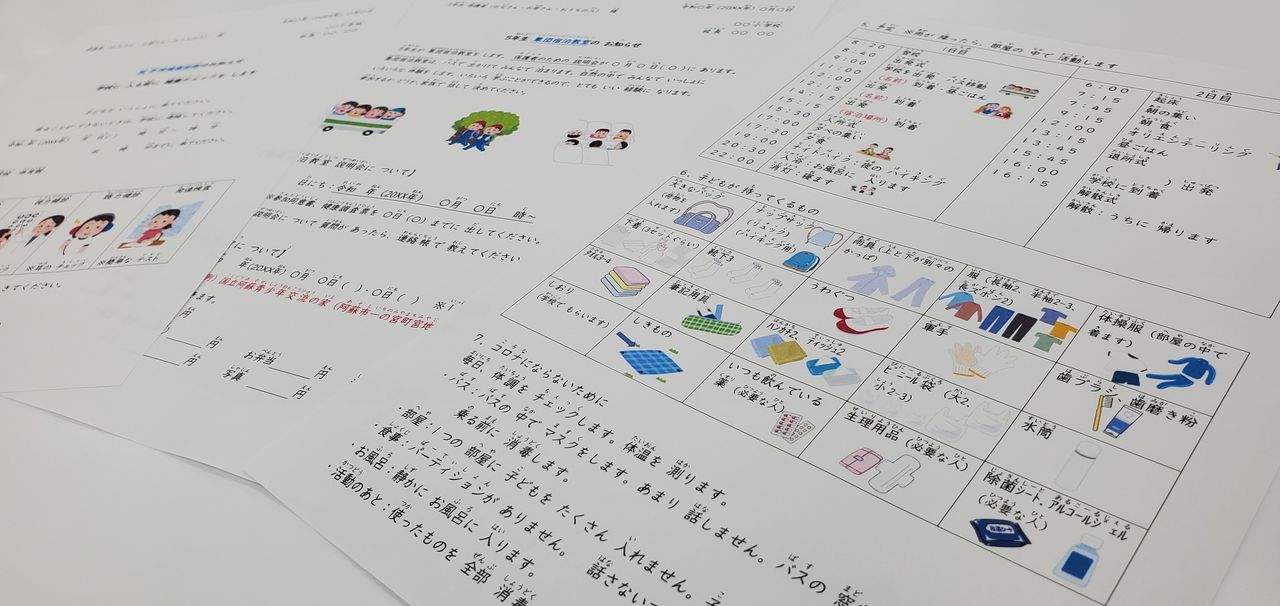
A collection of example sentences in simple Japanese distributed to elementary schools in the city of Kumamoto. (Courtesy Kumamoto International Foundation)
Tourism, Medicine, and Bottom-Up Integration
With the number of foreign residents in Japan now standing at around 4 million, usage cases of simplified Japanese are spreading.
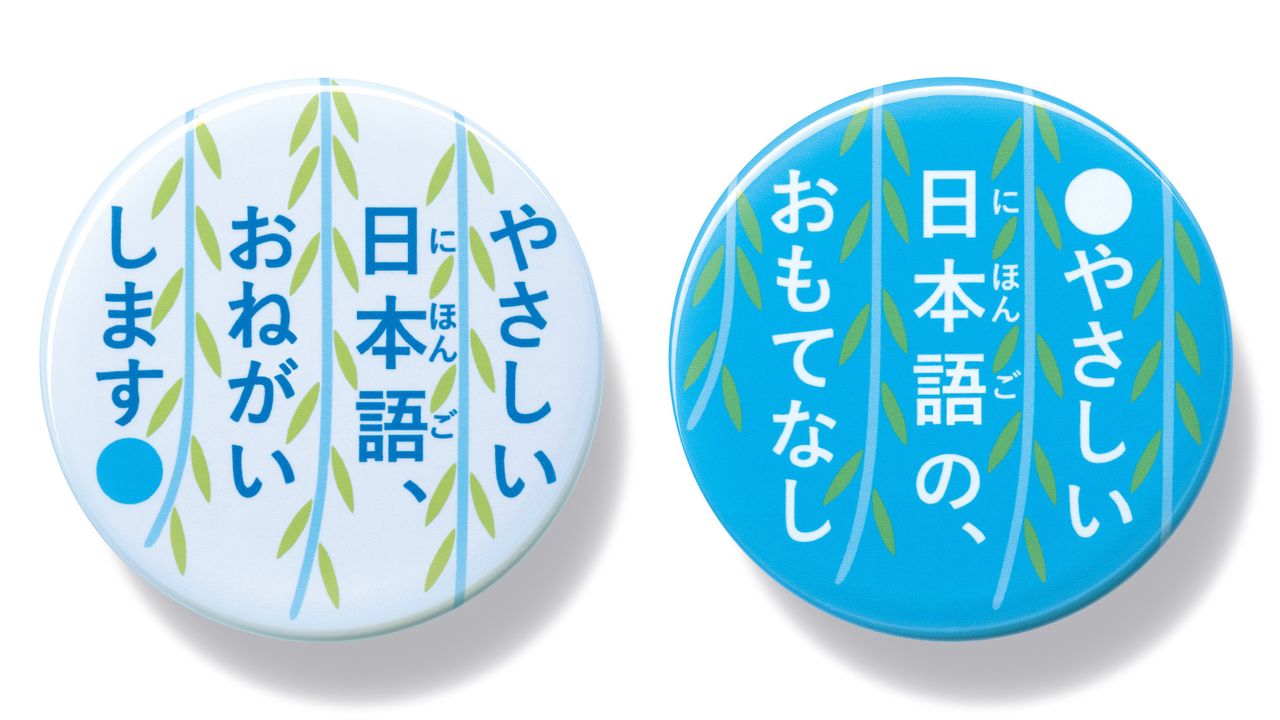
In 2016, the yasashii Nihongo initiative was launched in Yanagawa, Fukuoka, as a project I conceived of while I was then working at Dentsū. The city saw many repeat visitors from places like Taiwan and South Korea, who were studying Japanese. It aimed to encourage tourists to speak Japanese and local people to respond using simple language in order to promote interaction.
In the medical field, Juntendō University and the Tokyo metropolitan government have conducted research into easy-to-understand conversation with foreign patients, through initiatives including the establishment of a study group.
Yamawaki Keizō, a Meiji University professor specializing in multicultural communities, says these are “bottom-up integration policies led by local governments.” Because the national government has long maintained that it has no immigration policy, local governments were the first to move things forward. Later, against the backdrop of accepting foreign workers, the national government established the promotion of yasashii Nihongo as a policy.
In 2020, the Immigration Services Agency and the Agency for Cultural Affairs produced their guidelines, and training for government workers and Japanese language volunteers began. A 2024 survey by the Tokyo metropolitan government found that 48% of residents had at least some awareness of efforts to promote yasashii Nihongo—up 7 percentage points year on year—while 65% said that they had used it. A survey of foreign people found that 92% had heard of it, while 80% expressed a wish for information to be transmitted using simplified Japanese.
Training and Tools for Plain Writing
There have been similar efforts in other countries, such as in the United States, where President Jimmy Carter issued an executive order in 1978 calling for simplification in the language of regulations, which was also pursued at the state level. In 2010, the US Plain Writing Act became law, requiring that government documents be written in easily understandable language.
In Europe, there is a growing trend toward simplifying language to support people with learning difficulties or intellectual disabilities, with countries including France and Germany doing so as part of their welfare policies. However, countries like South Korea and Taiwan have yet to wholeheartedly adopt such methods, likely because of the importance placed on learning English.
There are also countless nongovernmental efforts at raising awareness. I am working together with the Japanese language information platform Nihongo Plat to implement a program for training instructors to further spread awareness. Since online courses were launched in 2020, more than 500 people have completed them and are working to promote yasashii Nihongo across the country.
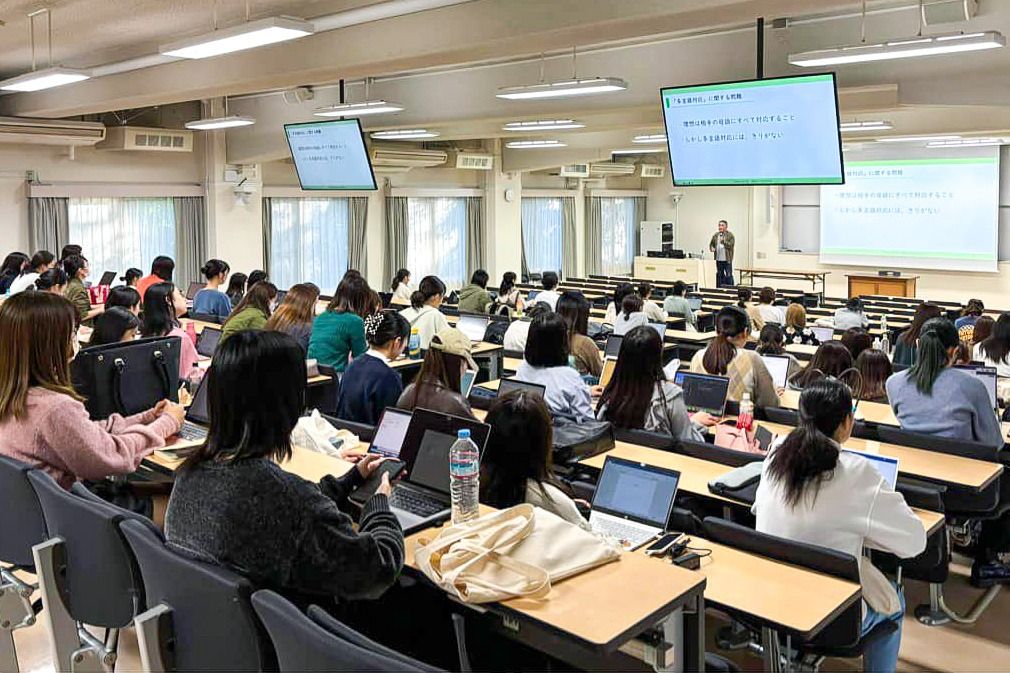
A lecture on yasashii Nihongo at Tsuda University. (© Yoshikai Akira)
In 2023, the Yasashii Nihongo Promotion Network was founded. This group conducts activities including essay contests for high school students and promoting the official designation of August 3 as Yasashii Nihongo Day.
Katsura Kaishi, who is famous for performing rakugo in English, is collaborating with me to arrange performances in simple Japanese at various locations around the country, targeting students of Japanese.
In 2021, I worked together with Professor Yamawaki’s seminar group at Meiji University to make a rap video for YouTube called “Yasashii sekai” (A Simpler, Kinder World), expressing the feelings of Japanese-speaking minorities.
There are also conversion tools available. Tsutaeru Web can automatically convert websites into simplified Japanese. Meanwhile, Yasa-Nichi Checker and j-Readability, from Waseda University Professor Lee Jae-ho’s research group, are systems that analyze a Japanese text’s vocabulary, grammar, use of kanji, and other elements to assess its readability.
Simpler and Kinder
The emergence of generative AI has made it easy to rewrite documents. However, during a disaster, when immediacy is required, the language people directly use becomes important, so the need for simplified Japanese remains the same.
In 2025, xenophobic viewpoints became increasingly prominent in Japan, including the sentiment that it is unnecessary to make linguistic accommodation for foreign people. On the other hand, in July 2026, the government published a document responding to the rapid rise in foreign workers that explicitly called for the promotion of information in simplified Japanese.
The spread of yasashii Nihongo makes it easy to provide information to people from other countries, while also contributing to social stability. It is a kind of courtesy similar to providing handrails to those who need them, and it does not limit the linguistic expression between native speakers.
The yasashii in yasashii Nihongo can mean both “simple” and “kind,” and the project has developed into a social initiative that transcends linguistic issues. We hope that this effort can attract global attention, so that the word yasashii becomes as well-known as kawaii.
(Originally published in Japanese. Banner photo: Badges for tourists and locals in Yanagawa, Fukuoka Prefecture, read “Yasashii Nihongo, onegaishimasu” [Please speak in simple Japanese], at left, and “Yasashii Nihongo no, omotenashi” [Hospitality in simple Japanese]. Courtesy Yanagawa municipal government; © Jiji.)