Putting the Language to Work, Work, Work: Winner Announced for Japan’s 2025 Word of the Year
Society- English
- 日本語
- 简体字
- 繁體字
- Français
- Español
- العربية
- Русский
First Female Premier Hits the Ground Running
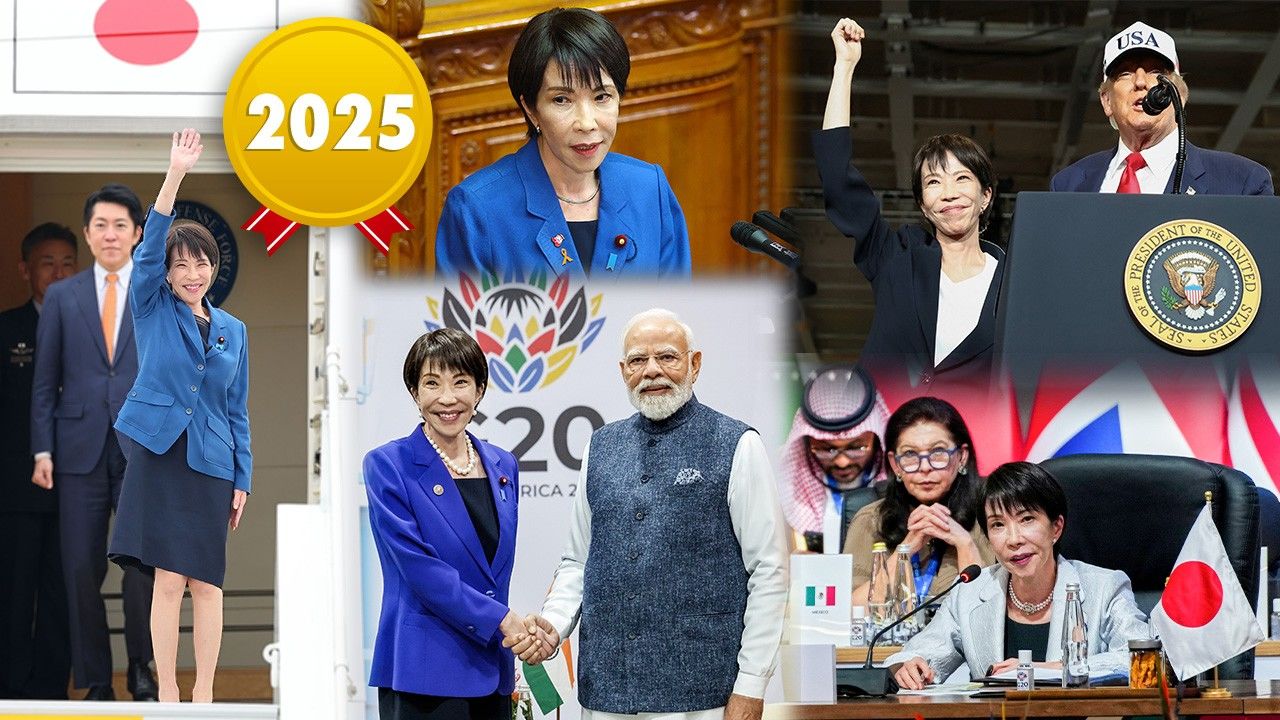
On December 1, 2025, the publisher Jiyū Kokumin Sha announced its 10 finalists for the Japanese-language words or phrases of the year, along with the grand-prize winner: Hataraite, hataraite, hataraite, hataraite, hataraite mairimasu (I pledge to work, work, work, work, work), which was paired with josei shushō, meaning “woman prime minister,” referring to Takaichi Sanae, who took the nation’s top political post on October 21.
Prime Minister Takaichi, who appeared at the Tokyo ceremony on December 1 to represent the winning phrase, has been criticized for stating that she intends to “do away with work-life balance” in her own schedule in pursuit of needed outcomes for Japan, and she has come under fire in the Diet for forcing her staff to attend her at 3:00 in the morning for preparatory meetings before important parliamentary deliberations.
The 10 finalists selected from the original list of 30 nominees included everything from adorable meme fodder (ehho ehho) and quirky characters (Myaku Myaku) to far more serious domestic and global developments, like increasingly dangerous encroachments by wild bears into human communities around the nation, US President Donald Trump’s tariffs and the economic upheaval they have brought, and the climate change threatening to leave Japan—and indeed, much of the world—with only niki, or “two seasons.”
Members of the judging committee that chose the winning terms commented on their choices. The manga artist and columnist Shinsan Nameko (Ikematsu Emi) described 2025 as a year of milestones and noteworthy anniversaries, being the eightieth year since the end of World War II and what would have been year 100 in Japan’s Shōwa era, as well as seeing the selection of Pope Leo XIV and the rise of Takaichi as Japan’s first female leader. Both the storyteller Kanda Hakuzan and the comedian Patrick Harlan, meanwhile, noted the burgeoning influence of social media, which in many cases is outstripping television as a main driver of mass culture and source of newly coined phrases.
An additional special prize was announced this year recognizing ミスタープロ野球 (Misutā puro yakyū, “Mister Pro Baseball”), a reference to Yomiuri Giants baseball legend Nagashima Shigeo, who passed away in June 2025. The manga artist Yaku Mitsuru hailed Nagashima as a figure particularly suited to recognition by these awards, given the many quirky and memorable sayings he had left his fans with over the years.
Finally, Ōtsuka Yōko, editor in chief of Gendai yōgo no kiso chishiki (Basic Knowledge on Contemporary Terminology), called attention to the character 米, meaning “rice” and appearing in the traditional Japanese rendition of “United States.” Its relevance to both the “old old old rice” and “Trump tariffs” appearing among the contest finalists this year just might presage its appearance in the Kanji of the Year announcement coming later this month.
The Winning Word of 2025
働いて働いて働いて働いて働いてまいります/女性首相 — Hataraite, hataraite, hataraite, hataraite, hataraite mairimasu/joseishushō. Japan’s first female prime minister, Takaichi Sanae, expressed her commitment to “work, work, work, work, work,” drawing criticism from many for sending a message out of step with the country’s push for residents to strike a better work-life balance.
Other Finalists
エッホエッホ — Ehho ehho. A 2021 picture by Dutch photographer Hannie Heere of a baby owl running became a 2025 meme in Japan, associated with the huffing and puffing sound of exertion ehho ehho that was added along the way. This phrase took on a life of its own, becoming a staple of social media posts about being in a hurry.
オールドメディア — Ōrudo media. In the online age, newspapers and television may be classified as “old media.” Amid a rising tide of opinion that dismisses these as biased, politicians and others are turning to social media and short videos, but there are also growing concerns about a lack of critical judgement of online content.
緊急銃猟/クマ被害 — Kinkyū jūryō/kuma higai. On September 1, new “emergency hunting” (kinkyū jūryō) legislation was introduced allowing for shooting of bears, boars, and other dangerous animals that enter populated areas, based on the decision of the mayor. The term kuma higai refers to damage or injuries caused by bears, incidents that have been more common in 2025 than in typical years.
国宝(観た) — Kokuhō (mita). The kabuki-themed movie Kokuhō has become a massive hit—at the time of writing, it looks set to become the highest grossing Japanese live action film ever in its home country. The buzz has been such that “Have you seen Kokuhō?” (Kokuhō mita?) became a common question.
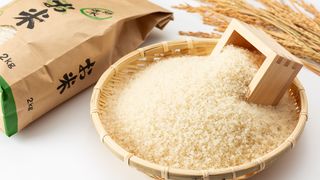
古古古米 — Kokokomai. With rice prices soaring, the release of government stockpiles prompted talk of komai (literally “old rice”), as well as kokomai (“old old rice”) and kokokomai (“old old old rice”). A crop is described as “old rice” from November 1 of the year after it is harvested, with a subsequent ko or “old” added for every subsequent year every subsequent year.
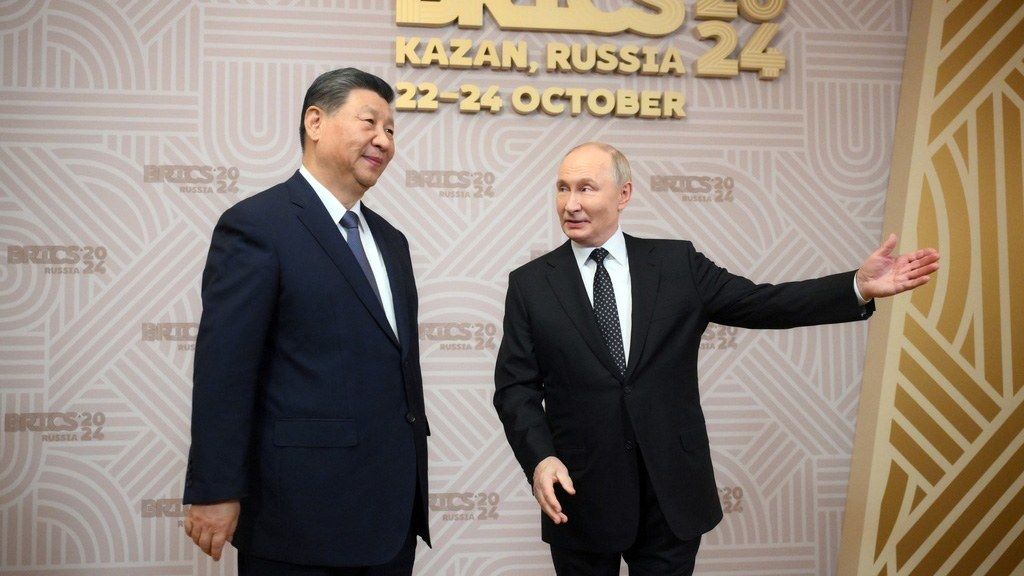
戦後80年/昭和100年 — Sengo 80 nen/Shōwa 100 nen. This year marked the eightieth anniversary of the end of World War II and would have been year 100 of the pivotal Shōwa era, which began with 1926 as Shōwa 1, with broadcasters, publishers and other media organizations releasing an abundance of retrospectives on major events and their lasting legacies.
トランプ関税 — Toranpu kanzei. Japan was among a number of US trade partners slapped with “Trump tariffs,” sending the government scrambling to negotiate a deal to reduce the economic impact, particularly to the auto industry.

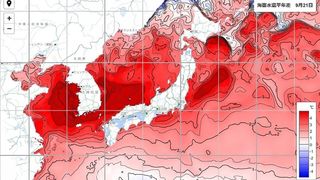
二季 — Niki. A growing number of experts warn that as climate change alters weather patterns, Japan’s much loved four seasons (shiki) will dwindle to just two (niki) as the climate swings between winter and summer, pushing spring and autumn entirely out of the picture.
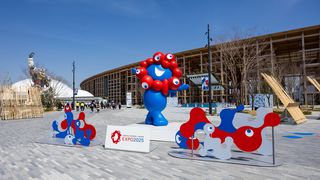
ミャクミャク — Myaku Myaku. The official mascot of the 2025 World Expo held in Osaka, this colorful being started off being viewed as a weird, somewhat frightening figure, but won the hearts of Expo-goers to become one of the more popular yurukyara in recent memory, driving significant souvenir sales.
(Originally published in English. Banner photos, clockwise from left: Japanese Prime Minister Sanae Takaichi arrives Gimhae, South Korea, on October 30 [© Lee Young Ho/Sipa USA via Reuters Connect]; speaking in the House of Councillors on November 6 [© Kazuki Oishi/Sipa USA via Reuters Connect]; appearing with US President Donald Trump in Yokosuka, Kanagawa, on October 28 [© Reuters]; attending a plenary session of the G20 Leaders’ Summit in Johannesburg, South Africa, on November 22, [© Misper Apawu/pool, via Reuters]; with Indian Prime Minister Narendra Modi in Johannesburg on November 23 [© DPR PMO/ANI Photo, via Reuters Connect].)