Japan’s Top Events in Winter 2025–26
Lifestyle Food and Drink Society- English
- 日本語
- 简体字
- 繁體字
- Français
- Español
- العربية
- Русский
New Year’s Feature Exhibition: Pony Tales: Celebrating the Year of the Horse at Kyoto National Museum: December 16–January 25
In Japan, 2026 is the Year of the Horse. This exhibition gathers cultural artefacts inspired by horses, which were once deeply connected to people’s lives, whether plowing fields, transporting goods, or carrying riders.
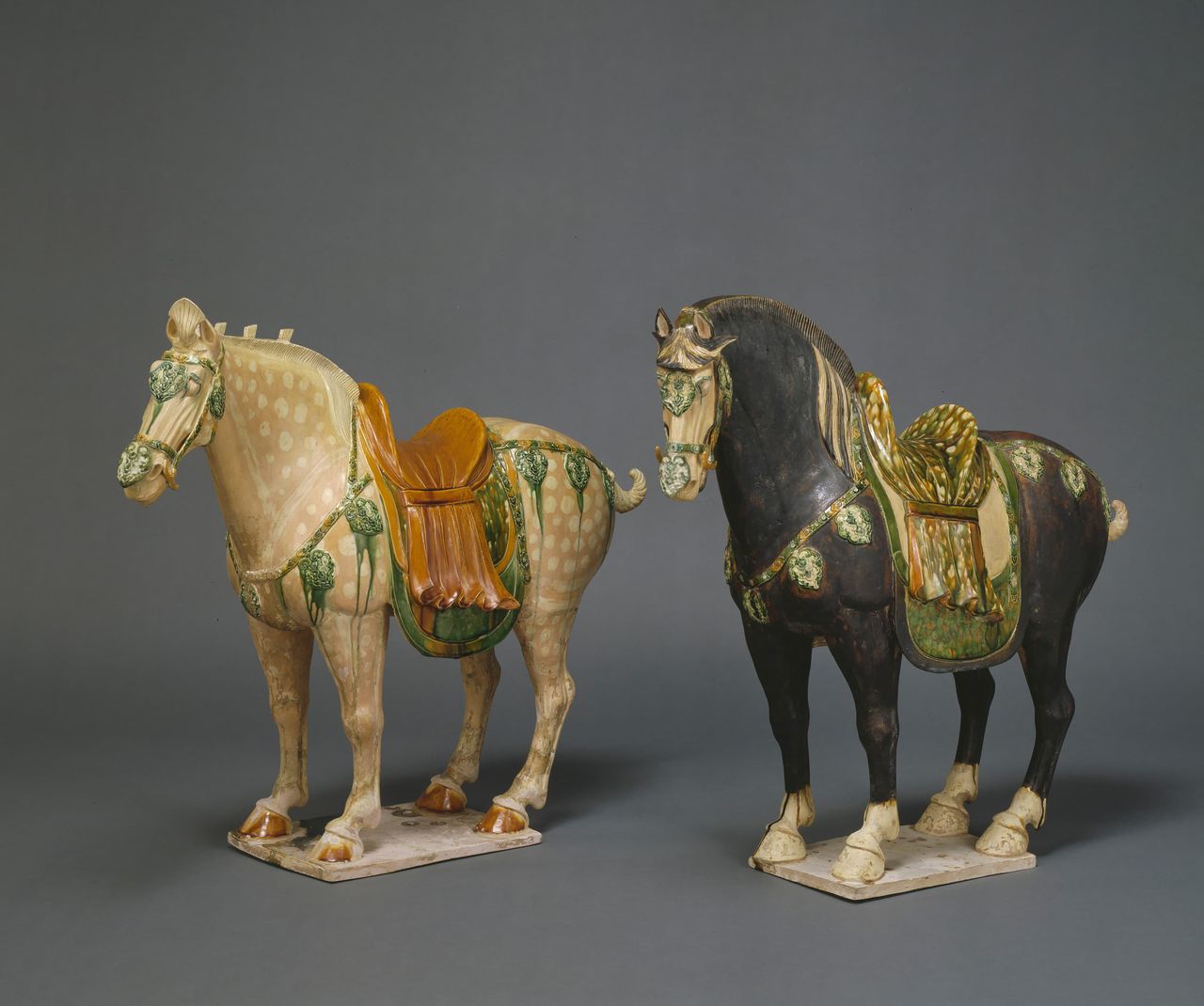
Pair of Horse Tomb Figures with Three-Color Glaze (Important Art Object). Tang Sancai (three-color glaze) ceramics were produced as grave goods for the tombs of the upper classes in China from around the second half of the seventh century to the mid-eighth century, during the flourishing of the Tang Dynasty. They had a major influence on Japan’s pottery culture. (© Kyoto National Museum).
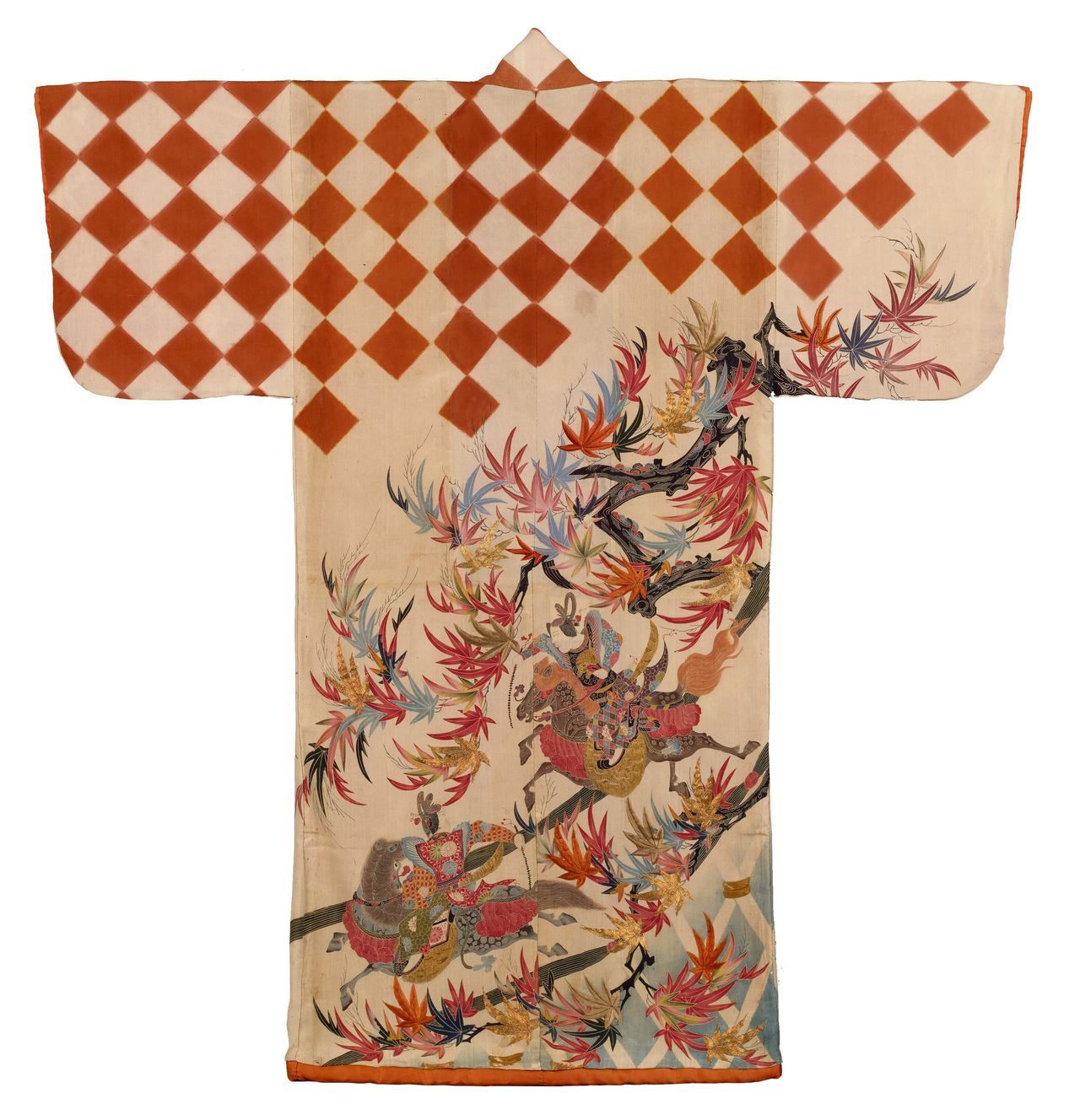
Kosode (Kimono) with Scene of Kamo Horse Racing Ritual. A kosode kimono from the Edo period (1603–1868) with a yūzen-dyed design depicting Kyoto’s Kamigamo Shrine Kurabeuma horse-racing ritual. (© Kyoto National Museum)
Official website: https://www.kyohaku.go.jp/eng/exhibitions/feature/b/2025_horse/
A Rousing Rehearsal at Chion’in, Kyoto: December 27
In the last moments of New Year’s Eve, temple bells ring out across Japan to signal the end of one year and the start of the next. The bells sound 108 times in a Buddhist ritual called joya no kane that represents the cleansing of 108 worldly passions.
At the Kyoto temple of Chion’in, there is a rehearsal held each year on December 27. A priest holds the lead rope attached to a huge wooden hammer that is 4.5 meters long and weighs 350 kilograms, while 16 other priests help to swing the hammer with supporting ropes. The lead priest falls down on to his back as he finally pulls the hammer to strike. The tolling of the bell resounds after this dynamic scene.
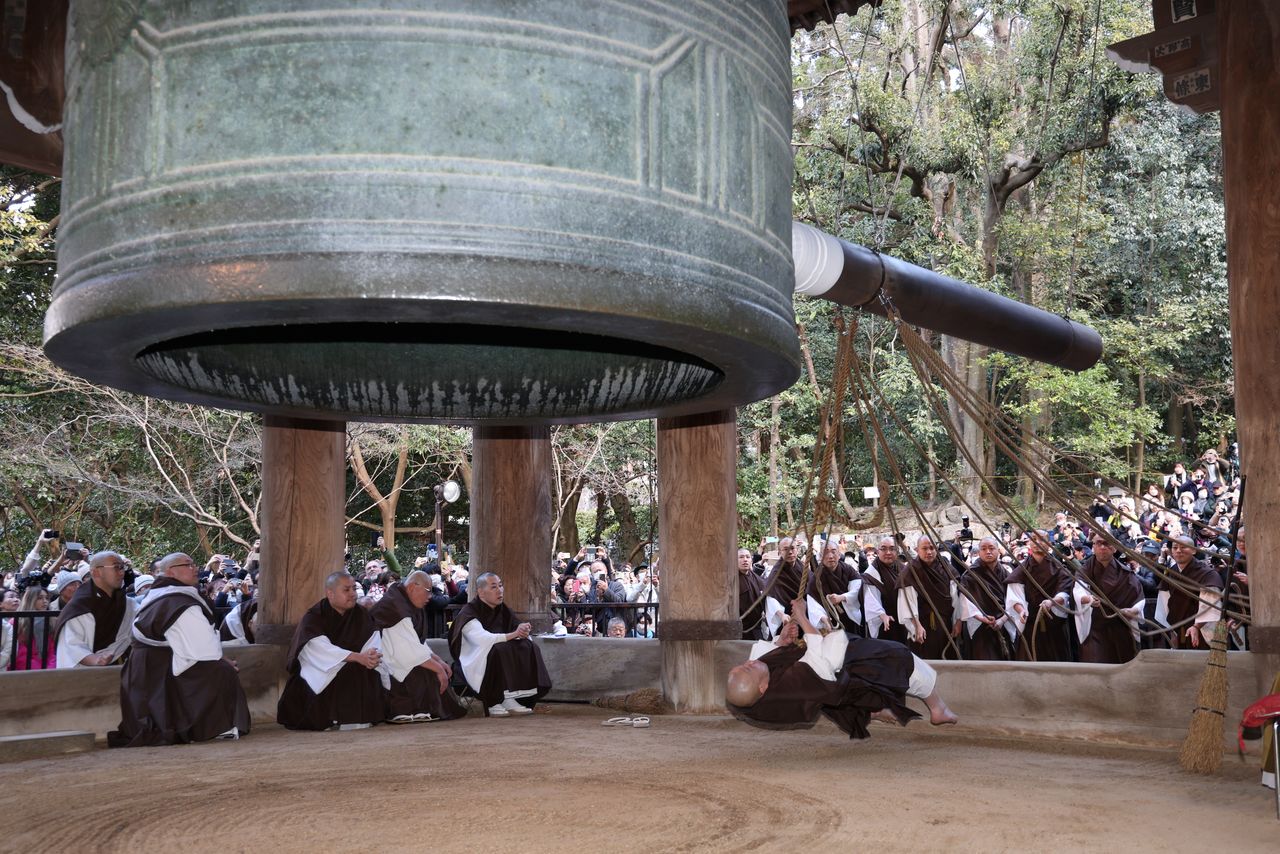
The bell at Kyoto’s Chion’in. (© Jiji)
Official website: https://www.chion-in.or.jp/en/
Ōji Fox Parade: December 31
According to legend, foxes would travel from far and wide to gather beneath a large tree near Ōji Inari Shrine on New Year’s Eve, where they would dress up before making a visit to the shrine. The Edo period artist Utagawa Hiroshige depicted this scene.
Inspired by Hiroshige, in 1993 some locals began a parade to the shrine, located in Kita, Tokyo. Over the years, it has grown in scale, and the procession of people wearing fox makeup and carrying lanterns has become popular with international visitors.
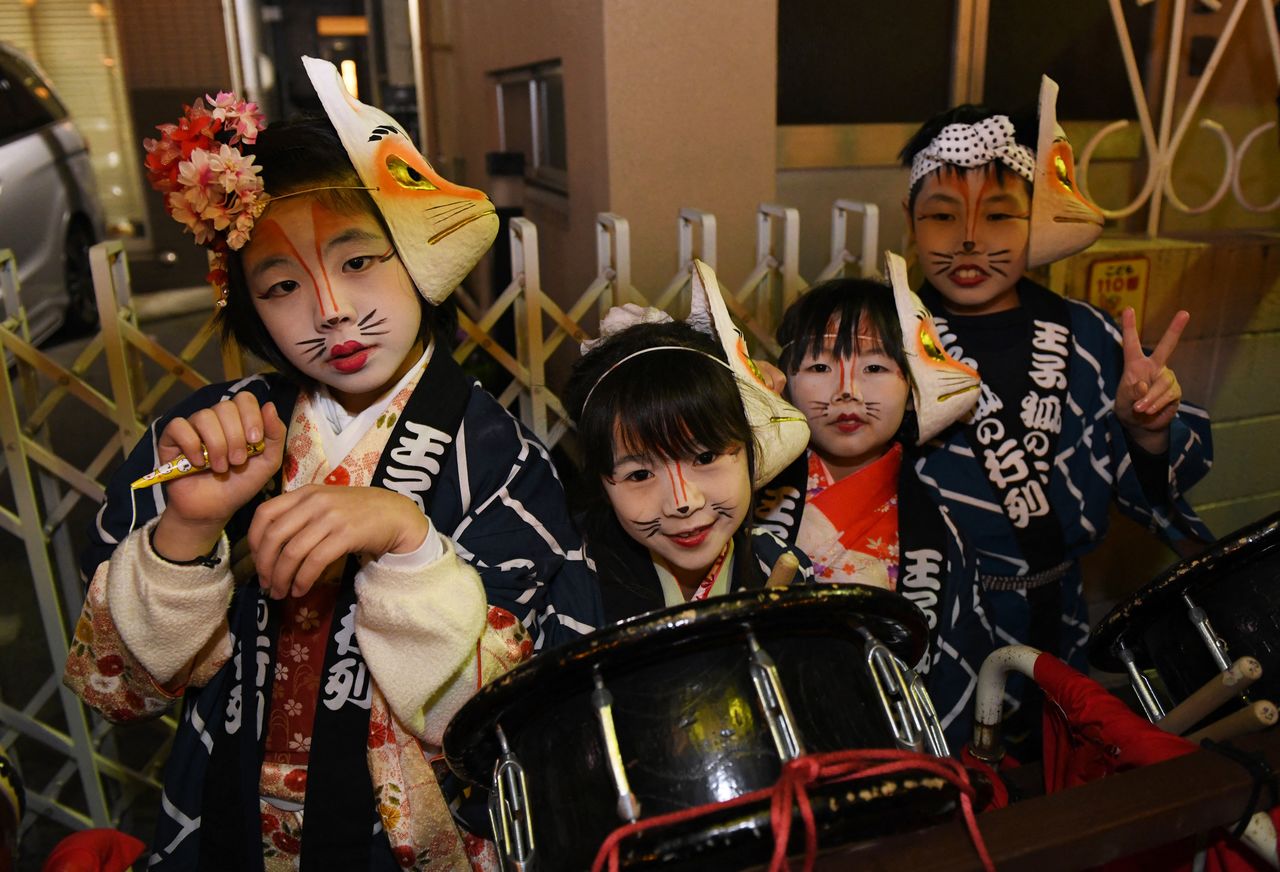
Children participating in the Fox Parade. (© AFP/Jiji)
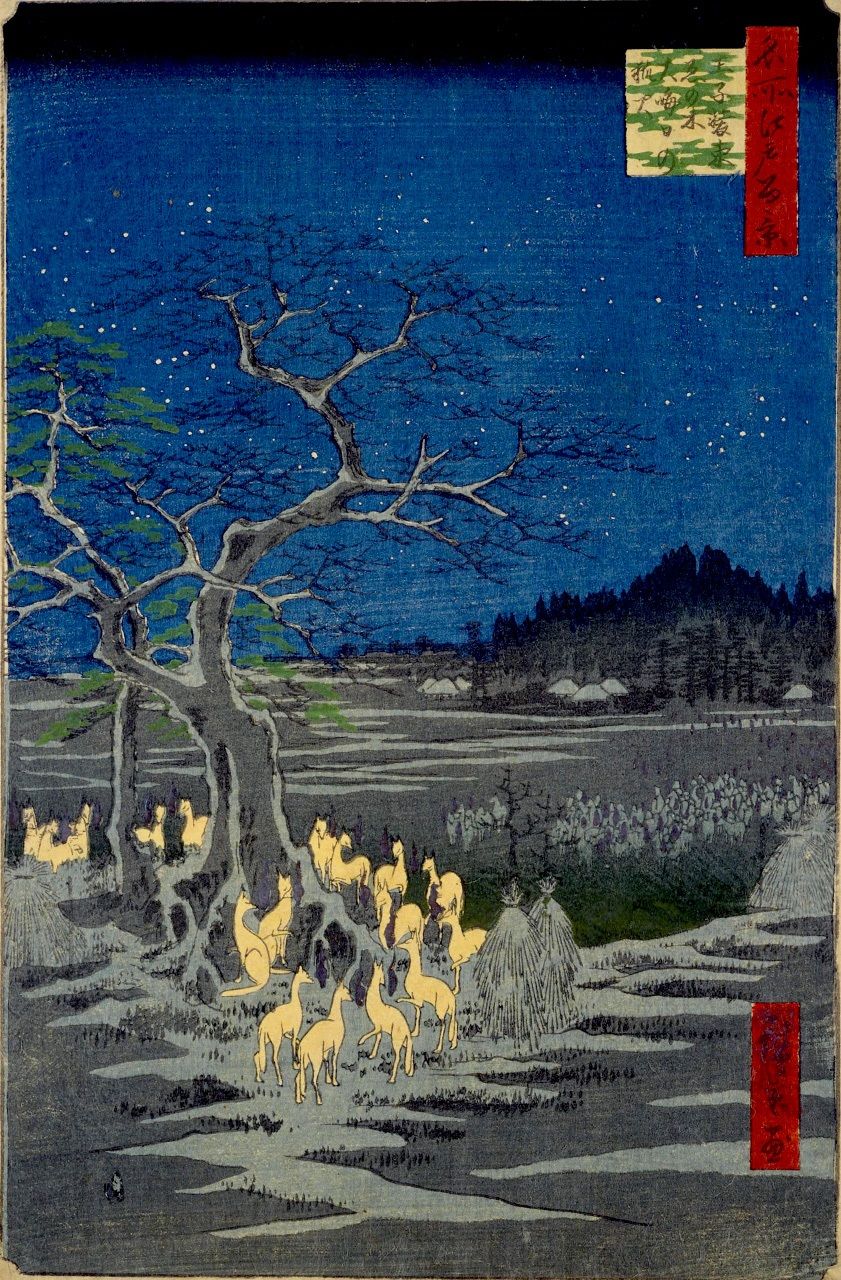
Ōji shōzoku enoki Ōmisoka no kitsunebi (Fox Fires on New Year’s Eve at the Changing Tree in Ōji) from Meisho Edo hyakkei (One Hundred Famous Views of Edo) by Utagawa Hiroshige. (Courtesy National Diet Library)
First Sunrise at Shibuya Sky: January 1
A limited number of tickets are available each year for the rare experience of viewing the first sunrise of the year from Shibuya Sky, the central Tokyo open-air observation deck 229 meters up. A priest from the nearby Konnō Hachimangu Shrine also offers a New Year prayer.
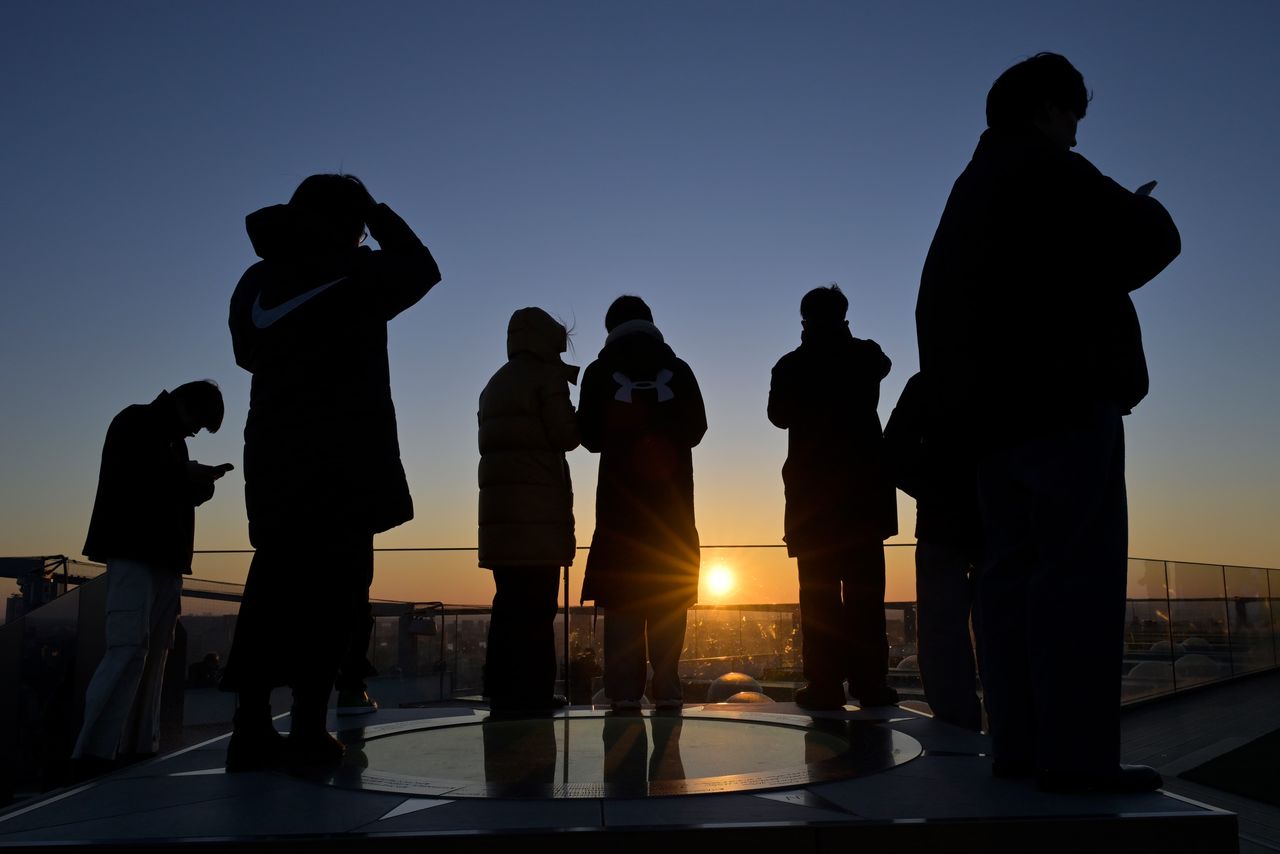
The first sunrise, as viewed from Shibuya Sky. (© Jiji)
Tōka Ebisu Festival at Imamiya Ebisu Shrine, Osaka: January 9–11
This festival is dedicated to Ebisu, a god of good fortune. Crowds gather at Osaka’s Imamiya Ebisu Shrine to receive lucky bamboo (fukuzasa), encouraged by chants of how it will bring business prosperity. Visitors may also buy auspicious objects to decorate their bamboo.
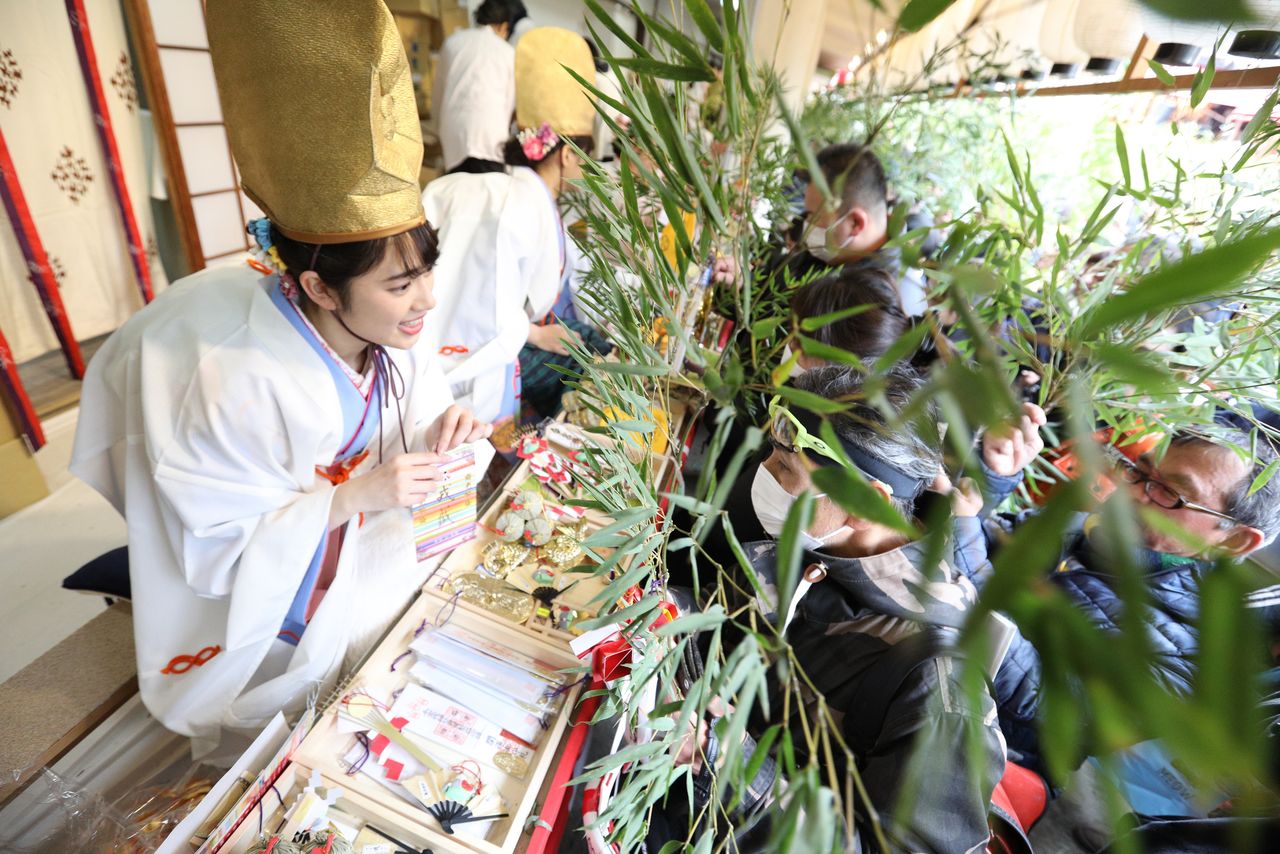
Women in distinctive hats give out the lucky bamboo. (© Jiji)
Official website: https://www.imamiya-ebisu.jp/english
Usokae Bullfinch Exchange at Kameido Tenjin Shrine in Tokyo: January 24–25
This festival plays on the fact that uso in Japanese can mean both a “lie” or “falsehood” and a “bullfinch.” Participants exchange the previous year’s misfortunes in the form of bullfinches, thereby turning those unhappy events into lies, and pray for good fortune in the new year. Wooden figures in the shape of bullfinches are sold only at this time.
(Usokae bullfinch exchanges are also held at other Tenjin Shrines, but may be on different dates, so visitors should check the details before attending.)
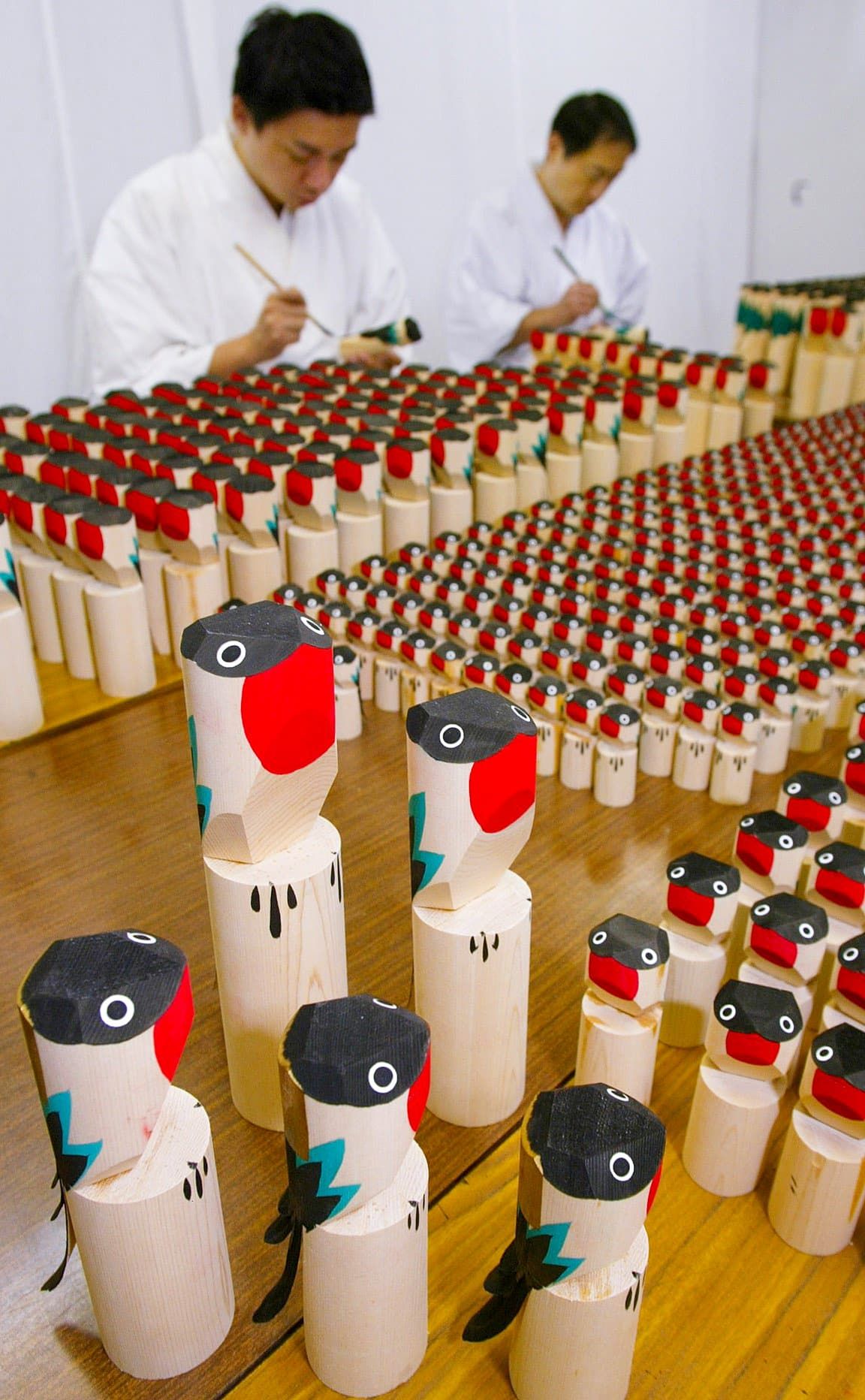
Preparing wooden bullfinch figures at Kameido Tenjin Shrine. These are almost the same as those sold in the Edo period. (© Jiji)
Nagasaki Lantern Festival: February 6–23
Held around the time of the Chinese New Year, this began as a small-scale event in Nagasaki’s Chinatown in 1987. It has now grown to a major winter tradition featuring 15,000 colorful lanterns and art objects that light up the streets.
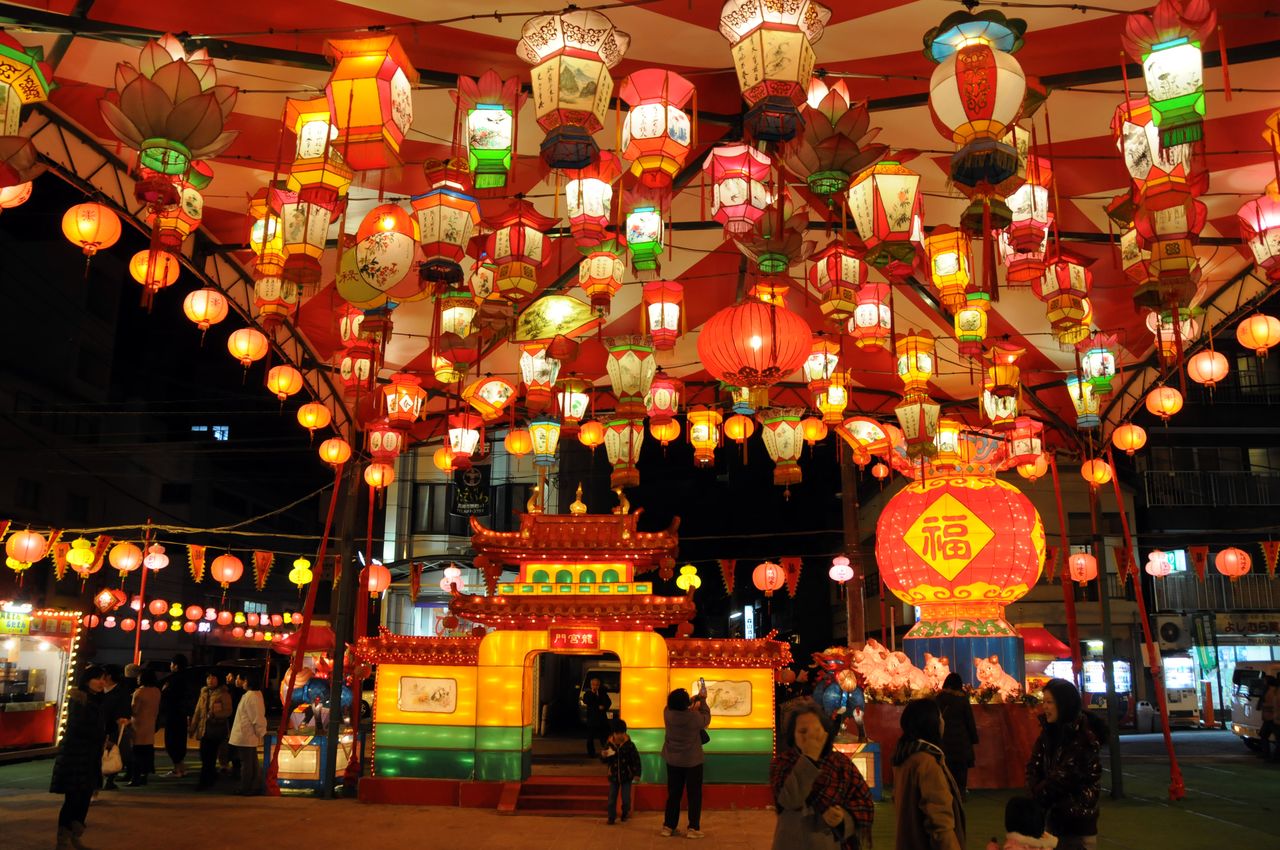
The main Minato Park venue of the Nagasaki Lantern Festival. (© Nagasaki Prefecture Tourism Association)
Otaru Snow Light Path Festival: February 7–14
Originally launched in 1999 by residents of Otaru, Hokkaidō. Snow lanterns light up the main path while glass floats like those once used in herring fishing bob in the canal with candles inside them, spreading a soft glow.
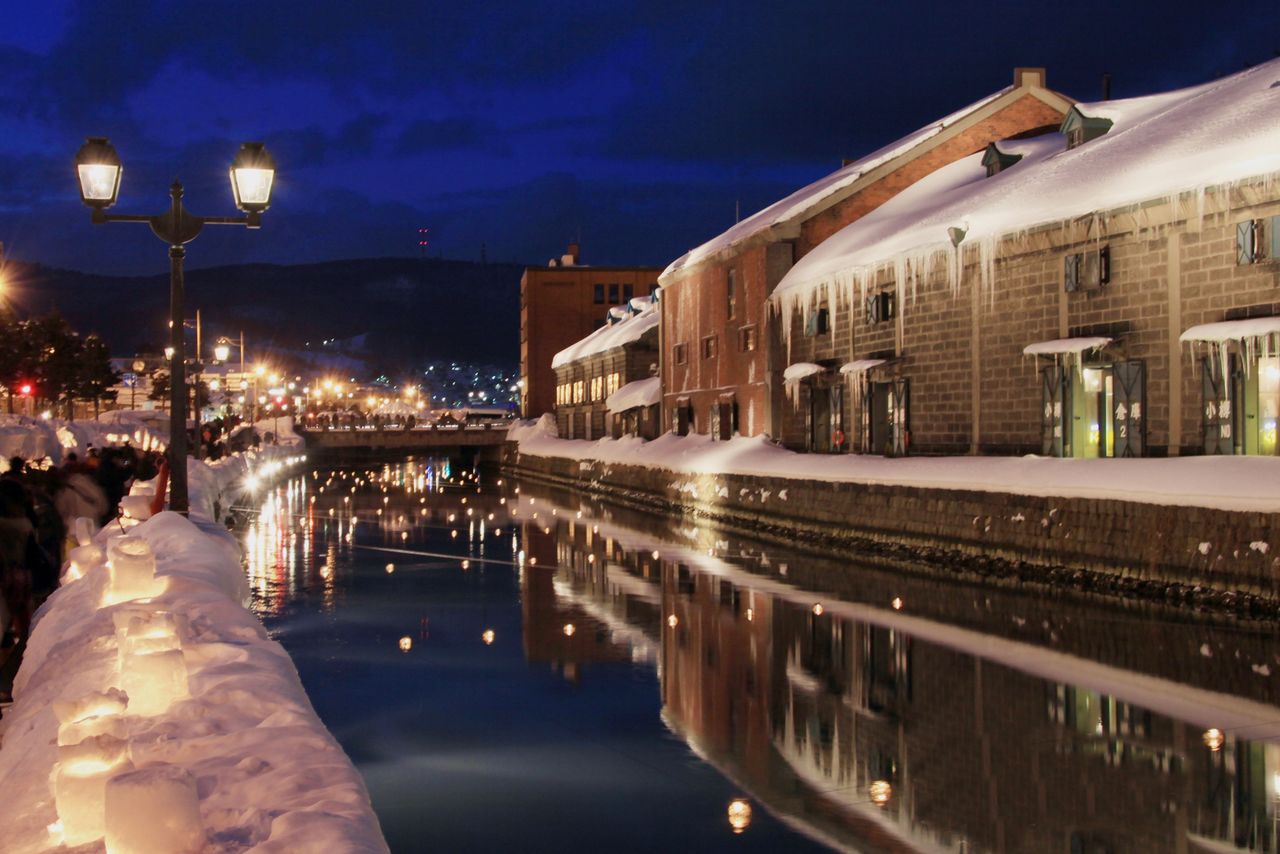
The canal lit up at the Otaru Snow Light Path Festival. (© Otaru Tourism Photo Library)
Kasedori Festival: February 11
This quirky festival, praying for good harvests and prevention of fires, dates back 400 years in Kaminoyama, Yamagata. The kasedori participants dressed in straw capes hop about, caw like birds, and douse spectators with water. It seems like a crazy idea to get people wet in the middle of winter, but both participants and spectators seem to enjoy it.
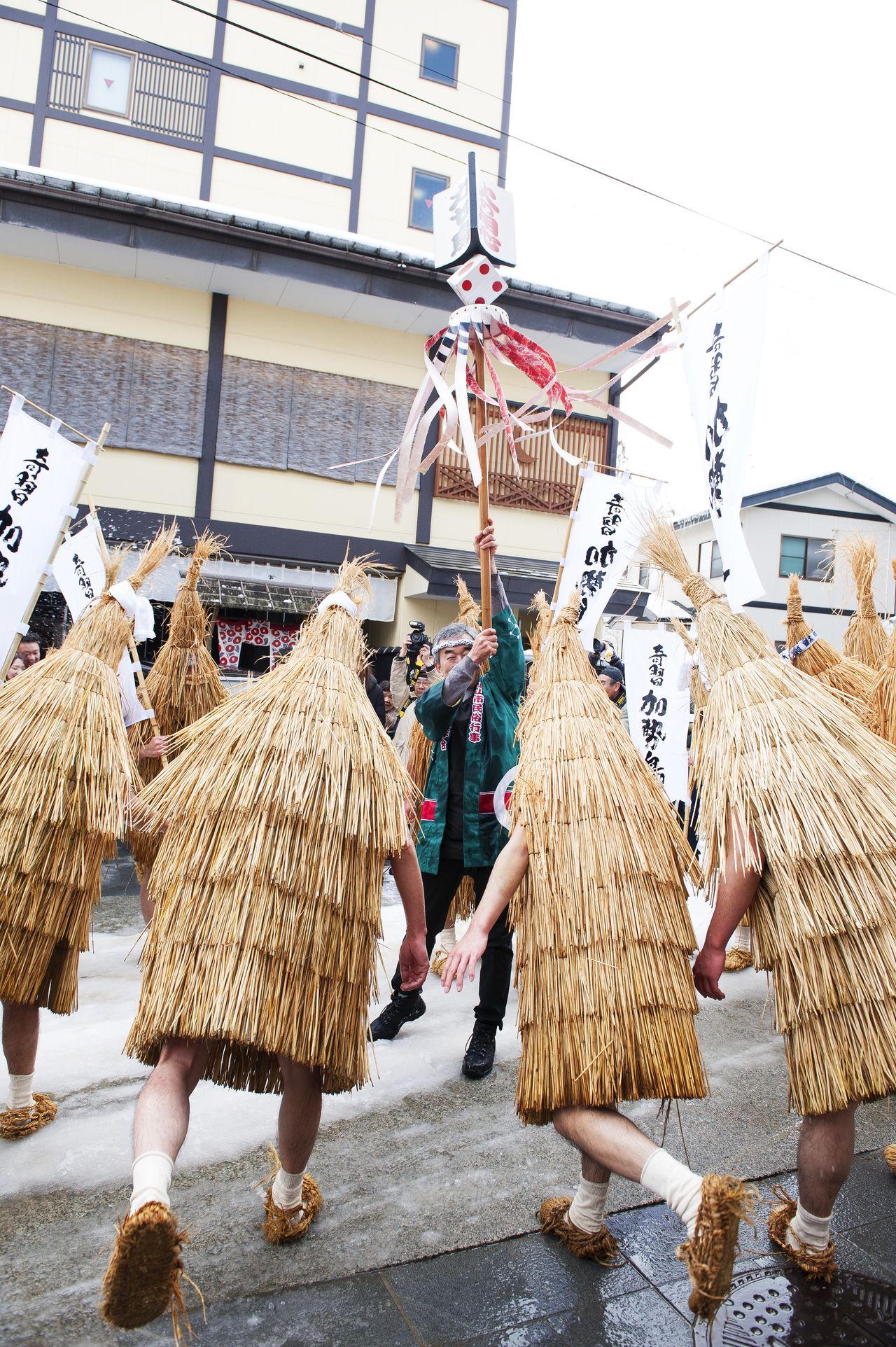
The Kasedori Festival. (© Stay Yamagata)
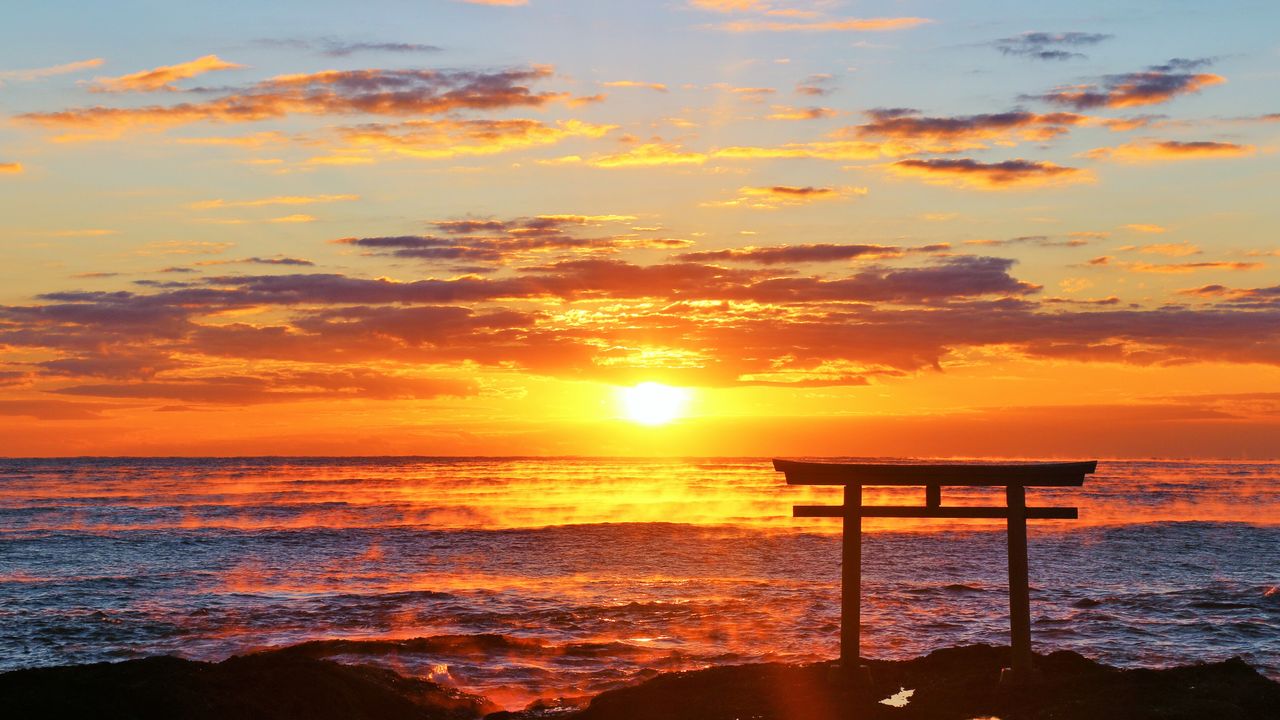
(Translated from Japanese. Banner photo: The Ōarai Isosaki Shrine torii gate on the rocky shore in Ibaraki Prefecture is popular as a “power spot” and a location for scenic photography. Every New Year, a priest comes to the rocks for worship at sunrise. © Pixta.)