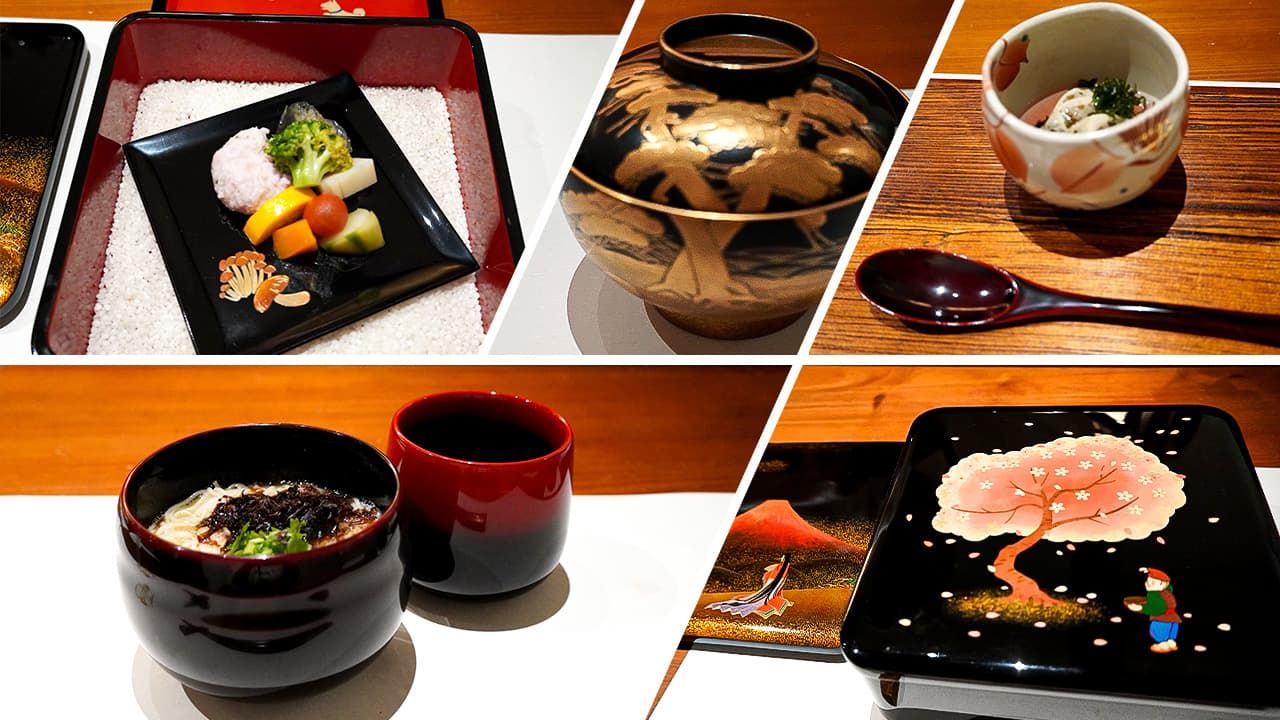
A Taste of Elegance: The Kanazawa Restaurant Putting Wajima Lacquerware at the Heart of Its Meals
Culture Travel Food and Drink- English
- 日本語
- 简体字
- 繁體字
- Français
- Español
- العربية
- Русский
The Feel of Lacquer with Local Ingredients
Crafeat, a restaurant opened in central Kanazawa in 2021 by the longstanding lacquerware maker Taya Shikkiten, takes its name from a blend of the words “craft” and “eat.” The restaurant’s concept is to let customers experience the essence of wajimanuri—traditional lacquerware from Wajima in Noto Peninsula—together with locally sourced ingredients. Casual Japanese dishes are available at the bar on the first floor, while course meals featuring ingredients from Ishikawa Prefecture are served on the second floor.
Customers can enjoy local flavors while eating food served on lacquerware. The chefs and staff share the stories behind the crafted tableware, conveying its charm. Taya Takahiro, who runs the restaurant, says that the excellence of wajimanuri can only be understood once one uses them. “The dining experience is something that includes even the softness of the lacquerware touching your lips and the sensation of its temperature in your hands.”
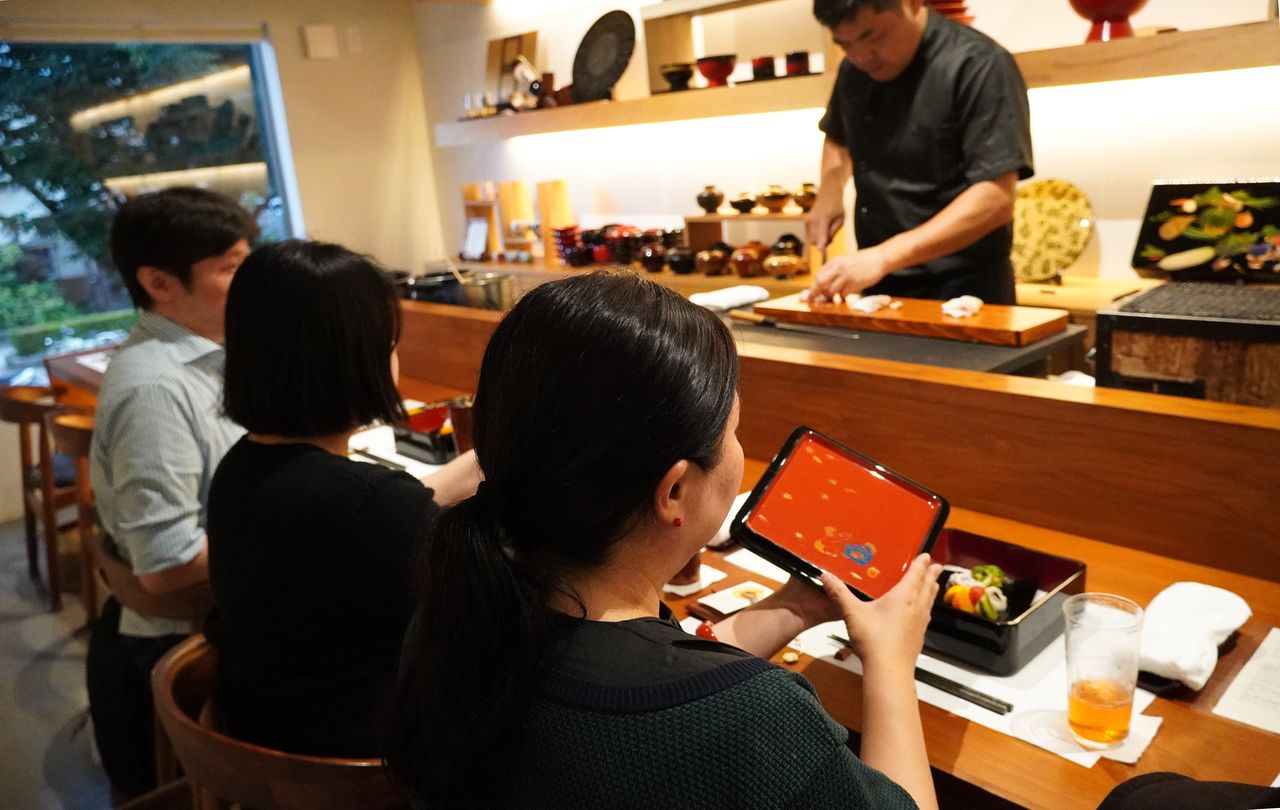
Guests enjoy food served in stacked boxes designed by Taya Takahiro. (© Nakahara Mieko)
One day’s appetizer was a dish in which customers mix Iwagaki oysters with a sauce made from grated locally grown cucumbers using a lacquerware spoon. The dish was served in a two-tier stacked box decorated with a pop design inspired by the four seasons, which was created by Taya.
The stacked boxes have four different lids, each expressing one of the four seasons through scenes from folk tales. Spring shows Hanasaka Jīsan beneath cherry blossoms in full bloom. Summer depicts Princess Kaguya gazing at a red Mount Fuji. Autumn shows Momotarō and his animal followers devising a plan to defeat fearsome oni as fall leaves swirl around him. Winter portrays an old man praying to Kasajizō while snow falls.
“Stacked boxes are often used for New Year’s osechi dishes, but here we present them with four different lids depicting the seasons so that they can be changed like seasonal clothing and enjoyed throughout the year,” Taya explains. “The designs incorporate a traditional Wajima lacquerware technique called togidashi makie, in which gold gently emerges from inside the colored lacquer. For the Mount Fuji design, we also used a technique that makes the light appear different depending on the angle from which it’s viewed.”
The menu items are chosen with the wajimanuri ware and cutlery in mind. Chef Okumura Jin created a menu of light, easy-to-eat items so diners could appreciate the texture of the lacquerware spoons with their mouths. “It’s like wine pairing,” he says. “You think about which cuisine would best suit each ware.”
The lacquerware in the course meal can be worth as much as two million yen. Many guests are so moved by the sensation of the lacquerware fitting gently in their hands that they decide to purchase pieces right on the spot.
Taya was motivated to start Crafeat after feeling concerned that wajimanuri was being used less in everyday life, as it had come to be viewed mainly as a high-end decorative craft. It was during the COVID-19 pandemic, when tourism came to a halt, that he came up with the idea. By allowing people to casually experience the quality of wajimanuri in Ishikawa’s prefectural capital Kanazawa, he hoped to encourage people to visit Wajima and the Noto Peninsula, elsewhere in the prefecture.
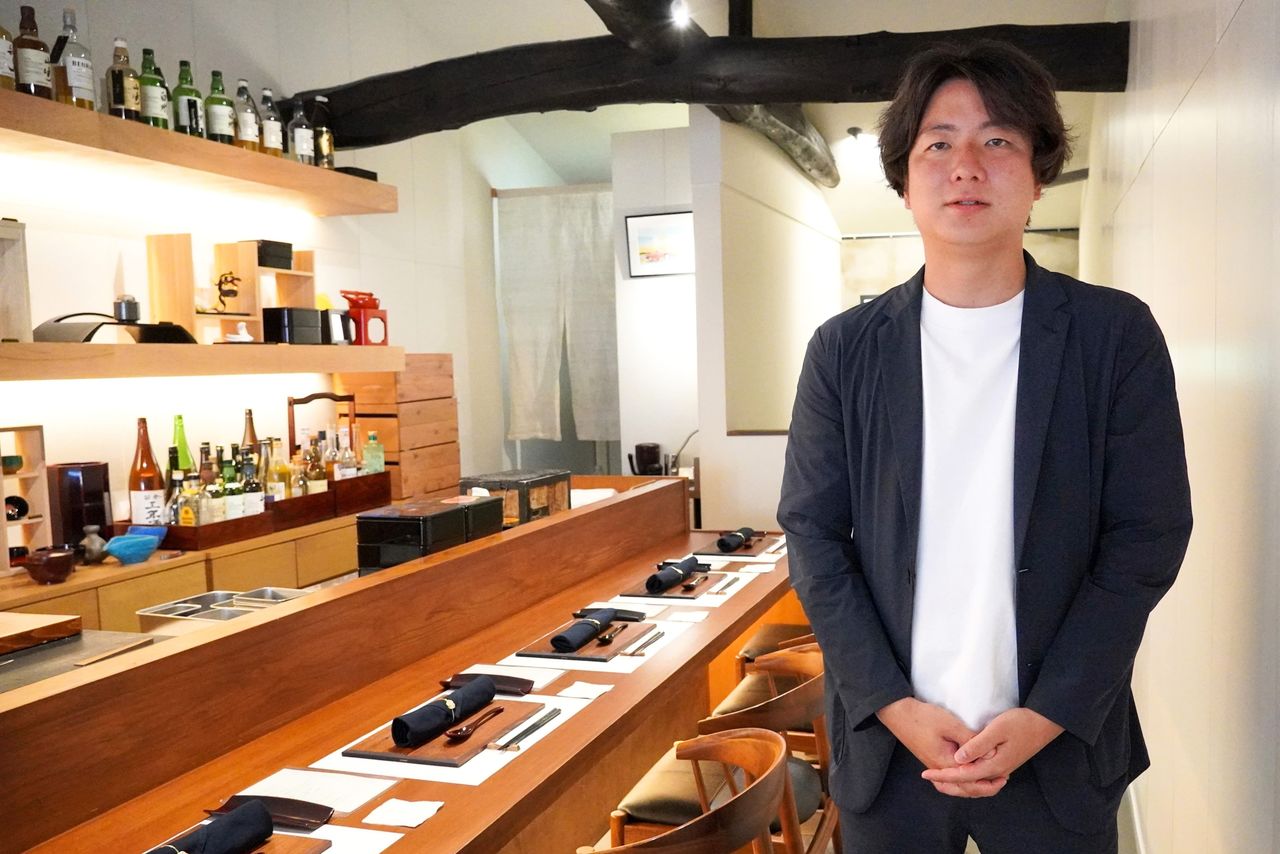
Taya Takahiro speaking at the restaurant Crafeat in Kanazawa. (© Nakahara Mieko)
Taking on a Greater Role After the Earthquake
However, the hub would come to carry greater meaning and responsibility.
On New Year’s Day 2024, a major earthquake hit the Noto Peninsula, bringing devastation to Wajima. Factories and offices in the city were completely destroyed. A Wajima lacquerware gallery that was being built by Taya Shikkiten, and was nearing completion, burned down in a fire after the quake. The destruction of things that had been built up over meany years led to a deep sense of loss.
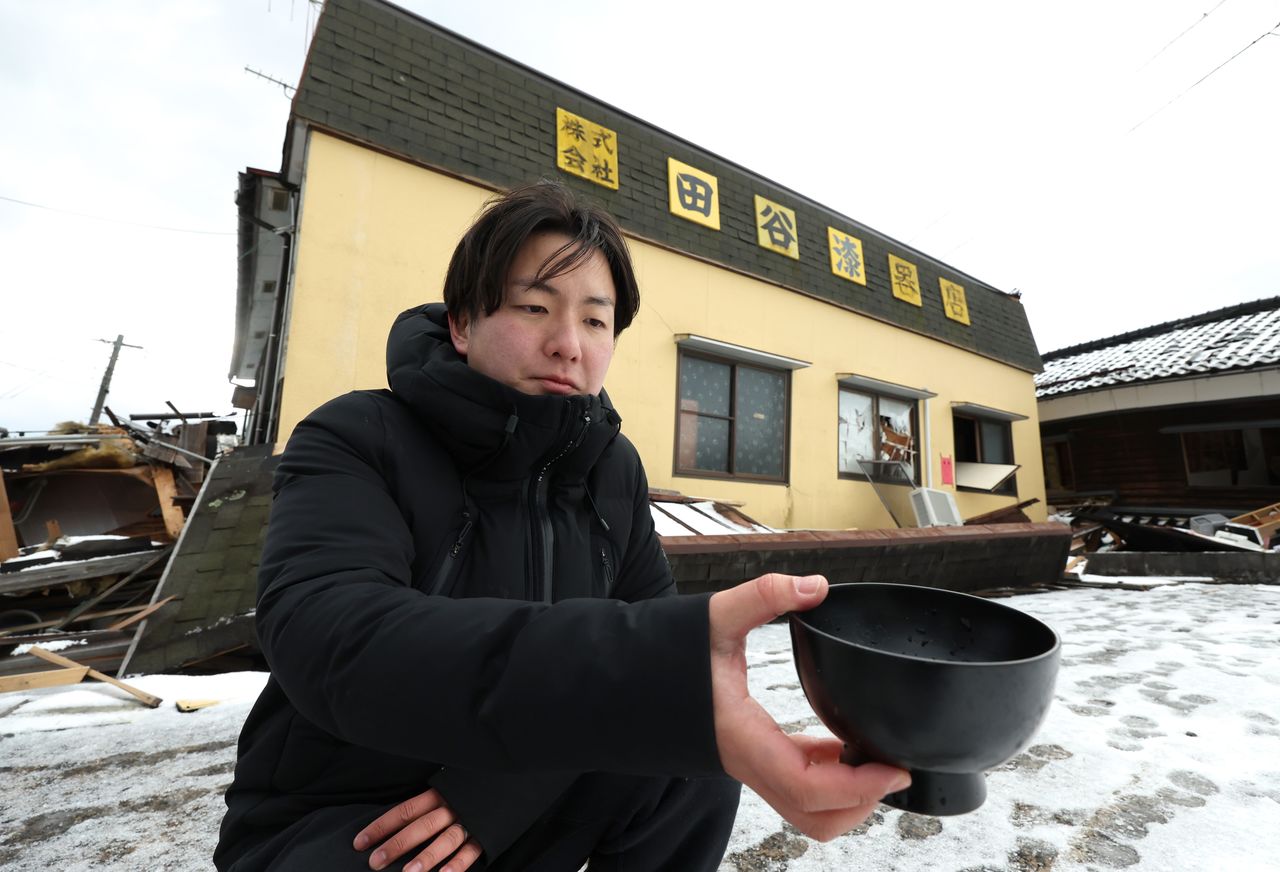
Taya Takahiro holds a wajimanuri bowl found in a workshop in Wajima whose first floor had been crushed. Photographed on January 16, 2024. (© Jiji)
Although deeply disheartened, Taya resolved to move forward, thinking, “It may take many years before Wajima can thrive again as a renewed city. But I will begin with what I can.” It was a determination to share Wajima’s lacquerware, particularly in a moment when the flow of tourism had stopped.
In the two years that followed, he gradually built a hub linking the production and sale of Wajima lacquerware with tourism. He cleared the site of the company’s collapsed headquarters, installed 10 trailer houses, and turned them into galleries, offices, and lodgings, launching a new business. In July last year the workshop was fully reopened. He worked to give people an appreciation for Noto and Wajima lacquerware, hoping to bring visitors back to the region. His efforts at Crafeat in Kanazawa also continued.
In Wajima, while progress has been made in dismantling damaged buildings, there are still many areas, such as the morning market, a well-known tourist destination that suffered a major fire, that remain empty lots, and this is precisely why Taya Shikkiten stands out as a source of hope in the city. “We’re going to revive Noto Peninsula not through volunteering, but through business. By making wajimanuri a viable business and returning the profits to the community, I believe we can contribute to rebuilding the city,” Taya asserts.
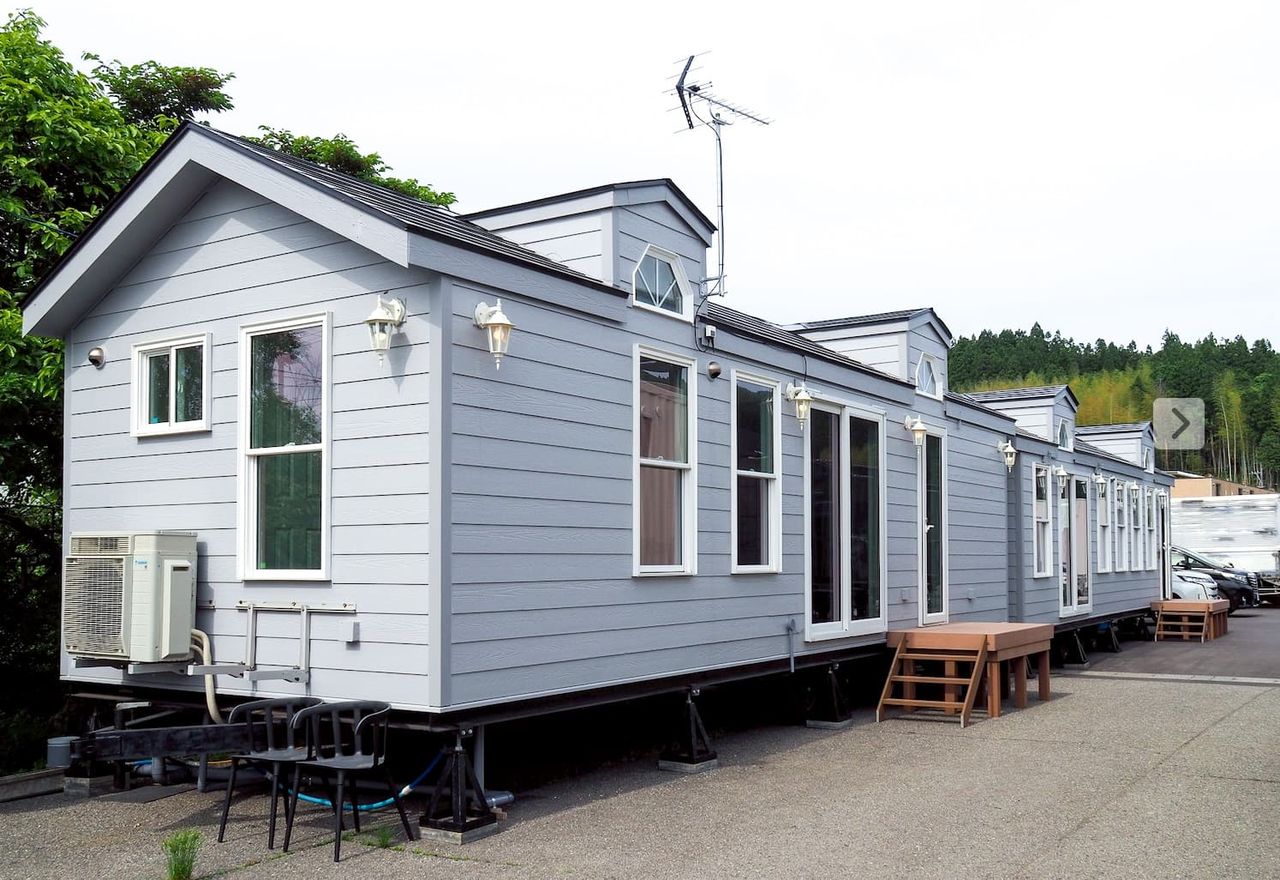
Trailer houses were installed at the site of the company headquarters and turned into galleries, offices, and lodgings. (© Taya Shikkiten)
A Traditional Craft with 500 Years of History
Wajimanuri is one of Japan’s representative lacquer crafts and is designated an important intangible cultural property. The lacquerware is made of woods like zelkova, and it has both a glossy beauty and durability that make it delightful for continued use in everyday life. Its appeal deepens with use and it has a beauty that comes from its functionality and practicality.
The oldest surviving piece of wajimanuri is believed to be a vermilion-lacquered door, said to date from 1524, preserved at Jūzō Shrine in Wajima. The method was initially used mainly by commoners, before spreading to the samurai and merchant classes, and by the late sixteenth century had become known both in Japan and abroad as one of the country’s leading lacquerware techniques.
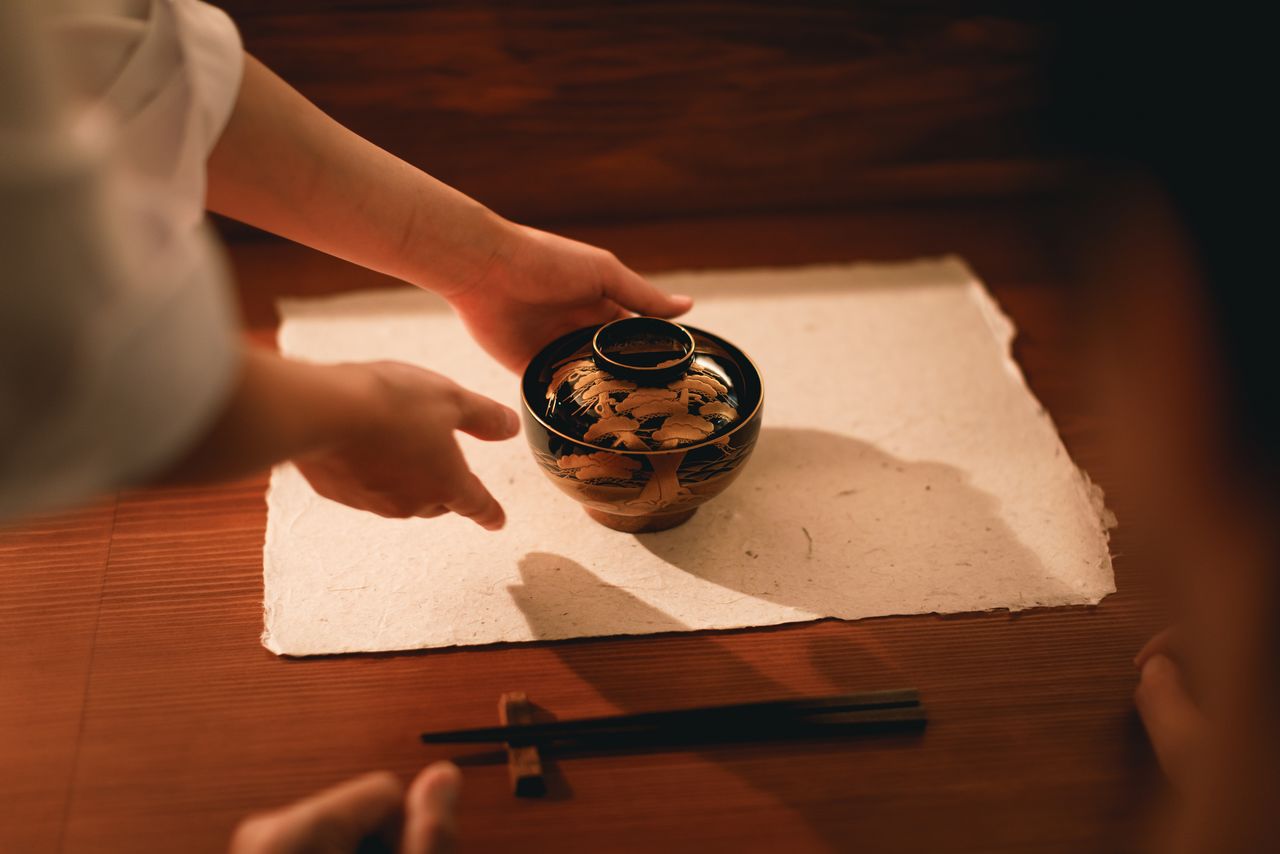
Wajima lacquerware, where beauty lives in everyday use. (© Tajima Shikkiten)
One factor that contributed to its acclaim is its method of increasing durability by mixing diatomaceous earth sourced from Wajima, called jinoko, into the lacquer to form the base layer. Techniques such as nunogise, which reinforces weak parts of the wooden base like fragile rims and joints with cloth, and honkataji, in which many layers of lacquer are applied, were also established. Taya was impressed when he found lacquerware among the workshop’s rubble that hadn’t even cracked. “It made me realize once more just how durable they are,” he said.
The surface decorations of the lacquerware, called makie, are made by painting pictures or patterns with lacquer and sprinkling gold or silver powder on it before it dries. There are 10 different levels of gold powder based on fineness, which are used to create depth and dimension. “The perception of depth of motifs like pine trees is created by utilizing the different grades of gold powder,” says Taya. “It’s like the ultimate ink painting, isn’t it? Lacquer hardens slowly. At first, it’s as soft as a baby’s skin, and over time it gets harder. Also, the more you use the lacquerware, the more it develops a unique texture that gently fits your hand.”
A Gift to the US President
The production of wajimanuri is carried out through division of labor. Taya’s role is to oversee the craftsmen and handle the planning, design, and sales of the products. While staying true to tradition, he has also been advancing initiatives of employing wajimanuri in a variety of other products such as Chinese tea utensils, American fountain pens, jewelry boxes, and watch cases.
At the Japan-US summit meeting in April 2024, when Prime Minister Kishida Fumio visited the White House, the gifts he presented to President Joe Biden were wajimanuri coffee cups and a ballpoint pen made by Taya Shikkiten. Kishida explained to Biden that the items were specially created for the occasion by a young craftsman who had been impacted by the earthquake.
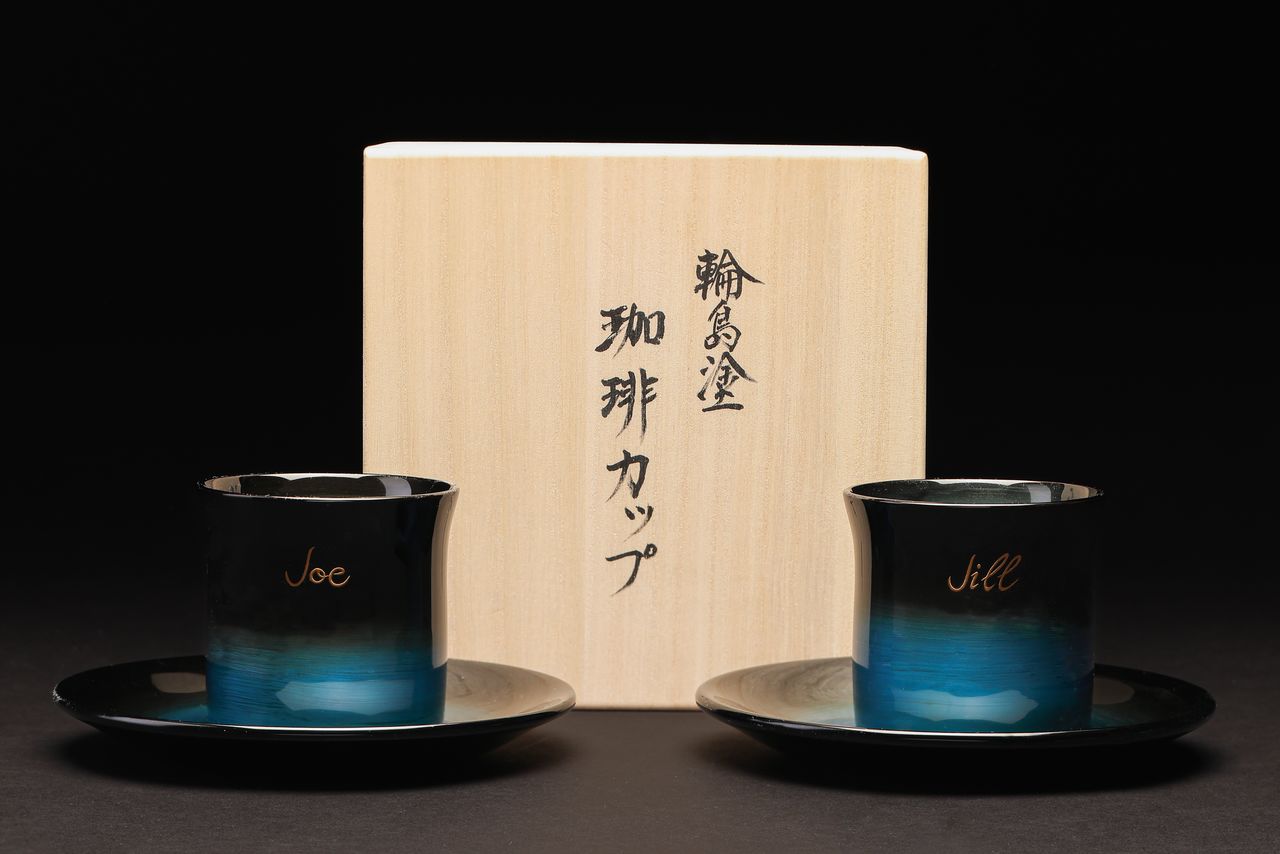
Taya Shikkiten’s wajimanuri coffee cups presented to former US President Joe Biden. (© Taya Shikkiten)
While it’s hard to imagine traditional wajimanuri bowls being used for meals in Western households, jewelry boxes or household items finished with Wajima’s lacquer techniques could certainly be readily appreciated for their beauty. It’s part of the effort to apply wajimanuri in various forms and increase its visibility, preserving tradition while also striking out in a new direction.
Wajimanuri has evolved with the times and will continue to adapt. Taya, for his part, intends to keep pushing ahead. “We will carry out our roles and show what recovery looks like, taking it one step at a time.”
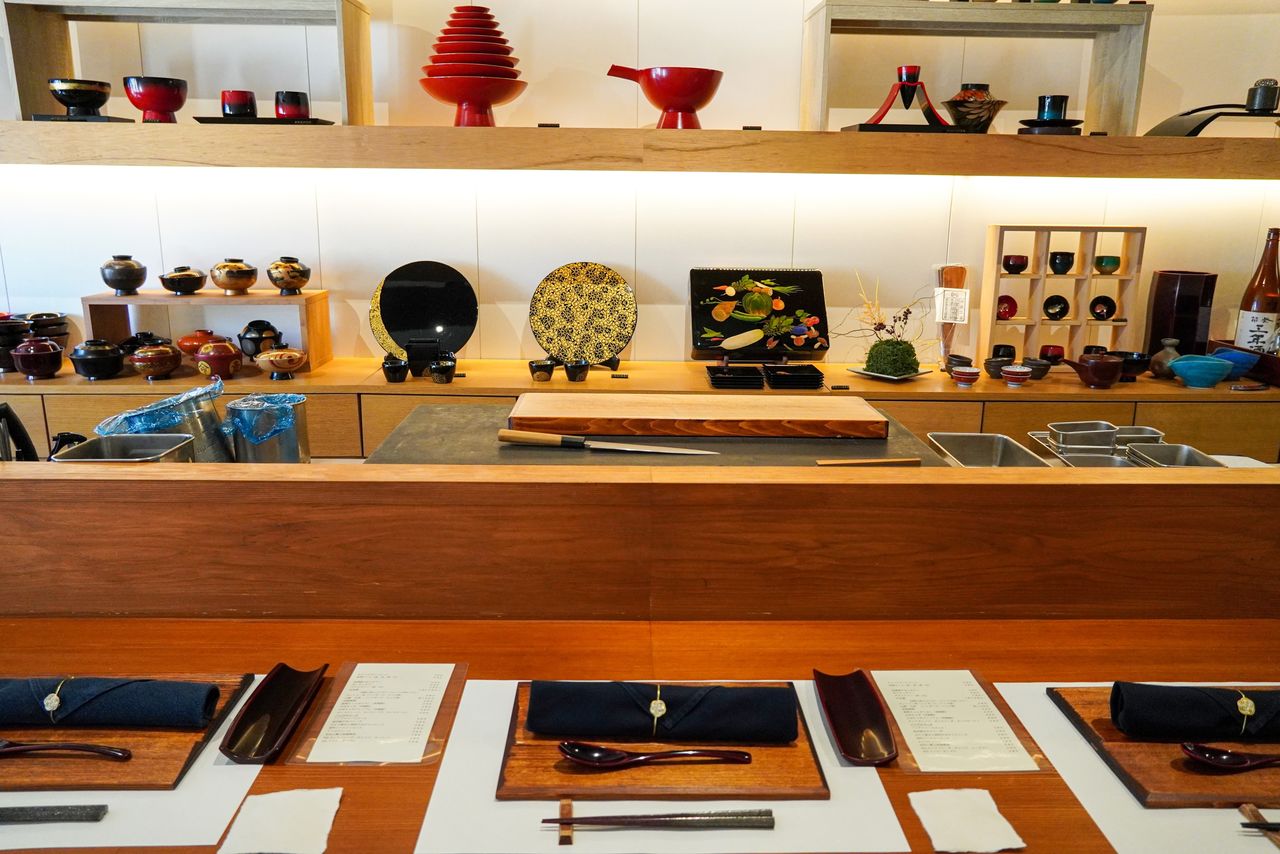
After enjoying a meal made with local ingredients, diners at Crafeat can purchase lacquerware with the same designs as the pieces they used. (© Nakahara Mieko)
(Originally published in Japanese. Banner photo: Lacquerware by Taya Shikkiten, presented throughout a course meal at Crafeat. © Nakahara Mieko.)