Fukushima Daiichi Nuclear Power Station Tours: Trust Building with an Eye to the Challenges Ahead
Society Environment- English
- 日本語
- 简体字
- 繁體字
- Français
- Español
- العربية
- Русский
Incremental Progress
January 19, 2026, marked another step forward in the slow, grinding process of decommissioning the Fukushima Daiichi Nuclear Power Station. After nearly four years of effort, workers at the stricken facility completed a massive cover over the Unit 1 reactor building, which was one of four reactors heavily damaged by hydrogen explosions following an earthquake and tsunami on March 11, 2011. Tokyo Electric Power Corporation plans to begin moving the 392 spent fuel rods assemblies still contained in a pool on the top floor of the structure to a separate storage facility as early as fiscal 2027. The immense cover will play a critical role in this plan by preventing residual contamination as workers carry out the painstaking task of clearing the debris that lies strewn across the upper part of the building.
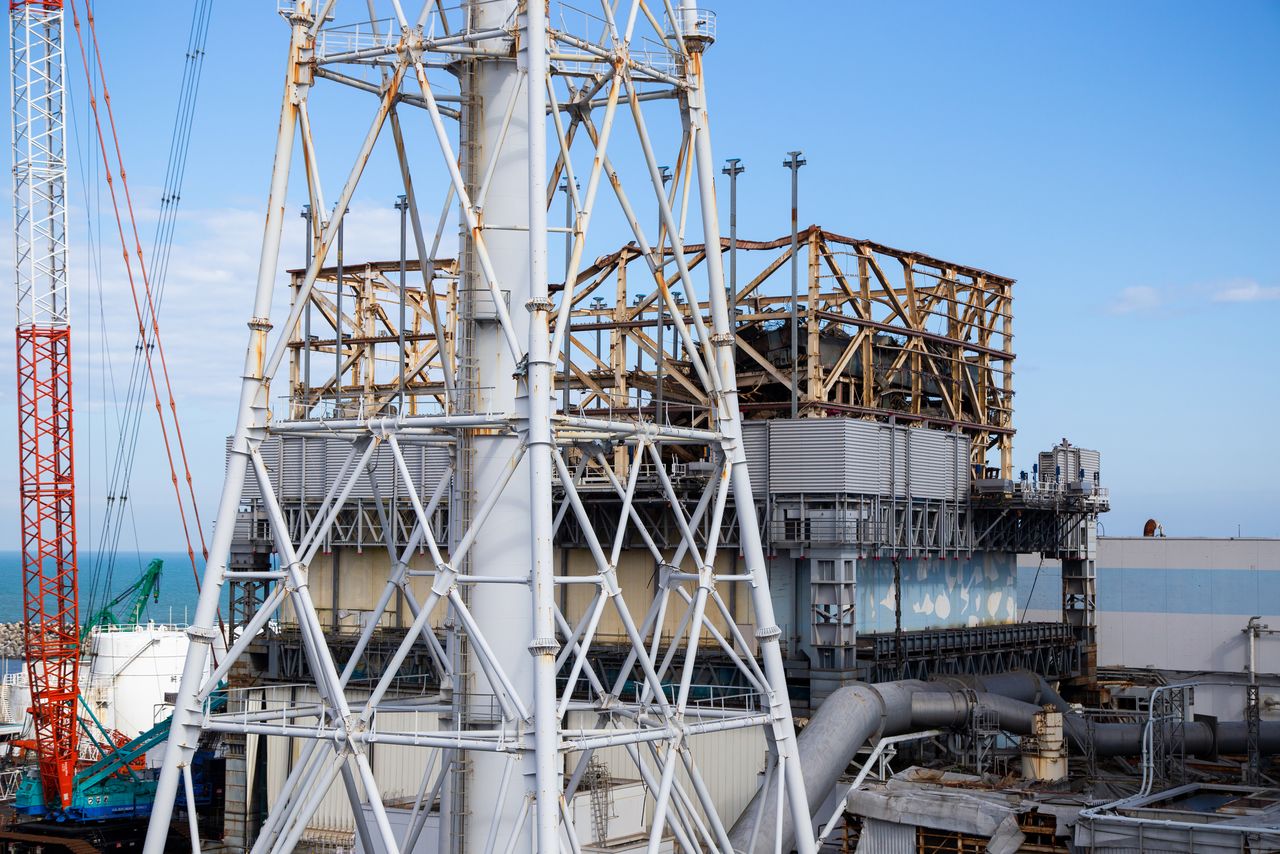
The heavily damaged Unit 1 reactor building, as seen in February 2020. (© Hashino Yukinori)
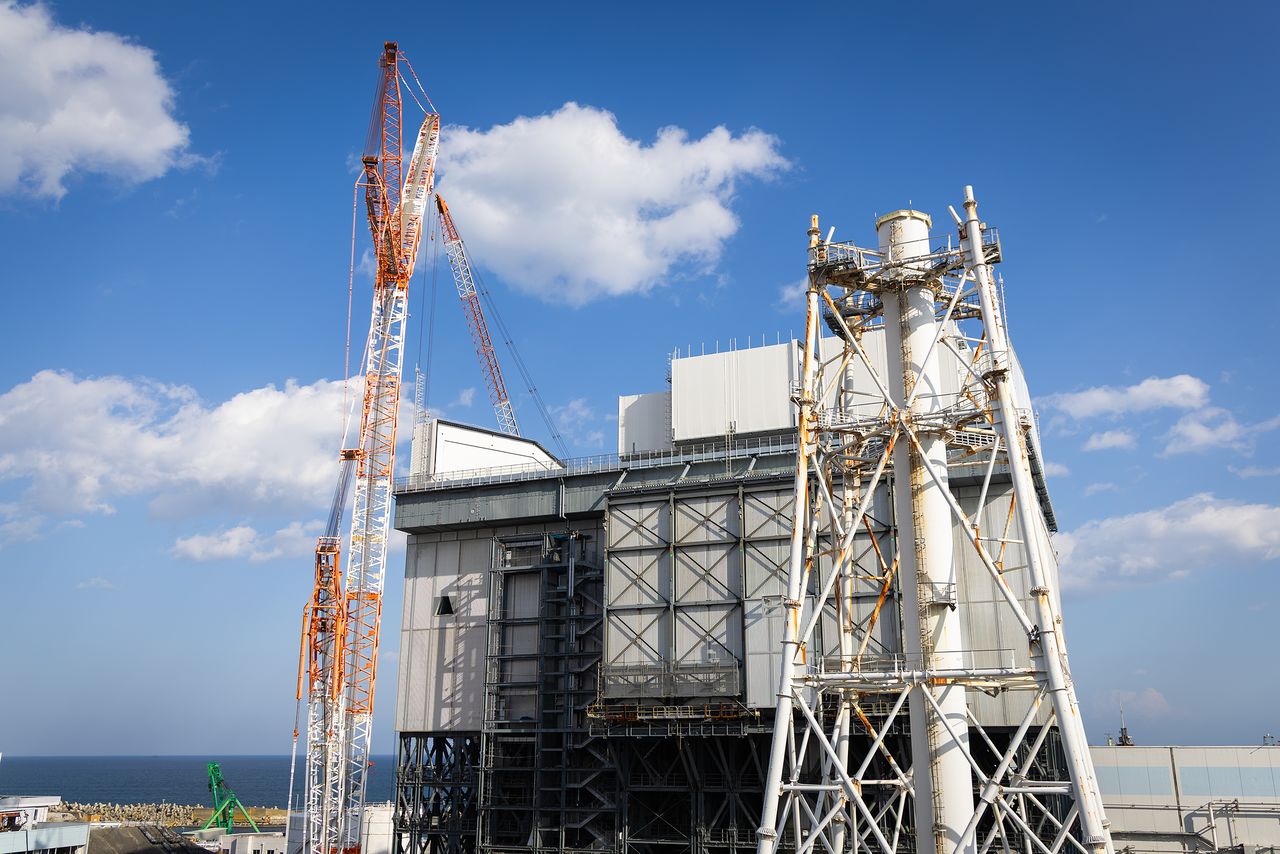
The Unit 1 reactor building, now enveloped in a giant cover, in January 2026. (© Hashino Yukinori)
The decommissioning of Fukushima Daiichi represents completely uncharted territory. Plans must be drawn up from scratch and revised based on factors like structural differences of reactor buildings and the location and extent of damage from the hydrogen explosions that tore through the structures. Careful measures to prevent radioactive contamination from spreading are required every step of the way, as are procedures to safeguard workers against the high levels of radiation present in many areas. This has required the development of remote-operated equipment to carry out tasks in places too dangerous for humans to enter.
Progress has been hindered time and again by a host of unforeseen issues, such as repeated crane malfunctions, the need for additional protection against radiation, work stoppages due to inclement weather, and extreme heat. Every new development knocked back the timeline for finishing the cover, which had begun in April 2022 and was originally slated to be completed in the summer of 2025. The media has announced each postponement with attention-grabbing headlines like “Another Delay” or “End of Decommissioning Nowhere in Sight,” but all too often this has come at the cost of conveying the complex circumstance behind the delays to the public.
Touring Daiichi
Although Fukushima Daiichi no longer generates power, the facility bustles with the activity of TEPCO employees and those of its affiliate and partner companies involved in the decommissioning of the plant. TEPCO holds regular monthly tours and roundtables for current and former residents with the goal of keeping locals abreast of developments over the long span of the decommissioning process. Participants are recruited online and through announcements in newspapers, with seats available on a first-come-first-serve basis.
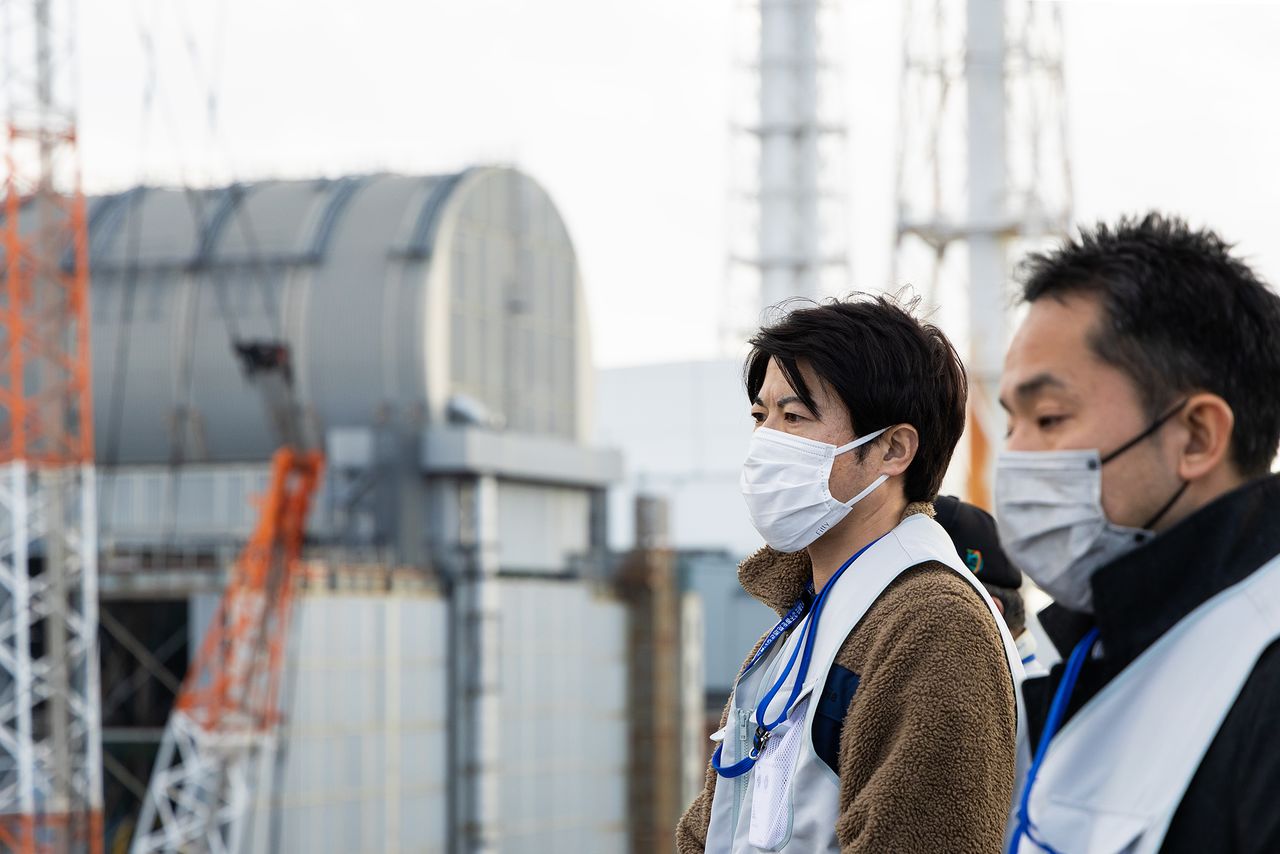
Participants in the tour stand on an embankment overlooking the four damaged reactors. (© Hashino Yukinori)
I took part in one such tour on January 17, just two days before the completion of the cover. I boarded a microbus with the other participants—there were 10 of us in all—and rode to the plant along a route that provided a panoramic view of Units 1 to 4, those damaged by hydrogen explosions.
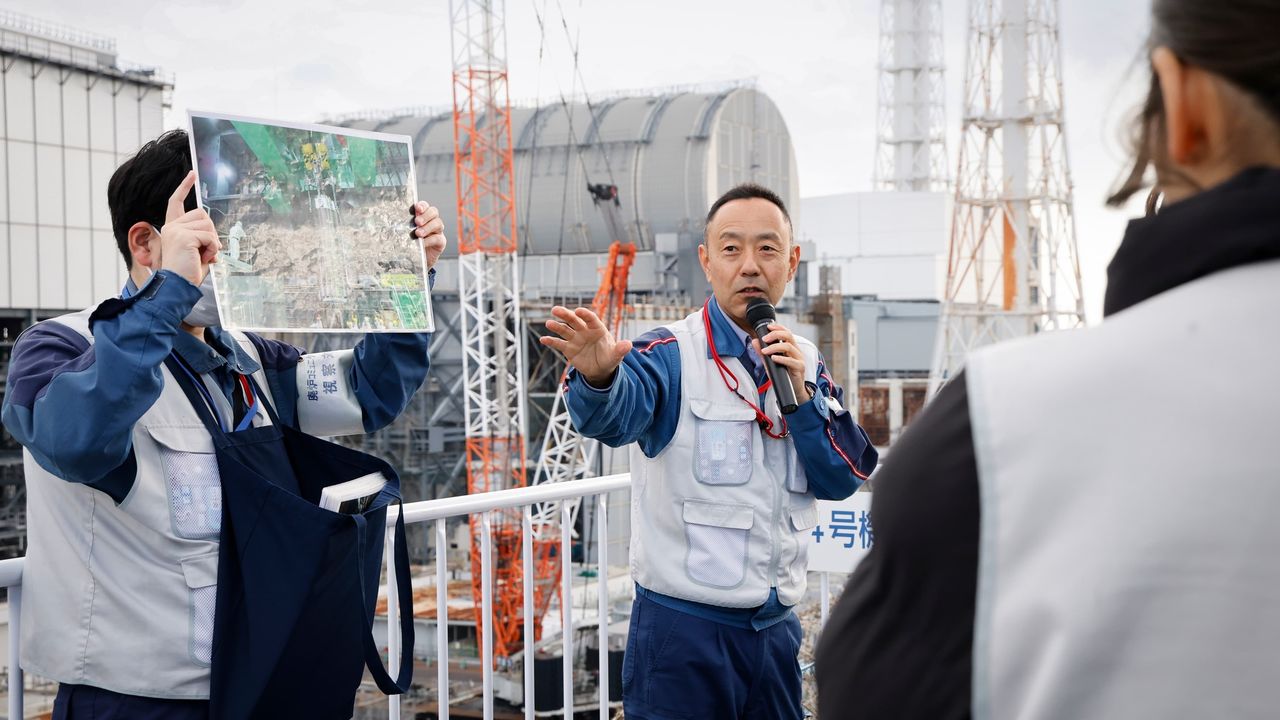
We exited the vehicle in front of Unit 1, and as we stared up at the massive cover enveloping the building, our guide described for us the various details of the towering structure. We also heard about plans for retrieving melted fuel from the Unit 2 reactor—testing for this task is conducted at the undamaged and similarly designed Unit 5—with our guide showing photographs and diagrams to help explain the complex and challenging endeavor.
Following a brief Q&A session TEPCO staff offered to take photos of participants backed by the towering reactors. We had surrendered our mobile phones and cameras, which are not permitted at the plant, before starting the tour. I had assumed that most residents who were participating would find a casual snapshot at the site of such a disruptive event in their lives unappealing, but to my surprise, everyone gladly had their pictures taken.
Seeing Daiichi for the First Time
One of my fellow participants was Shiga Mikiko, a licensed guide interpreter working in Fukushima. Shiga has taken foreigners on numerous tours of TEPCO’s Decommissioning Archive Center and the Great East Japan Earthquake and Nuclear Disaster Memorial Museum, facilities in the nearby towns of Tomioka and Futaba, respectively preserving the memories and records of the Fukushima Daiichi nuclear accident. She says participants have come from all walks of life, including researchers, environmental activists, and people drawn by the haunting images of the tsunami and nuclear accident, and that she sometimes struggles to answer the questions put to her about the accident. “As a guide, I wanted to see the site with my own eyes,” she explains, “and ask those working here directly some of the questions I have.”
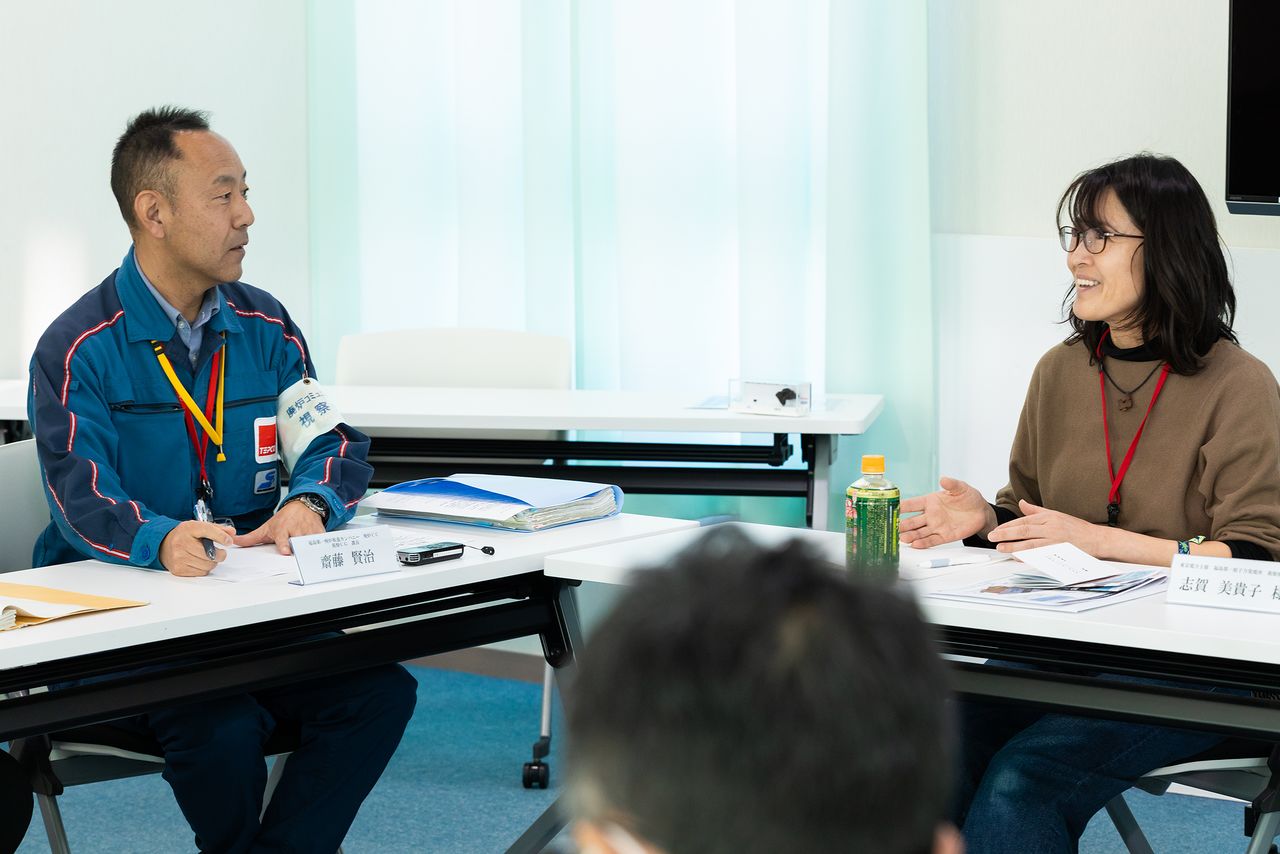
Shiga Mikiko (right) asks TEPCO staff questions during a roundtable that was part of the tour. (© Hashino Yukinori)
She says the depth of the answers she received surprised her. Listening to a staff member’s explanation as the group stood atop an elevated platform overlooking the reactors, Shiga declares her amazement at the need for a distinct approach for each building, depending on its construction and the type and degree of damage. “This kind of meticulous attention to detail is the hallmark of Japanese technology,” she declares. “I hope more people will come and see it for themselves.“ Aware she may have struck an overly rosy tone, she quickly adds, ”This is not to say that everything is under control and that there’s nothing to be concerned about.“
Shiga lives in Fukushima’s southernmost city of Iwaki in the prefecture’s coastal Hamadōri region, where Fukushima Daiichi is located. While the residents of Iwaki were not forced to evacuate, the triple disaster left deep scars on people like Shiga, who says the traumatic events of 3/11 have caused her to question TEPCO’s handling of the decommissioning of Fukushima Daiichi.
Most participants were repeaters; only Shiga and one other person were visiting Fukushima Daiichi for the first time. The majority were either in the prefecture on temporary assignments related to reconstruction work or residents from other parts of the prefecture. No one hailed from areas evacuated after the accident, and perhaps because of this, the atmosphere was subdued and matter of fact, lacking any overt animosity toward TEPCO.
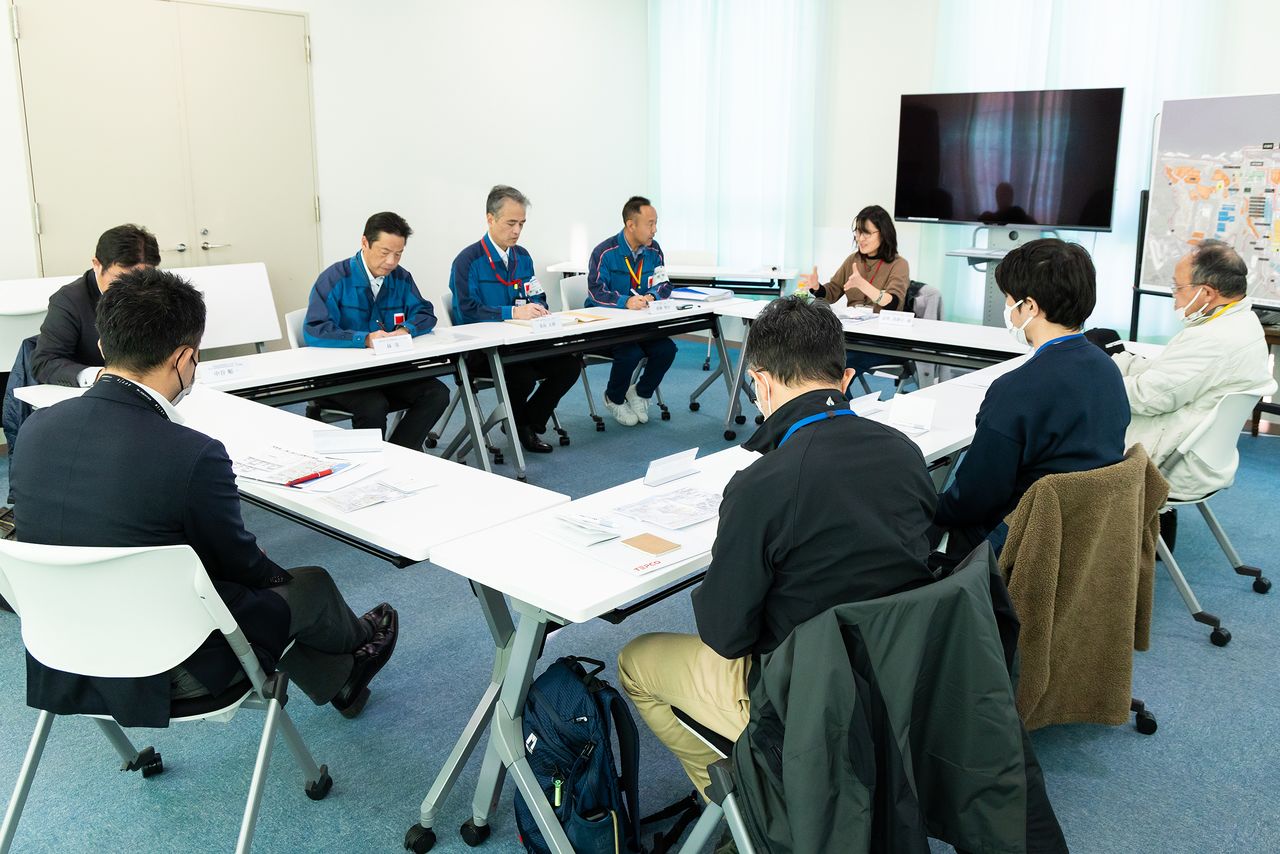
Tour participants take part in a roundtable. (© Hashino Yukinori)
One man, an employee at a construction company that supplies materials to Fukushima Daiichi, was participating in the tour for the third time. He said he sometimes visited the plant as part of his work duties and lamented the tour’s set route, stating that “opening up new and different areas would attract more repeat visitors. Personally, I’d like to have a look at some of the more hazardous zones.” Other participants included members of a citizens group who had attended a tour around six months earlier and had returned to see how things had progressed.
Seeing the Decommissioning Process Through
Kuwajima Masaki, deputy site superintendent of the Decontamination and Decommissioning Communication Center, expresses his gratitude to those return participants, adding that “the challenge is in drawing first-time visitors.” He notes the implications this task has for decommissioning the plant. “It’s a long process. The generation of workers who experienced the accident is gradually reaching retirement age, and we hope young people will come see the site firsthand and be inspired to take a role in decommissioning work.” He stresses that the unprecedented lessons learned from the accident and the knowledge gained through the decommissioning process must be actively shared with the world.
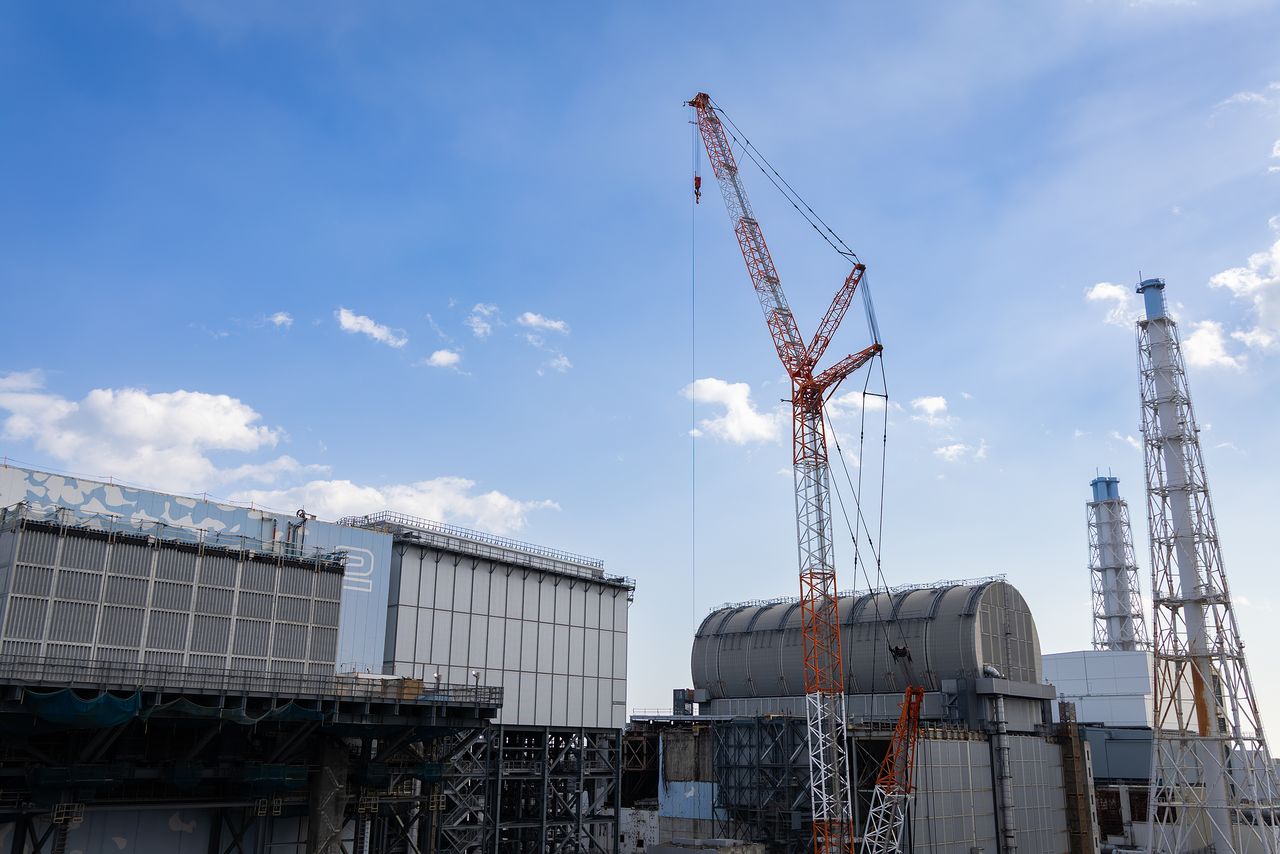
Unit 2, at left, and the rounded dome cover of Unit 3. (© Hashino Yukinori)
The greatest challenge in decommissioning is the removal of approximately 880 tons of highly radioactive fuel debris contained within Units 1, 2, and 3. TEPCO has developed a robotic arm that during test runs in 2024 and 2025 succeeded in removing minute amounts of debris from Unit 2. Nonetheless, the slow pace of progress has forced the company to push back the start of full-fledged removal of melted fuel, originally slated to begin in the first part of the 2030s, to 2037 at the earliest. There is a significant chance the timeline will be lengthened even further as new and unforeseen complications arise as work advances.
The stigma Fukushima Daiichi carries as Japan’s worst nuclear accident will be impossible to erase. At the same time, the knowledge and experience gained through managing the disaster and the lessons learned by surmounting the unforeseen setbacks of the decommissioning process will serve as a benchmark for similar efforts in the future. Perhaps its greatest legacy, though, will be as a reminder of preventing such an accident from ever occurring.
We all rely on electricity in our lives, and it falls to each of us to pass the experiences of Fukushima Daiichi to the younger generations born after the accident to ensure that memories of the tragedy and the lessons gleaned are not lost to history.
(Originally published in Japanese on March 11, 2026. Banner photo: TEPCO staff explain the decommissioning process to tour participants at the Fukushima Daiichi Nuclear Power Station on January 17, 2026. © Hashino Yukinori.)