Cretaceous Critters: T-Rex Flash Mobs Take Over Japan’s Dino Capital Fukui
Travel Society- English
- 日本語
- 简体字
- 繁體字
- Français
- Español
- العربية
- Русский
Dinosaurs Spring into Action
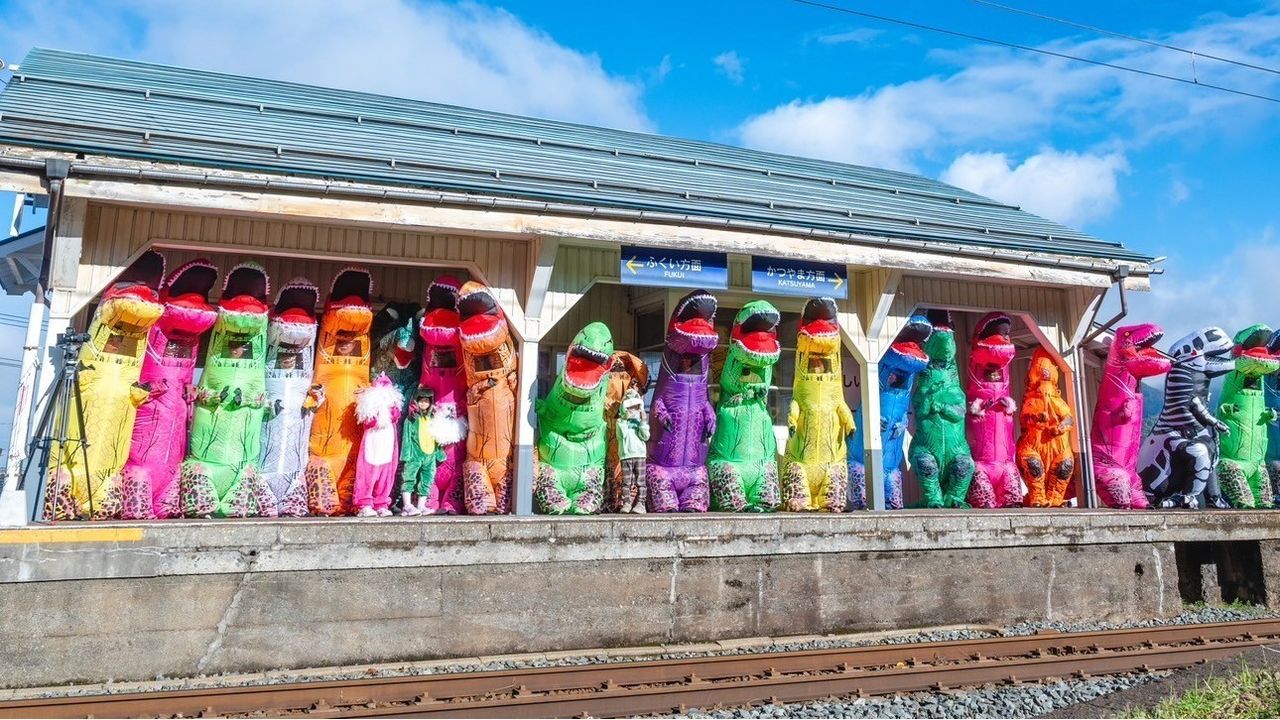
Every spring, swarms of T-rexes descend on a small corner of Fukui Prefecture, Japan’s dinosaur capital. The invaders from the Cretaceous period are not on the hunt but are out to amuse riders on the Echizen Railway’s Katsuyama Eiheiji Line, the gateway to the Fukui Prefectural Dinosaur Museum. Each Sunday, the bobbly, brightly colored dinos can be spotted frolicking about Katsuyama Station and other stops, drawing smiles with their shenanigans. The T-rexes, part of the welcome awaiting visitors to one of the world’s largest dinosaur museums, continue their jovial task into late autumn before going “extinct” until spring returns.
Behind each smiling dino maw, of course, is a human. Answering the call of social media, these part-time dinos organize around the hashtag #katteniechitetsu, an abbreviation of a Japanese phrase meaning something akin to “free-spirited fans of the Echizen Railway.” Clad in T-rex costumes, they entertain passengers on the railway’s “Dinosaur Train,” which makes the round trip between Fukui and Katsuyama Stations once a day.
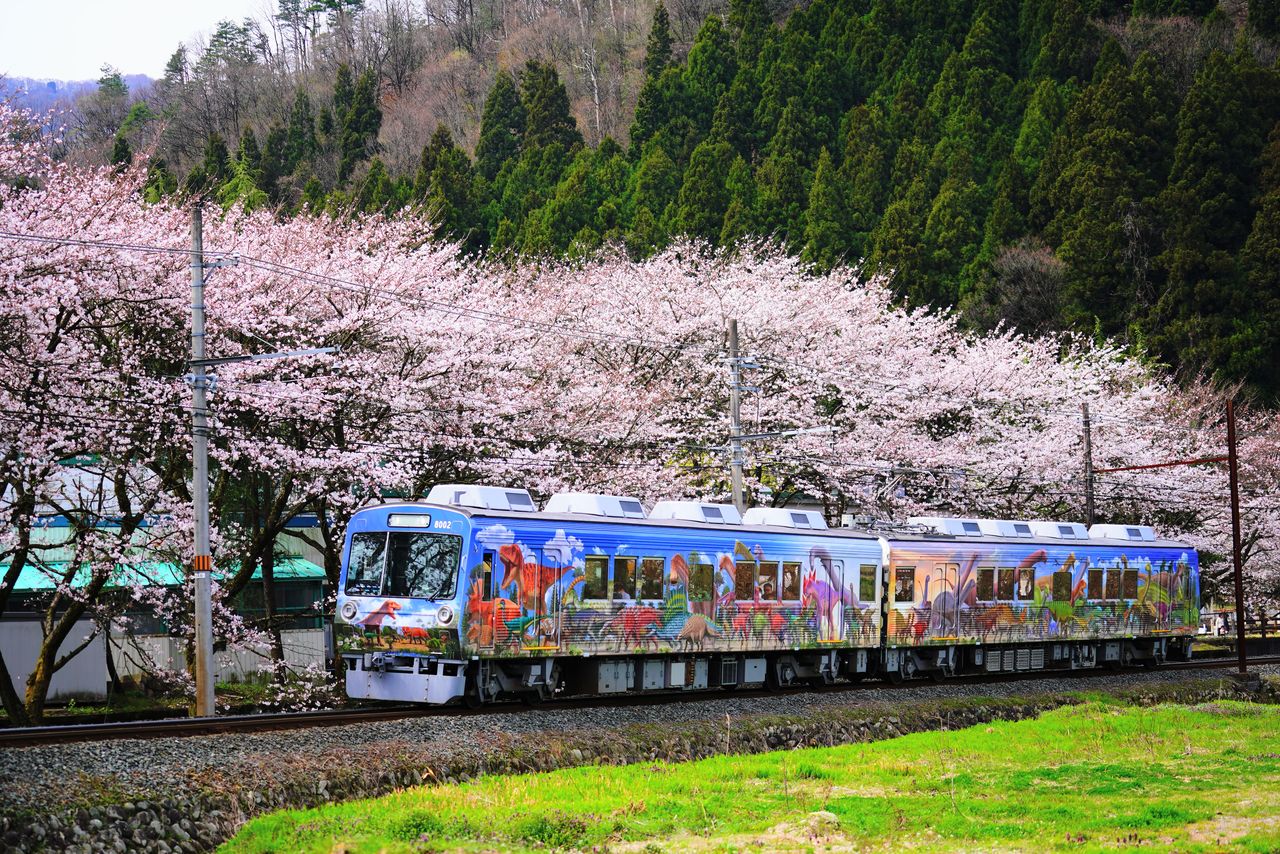
The Dinosaur Train trundles along against a background of blossoming cherry trees. (© Echizen Railway)
The gatherings are spontaneous, leaderless affairs, with any number of volunteer dinosaurs likely to appear. Videos of the T-rex flash mobs have been widely shared on social media, attracting attention to the effort and wooing participants from as far away as Hokkaidō and Okinawa, not to mention a few hailing from the United States and Australia.
A T-Rex Community Grows
The T-rex movement began with Watanabe Hiroshi, a 50-something proprietor of a café near Shiizakai Station along the train route. Watanabe began donning a dino suit in June 2023 on a whim. He first took position atop an office building near the station and would jump and wave at the train as it passed. Passengers paid him little heed at first, though, which Watanabe attributes to the distance and the speed of the train. “This wasn’t helped by the fact that everyone was busily staring at their phones,” he adds.
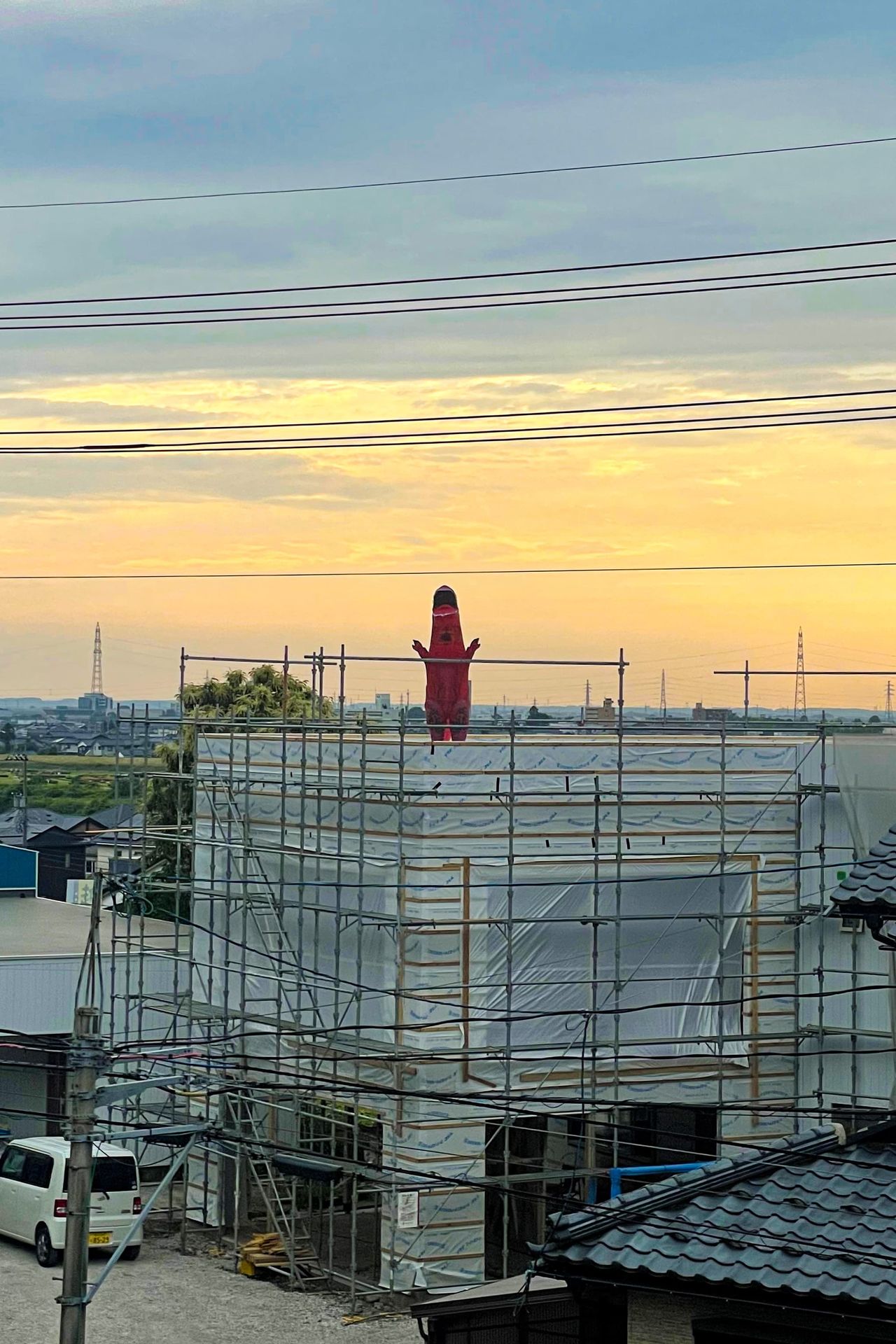
Watanabe waving to the train from his rooftop position. (© Watanabe Hiroshi)
The train line, like many local railways, has struggled. Its predecessor, the Keifuku Electric Railroad, was ordered by the government to cease operations following accidents in 2000 and 2001. The prefectural government worked with Fukui, Katsuyama, and other municipal authorities to revive a section of the vital transport route, which was relaunched in September 2002 as the Echizen Railway.
The Dinosaur Train was launched in the hopes of attracting visitors to the renowned Fukui Prefectural Dinosaur Museum. It began running in July 2023. The exterior of carriages are bedecked in dinosaur images and the interior has digital and other displays that bring dinosaurs to life.
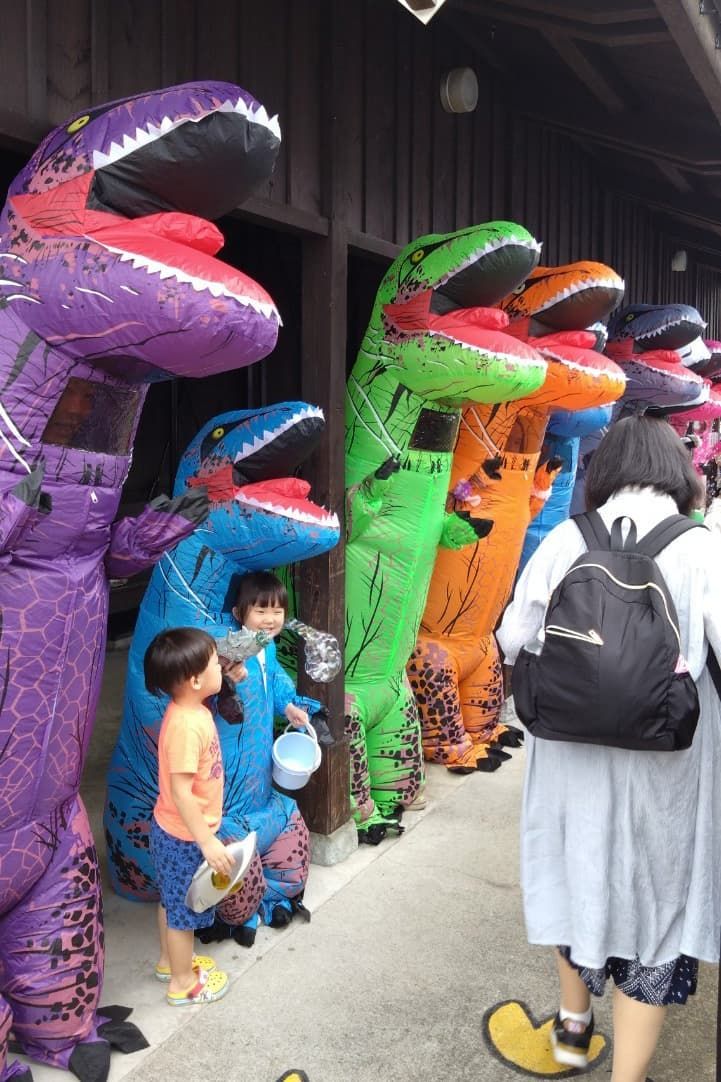
Dinos welcome passengers at Katsuyama Station, near the dinosaur museum. (© Watanabe Hiroshi)
Undeterred by his initial failure, Watanabe changed tactics. Coming down from the rooftop, he moved closer, standing on the platform at Shiizakai Station and waving excitedly as the train rushed past toward Katsuyama Station. “I could see the looks of surprise on the faces of passengers,” he recounts. “It was mission accomplished.”
He posted a video on social media, and before he knew it, he was joined by friends and acquaintances clad in T-rex suits. As the herd gradually grew, the group shifted their activity to Katsuyama Station and other manned stops on the line. By 2025, some days saw as many as 32 dino volunteers greeting visitors at station platforms and other places along the line.
Momentum Grows with the Shinkansen’s Arrival
One of Watanabe’s cohorts, Katō Fusami, got her start as a dino impersonator when she ran in a T-rex costume race. These unique events have gained popularity in Japan since the first was held in Tottori in 2022. Katō, who is a nurse, picked up a suit in 2023 when she heard about a race near her hometown of Ebetsu, Hokkaidō.
She first met Watanabe during the pandemic on an online forum. “We hit it off from the start,” she says. As one of his earliest supporters, she encouraged him to keep up his dino efforts. The thrill of running in her first T-rex race increased her zeal, and it was her words that helped spur Watanabe to move from his rooftop perch to the station platform. A month later, Katō traveled to Fukui to join in the effort.
Fukui boasts the largest and richest dinosaur fossil sites in Japan, earning the prefecture a reputation as the country’s dino capital. The extension of the Hokuriku Shinkansen to Tsuruga in 2024 brought a significant uptick in tourism to Fukui, with many of those visiting putting the Fukui Prefectural Dinosaur Museum on their itinerary. Opened in 2000, the museum underwent a major renovation in 2023 that expanded the facility and added new exhibits. Since then, it has steadily grown in popularity, attracting a record 1.26 million visitors in 2024.
Japan’s Dinosaur Kingdom
Fukui’s dinosaur connection dates to 1982, when crocodilian fossils from the early Cretaceous period, some 120 million years ago, were discovered in a cliffside in Katsuyama. The specimens were contemporary with dinosaurs, giving researchers hope of finding evidence of the great beasts in Japan.
Further exploration unearthed teeth of carnivorous dinosaurs, and in 1989, the prefectural museum began full-scale excavations for dinosaur fossils. To date, 6 of the 13 dinosaur species discovered in Japan were first uncovered in Fukui, including the herbivore Fukuisaurus tetoriensis and carnivore Fukuiraptor kitadaniensis. Each new find drew national headlines, strengthening Fukui’s reputation as Japan’s dinosaur kingdom. Amid this fossil fever, the dinosaur museum marked its 2000 openingwith a “Dino Expo.”
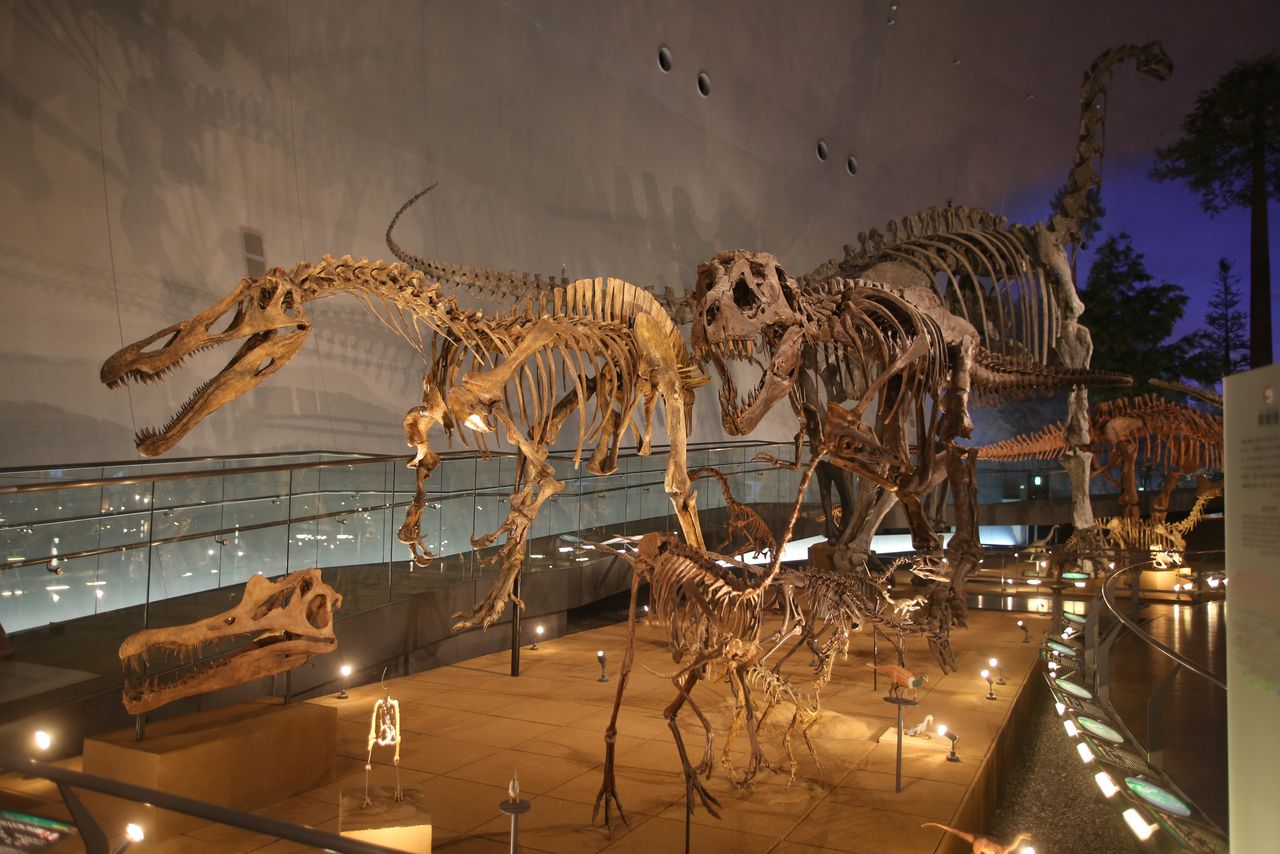
The Dinosaur World exhibit at the Fukui Prefectural Dinosaur Museum is one of the facility’s biggest draws. (© Fukui Prefectural Dinosaur Museum)
In preparation for the extension of the Shinkansen, the prefectural government in 2009 established a tourism department, which set about identifying sightseeing resources. Needless to say, dinosaurs were—and remain—a top area of focus. In 2015, Dinosaur Plaza, which features life-size dinosaur robots, was opened outside Fukui Station, with new animatronic dinos added over the years, including a T-rex in 2024.
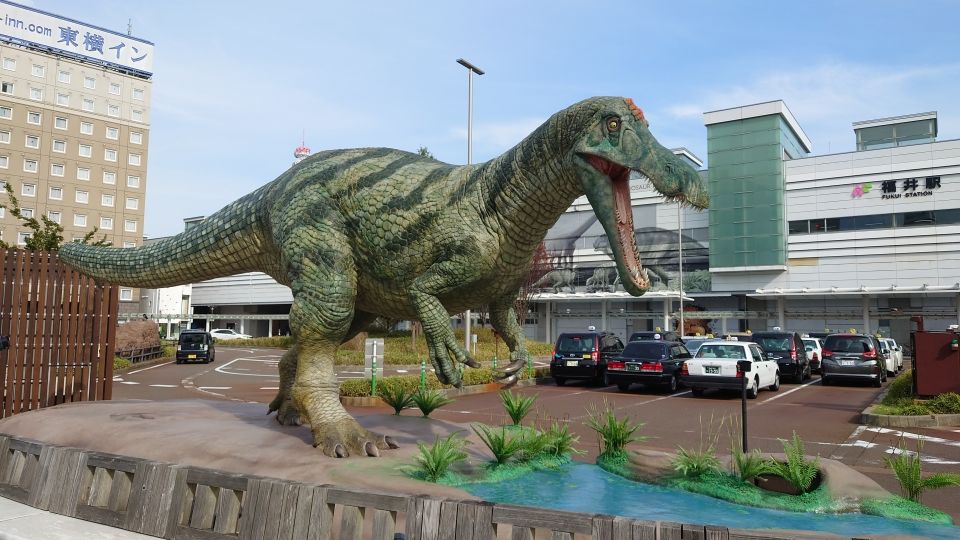
A robot of the giant Cretaceous carnivore Suchomimus tenerensis at Fukui Station. (© Fukui Prefectural Government)
Prefectural authorities have encouraged private companies to join the dinosaur museum promotion bandwagon, including in some cases providing subsidies. This push led to the launch of the Dinosaur Train and other attractions, including buses sporting dino-themed exteriors. A number of lodgings have also rebranded as “Dino Hotels,” offering guests specially decorated rooms inhabited by dinosaurs.
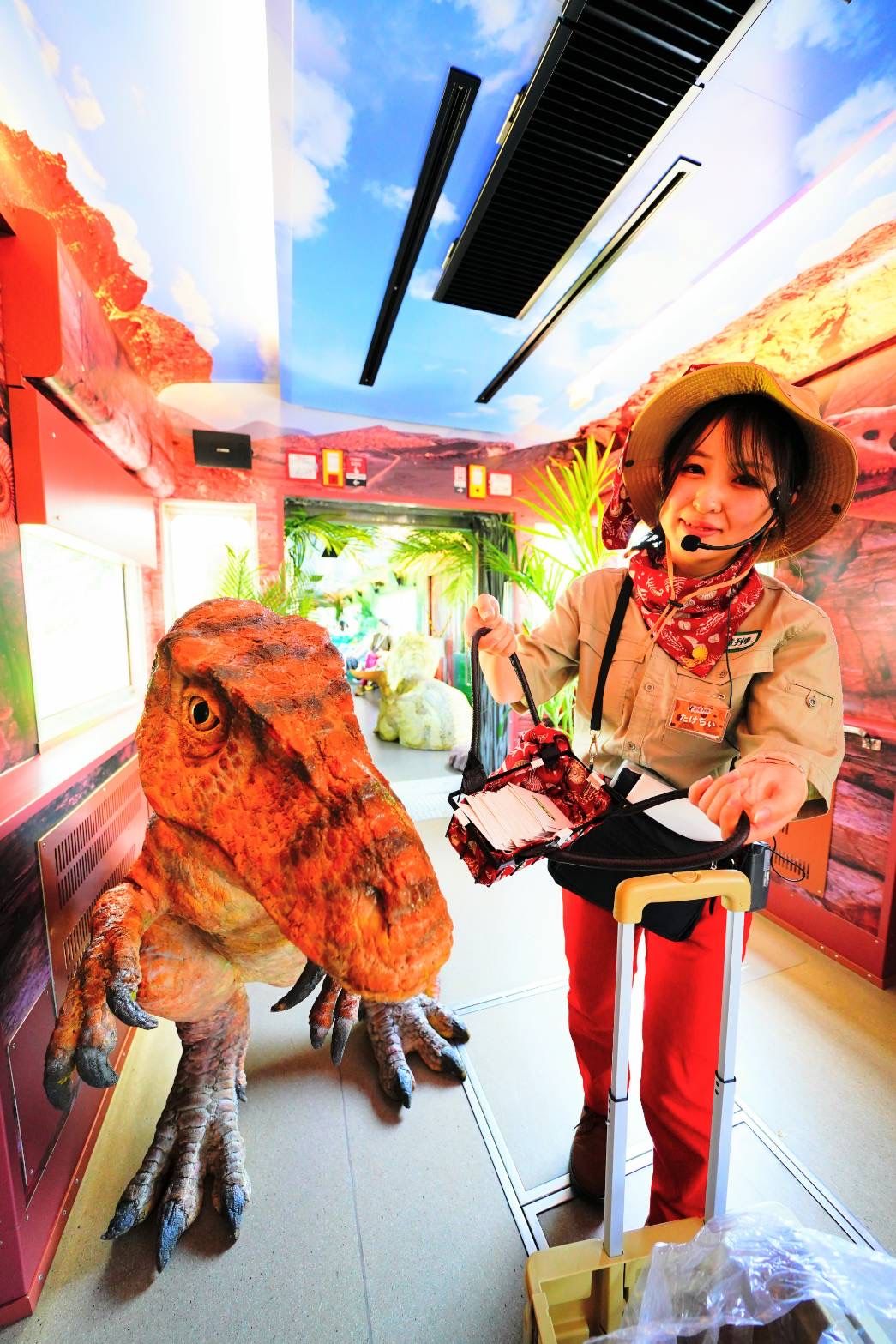
An attendant on the Dinosaur Train entertains passengers. (© Echizen Railway)
This year, Fukui staged its Dino Action Award, with residents voting for the most outstanding dinosaur-related activities and ideas from a list of candidates. Over 80 entries that were received, and Watanabe’s T-rex related hashtag #katteniechitetsu came away with the top prize in the activities division.
Adachi Tetsuo, who heads the tourism division’s dinosaur strategy office, has high hopes for Fukui’s dinosaurs. “I want them to be a rallying point and a matter of pride for residents,” he declares. “And to serve as a gateway for tourists to discover Fukui’s other attractions.”
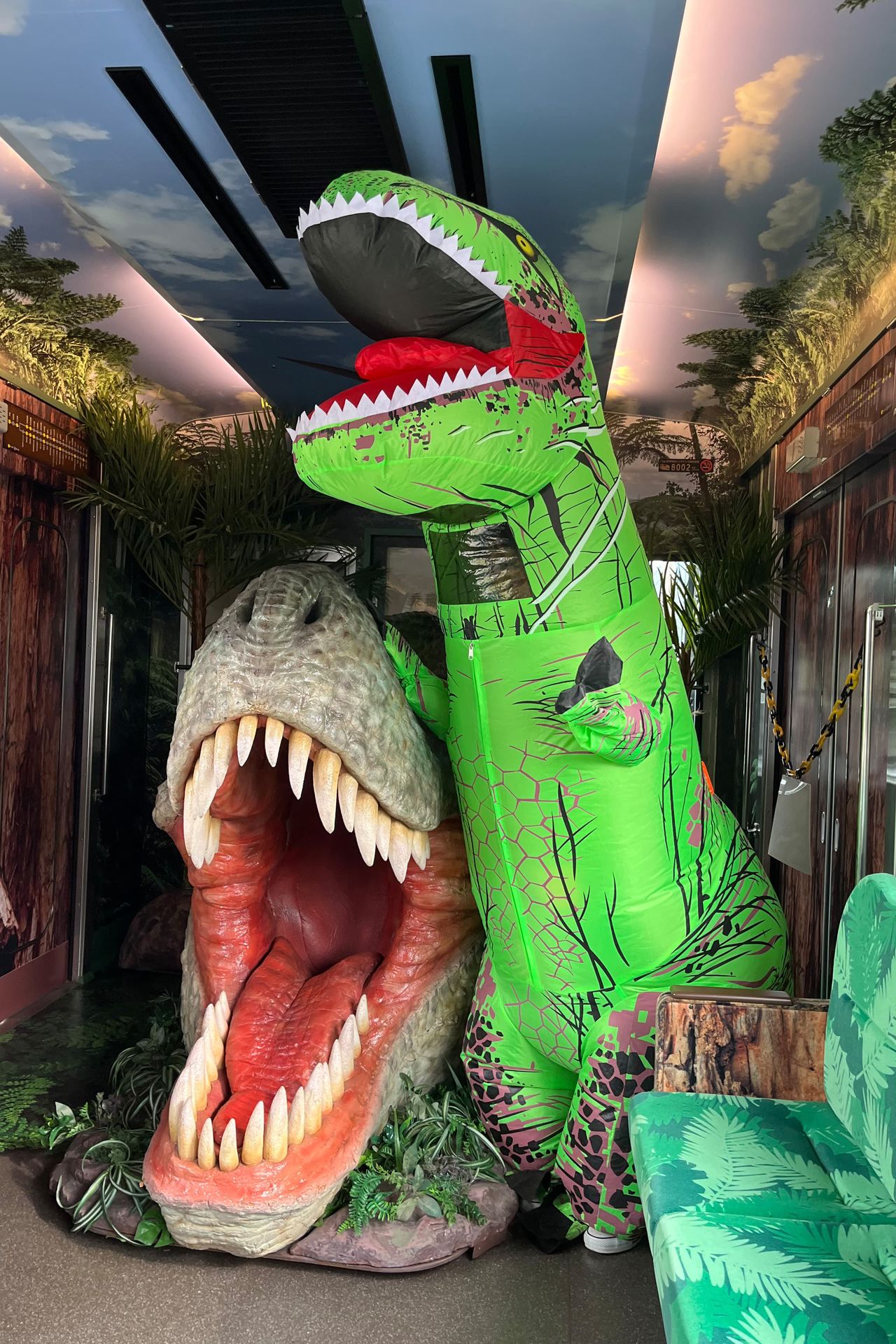
Katō Fusami in her T-rex suit poses with at a display on the Dinosaur Train. (© Katō Fusami)
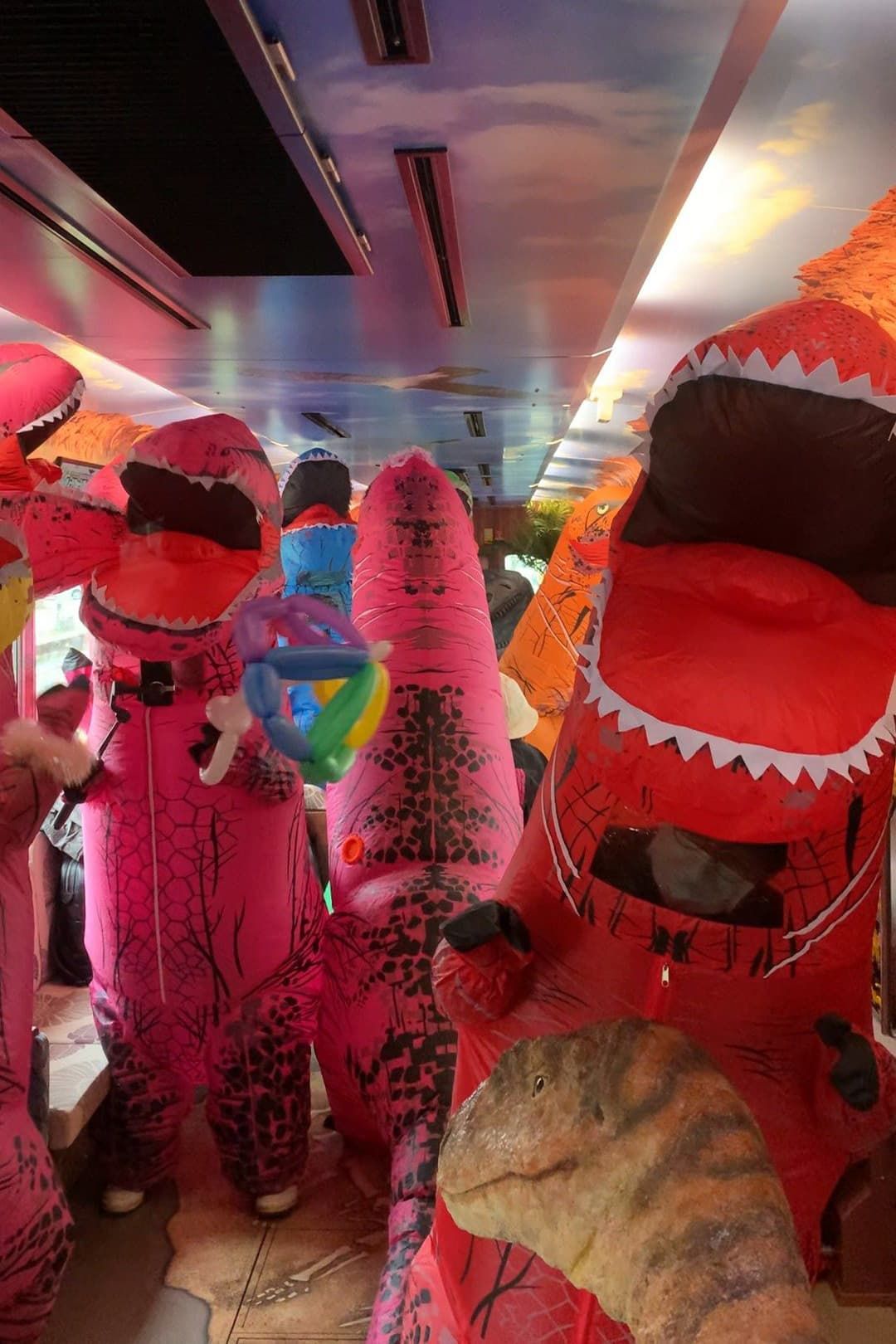
Volunteers in T-rex suits mingle lively on the Dinosaur Train. (© Watanabe Hiroshi)
(Originally published in Japanese on March 13, 2026 with editorial assistance by Power News. Banner photo: Volunteers in T-rex suits entertain train passengers at Shiizakai Station. © Watanabe Hiroshi.)