


Formidable Challenges
A 56-year-old woman living in a nearby temporary unit echoes these sentiments.
“We had our children to think about, so we planned to use our own money to rebuild on one of the residential sites being developed by the local government. But now they’re telling us it won’t be ready until the spring of 2018! There’s no telling what land prices will be like by then, so we can’t really plan financially. We never imagined it would take more than five years to get out of here. A lot of our neighbors have given up and moved in with their children in Sendai or Ishinomaki or have left here for communities that are making faster progress building new homes.”
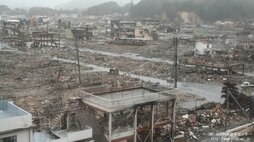
On each of my five visits to Onagawa since the tsunami, I have been impressed by the local officials’ commitment to rehousing the disaster victims. There is no question that this is their top priority. But Onagawa faces monumental challenges. The tsunami destroyed most of the town, including its central business and residential districts. And the area has very little high ground that is suitable for residential development. Those charged with preparing the building sites have run into solid bedrock, which has caused long construction delays. Even acquiring the land for development has been an ordeal, since it involves identifying and contacting numerous owners scattered around the country to secure property rights.
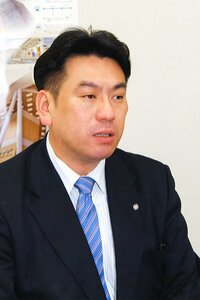
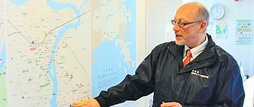
 Onagawa Mayor Suda Yoshiaki: “However tough things get, I’m going to stand by our citizens, stay positive, and tackle each obstacle aggressively.”
The municipal government expects to complete 28% of the public housing slated for construction in the town’s central districts (excluding islands and peninsulas) by the end of March 2016. It hopes to have completed all units by the end of March 2018. But how many of the town’s displaced can wait that long?
“We understood from the outset that recovery would take a long time, and we were resigned to some decline in the local population,” says Onagawa Mayor Suda Yoshiaki. “But securing decent housing for our citizens remains the top priority. We’ve brought in special blasting equipment to remove the rock and speed up excavation, and we’re determined to complete construction as soon as we possibly can.”
Unlike Sendai, the region’s smaller communities have struggled with depopulation and economic decline for years, and the 2011 disaster has accelerated the exodus. Still, the victims expect action, and it is the government’s duty to respond. Mayor Suda says he is determined to make Onagawa “a town ready to take on one new challenge after another.” But the first step, as he knows, is making sure that its citizens have somewhere to live.
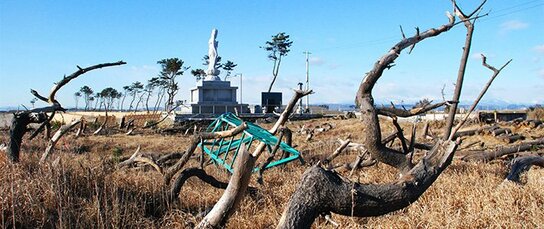
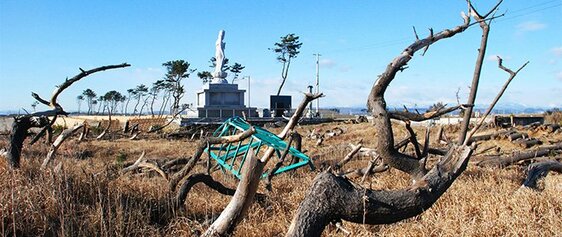
(Originally written in Japanese. Article photos courtesy of the author. Banner photo: A seaside monument to the victims of the March 2011 tsunami is virtually all that remains of the Arahama district of Sendai, Miyagi Prefecture.)
 Read in other languages