


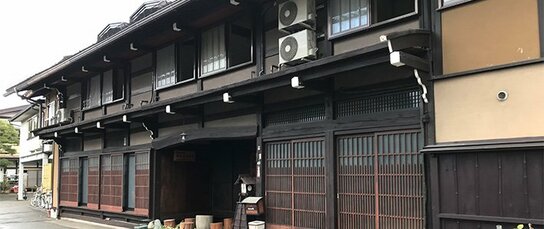
Flexibility: The Hallmark of Minshuku
Arriving at a ryokan before the prescribed check-in time, guests may find the reception desk unattended. It’s often the case that staff are not yet on duty, and guests will not be offered their room before the appointed time. This may be an extreme example, but many Japanese-style lodgings tend to be inflexible about their rules. Sōsuke, on the other hand, is more flexible, and proprietress Tamai offers a few examples: “Our check-in time is three in the afternoon, but one time, guests from Hong Kong appeared on the doorstep at nine in the morning. Their room was being cleaned and wasn’t ready yet, so I couldn’t show them in, but I said they were welcome to leave their luggage while they went off sightseeing. In another case, a guest from the UK arrived at one in the afternoon, but the room was ready so I showed her in right away.”
It’s this kind of flexibility that appeals to many minshuku users. The human warmth and go-with-the-flow attitude of their proprietors are quite different from the by-the-book methods common at most Japanese hotels and ryokan.
Although not actually a minshuku, Fujinobō Kaen, a hotel near Mount Fuji in Shizuoka Prefecture, has also won success with its tourist clientele by making flexibility its byword. Owner Xue Sentang, a native of Taiwan, describes the constraints in traditional ryokan operation that are often a factor in their lack of flexibility.
“Many Japanese inns are strict about mealtimes because of their staff’s duty hours. This doesn’t tend to bother Japanese, who are used to traveling according to a set schedule, but non-Japanese assume that meals will be served whenever they like. We have found that tour groups from China or Thailand, especially, often don’t stick to their schedules and fail to arrive by mealtime, so it’s up to us to work around this as best we can.
“We give our guests value by providing service that goes beyond set rules and procedures,” continues Xue. “No matter how late a tour bus arrives, we make a point of always providing travelers with a hot meal.” Fewer tour groups have been traveling to Japan lately, but Fujinobō Kaen’s occupancy rate has remained steady thanks to this kind of attention.
Human Warmth the Key to Success
Japan’s Ministry of Agriculture has begun to encourage inbound travelers to stay at minshuku in rural areas, seeing this as a valuable opportunity for revitalizing regional economies.
Professor Nakao Seiji of the University of Fukuchiyama is Japan’s foremost authority on minshuku. According to him, minshuku in rural communities offer the best of Japan as it was 40 or 50 years ago. The standard model is a small establishment, a private home taking in paying guests, run to supplement the owner’s farming or fishing income. Small mountain or seaside settlements are ideal for enjoying local delicacies, an essential part of the minshuku experience. In Nakao’s words, “At a minshuku, the point is to be open to chatting with the proprietor and soaking up the local atmosphere. It’s different than staying at a resort with family or friends.”
At large hotels or ryokan, staff are generally too busy to spend time having meaningful interactions with guests, and trying to engage staff in conversation often elicits only rote answers. In addition, many Japanese are rather reserved and uncomfortable engaging in casual conversation with strangers. They may also be nervous about talking with foreign visitors, perhaps because of a lack of confidence in their foreign language skills. But friendly chat is part of the enjoyment of a minshuku stay.
Kokuriko, a minshuku in Uchiko, Ehime Prefecture, features a goemonburo, a large iron receptacle that serves as a bathtub, in its own building in the garden. This old-style bath is a unique way of enjoying a soak, but even better is the conversation with owner Morinaga Teruhiro, who loves to talk about the local area.
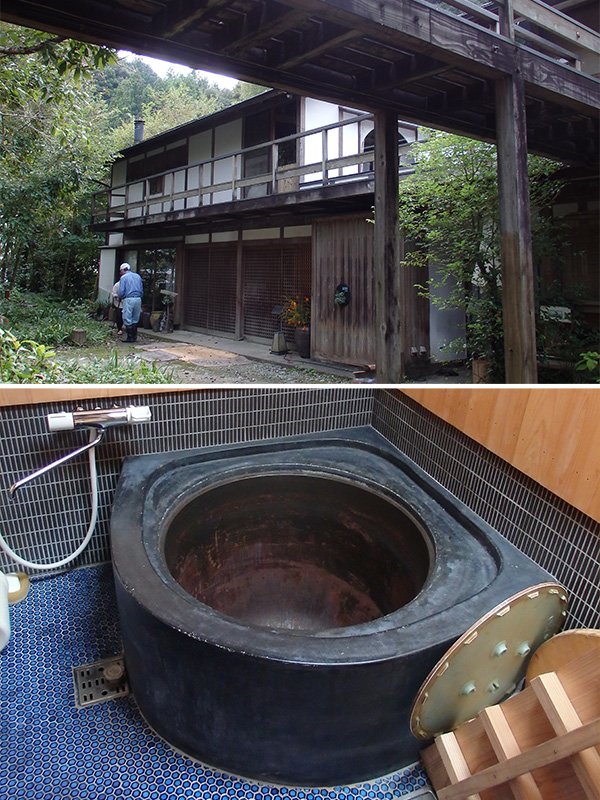
 Farm Inn Raum Kokuriko is in a rural area of Ehime Prefecture. A small building in the garden (bottom photo) houses a goemonburo bath.
Morinaga knows how to entertain guests, talking enthusiastically about unusual nuts he came across in the forest or encouraging visitors to write letters on tree leaves or otherwise commune with nature. Guests are welcome to go up to the second floor of the building, which features a collection of crafts created by local people. His wife Reiko also engages guests in conversation. She says she will invite anyone who looks as though they’d like to talk to sit and have a cup of tea. “I don’t speak English well, so I can’t discuss complicated issues with foreign guests, but I like to think that, on some level, we’re communicating.” This spirit of hospitality is part of Kokuriko’s appeal.
Competing on Warmth and Human Spirit
But business for lodging operators like Sōsuke in Takayama is not all smooth sailing. In that city, there has been a sharp increase in the number of minshuku, guest houses and other small establishments since 2015; in 2016, their number had grown to 489, up 92 from the previous year. The struggle for a share of the accommodation pie has also been aggravated by the proliferation of minpaku, paid home-sharing arrangements in private homes or apartments, and some minshuku operators say that their occupancy rates have dropped. Despite the business opportunity offered by the increase in inbound tourists, some minshuku have closed after their proprietors decided they were too old to carry on, had difficulty finding successors to run the establishment, or felt daunted at having to communicate with guests in foreign languages. Renovating premises or advertising more widely may be effective in some cases, but when money is tight, it’s difficult to decide to invest in upgrading outdated décor or facilities.
But a change of mindset might be in order here to encourage minshuku owners to focus less on cosmetic changes to overcome these challengeas. Says Takayama mayor Kunishima Michihiro: “The residents of this city are the asset we have for profiting from inbound tourism.” In other words, Takayama shouldn’t depend on its picturesque atmosphere or onsen hot springs: local residents should learn how to communicate better with foreign visitors.
Today, visitors to Japan are often viewed just as high-spending tourists, and sadly, people-to-people exchanges aren’t given the importance they deserve. What’s more, with so many operators now crowding the market for accommodations, the human touch is the only way for minshuku, small in scale, to survive. Tora-san films are enduringly popular because of the warmth of the interaction they depict, something that people may have little time for nowadays. Going back to basics can surely help minshuku survive. No matter that some owners may be tongue-tied, feel awkward around foreigners, or speak little English—plain human kindness toward travelers, at which minshuku excel, can help make Japan a true international tourist destination.
(Originally posted in Japanese on January 4, 2018. Banner photo: Sōsuke, a minshuku in Takayama, Gifu Prefecture. Photos provided by Himeda Konatsu.)



 Read in other languages