


Attracting the Next Generation
South of Minamisanriku in the towns of Onagawa and Ishinomaki, areas once inundated with rubble, work on port facilities and raised platforms of soil for new structures is nearing conclusion.
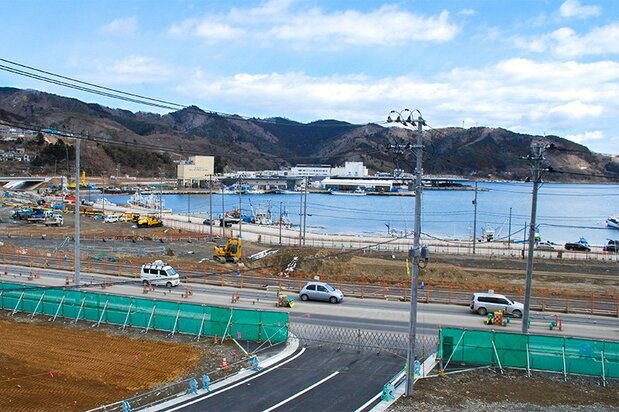
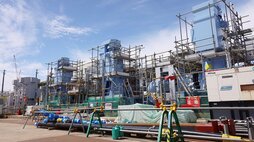
 Traffic flows past a construction site along a coastal road in Onagawa.
In Onagawa, recovery efforts are making steady progress. In the last few years the town has completed several key projects, including construction of an ice and refrigeration facility, and in April 2017 it opened a new regional wholesale fish market.
The local fishery is also bouncing back. In 2016 the fishing industry was finally able to secure the necessary vessels to complete its fleet. Fish catches have been slowly edging upward over the last few years, recovering to around 80% of what they were before the tsunami. In 2017 boats netted over 35,600 tons of fish, nearly twice the 19,740 tons caught in 2011. According to the local industry recovery bureau, in the wake of the disaster local fishermen took the initiative and carried out cleanup work and emergency repairs at port facilities. This has facilitated recovery by allowing large reconstruction projects to wrap up ahead of schedule.
Even as port and processing facilities come back online, though, the town, which bore some of the worst destruction in the region, continues to suffer one of the nation’s highest depopulation rates. The town’s population plunged by nearly 40% from the 2010 national census to the 2015 census. With fewer people to carry on the fishing trade, Onagawa, like Minamisanriku, is working to recruit newcomers to the industry to counter the effects of a dwindling and graying population.
Leading the charge has been a group of young fishermen from Onagawa, Ishinomaki, and other communities along the Sanriku coast who in 2014 formed the cooperative Fisherman Japan. Based in Ishinomaki, a town that lost more than 3,000 residents in the tsunami, the group aims to attract young people to the industry by rebranding fishing as an attractive, high-paying, and innovative profession. The 40 core members of the organization are involved in a wide range of activities, including direct sales of their products, planning and managing events, and professional training.
Abe Shōta, the group’s 32-year-old head, stresses that revitalizing the industry hinges on bringing up the next generation. “It takes ten to fifteen years to become a full-fledged fisherman,” he explains. “Most veterans are in their sixties and seventies, so it’s vital to tap into their experience now to train newcomers while also transforming how the industry runs.”
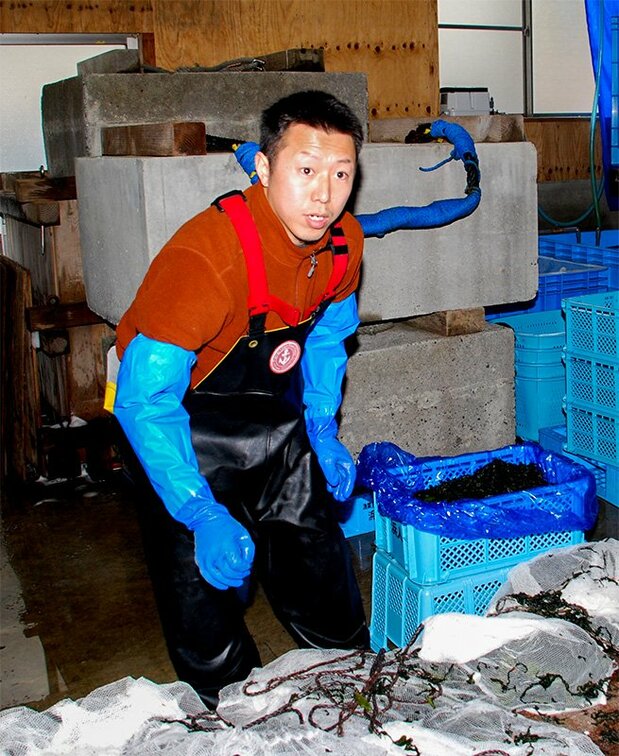 Fisherman Japan leader Abe Shōta makes his living farming wakame.
Shortly after Fisherman Japan was formed, Ishinomaki enlisted it in establishing a hands-on fishing and aquaculture training program and a work experience scheme. In 2015 the group also set up an employment site for people looking to join the fishing industry. To date, around 100 people have participated in programs or applied for positions, with upward of 40, including 20 newcomers to the industry, finding employment.
While interest in fishing as a career is growing, Abe says the group must continue working to boost the appeal of the profession. “The next challenge is to keep people in the industry,” he exclaims. “We are always exploring ways to better market products and make fishing a more lucrative vocation.”
Many residents in communities along the Sanriku coast remain in temporary accommodations, and constructing housing complexes along with restoring basic infrastructure like roads, medical and welfare facilities, and governmental services continue to be priorities. However, the fishing industry also has a vital role to play in recovery. It is the resilient people working in the commercial fisheries who will be a driving force to rebuild communities.
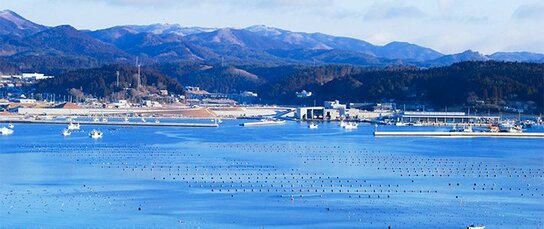
(Originally published in Japanese. Banner photo: New port facilities and aquaculture platforms in Minamisanriku’s Shizugawa Bay. All photographs provided by the author.)


 Read in other languages