



Collaborating at the Local Level
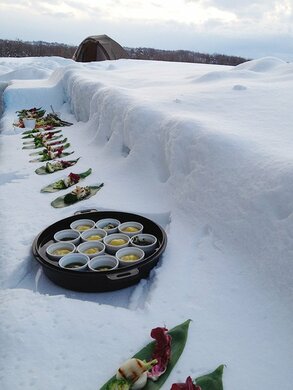
 Local dishes and scenery combine to make a unique experience during a Nippon Travel Restaurant excursion to Niigata. (Photo courtesy of Umari Inc.)
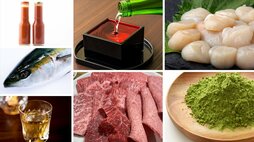
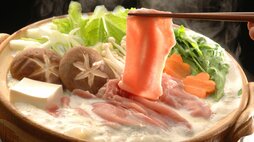
Potts also builds grassroots connections by highlighting regional food cultures. One important venue for this is the International Terakoya. Recent courses at the venue, which shares space with Roppongi Nōen, on sake, green tea, and dashi (Japanese-style broth) looked at new approaches to traditional food products. Another program is Nippon Travel Restaurant. These two-day outings to rural communities give participants firsthand experiences of local history and cuisine as they join local growers and artisans in one-time-only dining experiences designed to express the region's unique food culture and local resources. On a recent NTR trip to Niigata Prefecture, participants met local artisans, enjoyed regionally brewed sake, and took walks through snow-covered mountains with equipment provided by a local outdoor gear maker.
Participants and local residents come together through these events to share thoughts and ideas, and hopefully, to build long-term collaborative relationships. Potts notes: “A lot of things can resonate with people, and if it’s something people can recognize personally in their life, it tends to leave a lasting impression. They might come back to visit a friend they made, a community they’ve created. That’s the type of thing that motivates people to stay involved—a personal investment.”
The diverse background of participants is key to creating value. “We try to match local key players up with professionals from elsewhere in Japan and overseas. These are people from diverse backgrounds, like IT or media, who can share unbiased opinions and ideas. To get these people from different industries and professional backgrounds to come together and pool their resources and know-how creates something of value that is new and unique.”
Promoting Through a Wide Range of Activities
Since 2013 Potts has been involved as part of the Morning University of Marunouchi in a collaborative program with Kirin Holdings to help local areas rebuild after the March 11, 2011, earthquake and tsunami. Known as the Tōhoku Agricultural Training Center and Rebuilding Project, it partners professionals from diverse backgrounds with local farmers and producers affected by the disaster. Together they work to develop a stronger, more sustainable agricultural industry as a core part of the region. “It’s about getting growers, along with businesspeople and other key players, involved in not only rebuilding, but in building something new,” Potts explains. The financial backing Kirin brings to the project is important, but Potts recognizes the company’s business know-how and focus on getting people directly involved as essential to the program’s success.
Looking beyond Japan’s borders, Potts traveled to the Netherlands in 2013 with program participants to examine the nation’s approach to maximizing greenhouse productivity and the peripheral business and policies that shape the region’s unique model. In February 2014 he traveled to New Zealand to look at the country’s unique approaches to tourism and related agriculture.
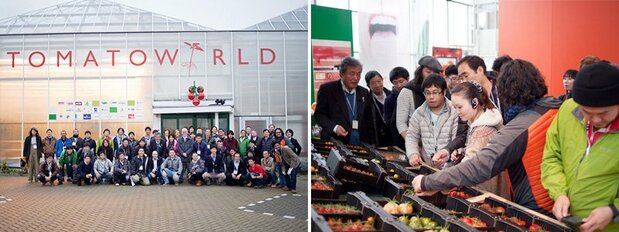 Rebuilding Project participants learn about greenhouse production in the Netherlands. (Photo courtesy of Umari Inc.)
Along with his duties at Umari, Potts is active with the Japan Local Innovators Committee, an organization working to put non-Japanese professionals from different disciplines in touch with Japan’s unique cultural resources. He provides content for the JLIC website and its “Social Excursions Japan” Facebook page. He has written a short series in Japanese for the online magazine Colocal titled “Hello Hakkō Life” that introduces regional companies involved in creating such traditional fermented products as soy sauce and sake.
Perhaps the most visibly pleasing project highlighting Potts’s passion for producing Japan is the web program Local Japan, where he serves as creative director and host. In the informative and beautifully filmed episodes, Potts visits various local communities and presents customs, traditions, and food culture. Interviews with local residents give viewers a taste of Japan’s unique rural culture and allow them to hear firsthand from those involved in preserving it.
Potts happily admits he has his finger in a lot of pies, but he seems to be getting positive results. Interest is high in the Producing Japan class at the Morning University of Marunouchi, and events at Roppongi Nōen remain popular. As local food culture continues to gain attention, Potts remains determined to stay involved and find new ways to produce local products. To him, this means “bringing people together.”





 Read in other languages