


The China Question
INTERVIEWER When you talk about the trilateral relationship, America and Japan have been very interested in bringing Australia into that as a fourth party. China tends to see this as trying to contain its ambitions in the region. Do you think there is room for Japan and India to work together in the face of a China that’s still a rising power?
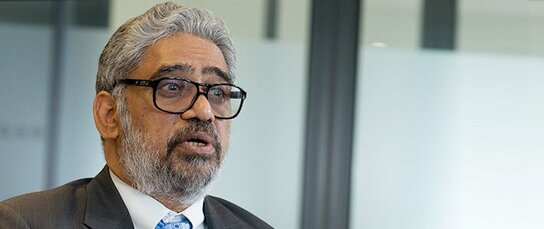
MOHAN Look China is the second largest economy and I think all of us will continue to engage the Chinese. But that doesn’t mean we take everything they say as gospel. India sits down with the Chinese and the Russians—so I can’t see why we can’t sit with the Americans and the Japanese also. To say there’s only one way forward—I mean, that’s exactly what the Chinese tell everyone, that everybody must choose their own path of development and their own friends. India is doing the same.
I don’t think that India or Japan is trying to, shall we say, contain China, because China is too big to be contained. But it’s a question of balance, a question of regional stability. Those demand more cooperation between India and Japan—and the United States and Australia.
INTERVIEWER Japan’s ties with India are very strong and going in a very healthy direction. You can’t say the same about Japan’s ties with its neighbors, South Korea and China, where there are some thorny issues to overcome. Do you have any recommendations to Japan on how to build a more constructive relationship with the neighbors?
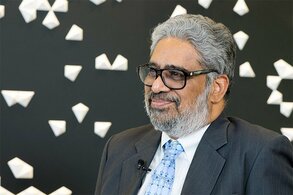

MOHAN Japan has been a good international citizen for more than seventy years since the end of the war. I think it’s quite unfair to constantly make the war a central issue of what Japan ought to do. I think about [the differences between] what our American friends, and the Chinese and the Koreans, say about Japan and the war. The story is not the same in Southeast Asia. And in my own country, one section of our national movement saw Japan as a liberator. So it’s not such a neat story where Japan has to go around the world with an apology in its pocket always.
I think that phase should come to an end. That’s where Indian Prime Minister Jawaharlal Nehru was very correct in saying, look, we’ve got to move beyond it: there cannot be a stable Asia without Japan playing its full, legitimate role in this part of the world. The time has come for China, Korea, and Japan to look beyond the past and build a new framework. After all, they trade so much and they’re quite integrated. The politics sometimes prevents a genuine transformation of Asia.
An Unpredictable America?
INTERVIEWER Do you see any rough sailing ahead based on what happens with the American election this November, for India, Japan, or the trilateral ties?
MOHAN I disagree with people who think “Americans are crazy,” or “How did they produce a Trump?” Look, it’s a democracy and we shouldn’t forget that. This has come through a democratic process, and my sense is that Mr. Trump reflects a political trend. He’s trying to mobilize the resentments that exist today, especially among those who feel that the United States has spent too much blood and treasure in foreign military misadventures. Those who feel that they’ve been losers in globalization. These people feel that it’s time for a change. The so-called internationalist elite in Washington and the banking elite in New York are insensitive to what’s happening in that country, and I think that’s what we’re seeing.
Populism of the kind that Trump has shown has a long tradition in the United States. It’s not something that has fallen from the moon. He’s very much part of the American tradition and it’s a very decisive moment in the American political evolution. As outsiders, people like us must respect what’s going on. Eight years ago the Americans impressed the world by electing an African American as a president. The American system will throw up surprises, and as outsiders, we have to deal with what emerges.
If the United States decides that they have to reduce their security role, we’re not anyone to tell them that it’s right or wrong—that is an internal debate. But if the US says that after Iraq and Afghanistan they need to lessen their responsibilities, then we have to deal with that situation. That’s where India and Japan must be prepared to take larger responsibilities for security in the region. I’m not saying Japan should write a bigger check for Mr. Trump so that Americans can continue, but when Trump is saying look, Korea and Japan are so rich and they should take a bigger share, I’m sure that’s up for negotiation, assuming he gets elected.
My sense is that we’re at a cusp of a change—that things cannot go on the way they have in the security realm, that the Americans will do all that is necessary and that we all have the right to criticize them when things go wrong. The Americans are asking why, what’s in it for us? That’s an interesting debate. As major countries in this region, Japan and India should be prepared to do more, individually and bilaterally.
INTERVIEWER India in particular is in quite a volatile neighborhood if America does decide it needs to withdraw militarily. Is India prepared, on a regional basis, to leave a footprint there?
MOHAN Definitely. In East Asia, you already have the physical presence of US troops, and in the Middle East, again you’ll see that the US frequently intervened and got involved. If some of that gets reduced, India will have to contribute more to the region’s security. For example, in the Indian Ocean, where India has a strong naval force, we’re able to take on more responsibilities. We’ll be able to support more efforts for peace and reconciliation in the Middle East and to construct a stable balance in East Asia. There, again, I think India and Japan have a huge potential to work together to produce that stability and to work, for example, in the Middle East or in Africa to expand growth and create new opportunities. It’s actually a very exciting moment because there is a reordering of the universe around us taking place. I think this increases the responsibility and the possibilities of both Tokyo and Delhi.
A Message for Japan
INTERVIEWER Do you have a message to deliver to the Japanese, either in the context of how you’d like to see them develop as partners for India or as members of the global community?
MOHAN
As I said, Japan has been a very good global citizen for the last seventy years, and today the world demands that Japan play a larger role. Whatever the debates of Northeast Asia might be, Japan has no baggage in South Asia, in Africa, in the Middle East. People look to Japan, so I think Japan should also look beyond the region. There is a world out there where people have nothing but goodwill for the Japanese. And at a time when the United States seems ambivalent, Japan ought to be able to step up and to take more responsibility. I think there’ll be a lot of support in South Asia, in the Middle East, for a more constructive, more positive Japanese role. (Based on a May 19, 2016, interview in English. Interviewer Peter Durfee is chief of the Nippon Communications Foundation’s English Editorial Dept. Photos © Yamada Shinji)



 Read in other languages