


Eyes on Asano
The brightest star for Teguramori Japan at present is forward Asano Takuma, who recently transferred to Arsenal in the English Premier League from Hiroshima. The fleet-footed striker is known for turning on the speed to break through opposing teams’ defenses, a skill he used to score several crucial goals during Japan’s AFC campaign. Along with his role on the Olympic squad, he has been called up several times by senior manager Vahid Halilhodzic to play for the Japanese national team.
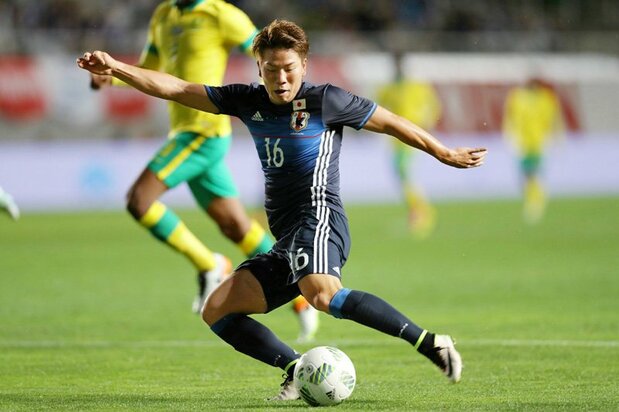
 Striker Asano Takuma takes a shot on goal during a Kirin Challenge Cup match against South Africa on June 29, 2016. (© Jiji)
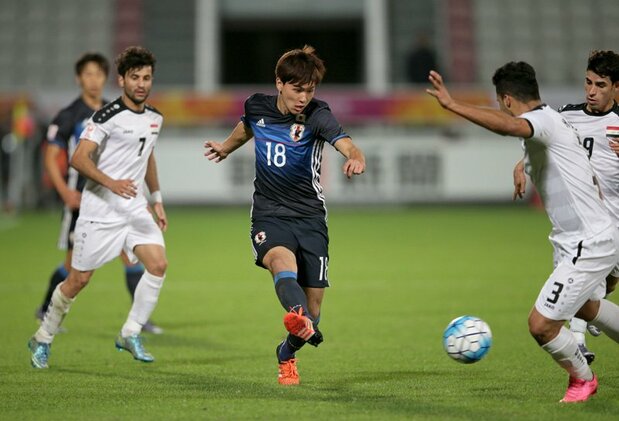 Minamino Takumi makes a pass during the AFC U-23 Championship semi-final match against Iraq in Doha, Qatar, on January 26, 2016. (© Jiji)
In addition to Asano, Teguramori is also looking to striker Minamino to produce goals in Rio. Minamino transferred to Salzburg from J2 side Cerezo Osaka in January 2015. In his first full season he helped his club win its third straight league title by posting 10 goals and 3 assists in 32 appearances.
On the defensive end, captain Endō Wataru is expected to use his prowess in reading game situations and strong one-on-one play to win balls and quickly start counterattacks with long passes upfield. His ability to see the whole field of play and make decisions on the go have been pillars of the team’s success since early on. Heading into Rio, the defender has vowed to win a medal.
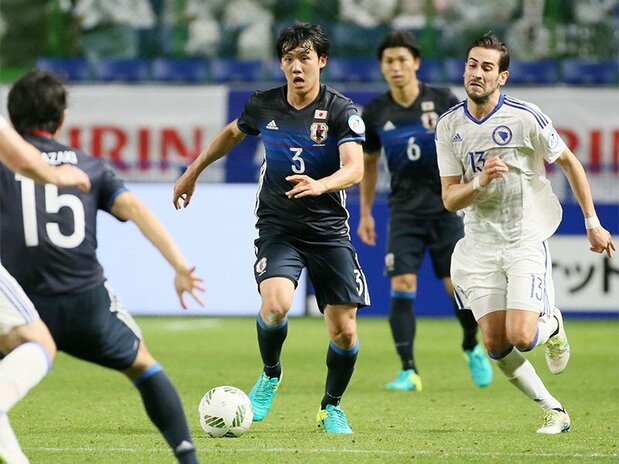 Endō Wataru dribbles the ball during the final of the Kirin Cup against Bosnia and Herzegovina on June 7, 2016. (© Jiji)
Rising to Prominence in Sendai
The 48-year old Teguramori was born in Aomori Prefecture in 1967 and honed his game playing alongside his twin brother Hiroshi in high school and in the professional leagues. (It is rumored the duo were the models for the Tachibana Brothers from the hit comic Captain Tsubasa.)
Teguramori took over as manager of then J2 side Vegalta Sendai in 2008. In only his second season he captured the division championship, earning the club promotion to the top flight of the J-League where, despite limited resources, it has remained. He finished his tenure in 2013.
The largest challenge of his coaching career came in the wake of the March 11, 2011, Great East Japan Earthquake. In Sendai, where the temblor reached upper-6 on the seismic intensity scale, Teguramori barely escaped with his life when shaking brought down the second-floor ceiling of the team’s clubhouse and toppled bookshelves around him.
Sendai became a symbol of recovery for the heavily damaged Tōhoku region. Following a month-long break due to the quake, the team, too, steadily climbed from fourteenth to finish the season in fourth place. The club kept up its momentum going into the next year and closed out the season in second, its best position to date.
Having come through the 3/11 disaster, Teguramori learned the value of striving for something larger than one’s personal ambitions, an idea he is certain to bring with him to Rio.
Tapping into Lower League Talent
While the U-23 side is rich in technical aptitude, players have not shown the usual intensity associated with international soccer. Early camps tended to be quiet affairs, perhaps reflecting low confidence from so few players having starting positions at their J1 clubs.
The situation, however, has been different among the squad’s J2 members. Making up around a third of the team, players like Yajima Shin’ya, who is on loan to Okayama from J1 side Urawa, have gained valuable experience in the second division, helping strengthen the team overall.
Japan faces a stiff challenge in Rio as it does battle in a group that features fierce adversaries Nigeria, Colombia, and Sweden. Winning this “group of death” would raise the prospect of the nation’s first Olympic soccer medal in 48 years and provide a shot at redemption for missing bronze at the London Games.
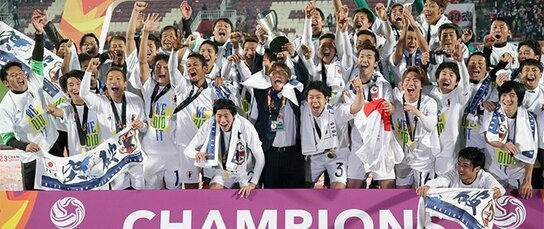
(Banner photo: The Japanese U-23 men's soccer team celebrates its Olympic berth after defeating South Korea to win the AFC U-23 Championship in Doha, Qatar, on January 30, 2016. © Jiji.)








 Read in other languages