


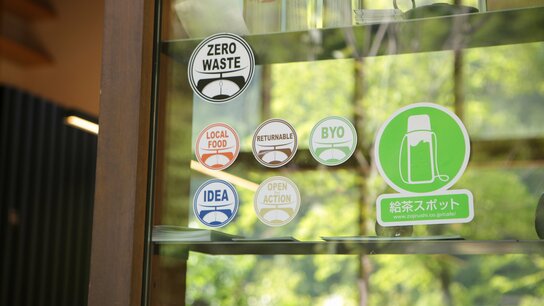
Recycling is not enough. Reusing old items and reducing the amount we discard are also required. The town of Kamikatsu, Tokushima, one of Japan’s leading municipalities in the waste reduction field, operates reuse stores and workshops. It is also gaining wide influence throughout the country with the Zero Waste Certification program.
Recycling Alone Won’t Eliminate Waste
“Up to now, we’ve put all our efforts into recycling the waste that we generate. Today, however, we’re starting to look earlier in the process, to reusing and reducing the things that were once discarded.”
So speaks Sakano Akira, the chair of Zero Waste Academy, an NPO based in Kamikatsu, Tokushima Prefecture.
Related article › The Kamikatsu Zero Waste Campaign: How a Little Town Achieved a Top Recycling Rate
In 2003, Kamikatsu became a pioneer in Japan with its Zero Waste Policy. Now the populace of Kamikatsu sorts waste into 45 types in 13 categories, achieving an 81% recycling rate in 2016. Sakano is among those who say that now, in addition to recycling, reduced waste generation must also be made part of the Zero Waste Campaign.

 Zero Waste Academy’s Sakano Akira continues to look for ways to improve in the Zero Waste Campaign.
The citizens of Kamikatsu bring their own waste to Hibigaya Waste Station, where they sort the waste themselves with assistance from the staff. Things that still have some use in them, or that others might want, are taken to Kurukuru Shop (whose name means “round-and-round,” symbolizing the items making their way back into the community), a reuse store on the premises.
Kurukuru Shop is a project for circulating still-useful things, both within and without the local community. While only Kamikatsu residents may bring items there, anyone may take items away. Some 15 tons of usable things that would otherwise go to waste pass through Kurukuru Shop annually, according to 2016 statistics.
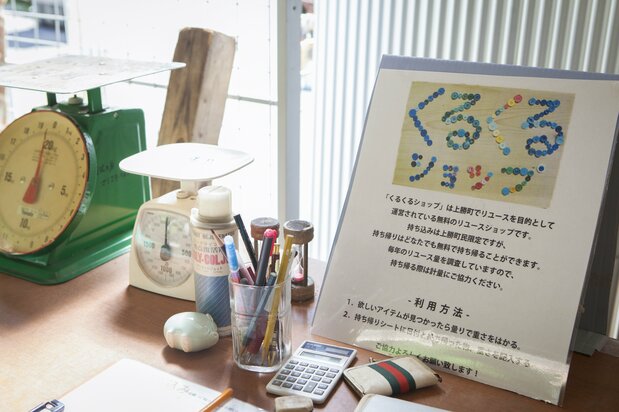 Established in 2006, Kurukuru Shop promotes reuse.
From Festival Trash to Popular Merchandise
Another project is Kurukuru Workshop. Located in the Hidamari (Sunny Spot) Senior Citizens’ Preventive Care Center, where Zero Waste Academy has its own offices, this workshop produces and markets products remade from old clothing and other old fabrics, as well as reworked cotton.
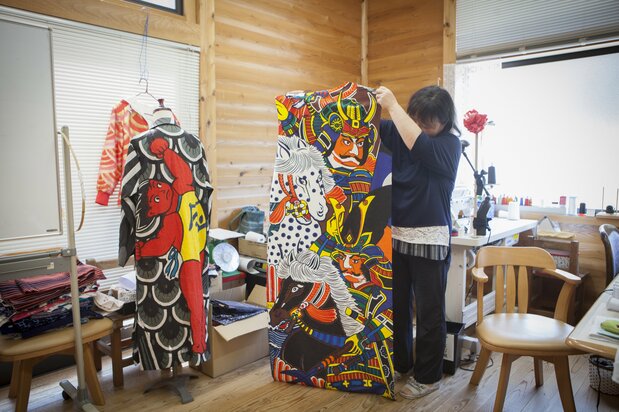
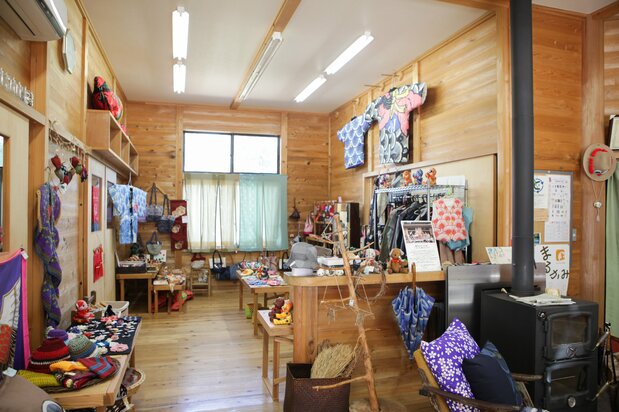 Established in 2007, Kurukuru Workshop makes clothing and personal articles. Items made with cloth from Boy’s Day carp streamers are especially popular.
Here you’ll find a range of products with modern and original designs, from windbreakers and stuffed animals made from Boy’s Day carp streamer cloth to handbags made from kimono cloth. The carp streamer cloth is the remains of large quantities of carp streamers that decorate the Katsuura River as part of the Irodori Koikoi Koimatsuri, a festival that takes place around May 5 each year near Tsukigatani Hot Springs in Kamikatsu. Carp streamers, which were previously burned as being no longer of any use, are now utilized efficaciously.
“Kurukuru Workshop got its start when we talked to elderly townspeople who were good at working with their hands,” says Sakano. “We have about twenty workers who bring us products that they made with their various skills.”
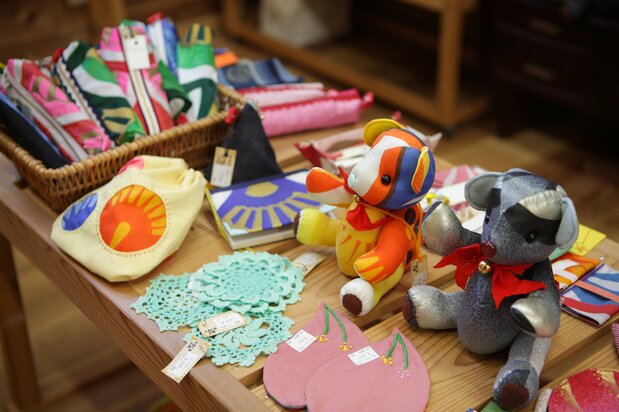 Prints of scales from carp streamers were used in the design of these items.
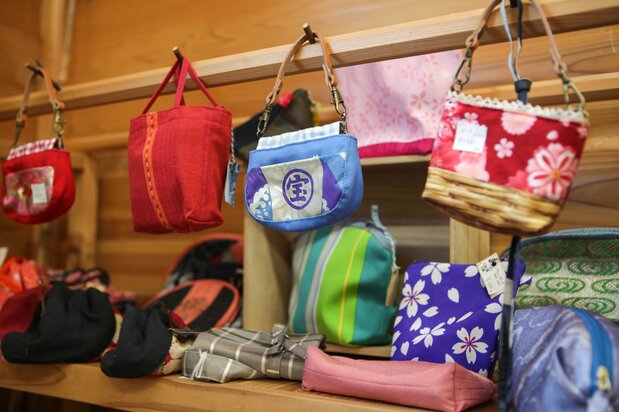 These bags and other articles were made by assembling pieces of kimono cloth.
 These bags and other articles were made by assembling pieces of kimono cloth.







 Read in other languages