


May 12–September 11
| Date | Fukushima Daiichi Nuclear Disaster and TEPCO | Government Response | Other Developments |
|---|---|---|---|
| May 12 | |||
| May 13 | The government agrees on a framework for using public funds to support TEPCO’s payment of compensation relating to the nuclear disaster. | ||
| May 14 | The Reconstruction Design Council presents its report with interim recommendations. | ||
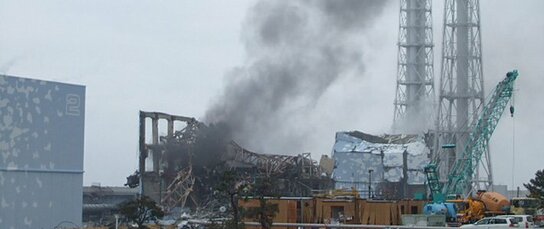
| May 15 | It is announced that the Unit 1 reactor underwent meltdown 16 hours after the March 11 earthquake. | Planned evacuations begin in Iitate and Kawamata in Fukushima Prefecture. | |
| May 16 | It emerges that Unit 2 and 3 reactors may also have experienced a meltdown. | ||
| May 17 | A revised schedule for bringing the nuclear disaster under control is announced. The earlier idea of a “water tomb” solution is abandoned; the goal of achieving a cold shutdown within a six to nine months remains in place. | The government announces a schedule for resolving the nuclear disaster; the plan calls for temporary housing to be available by the first half of August. | |
| May 18 | Without consulting his cabinet, Prime Minister Kan announces at a press conference that the government will consider a legislation to separate responsibility for the generation and distribution of electricity. | Over 100,000 people are said to have lost their jobs as a result of the earthquake and tsunami. | |
| May 19 | |||
| May 20 | TEPCO’s earnings report for March 2011 indicates a loss of over ¥1 trillion; President Shimizu Masataka announces he will step down and be replaced by Managing Director Nishizawa Toshio. | A law is enacted allowing elections scheduled in the disaster areas to be postponed. | |
| May 21 | Outdoor radiation levels of 1,000 millisieverts per hour, the highest so far, are detected at the south side of the Unit 3 reactor building. | Prime Minister Kan, Chinese Premier Wen Jiabao, and South Korean President Lee Myung-bak visit a disaster area in the northeast of Japan. | |
| May 22 | The leaders of Japan, China, and South Korea agree to work together to enhance nuclear safety and disaster prevention. | ||
| May 23 | A fact-finding mission from the International Atomic Energy Agency (IAEA) arrives in Japan to investigate the nuclear disaster. | ||
| May 24 | Meltdowns are confirmed to have occurred 60 hours and 101 hours after the earthquake at the Unit 3 and Unit 2 reactors, respectively. | A decision is taken to set up an investigative committee to study the Fukushima nuclear disaster. | |
| May 25 | |||
| May 26 | The G8 Summit begins in Deauville, France. Japanese and US leaders agree to postpone Prime Minister Kan’s trip to the United States until September. | ||
| May 27 | Final day of the G8 Summit; leaders issue a joint declaration, including a call for improving the safety of nuclear energy. | The IAEA fact-finding mission visits the Fukushima Daiichi Nuclear Power Station. | |
| May 28 | |||
| May 29 | The Reconstruction Design Council agrees on proposal of special reconstruction zones. | ||
| May 30 | |||
| May 31 | Operation begins of a device to cool the spent fuel pool of the Unit 2 reactor using recycled water. | At a meeting of governors from around the country, Prime Minister Kan states that all nuclear reactors in Japan except those at the Hamaoka Nuclear Power Station should resume operations. | |
| June 1 | A vote of no-confidence is submitted by three opposition parties. | The IAEA submits its report to the prime minister’s office. | |
| June 2 | Prime Minister Kan survives the no-confidence motion by indicating that he will step down, but in an evening press conference he rejects the idea of resigning right away. | ||
| June 3 | |||
| June 4 | High radiation levels of up to 4,000 millisieverts per hour are detected in the Unit 1 reactor. | Crown Prince Naruhito and his wife visit disaster areas in Miyagi Prefecture. | |
| June 5 | |||
| June 6 | The German government decides to phase out its nuclear power plants. | ||
| June 7 | The government submits a report to the IAEA recognizing the inadequacy of disaster prevention at Japan’s nuclear power plants. | ||
| June 8 | Prime Minister Kan marks one year in office. | The government’s current-account surplus for April declines by 70% compared to the same month the previous year. The trade deficit for the period May 1–20 exceeds ¥1 trillion. | |
| June 9 | Novelist Murakami Haruki delivers a speech in Spain denouncing the use of nuclear power. | ||
| June 10 | |||
| June 11 | Prime Minister Kan visits affected areas in Iwate Prefecture. | ||
| June 12 | |||
| June 13 | A total of eight nuclear power plant workers in Fukushima have been exposed to radiation levels exceeding the 250-millisievert limit. A water purification system is installed to purify contaminated water. | The Ministry of Health, Labor, and Welfare announces that radiation levels in tap water do not pose health risk. | Italian voters overwhelmingly reject nuclear power in a national plebiscite. |
| June 14 | A Fukushima daily farmer takes his own life. His suicide note reads: “If only this nuclear disaster had never happened.” | ||
| June 15 | |||
| June 16 | |||
| June 17 | |||
| June 18 | Minister of Economy, Trade, and Industry Kaieda Banri says it is safe for nuclear power plants to resume operations. | ||
| June 19 | |||
| June 20 | A basic reconstruction law is enacted, amid mounting criticism of the fact it has taken 102 days since the disaster to enact the law. | ||
| June 21 | The water purification system temporarily shuts down due to malfunction. | The government and opposition parties agree a 50-day extension of the Diet session. The same evening, Prime Minister Kan changes his proposal to 70 days. | |
| June 22 | Decision is made to extend ordinary Diet session by 70 days. | ||
| June 23 | |||
| June 24 | Matsumoto Ryū is appointed minister in charge of reconstruction. | ||
| June 25 | The Reconstruction Design Council submits a report to Prime Minister Kan. | ||
| June 26 | |||
| June 27 | TEPCO begins cooling with recycled water in the Unit 1–3 reactors. | Prime Minister Kan announces three conditions for his resignation, and his special advisor, Hosono Gōshi as minister in charge of handling the nuclear disaster. | |
| June 28 | TEPCO holds its annual general shareholders meeting. | First meeting of the government’s Headquarters for Reconstruction. | |
| June 29 | New leakage of recycled coolant water occurs at Fukushima Daiichi Nuclear Power Station. | Minister of Economy, Trade, and Industry Kaieda visits Saga Prefecture to request that the Genkai Nuclear Power Station resume operations. Local authorities seem likely to grant approval. | |
| June 30 | Work on installing a temporary tide barrier is completed. | ||
| July 1 | Summertime electricity saving begins. The government calls for saving of 15% from TEPCO users and 22% from Tōhoku Electric Power Company users. | ||
| July 2 | |||
| July 3 | |||
| July 4 | |||
| July 5 | Minister for Reconstruction Matsumoto Ryū, resigns after just nine days in office in the wake of insensitive remarks made to governors of prefectures affected by the earthquake and tsunami. His replacement is Hirano Tatsuo, senior vice minister at the cabinet office. | ||
| July 6 | Prime Minister Kan announces that “stress tests” will be conducted as a prerequisite for restarting nuclear power stations. | Kyūshū Electric Power Company is discovered to have encouraged its employees to send emails in support of nuclear power to a televised public hearing. | |
| July 7 | |||
| July 8 | |||
| July 9 | |||
| July 10 | |||
| July 11 | Japan marks four months since the earthquake and tsunami. | ||
| July 12 | |||
| July 13 | Prime Minister Kan announces a policy of reducing Japan’s dependence on nuclear power. | ||
| July 14 | Prime Minister Kan states the move from nuclear power represents his own personal view, not government policy. | ||
| July 15 | |||
| July 16 | |||
| July 17 | |||
| July 18 | |||
| July 19 | TEPCO announces the latest schedule for resolving the nuclear disaster. Step 1 has been achieved and the target of a “cold shutdown” by January 2012 remains in place. | ||
| July 20 | |||
| July 21 | |||
| July 22 | |||
| July 23 | |||
| July 24 | |||
| July 25 | The Diet approves the second supplementary budget. | ||
| July 26 | |||
| July 27 | |||
| July 28 | |||
| July 29 | |||
| July 30 | Record rainfall in Fukushima and Niigata Prefectures leaves two people dead and a further four missing. | ||
| July 31 | |||
| August 1 | The highest radiation level so far (over 10 sieverts per hour) is detected in the exhaust pipe between the Unit 1 and 2 reactors of the Fukushima Daiichi Nuclear Power Station. | ||
| August 2 | |||
| August 3 | |||
| August 4 | |||
| August 5 | |||
| August 6 | |||
| August 7 | |||
| August 8 | |||
| August 9 | The Nikkei average falls to ¥8,656, dipping below the ¥9,000 mark for the first time in five months. | ||
| August 10 | Work begins on assembling the steel framework for the cover at the Unit 1 reactor. | ||
| August 11 | Japan marks five months since the earthquake and tsunami. | ||
| August 12 | |||
| August 13 | |||
| August 14 | |||
| August 15 | |||
| August 16 | |||
| August 17 | The Hokkaidō Electric Power Company resumes operations at its Tomari Nuclear Power Station. This is the first nuclear power plant to be put back on line since the nuclear disaster in Fukushima. | ||
| August 18 | |||
| August 19 | The yen reaches a postwar high of 75.95 against the US dollar. | ||
| August 20 | The government admits that residents evacuated from a 3km radius of the Fukushima Daiichi Nuclear Power Station may not be able to return home for an extended period of time. | ||
| August 21 | |||
| August 22 | |||
| August 23 | |||
| August 24 | Credit rating agency Moody’s downgrades Japan’s debt rating. | ||
| August 25 | |||
| August 26 | Prime Minister Kan Naoto announces his resignation. | Residents evacuated from within a 3km radius of the Fukushima Daiichi Nuclear Power Station are allowed to return home for short visits. | |
| August 27 | |||
| August 28 | |||
| August 29 | Noda Yoshihiko is elected as new leader of the Democratic Party of Japan. | ||
| August 30 | Noda Yoshihiko becomes Japan’s sixth prime minister in the past five years. | ||
| August 31 | |||
| September 1 | Disaster Prevention Day (held annually to mark the 1923 Great Kantō Earthquake). | ||
| September 2 | The cabinet of new Prime Minister Noda is launched. The ministers in charge of reconstruction and the nuclear crisis remain the same as in the previous cabinet. | Typhoon Talas makes landfall in Japan, causing extensive damage across western Honshū over the next four days. Fifty people are confirmed dead, with another 54 still missing. | |
| September 3 | |||
| September 4 | |||
| September 5 | |||
| September 6 | |||
| September 7 | |||
| September 8 | |||
| September 9 | |||
| September 10 | |||
| September 11 | Japan marks six months since the earthquake and tsunami. |
(Originally written in Japanese.)



 Read in other languages