


The Mission: Overcoming Crisis
INTERVIEWER In March 2011 a major earthquake and tsunami struck the Tōhoku region and led to a nuclear accident in Fukushima. How important is the ability of politicians when it comes to responding to this kind of crisis?
NAKASONE Politicians have to shoulder the burden of fate. Once you become prime minister, you may be confronted with a massive earthquake, a major nuclear accident, an international conflict, or a fiscal crisis; that’s simply your fate as a politician. The politician’s mission, though, is to overcome whatever crises arise by reading the situation accurately, responding to it well, and passing the lessons of that experience on to the next generation.
That’s the politician’s job. So there’s a need to be constantly studying and bettering oneself. This is something that Ogata, Yoshida, and Hatoyama did. I did it, too.
INTERVIEWER During your tenure as prime minister, you showed real crisis-management skills following the 1986 eruption of Mt. Mihara on Izu Ōshima, when you directed the speedy evacuation of the entire island.

NAKASONE My generation lived through the war, so we’ve got the right mind-set for coping with emergency situations. We learned how leaders are supposed to respond to emergencies back when we were second or first lieutenants in the military. By the time we became politicians, we had already fully internalized those lessons. We had experience. No matter what happened, we were prepared to take action right away, without consulting with others first. That’s why I was never taken unawares as prime minister; why I never had to scramble to respond. I just had to do what I’d been trained to do.
People today lack that experience and have no opportunity to engage in similar study. All they can do is try to develop this talent on their own or ask an older politician to show them the ropes. There’s still a real need for the senior generation to pass on their knowledge. But the political scene today doesn’t place the same emphasis on relationships between seniors and juniors that used to exist, and there are fewer opportunities for politicians to learn the practical skills they need.
From the perspective of crisis management, we’ve got complete amateurs in charge of politics today. And I don’t think this is limited to the political sphere: there are problems with leadership education in every field in Japan today.
The Need for Hunger
INTERVIEWER In education and in other areas, what do you think the Japanese people need to aim for as we move into the future?
NAKASONE Beginning in my student days, I underwent humanistic training. I studied the things I needed to know as an individual and I established the aspects of my mind that would form the basis of my career in politics. As soon as I decided that I wanted to become a politician, I dedicated all my daily efforts toward that goal. I increased my spiritual nourishment and worked to boost what we call tandenryoku—the strength deep within the lower abdomen, the source of mental focus in the body.
Probably people who decide they want to go into politics today have a similar attitude. But, I think people were much hungrier in our day: they had a passionate desire to go out and grasp things for themselves, whether that meant learning from their elders or studying under some Zen monk. I suspect that hunger isn’t quite so strong among people today.
I feel that the educational system in prewar Japan helped to foster this sort of hunger for knowledge, or desire to develop one’s character. People who get their education today seem to find it harder to develop the same ambition and appetite for mental nourishment.
It all boils down to how we develop ourselves as human beings. You often hear it said that the education provided in the higher schools in Japan’s old education system was of high quality. And indeed, it wasn’t just classroom and book learning: we had lots of opportunities to learn through athletic competition, by living together in dormitories, by listening to what the senior students had to tell us. We were constantly hungry—always trying to take what those seniors had and make it our own. People today just don’t have the same drive.
INTERVIEWER So people today lack the necessary educational grounding? Would you say this has weakened politicians’ ability to perceive the true nature of things?
NAKASONE Yes it has. What we need more than anything is hunger. The desire to shed light on the truth of matters.
INTERVIEWER Will Japan be all right in the twenty-first century?
NAKASONE Yes, it’ll be all right.
INTERVIEWER You’re sure of that?
NAKASONE Of course. The Japanese people have always been bound together by strong tribal ties, in a sense. This dates back to ancient times when we were a small group of people confined to the islands they called Ōyashima [the eight great islands]. It’s not so apparent in ordinary times, but in critical moments that cohesion will always come to the fore. It’s rooted in the Japanese sense of history and national pride. I believe Japan still has its strengths. I don’t think there’s any need for worry on that account.
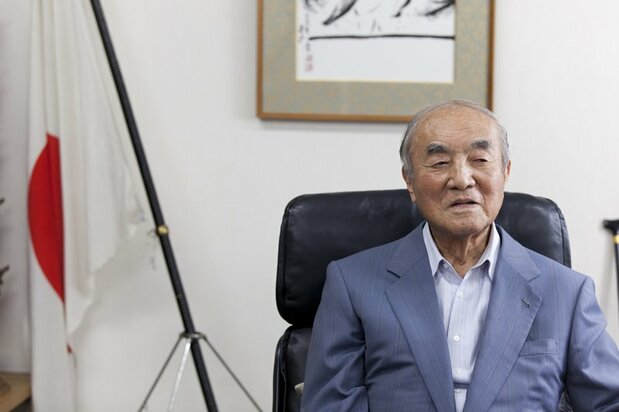
(Translated from a September 30, 2011, interview in Japanese. Interviewer Harano Jōji is representative director of the Japan Echo Foundation.)


 Read in other languages