


“Don’t Bother” is Typical Osaka Etiquette
Osaka locals have a distinctive manner of communicating. Whether selling food or other wares, merchants greet you with a “Welcome back” before they start bragging about their goods. Taxi drivers will update you on the weather and the local baseball team, the Hanshin Tigers. The moment you take a seat at a restaurant counter, they will ask where you have been and recommend dishes to you.
Kappō-style restaurants, where you sit facing the chef, wedged between other patrons, are another Osakan institution. They generally do not have menus listing dishes and prices; instead, the staff tell you what is on offer that day.
We are so used to supermarkets, with food stacked neatly and labeled: steak for stew or sirloin at x yen for y grams. You compare the prices, pop it in your basket, then proceed to checkout to scan the barcodes and pay. Minami is completely different.
Most retail areas in Osaka feature a fresh food market with shops in the adjacent street selling general household goods. If you visit the dried fish vendor, their preserved barracuda might catch your eye. “How should I cook it?,” you ask. “You can toast it, but if you don’t like the odor, fry it at medium-heat for 10 minutes.” Such interaction is the norm.
Sometimes they give you a little extra. Offer to pay for it, though, and the reply is iran koto—“Don’t sweat it.” This is Osaka.
Quintessential Osakan communication is more than just different intonation or slang: it is the style of interaction between a merchant and the customer, cultivated through years of doing business on the streets. In Osaka, humor always takes precedence. But this is not the slapstick of the city’s Yoshimoto comedy conglomerate—rather, it is the manner of interaction with others, along with perception and expression.
A Great Metropolis with Great Local Flavor
Osaka is undeniably a metropolis. Cities provide a cover where you can retain anonymity, ambling about like a traveler, shopping or eating, browsing the stores and going with the flow.
Osaka Minami, though, is more personable: The merchant and customer are known to one another, and share a local cognizance as members of a community.
Naturally, I believe that being able to exercise both anonymity and familiarity is a prerequisite for enjoying city life. The way that people in a city behave and relate to one another can be radically different depending on whether they think there is a limit to the number of fellow city-dwellers with whom they can have personal relations, or that the city population offers infinite possibilities.
The people who call Osaka home, though, hold the basic belief that everyone is a neighbor, everyone is good-at-heart, and everyone is funny. Even tourists with no Japanese can sense something of this. There is a common vibe to the urban centers of the world’s great cities, like Paris or Istanbul. The perception of this human warmth cannot be expressed in data, but, we Osakans can smell it.
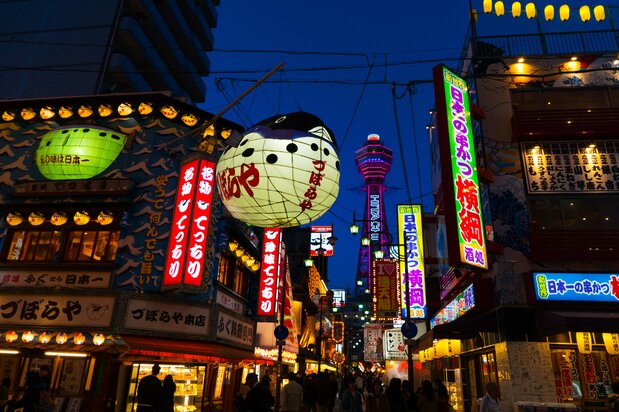
 Osaka’s Shinsekai, brimming with the city’s ambiance. (© Kuroiwa Masakazu)
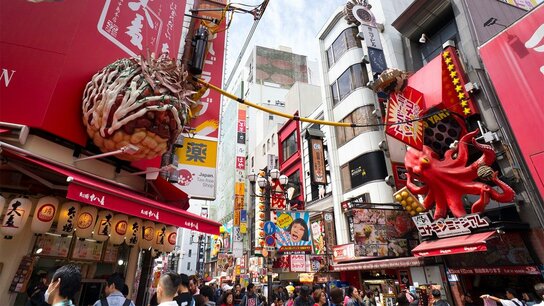
(Originally published in Japanese on May 27, 2019. Banner photo: Dōtonbori, Osaka Minami’s famed shopping district. © Kuroiwa Masakazu.)



 Read in other languages