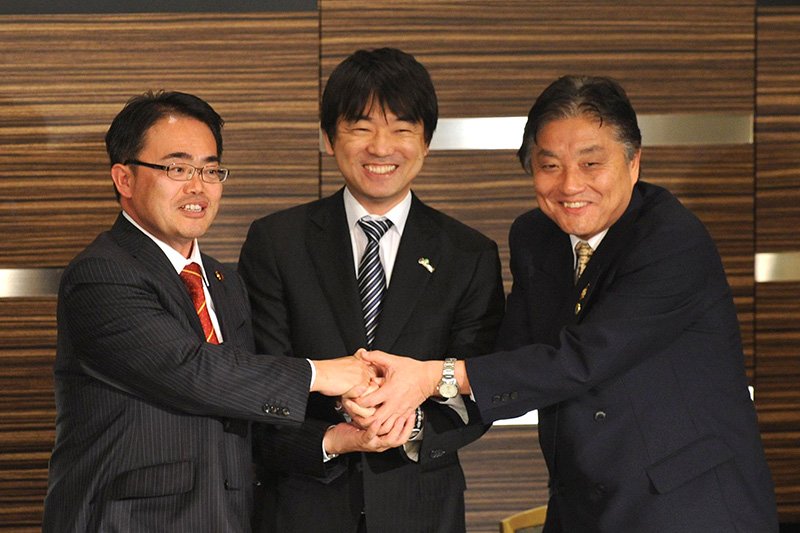
Hashimoto Tōru (center) flanked by Kawamura Takashi (right) and Ōmura Hideaki (December 20, 2010; photo: Sankei Shimbun). Kawamura was first elected in 1993 to the House of Representatives as a candidate for the Japan New Party (founded by Hosokawa Morihiro). In April 2009, while still in his fifth term in office, he resigned his position as a Diet member to run for mayor of Nagoya on a platform that included the pledge to reduce by 10% the city residential tax. Following his election as mayor, his tax reduction bill was approved by the city assembly in November 2009, but the assembly, in March 2010, passed a revised bill to limit the tax cut to just one year. Kawamura was at loggerheads with the city assembly, as a result of his effort to make the tax cut permanent and to reduce salaries of assembly members, and to overcome their opposition he spearheaded a petition drive to dissolve the assembly and hold a recall election. After gaining enough signatures for the recall election, Kawamura resigned his post as mayor in order to “seek the people’s mandate.” In February 2011, a “triple election” was held—a mayoral election, a referendum on whether to dissolve the city assembly, and the regularly scheduled Aichi gubernatorial election. In the election, the Genzei Nippon party headed by Kawamura fielded a candidate for governor, Ōmura Hideaki, who resigned his position as House of Representatives member for the LDP. Ōmura won the gubanotiral election, Kawamura was elected mayor, and the referendum calling for the dissolution of the Nagoya city assembly was approved by voters. In the assembly election held the following month, the Genzei Nippon candidates won the largest number of seats, surpassing the number of seats won, respectively, by the LDP, DPJ, and New Kōmeitō candidates.



 Read in other languages