-
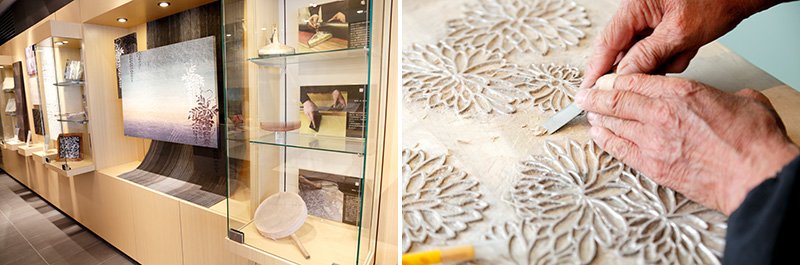
The products and tools on display give customers a deeper understanding the traditional crafts. The shop’s masters demonstrate their engraving skills right in front of visitors’ eyes.
-
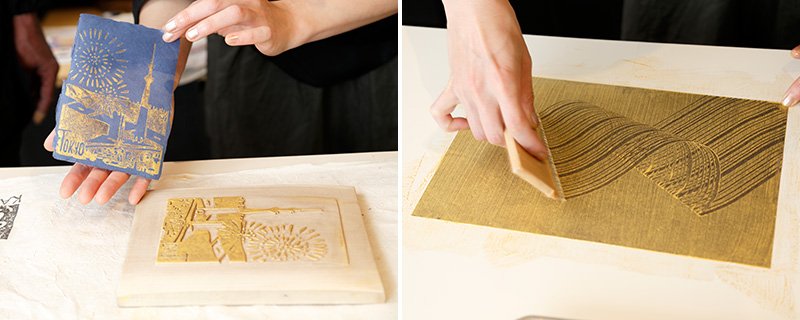
Woodblock prints. The person at left has created a wonderful impression of Tokyo Skytree. Visitors can experiment with the kushibiki technique shown at right.
-
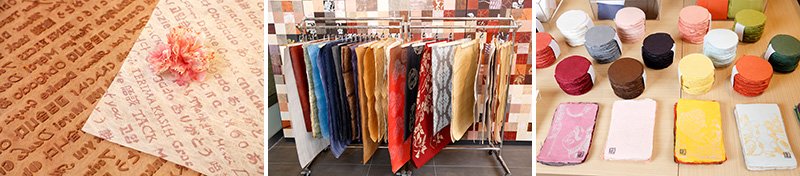
A piece of paper with “thank you” written in many world languages (left). The red corsage is made with the same paper. Paper that has been damaged in the printing process, or that is left over after wallpapering, is sold at a discount in one corner of the shop (center). Postcards and drink coasters are ideal souvenirs (right).
-
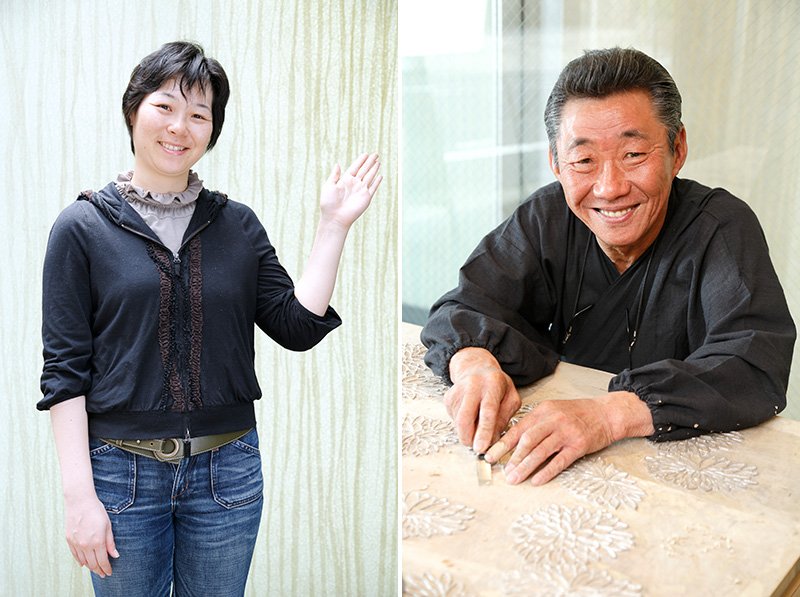
Watanabe Mayuko from the sales department and Nakanishi Katsuteru from the production department.
-
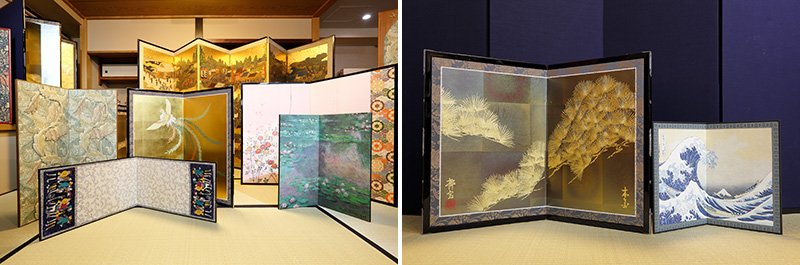
Kataoka Byōbu Ten breathes new life into the world of folding screens, as seen in the highly original works on display. The two items at right are popular among foreign visitors as souvenirs.
-
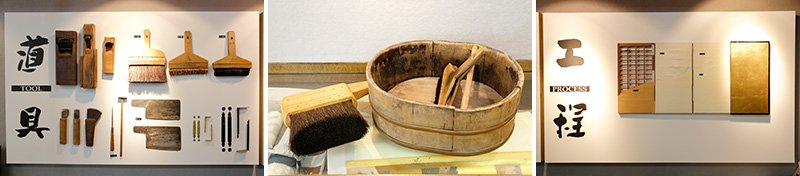
The museum area displays the tools that are used and shows how the screens are created.
-
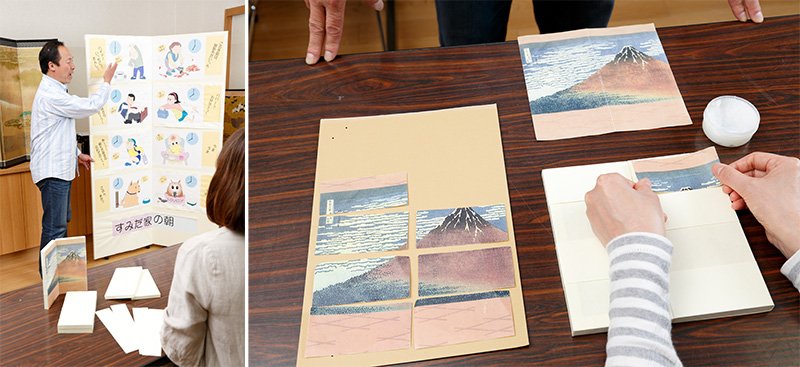
Kataoka using a large mockup to illustrate how the special folding screens are created. Visitors can make their own folding screen in the shop’s classroom.
-
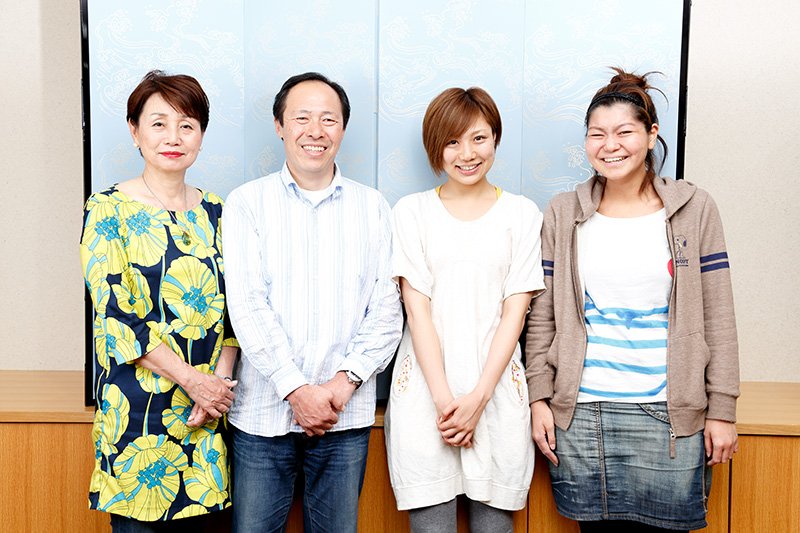
The Kataoka family. From left, Mitsuko, Kyōichi, Yui, and Sai.
-
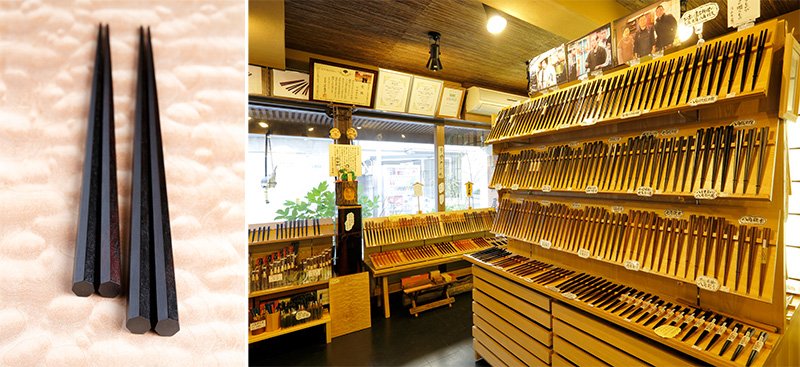
Heptagonal chopsticks.The heptagon is easier to hold than a square and less likely to slip than a circle.The chopsticks are laid out in the store without any packaging so that customers can pick them up and assess how they feel.
-
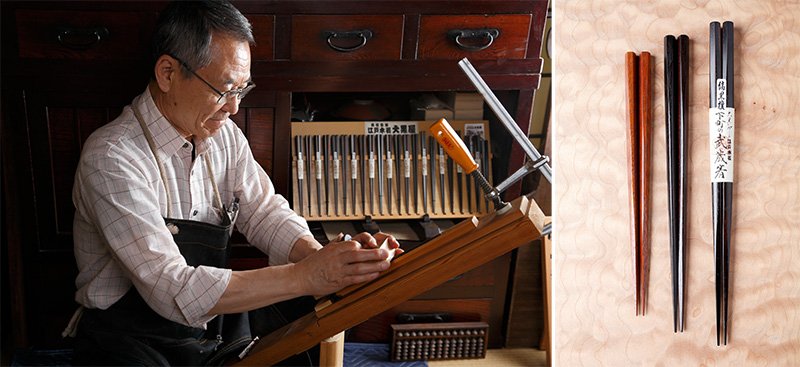
The shop is in a separate location from where the chopsticks are made, but visitors can sometimes see the finishing process take place in front of them. The height of Tokyo Skytree was selected to be 634 meters for the easily remembered alternate pronunciations of its digits. The figures six (mu), three (sa), and four (shi) form Musashi, the old name of the Tokyo region where it stands. To share some of the good luck, Takeda has made chopsticks (right) that have six sides at the top, three sides part way down, and four sides towards the tip. The sections with three sides are the easiest to hold. These chopsticks are used in the restaurant on the observation level of Tokyo Skytree.
-
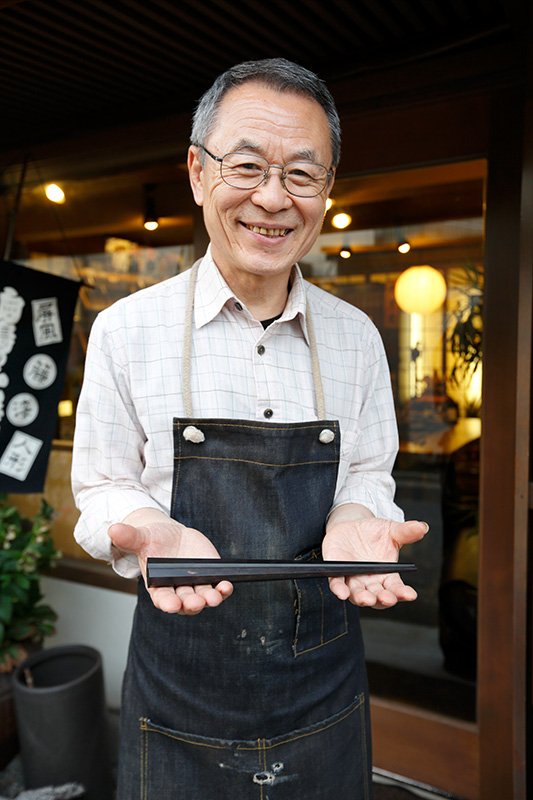
The owner, Takeda Katsuhiko.


 Read in other languages