-
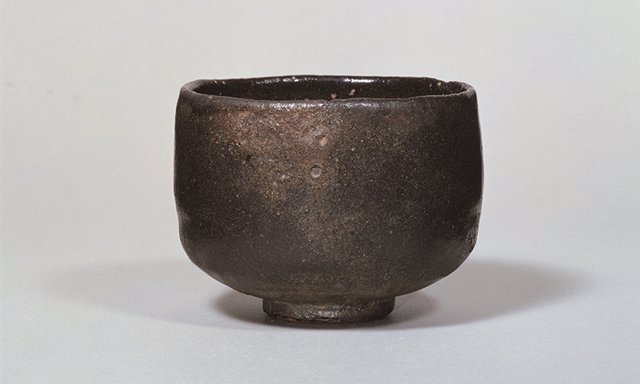
Black Raku tea bowl named Ōguro (Great Black). By Chōjirō, the first head of the Raku family. Important Cultural Property. Momoyama period (sixteenth century). Private collection. Said to be the finest tea bowl by Chōjirō, the piece has a tranquil appearance and an almost overpowering presence.
-
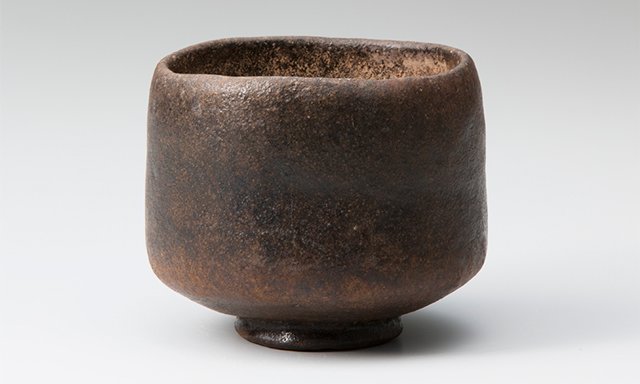
Black Raku tea bowl named Kaburo (Child Attendant). By Chōjirō. Momoyama period (sixteenth century). Collection of the Omotesenke Fushin’an Foundation. Rikyū is said to have been extremely fond of this bowl. The Omotesenke family customarily use this vessel only for the memorial services for Sen no Rikyū.
-
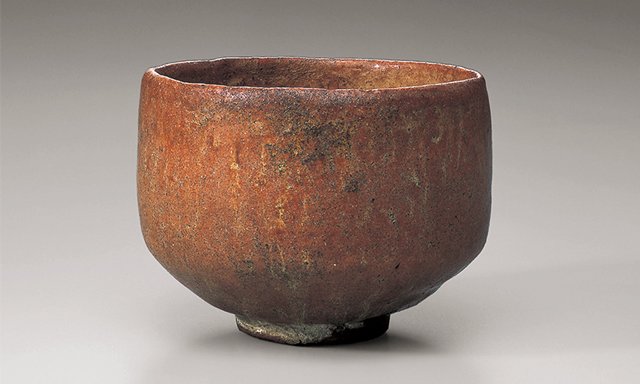
Red Raku tea bowl named Muichibutsu (Nothing). By Chōjirō. Important Cultural Property. Momoyama period (sixteenth century). Collection of the Egawa Museum of Art. Expressing the quintessence of Rikyū’s wabi-cha with its tranquil appearance, Muichibutsu is a celebrated bowl with a strong presence.
-
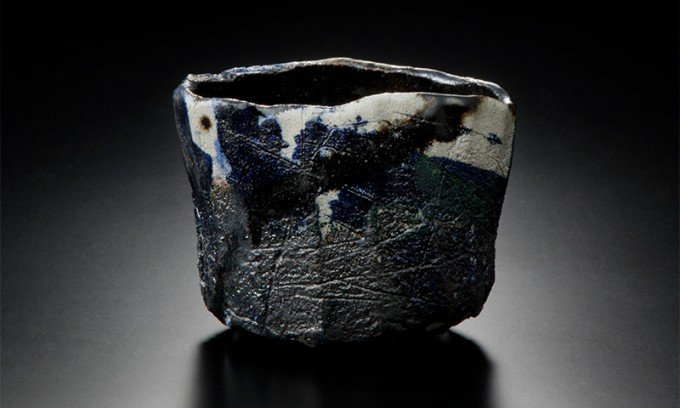
Yakinuki-type black Raku tea bowl by Raku Kichizaemon XV, 2012. Collection of National Museum of Modern Art, Tokyo. A yakinuki piece, made with a firing technique developed by Raku Ichinyū IV that involves direct exposure to red hot coals or flames deep inside the kiln. While preserving the traditions of the Raku family, Kichizaemon’s bowls are also receiving attention outside of Japan as the work of a modern ceramic artist.


 Read in other languages