-
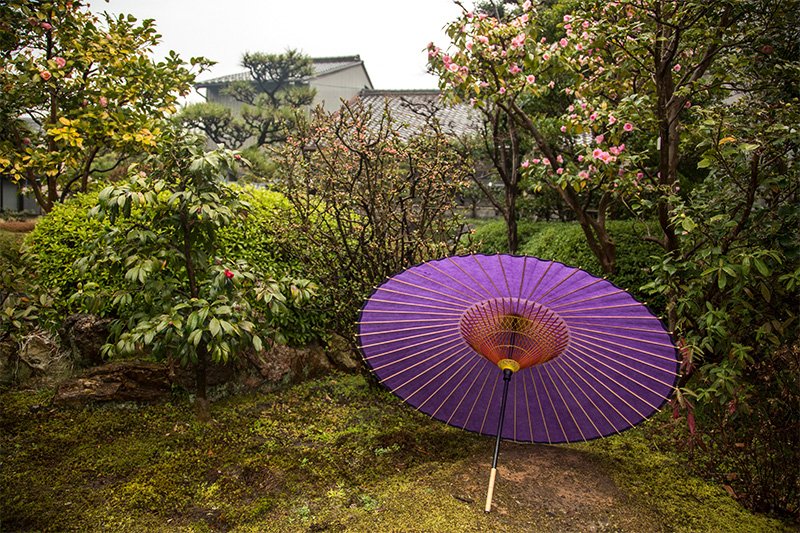
Ja-no-me-gasa can be used as both umbrellas and parasols. The colorful threads stitched into the framework are not just for decoration, but also help to strengthen the frame and make the umbrella sturdier.
-
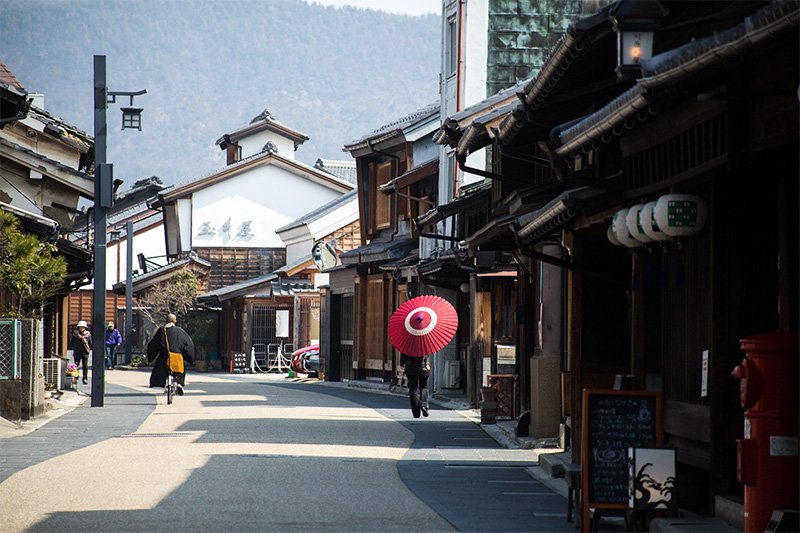
The distinctive silhouette of a ja-no-me-gasa adds an evocative element to the old streets of Gifu, a former castle town. The white circle is the “snake’s eye” that gave the umbrella its name.
-
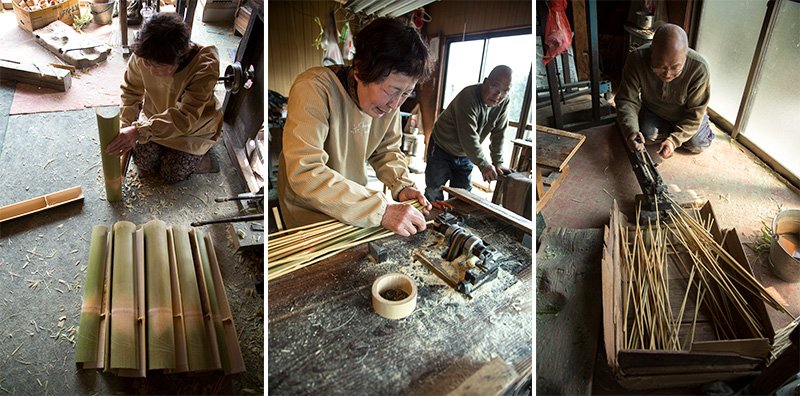
Making the ribs and spokes that will form the umbrella’s frame. Smoothing down the nodes on the inside of the bamboo (left). Using a billhook, the worker splits the bamboo into rods approximately three millimeters wide, and makes a hole for the thread to pass through the node of the bamboo (center). Shaving down the rods to make them thinner (right).
-

Using a line scratched onto the inside of the bamboo as a guide, the pieces are reassembled in their original order. The ribs are strung onto a thin strand of bamboo and dried in the sun before being moved onto the next stage.
-
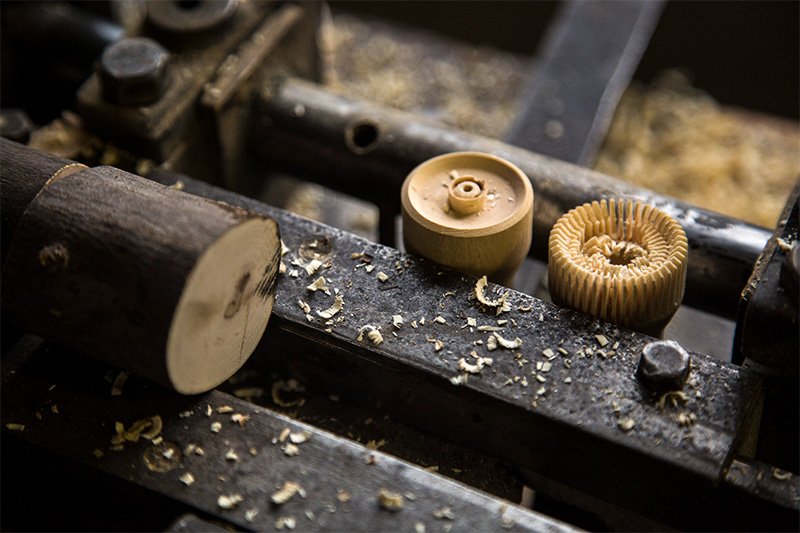
These spindles, made from the Japanese snowbell (Styrax japonicas), form the central hinges of the traditional umbrella.
-
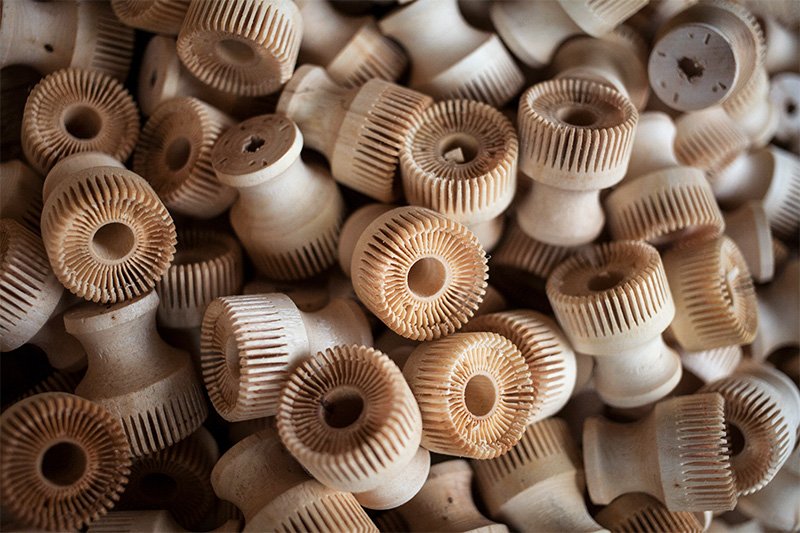
Each umbrella uses two spindles—a fixed spindle at the top of the umbrella, and a sliding spindle that is used to open and close the umbrella.
-

Attaching the fixed spindle to the ribs of the umbrella with cotton thread requires a steady hand.
-
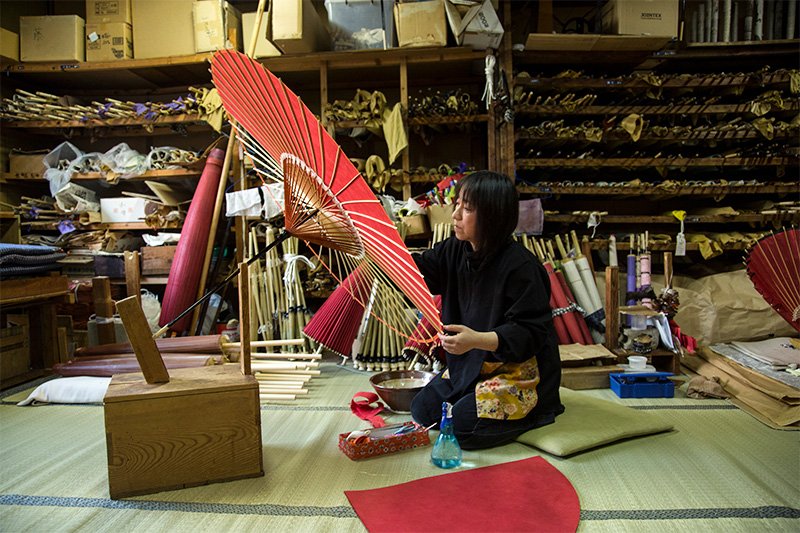
Attaching the paper. The ribs of the umbrella’s framework are fully opened and the strips of paper attached. Washi is also used to strengthen weak points in the frame, such as the joins between the ribs and the spokes and around the sliding spindle used to open and close the umbrella.
-
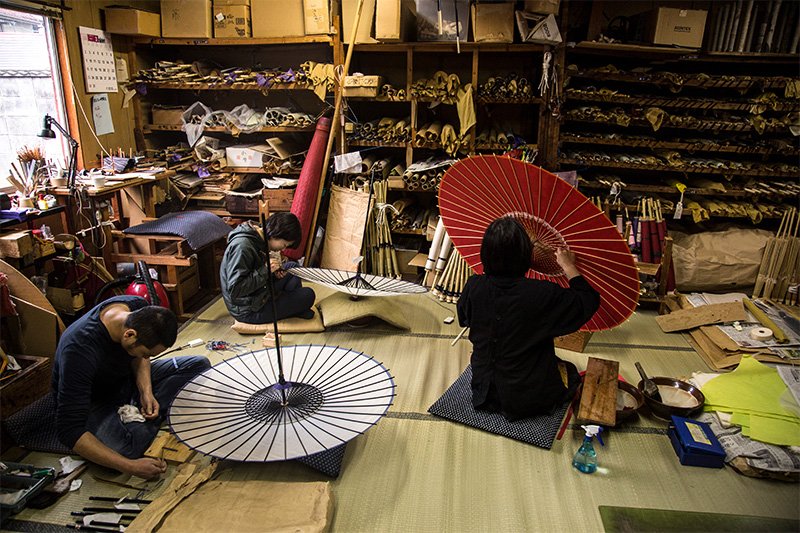
Young people work on improving their skills at a workshop of Sakaida Eikichi Honten. Many young people are attracted to the idea of learning a traditional craft.


 Read in other languages