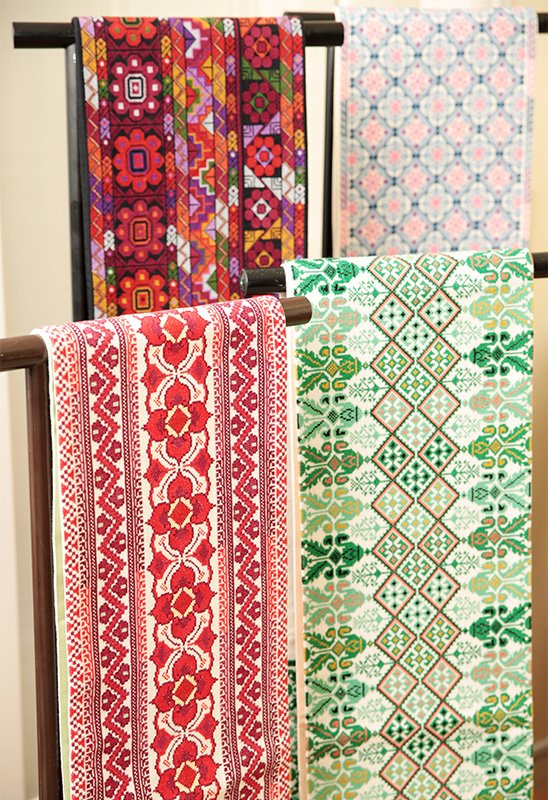
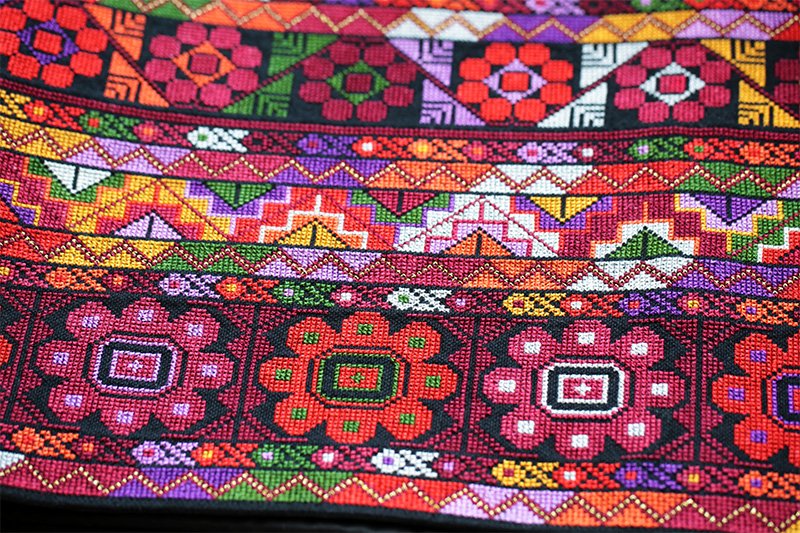
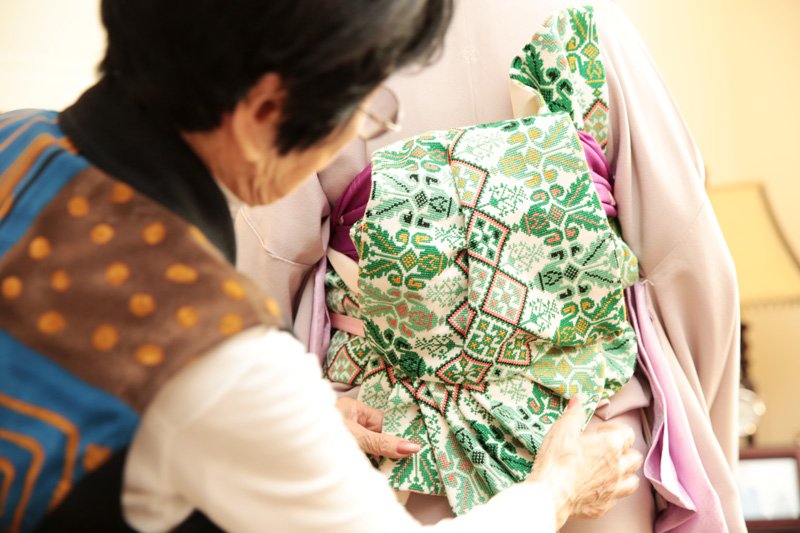
A hand-worked Palestinian-embroidered obi overseen by Yamamoto Maki, which uses traditional motifs in colors adapted to the subdued pastels favored for most women’s kimono. A highly skilled artisan, working near the city of Ramallah in the West Bank, used a fine cross-stitch to painstakingly cover the surface with an intricate pattern.
Yamamoto Maki.
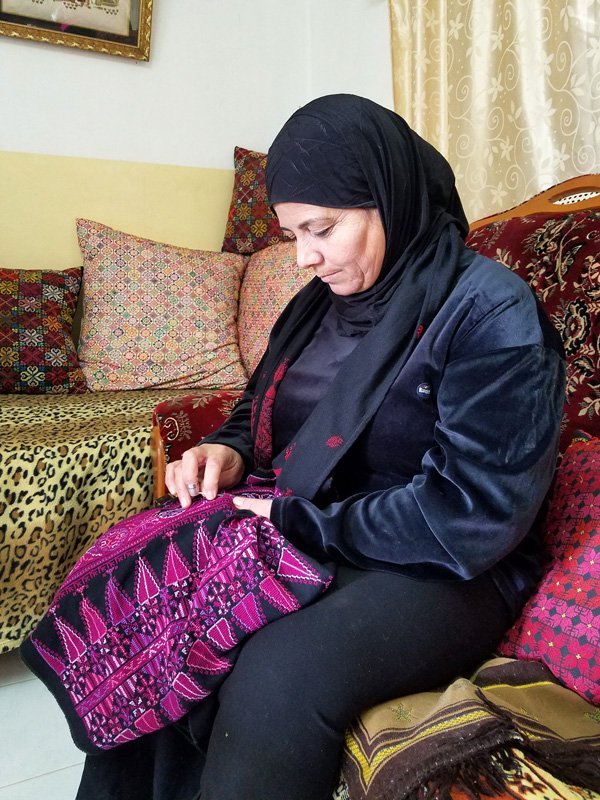
One of the women artisans who ply their craft with the support and guidance of the nonprofit Inash al Usra. She lives near Ramallah in the West Bank.
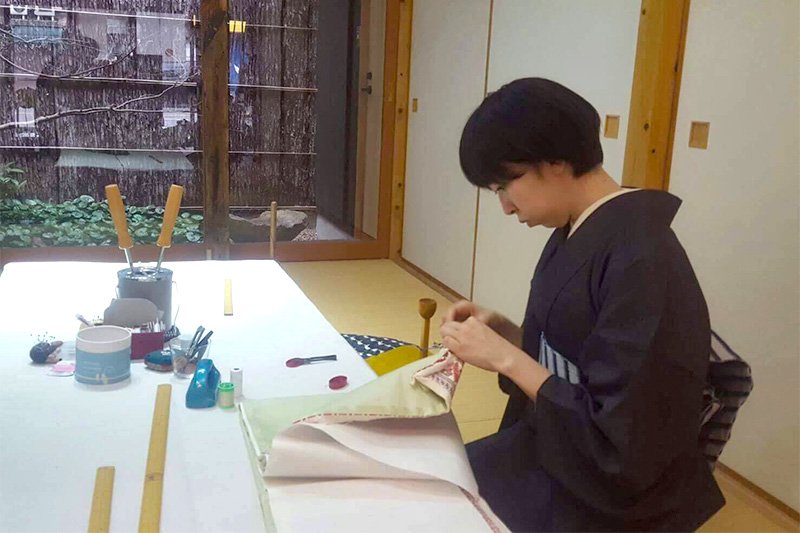
Ueki Yoshimi, a certified first-class kimono dressmaker, sews two lengths of fabric into a fukuro (pouch-style) obi. Ueki was astonished at the quality of the embroidery produced in a region she had pictured as one large war zone. “I’ve heard so much about the Palestinian territories from Ms. Yamamoto that now I want to go see them for myself.” (Photo courtesy of Matsukawa Co.)
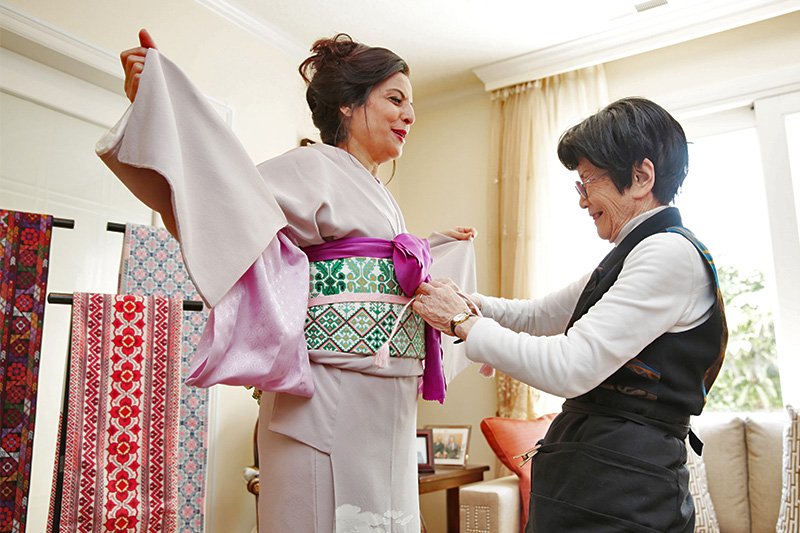
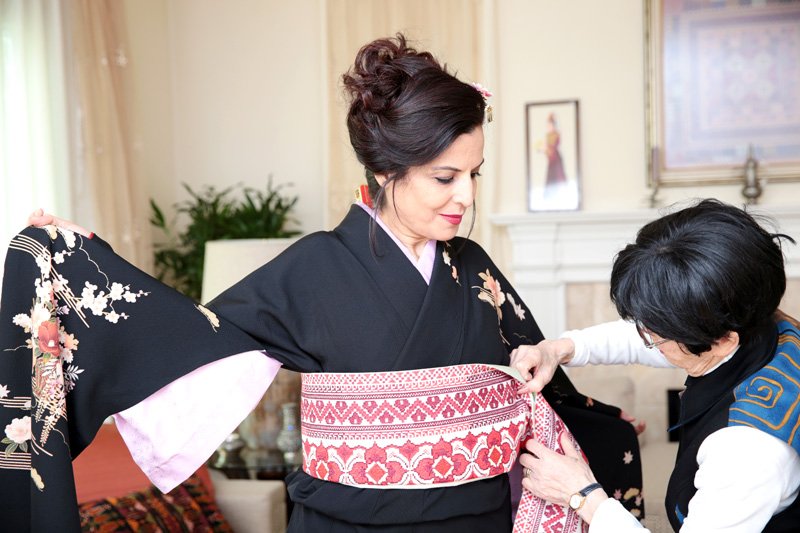
Takaoka Toyoko (right), a professional dresser, puts the finishing touches on Maali Siam’s kimono and obi. “A kimono expresses a woman’s femininity even though it covers her whole body,” says Takaoka. “It allows one to imagine the beauty within.”




 Read in other languages