-
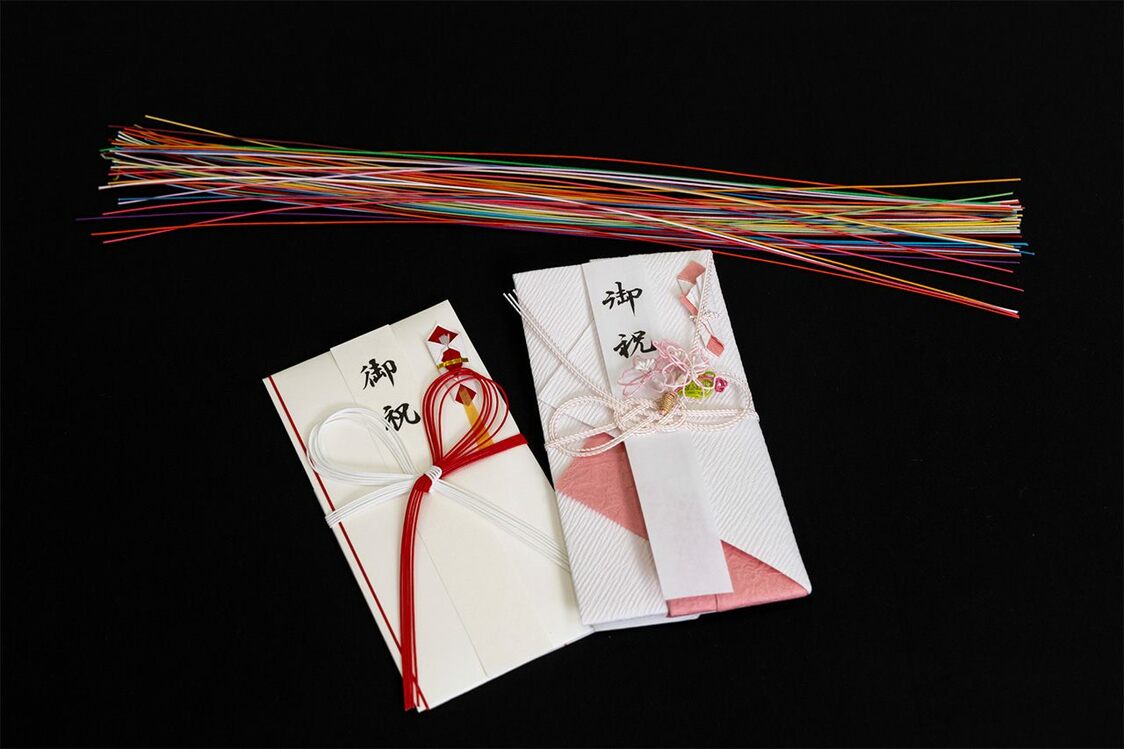
Most Japanese people have seen mizuhiki cords used to decorate envelopes for monetary gifts. They are layered upon one another to create the common hana-musubi (flower tie) at left; at right is an intricate awabi-musubi (abalone tie) crafted by Morita Eriko. (© Kawamoto Seiya)
-
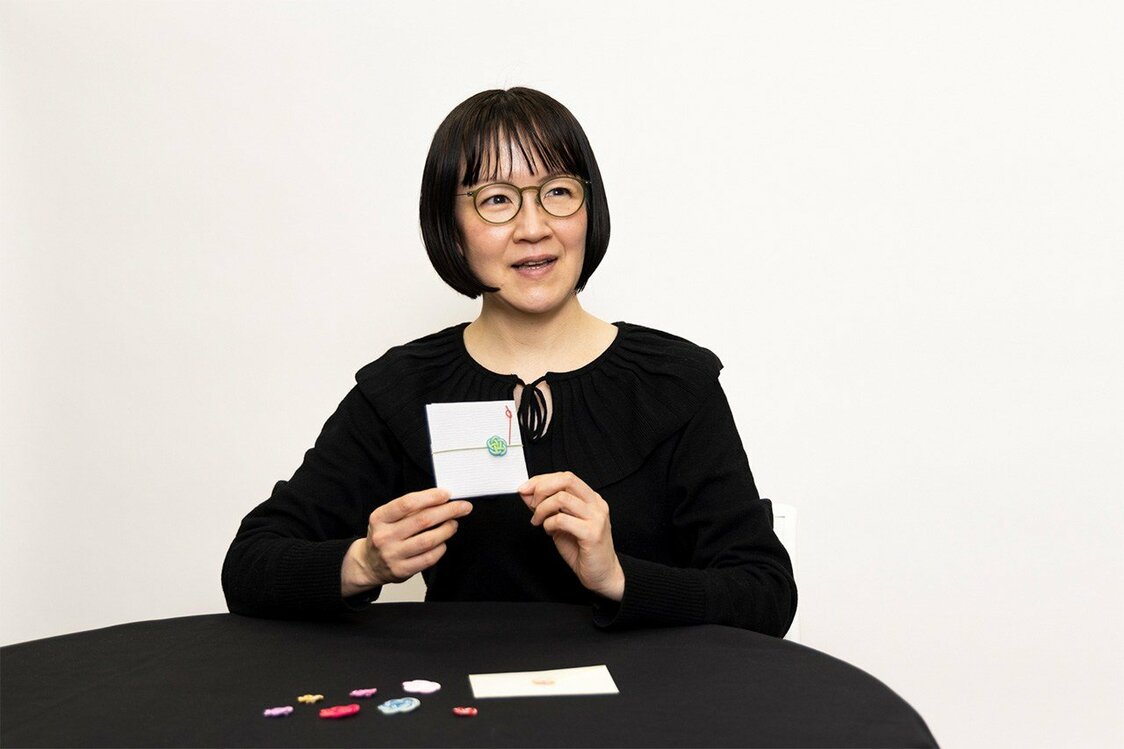
“Incorporating colorful designs into the tradition of mizuhiki has enabled me to connect with younger people,” says Morita. “Even just adding mizuhiki to an envelope helps convey the true feelings of the sender.” (© Kawamoto Seiya)
-
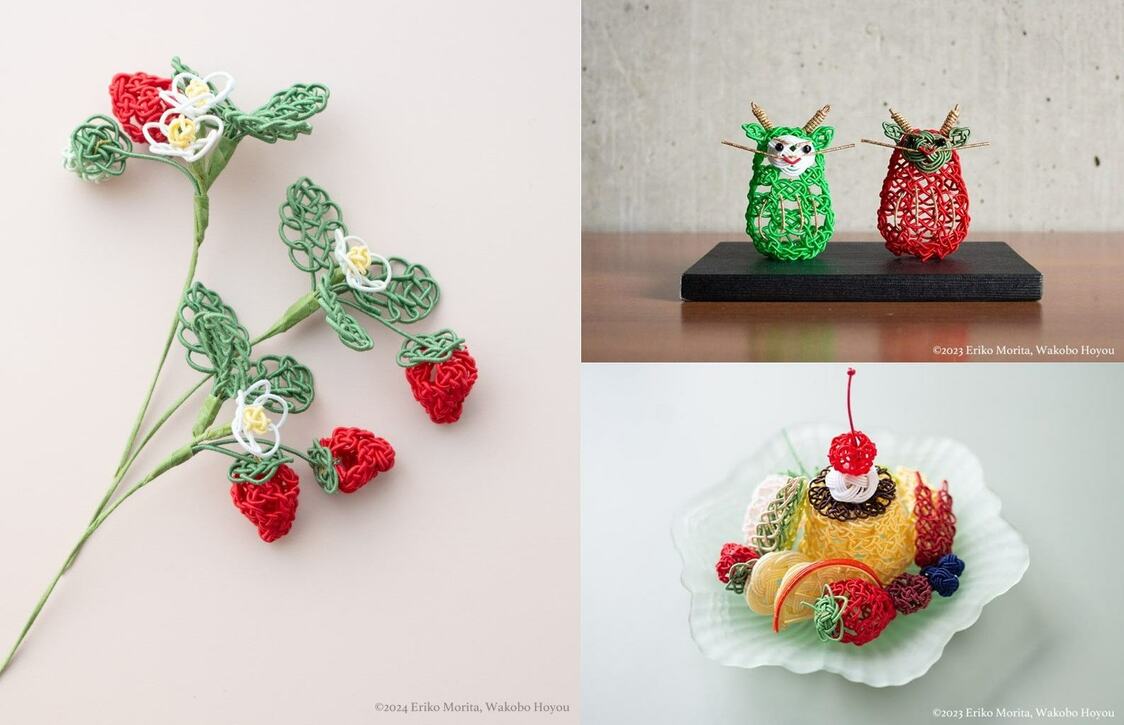
Floral designs are popular with mizuhiki novices. Clockwise from left: Delicate mizuhiki strawberries, playful Daruma figures that Morita designed for Year of the Dragon, and a colorful café-style “pudding à la mode.” (© 2021 Eriko Morita, Wakōbō Hōyū)
-
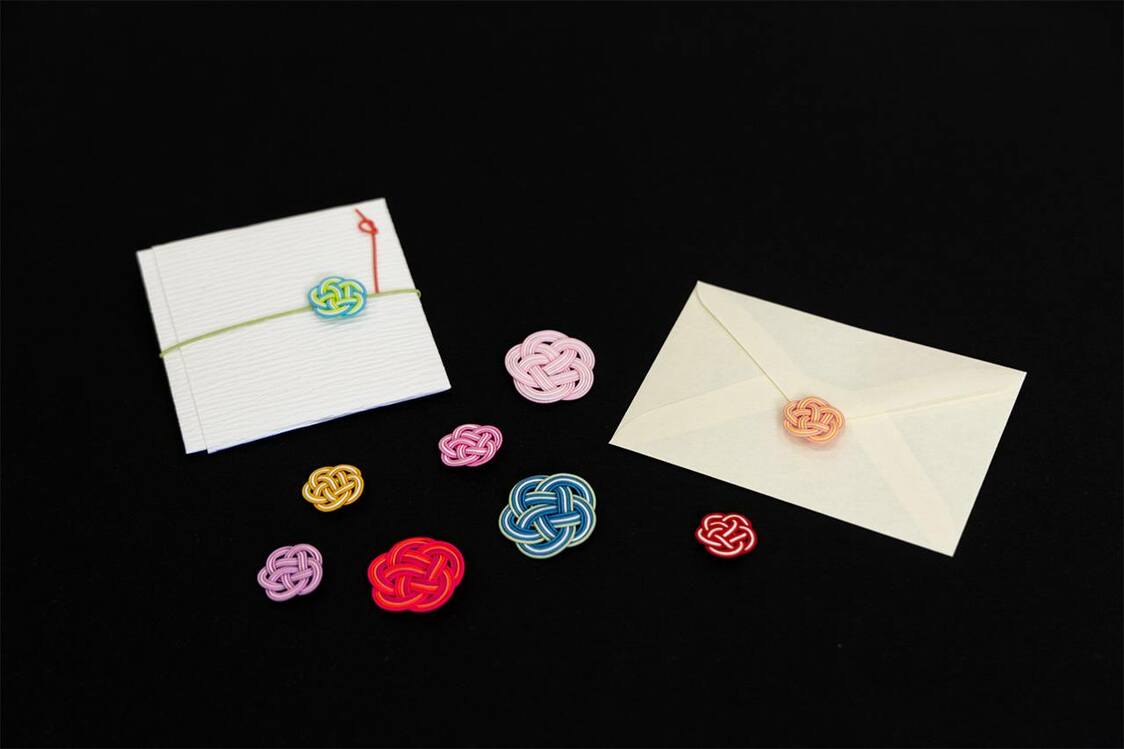
Using more strands produces a bigger finished piece. Five strands are used to make a large one, or three for a small one. More strands also increase the level of difficulty. (© Kawamoto Seiya)
-
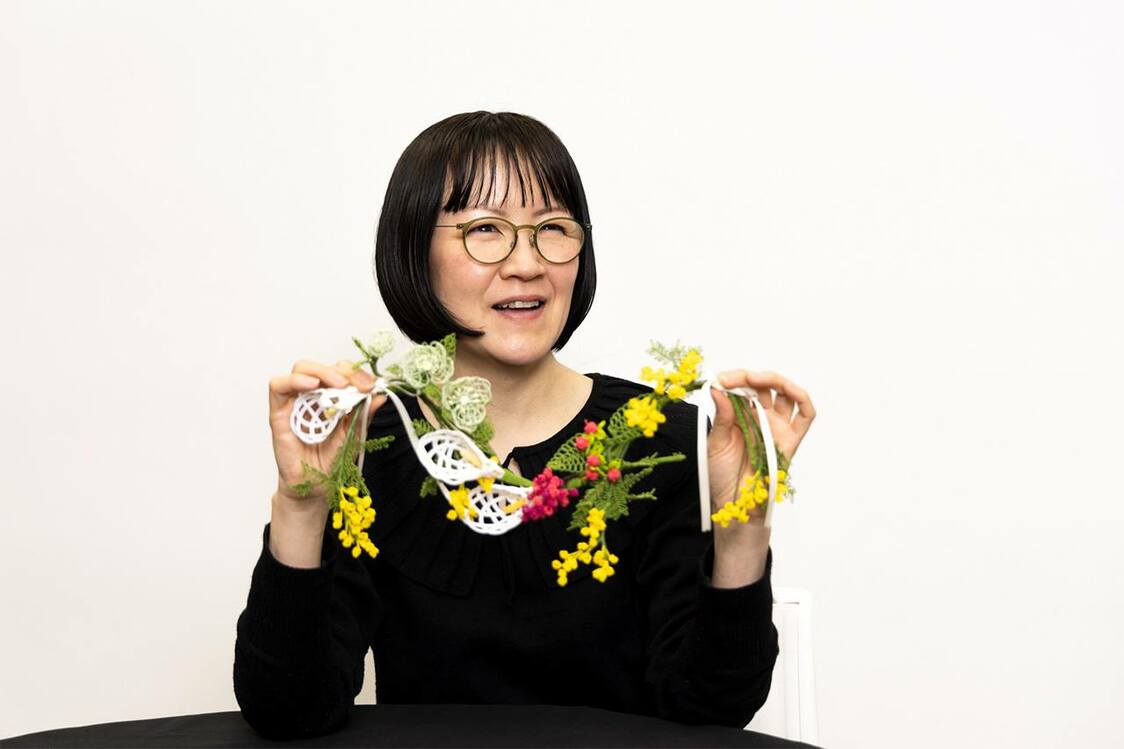
A gorgeous garland of yellow mimosa flowers. (© Kawamoto Seiya)
-
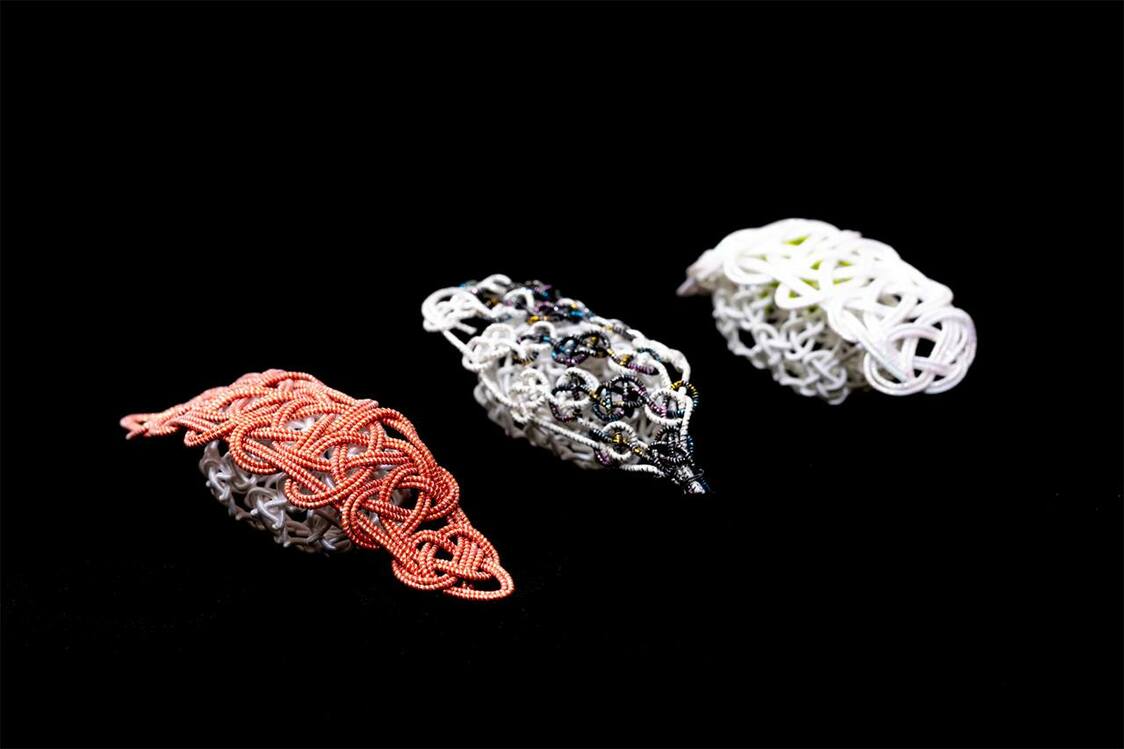
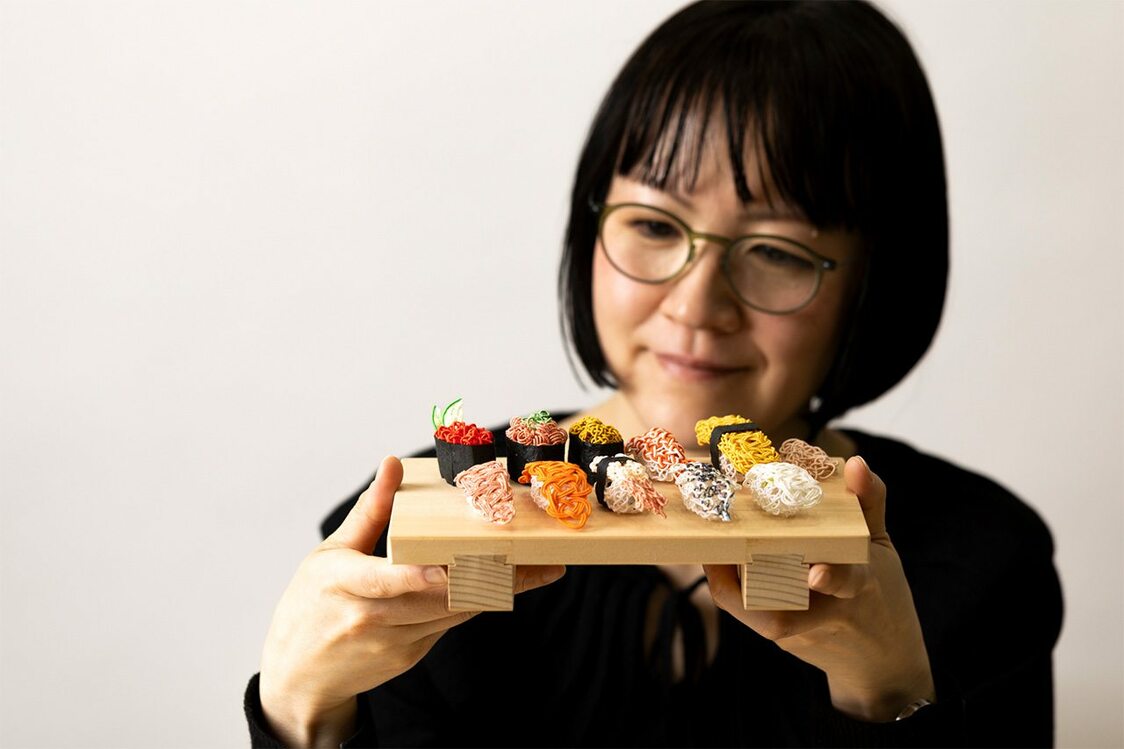
Sushi made using the basic “abalone tie.” (© Kawamoto Seiya)
-
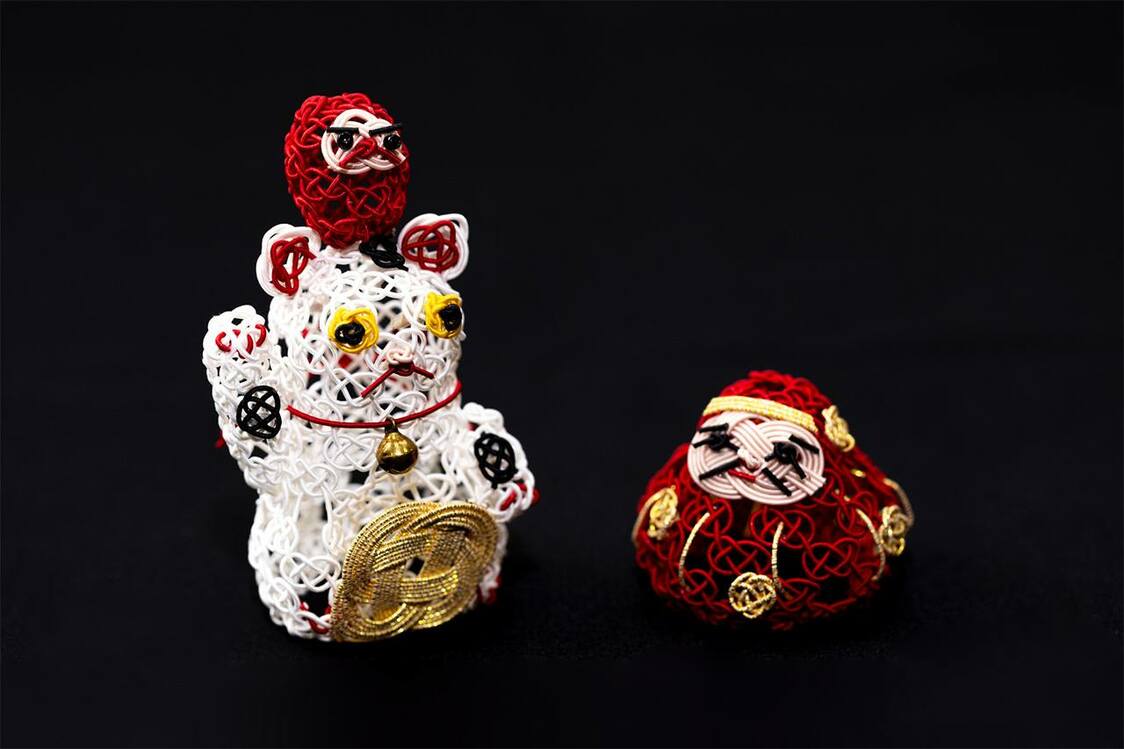
Manekineko and Daruma (a lucky cat and a tumbling Bodhidharma doll), also made with the “abalone tie.” Morita visualizes the finished piece as she works. (© Kawamoto Seiya)
-
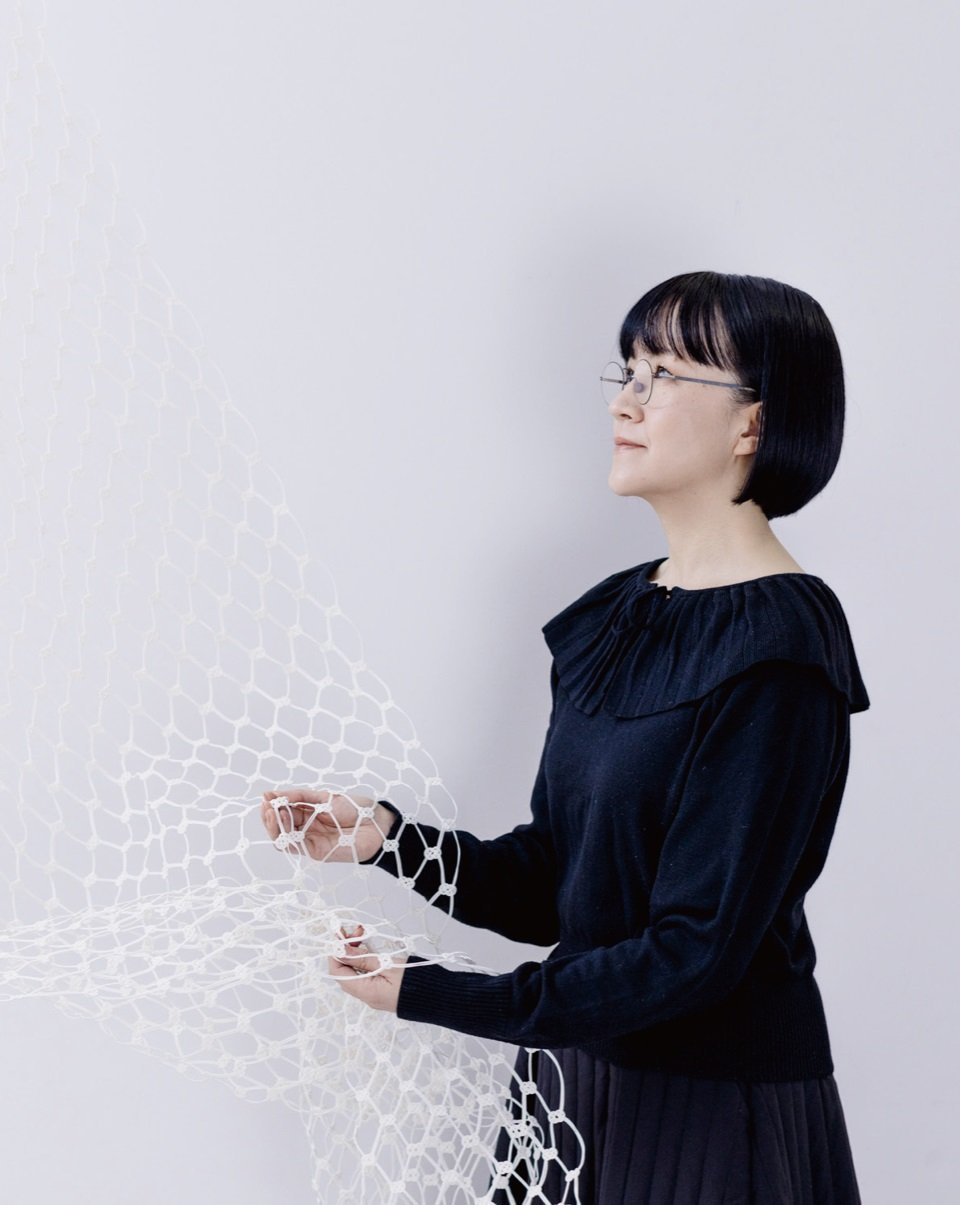
Morita holds part of a 5-meter-long mizuhiki creation. (© 2021 Eriko Morita, Wakōbō Hōyū)
-
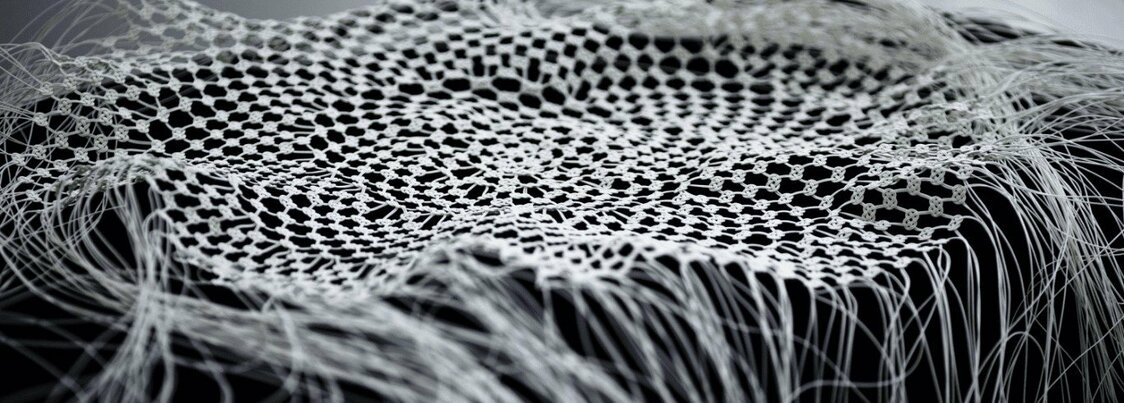
Morita is still gradually extending this piece. “I enjoy the moments when I can be totally absorbed in mizuhiki.” (©2023 Eriko Morita, Wakōbō Hōyū)
-
-
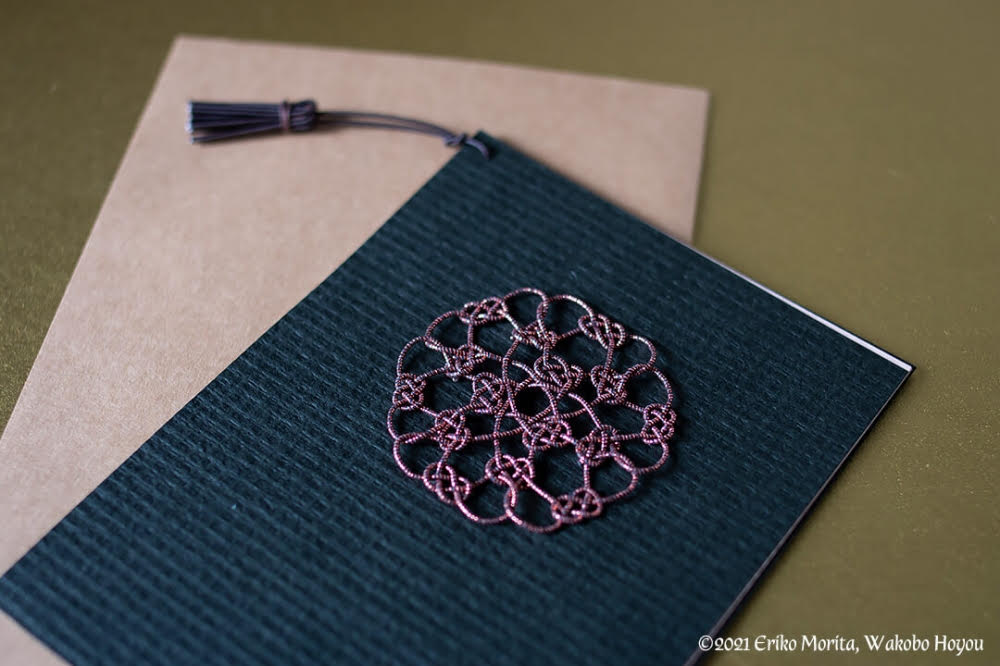
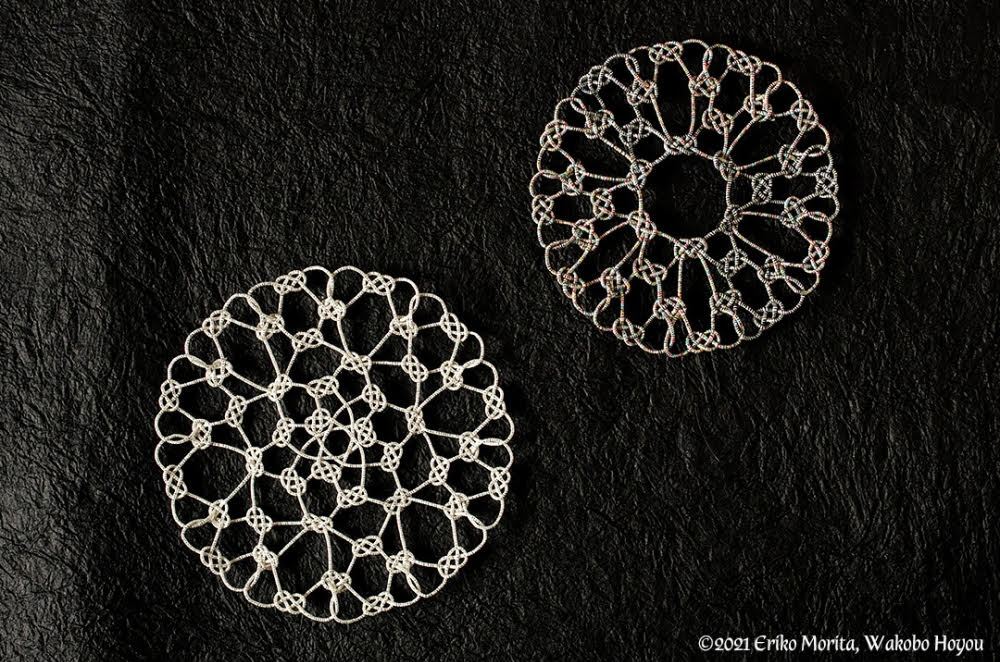
Celtic designs made with mizuhiki. (© Eriko Morita, Wakōbō Hōyū)
-
(© Kawamoto Seiya)


 Read in other languages