-
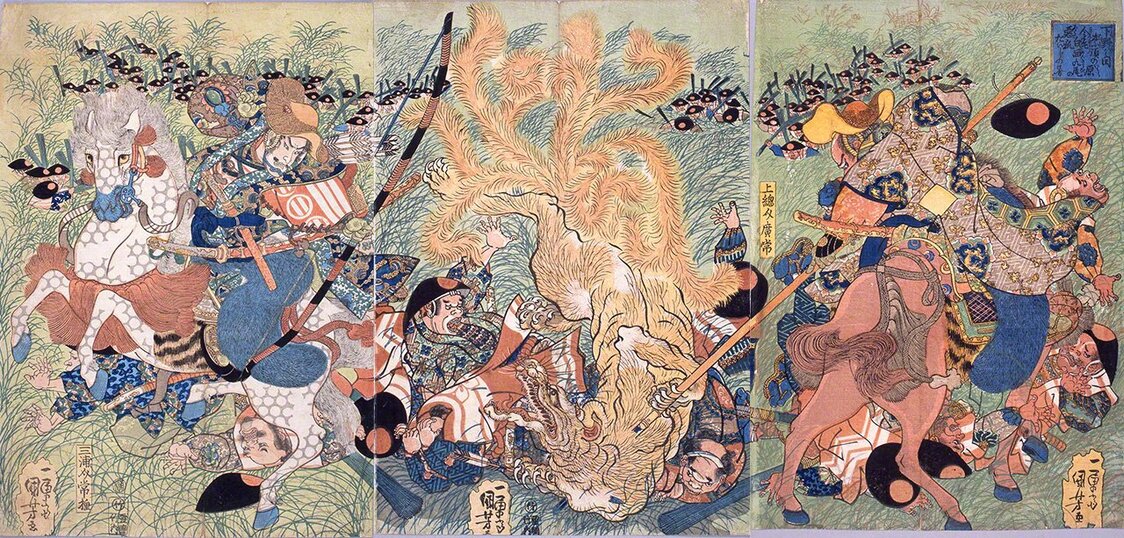
Shimotsuke no kuni Nasu no hara kinmō hakumen kyūbi no akko taiji no zu (The Defeat of the Evil Nine-Tailed Fox on Nasu Moor in Shimotsuke Province), Utagawa Kuniyoshi, 1830. (Courtesy of the Hyōgo Prefectural Museum of History)
-
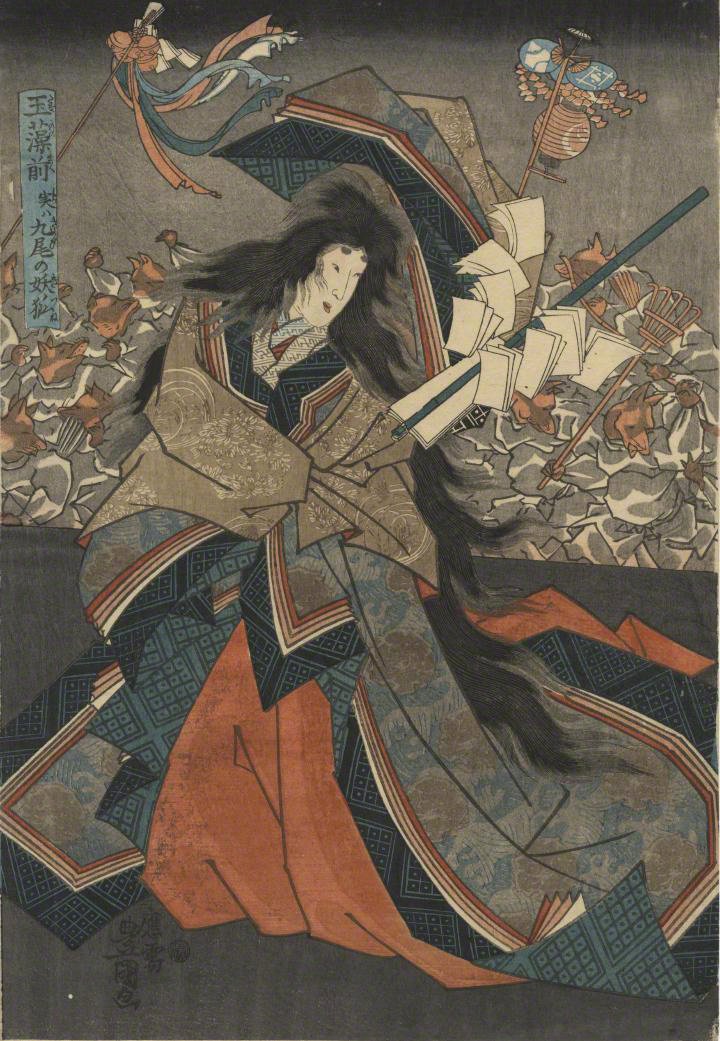
Tamamo no Mae, as pictured in Abe no Yasunari chōbuku yōkai zu (Abe no Yasunari Uses a Mirror to Reveal Tamamo no Mae’s True Form as a Nine-tailed Fox). (Courtesy of the International Research Center for Japanese Studies)
-
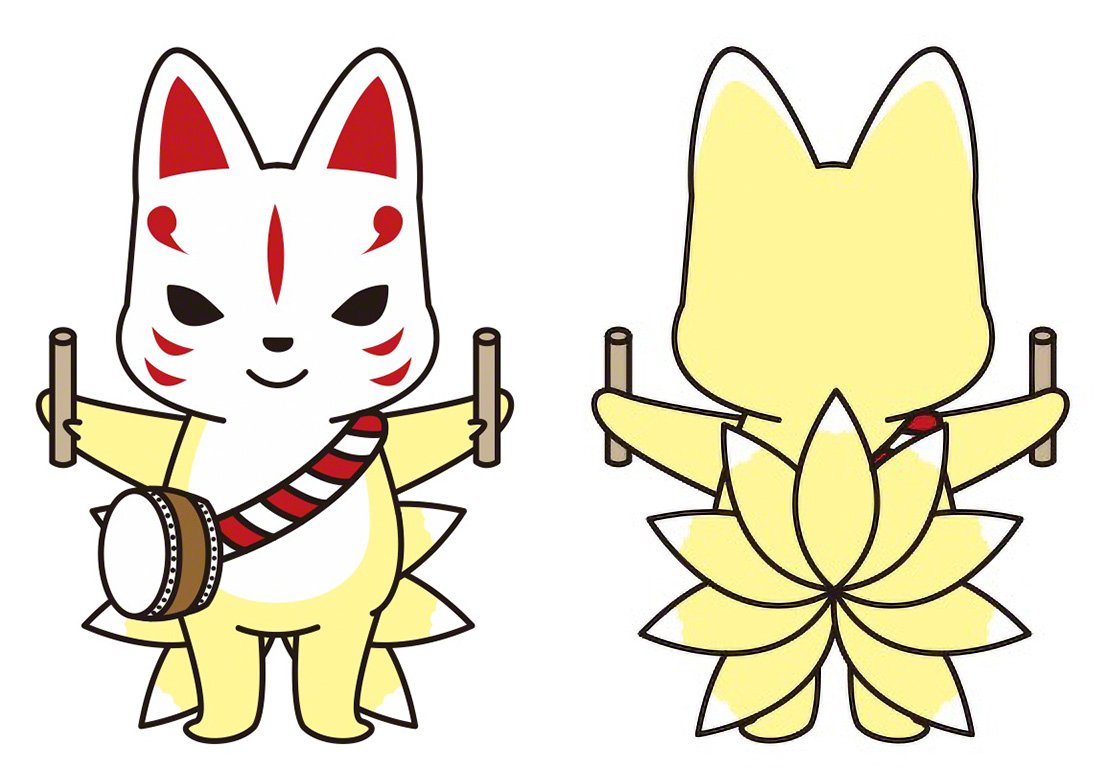
Nasu’s tourist ambassador Kyūbī, a name signifying “nine tails.” (Courtesy of the Nasu Municipal Tourist Information Center)
-
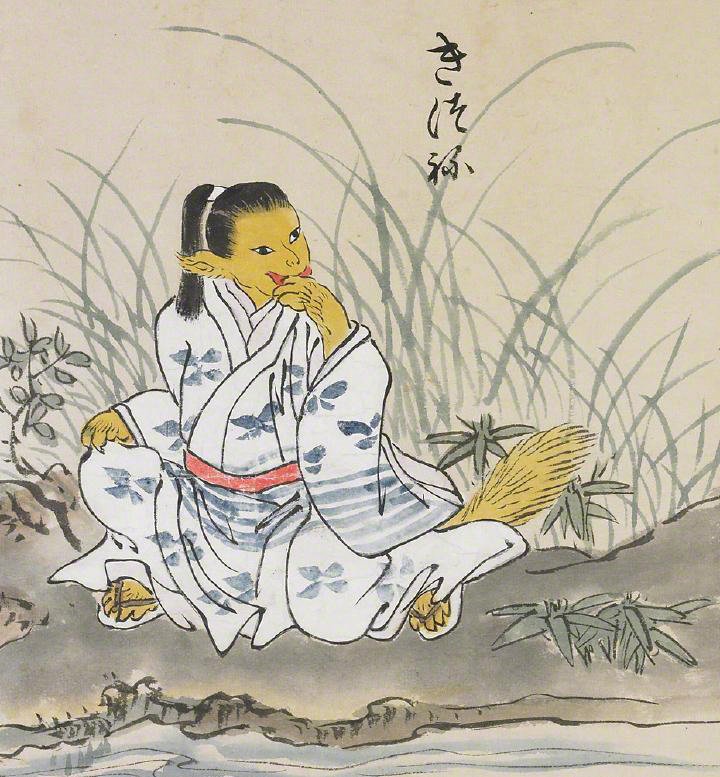
A fox from the late Edo-period Bakemono tsukushi emaki (An Illustrated Scroll of Shape-Shifters). (Courtesy of the International Research Center for Japanese Studies)
-

Foxes venerated at Toyokawa Inari Betsuin, Akasaka, Tokyo. (© Pixta)
-
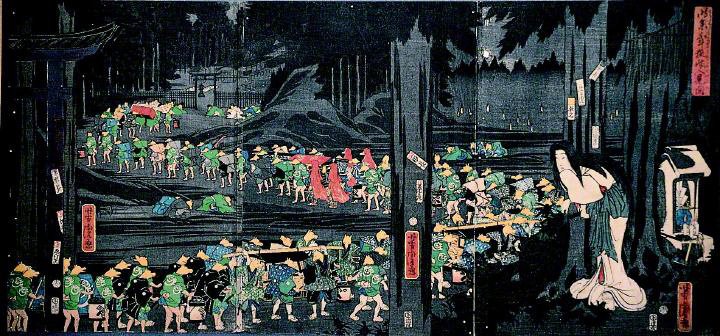
Tokimairi hakarazu mo kitsune no yomeiri o miru zu (Watching a Fox Wedding Procession). (Courtesy of the International Research Center for Japanese Studies)
-
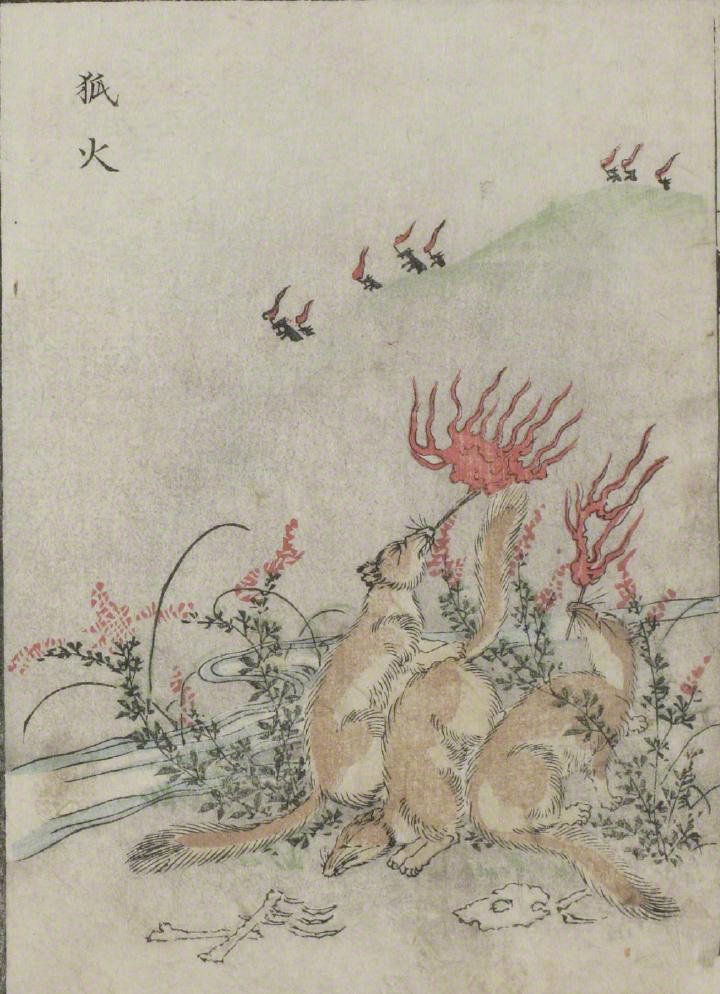
Foxfire from Kaibutsu ehon (Monsters Illustrated). (Courtesy of the International Research Center for Japanese Studies)
-
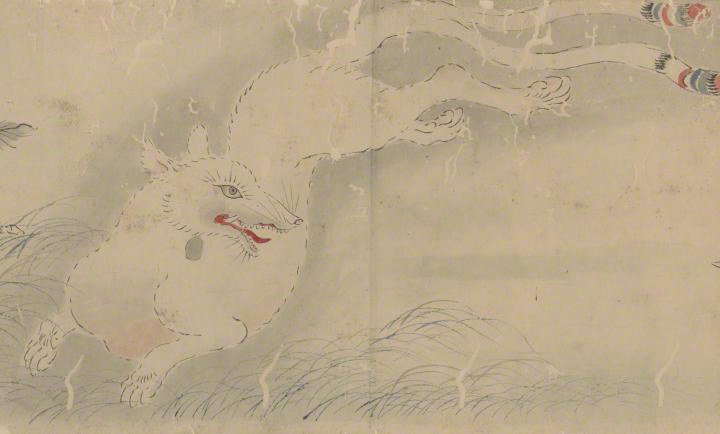
A two-tailed version on the Tamamo no Mae monogatari emaki (Illustrated Scroll of the Tamamo no Mae Tale). (Courtesy of the International Research Center for Japanese Studies)


 Read in other languages