-
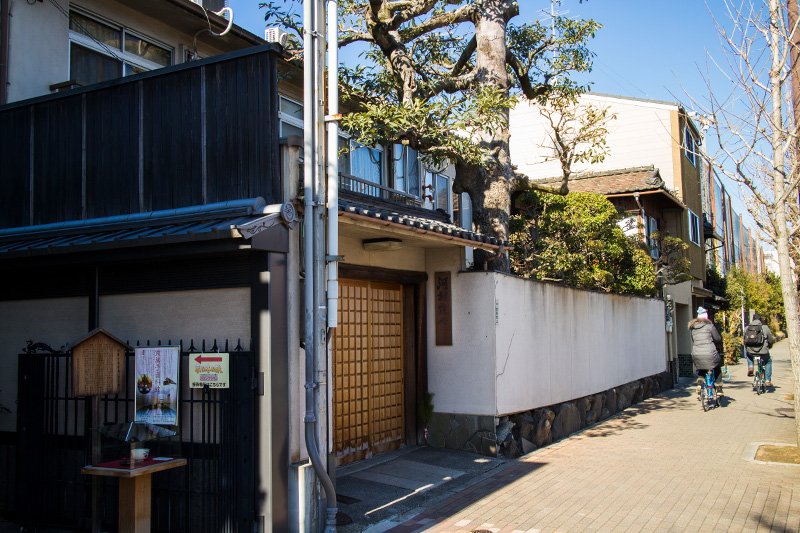
The front gate of the Kawamura Nō Theater.
-
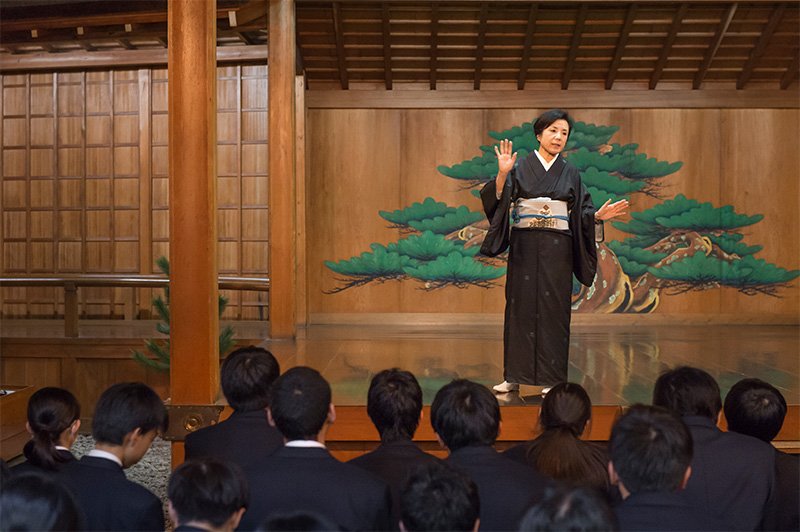
Kawamura Junko leads a workshop for high school students.
-
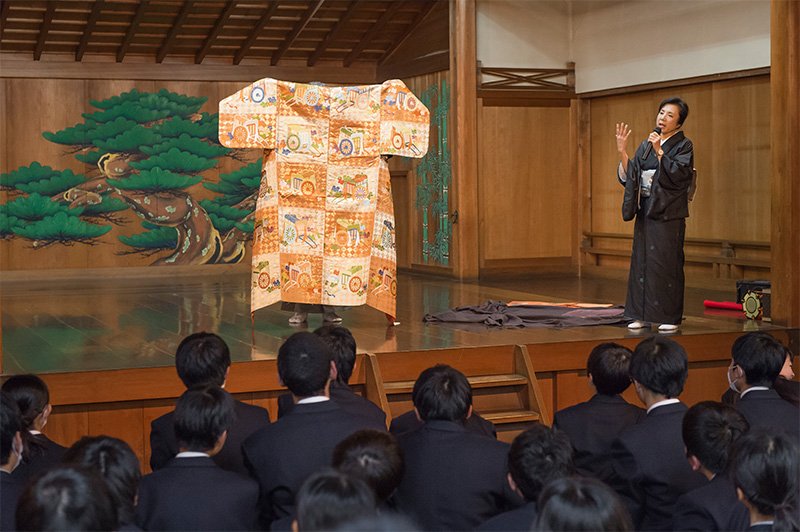
Students listen attentively to Kawamura’s description of nō costumes, which, like this karaori woven using gold and silver thread, can weigh as much as 10 kilograms.
-
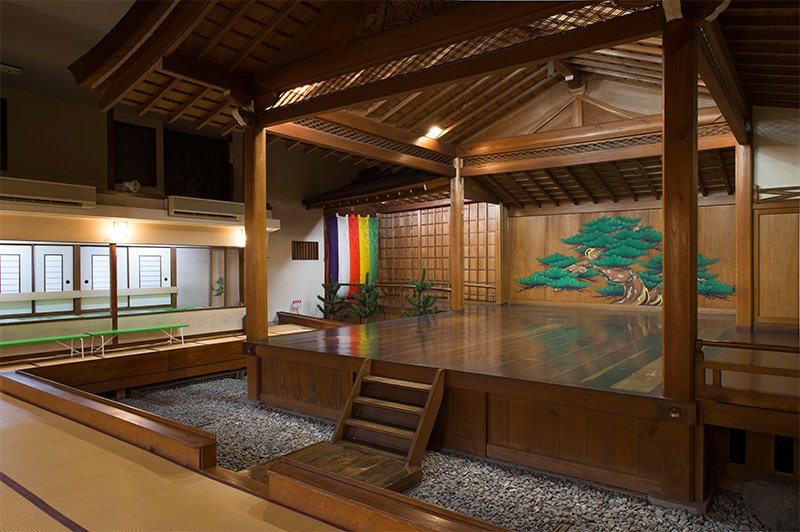
The area beyond the five-colored curtain represents the abode of other-dimensional beings.
-
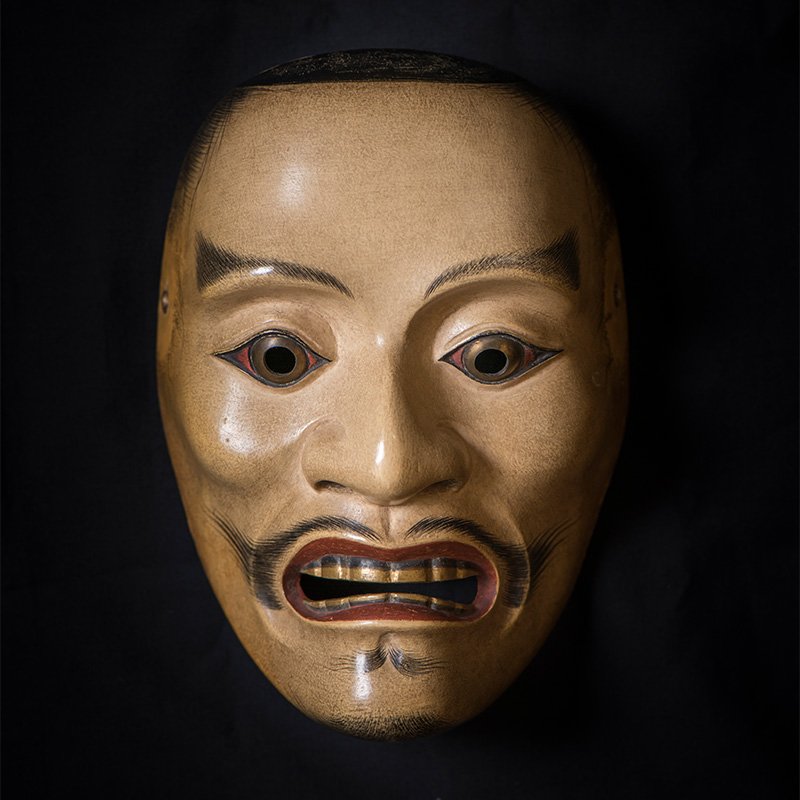
An ayakashi nō mask, used for the ghosts of fallen warriors. The outward expression of rage and resentment veils an inner dignity and calm.
-
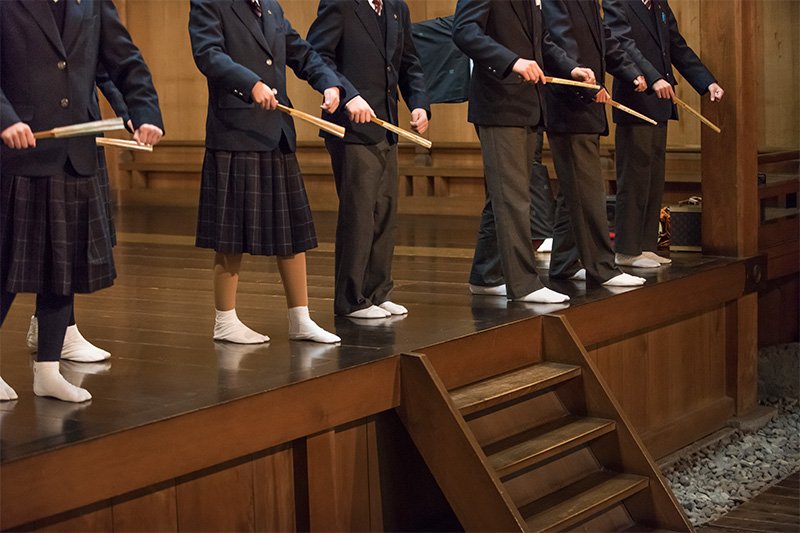
The stage is considered sacred, and one must wear white tabi—no socks or bare feet are allowed. The hakobi, with heels flush with the floor, is the basic style of walking.
-
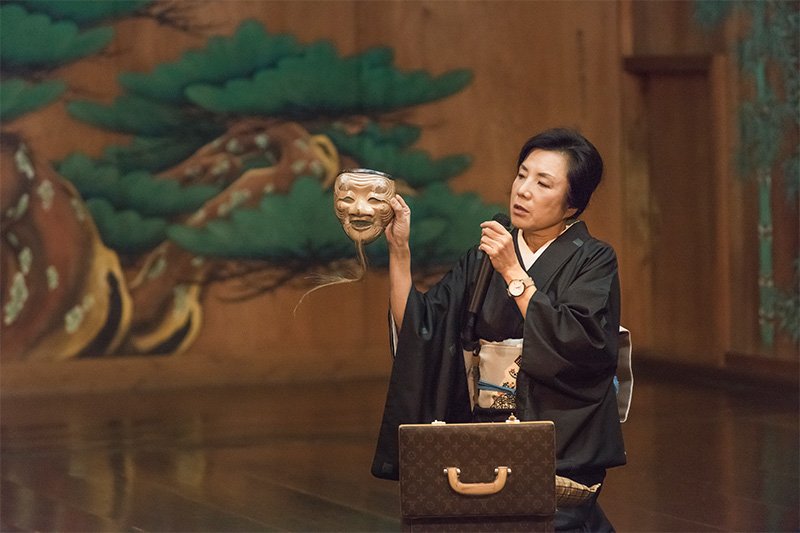
The mask used in the play Okina, for which actors are required to remain ritualistically pure before the performance.
-
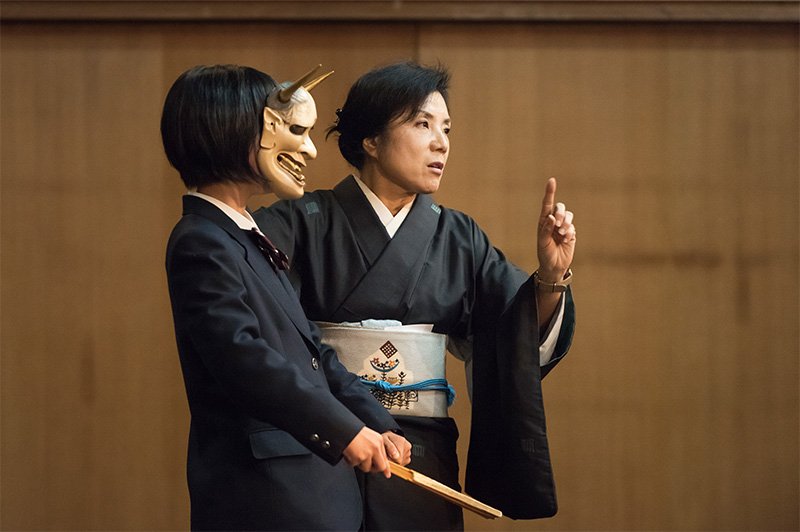
The hannya mask can transform even an innocent schoolgirl into a vengeful monster.
-
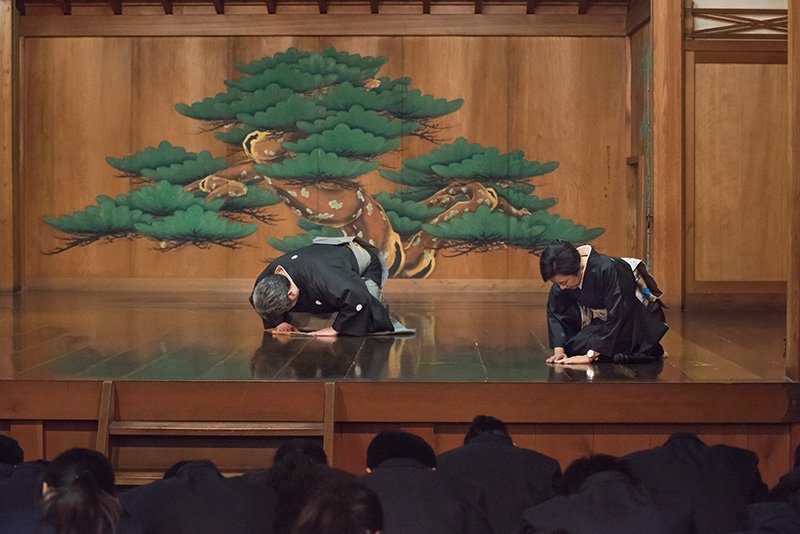
Both those leading the workshop and students in the audience bow at the end of the workshop to express gratitude for one another.
-


 Read in other languages